
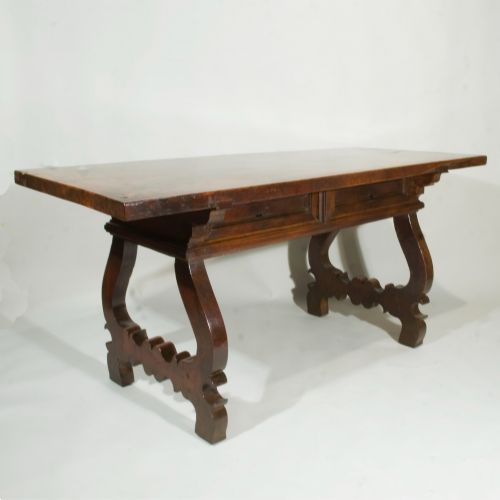
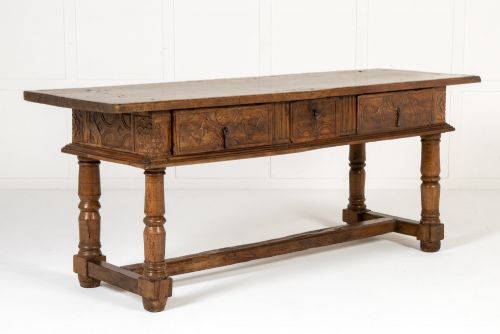


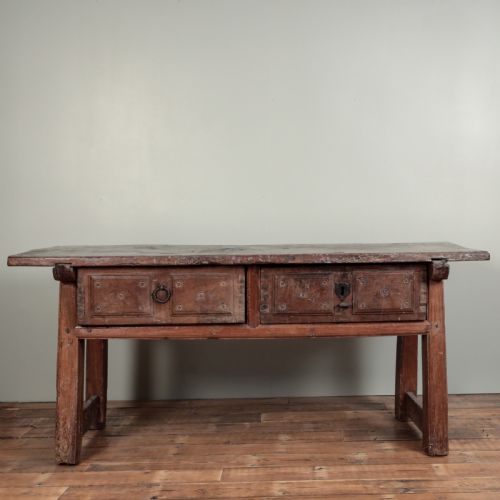


Spanish Walnut Console Table
These heavy Spanish walnut console table examples bring grounded provincial utility and enduring timber character to modern interiors.
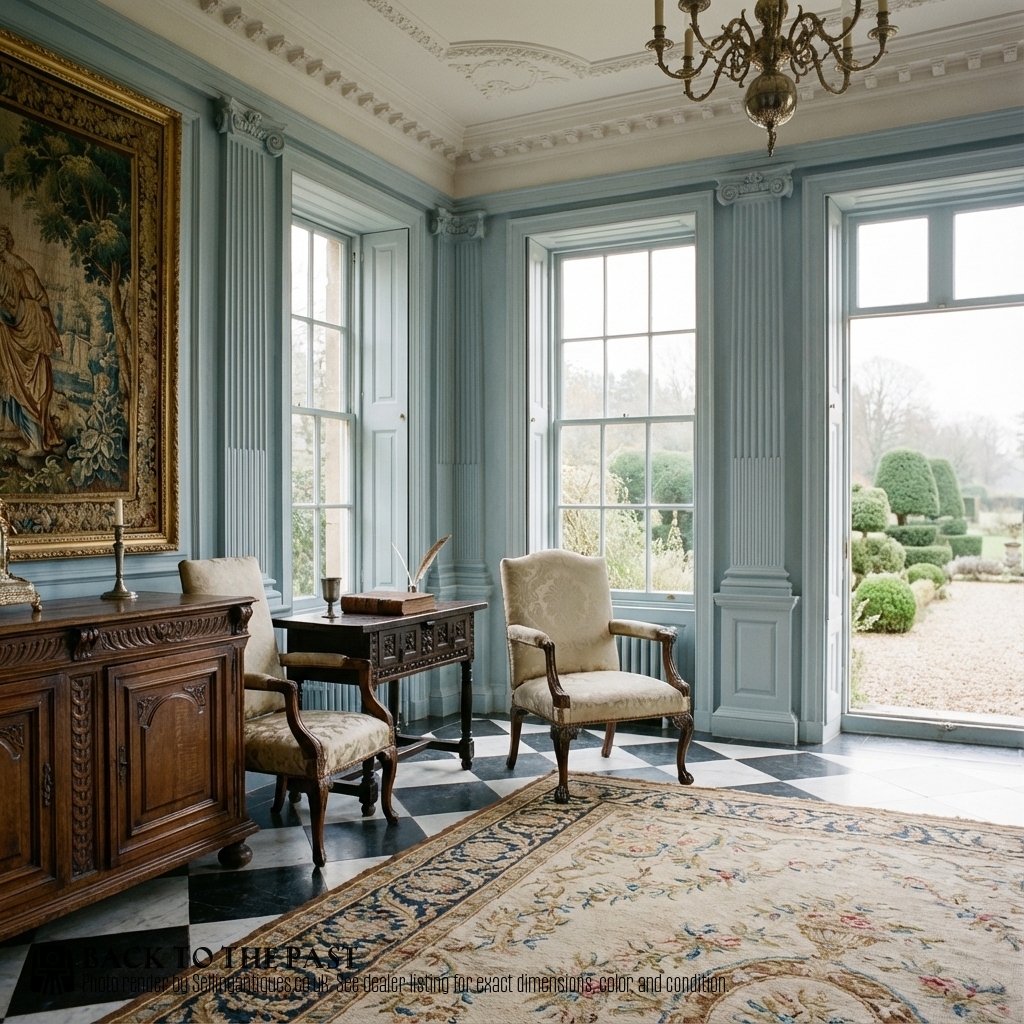
Spanish Walnut Console Table
A Spanish walnut console table combines robust timber construction with restrained continental provincial design. Buyers seek these forms for hallways and living spaces where narrow proportions matter.
The evidence shows examples spanning from the seventeenth century through to the early twentieth century. Seventeenth century pieces dominate the listings, alongside nineteenth century interpretations and continental side tables.
Materials and construction methods
Makers utilised solid walnut and oak timber for structural framework and surface boards. Wrought iron and iron elements appear frequently, providing structural bracing and support.
Makers shaped timber using traditional hand tools, resulting in surfaces that develop good original patina over centuries of use.
Listings feature walnut, oak, and iron materials across the seventeenth, eighteenth, and nineteenth centuries.
Indicators of quality
Quality separates by the depth of original patina and the integrity of the timber. Early solid walnut surfaces display distinct ageing that machine finishing cannot replicate.
Construction details such as wrought iron stretchers and iron hardware influence the overall character. Pieces retaining their early timber surfaces command attention from serious collectors.
The Spanish Walnut Console Table Glossary
- Patina
- The surface sheen and colour developed through age and handling. This develops naturally over centuries.
- Console table
- A wall-mounted or freestanding narrow table designed for hallways and living spaces. These pieces save floor space.
- Spanish Baroque
- An ornate artistic style originating in Spain during the seventeenth century. It influences the carving and proportions of early tables.
- Continental Provincial
- A regional design style reflecting local craftsmanship rather than court fashions. Pieces in this style show honest, utilitarian construction.
Spanish Walnut Console Table: Frequently Asked Questions
Where should I place a console table?
These narrow tables suit hallways, entryways, and living rooms where floor space is limited. Their shallow depth allows them to sit flush against walls without obstructing pathways.
They function well as display surfaces for lamps, ceramics, or mirrors. The timber tones complement both traditional and modern interior schemes.
How do I care for walnut furniture?
Maintain walnut surfaces by dusting with a dry cloth and avoiding direct sunlight. Excessive heat and moisture can damage the timber and the original patina.
Apply natural beeswax occasionally to nourish the wood and protect the grain. Avoid chemical cleaners that strip historical finishes.
How do I identify seventeenth century pieces?
Seventeenth century examples display heavy solid walnut construction and hand-tooled joinery marks. Wrought iron bracing and structural ironwork are typical of this early period.
Examine the underside and joints for hand-cut pegs and adze marks. These construction traits confirm early manufacturing methods.
What is provincial style?
Provincial style refers to furniture made outside major capital cities by regional craftsmen. These pieces prioritise functional utility over elaborate court decoration.
They utilise local timber species like walnut and oak. The resulting forms remain honest and robust.