




Spanish Baroque Side Table
A spanish baroque side table brings honest 17th-century timber and wrought iron into a room, offering robust utility and deep historical character.
Spanish Baroque Side Table
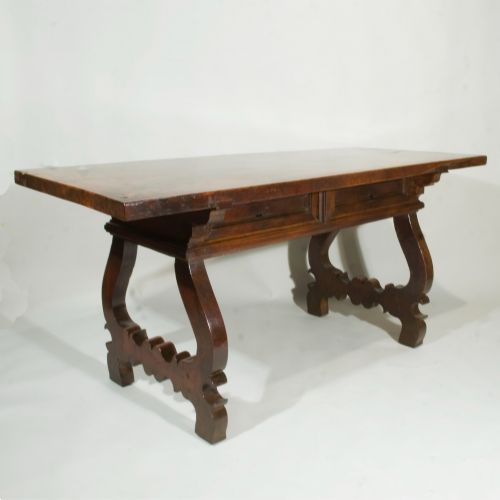
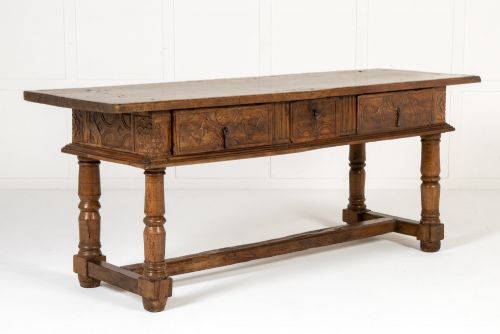
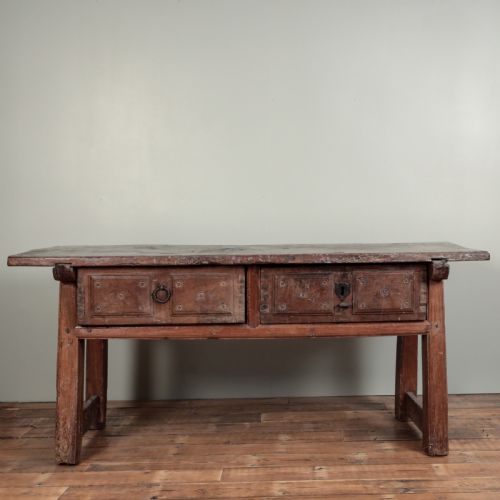
A spanish baroque side table is typically encountered as a solid walnut piece dating from the 17th century, built for utilitarian domestic use. These sturdy items frequently appear under broader designations such as console tables or centre tables, reflecting their original placement against walls or in open rooms.
While authentic examples date back to the 17th century and 18th century, later revivals from the 19th century and early 20th century also emerge in the listings. Walnut remains the predominant timber, occasionally accompanied by oak, fruitwood, or ebonised wood to create dark, imposing surfaces.
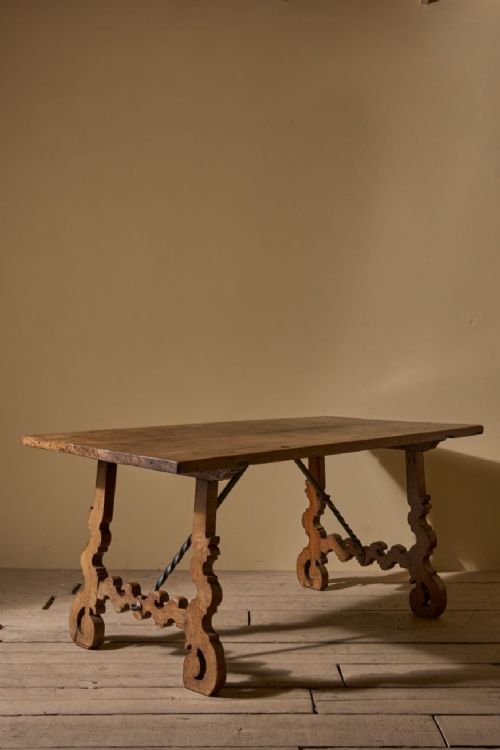
The form is defined by structural austerity, where thick timber tops rest on substantial legs often braced by iron stretchers. Collectors seek these variations for their architectural presence and the genuine patina accumulated over centuries of use.
Materials and construction
Construction relies heavily on solid walnut and oak, selected for durability and worked with straightforward joinery techniques. Makers utilised local timber stocks, occasionally incorporating fruitwood or applying ebonised finishes to achieve a formal, darkened surface.
Wrought iron forms an integral part of the structure, specifically through stretcher bars that brace the wooden legs beneath the tabletop. This combination of heavy timber and forged iron provided the necessary rigidity without requiring elaborate carving.
Listings for this phrase feature pieces spanning the seventeenth to the early twentieth century, dominated by solid walnut and iron work.
Assessing quality and character
Quality rests in the integrity of the timber and the depth of the original patina developed across the centuries. Pieces that retain their unpolished surfaces and early structural components demonstrate greater authenticity than those altered by heavy restoration.
The sophistication of the ironwork and the selection of dense, figured walnut distinguish finer examples from simpler provincial work. Proportion and the natural ageing of the wood dictate the visual balance of each table.
The Spanish Baroque Side Table Glossary
- Patina
- The surface sheen and softening of tone developed through age and handling. This gradual change is valued as evidence of a table's long history.
- Console table
- A table designed to stand against a wall, frequently secured to it or balanced on robust legs. These forms serve functional surfaces in hallways and principal rooms.
- Centre table
- A freestanding piece finished on all sides for placement in the middle of an apartment or hall. They allow access from multiple directions.
- Ebonised wood
- Timber treated with chemical stains or dark finishes to imitate ebony. This technique was used to achieve a formal, high-status appearance.
- Wrought iron
- Iron shaped by heating and hammering, utilised for structural stretchers beneath the table top. It provides essential bracing strength.
Spanish Baroque Side Table: Frequently Asked Questions
How do I date a spanish baroque side table?
Dating relies on examining the tool marks on the timber, the composition of the iron stretchers, and the natural wear patterns across the top. Earlier pieces from the 17th century display hand-riven boards and simpler, heavier construction methods.
Later revivals from the 19th century often reveal standardised machine-cut elements or different fastening techniques upon closer inspection of the underside.
Where should I place a spanish baroque side table?
These tables suit hallways, living spaces, or dining rooms where their dark timber and structural lines create a strong focal point. Placing them against a plain wall allows the silhouette and grain of the walnut to stand out.
Because many function as console tables or centre tables, ensure the room dimensions accommodate their heavy, solid proportions without crowding the space.
Are these tables made entirely of solid wood?
Most listings feature solid walnut, oak, or fruitwood construction rather than veneered surfaces over secondary woods. This heavy timber build accounts for their substantial weight and enduring stability.
Secondary woods occasionally appear in lesser structural components, but the primary visual surfaces remain faithful to the regional timber traditions of the period.
What maintenance do these tables require?
Maintenance involves keeping the timber nourished with appropriate wax and protecting the surface from excessive moisture and direct heat. Regular dusting with a soft cloth preserves the original patina without stripping the historic finish.
Avoid modern liquid polishes that can build up a residue and dull the subtle sheen acquired over centuries of existence.