
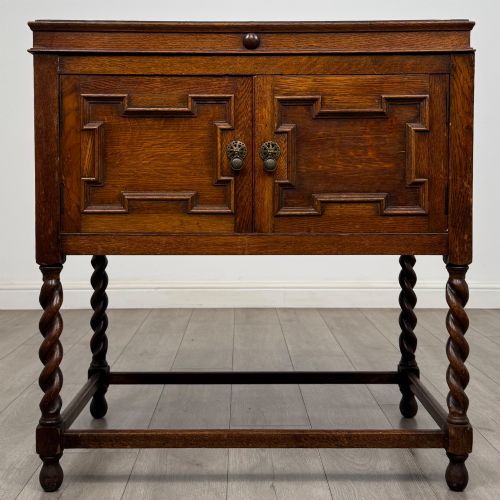
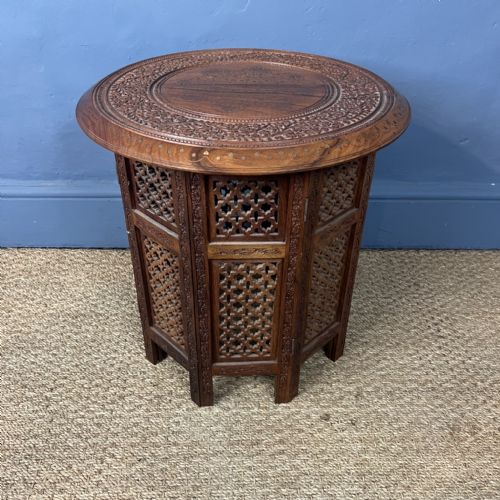


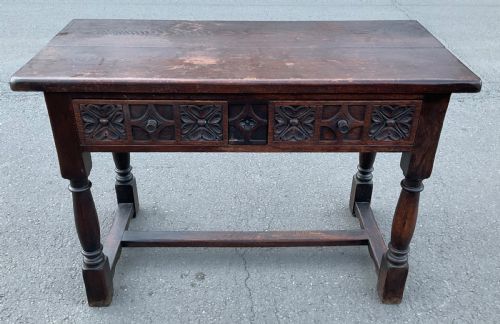


Carved Panel Side Table
These carved panel side table examples bring together oak, teak, walnut, and marble across periods from the seventeenth century to the twentieth.
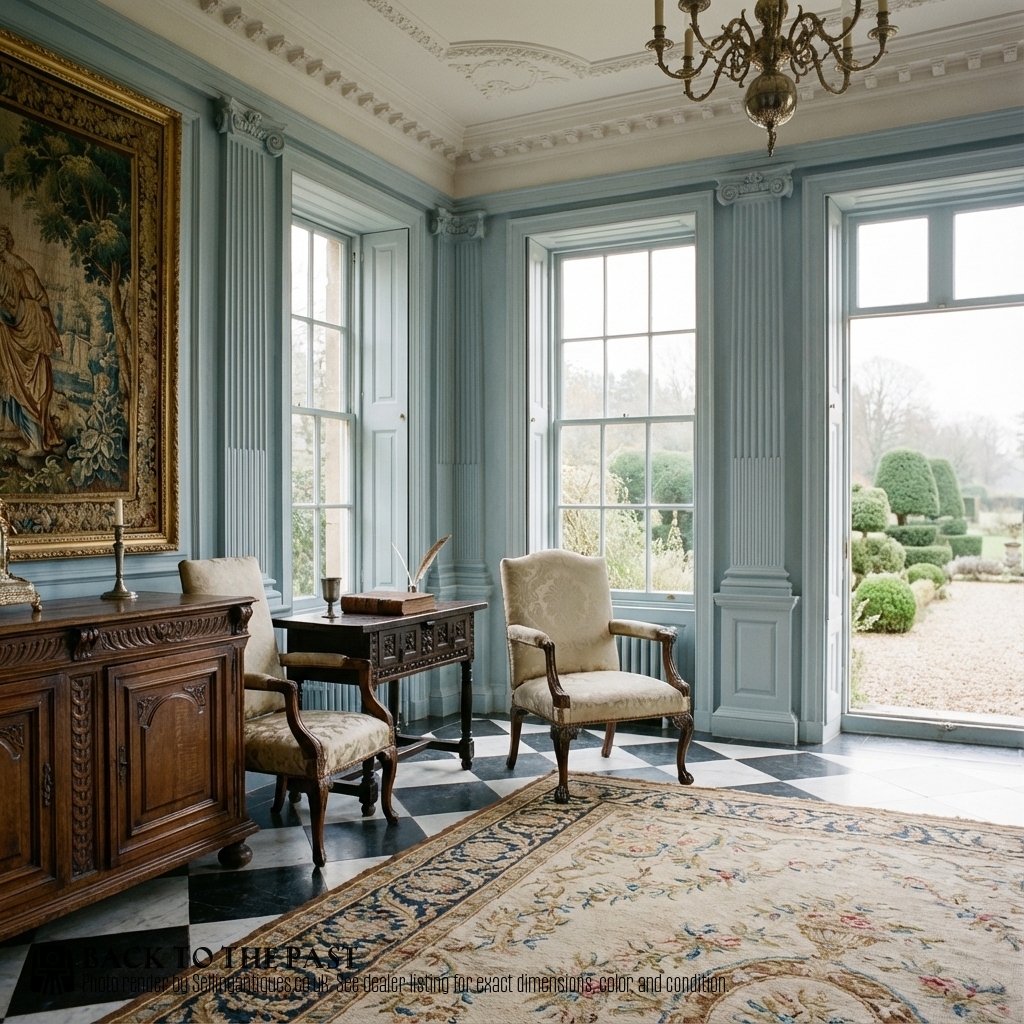
Carved Panel Side Table
When you search for a carved panel side table, you encounter a variety of forms including side tables, bedside cabinets, and console tables. These pieces draw on stylistic traditions such as Jacobean Revival, Victorian, and Qing Dynasty designs.
The oak, walnut, teak, and pine pieces on this page originate from diverse workshops and regions, ranging from seventeenth-century English work to Anglo-Indian production and twentieth-century interpretations.
Materials and construction
Cabinetmakers utilised sturdy timbers like oak, walnut, hardwood, and pine as the structural foundations for these items. Joinery techniques and carved surface details define the character of the woodwork.
Certain regional variations incorporate brass inlay work or inset rouge marble and cloisonné enamel panel tops. Painted finishes also appear on specific pine and Victorian examples.
Some tables double as drum-type surfaces with cloisonné enamel panels for when your side table needs a musical identity crisis.
Assessing quality
Quality rests in the crispness of the carving and the selection of timber used for the panels and frames. Denser hardwoods and older oak retain sharper decorative detail than later or more utilitarian interpretations.
The integration of inset elements like marble or cloisonné enamel, alongside the fidelity of revival styles such as the Jacobean or Queen Anne, marks the distinction between standard and finer pieces.
The Carved Panel Side Table Glossary
- Jacobean Revival
- A nineteenth- and twentieth-century style imitating the robust, geometric ornamentation of early seventeenth-century English furniture. It often utilises dark oak.
- Qing Dynasty
- The final imperial dynasty of China, spanning from the seventeenth to the early twentieth century. Pieces from this era often feature detailed hardwood carving and inset marble tops.
- Anglo-Indian
- Furniture made in India by local artisans for British colonial residents, frequently combining indigenous timbers like teak with brass inlay.
- Console table
- A table designed to stand against a wall, sometimes supported by brackets or legs. Early examples often utilise walnut or hardwood.
Carved Panel Side Table: Frequently Asked Questions
What periods do these tables represent?
The selection spans several centuries, starting from seventeenth-century oak pieces through to Victorian, Edwardian, and 1930s examples.
Revival styles from the nineteenth and twentieth centuries frequently reinterpret earlier Jacobean and classical motifs.
What materials are used in these items?
Timbers include oak, walnut, teak, pine, and hardwood. Some variations incorporate brass inlay, paint, or inset marble and cloisonné enamel panels.
The choice of material often reflects the geographic origin and period of production.
How do I identify a revival style?
Revival pieces adopt the heavy mouldings, geometric panels, and dark finishes of earlier centuries while often utilising nineteenth- or twentieth-century construction methods.
Comparing the timber grain and joinery helps distinguish original period work from later interpretations.
Where were these tables made?
The pieces originate from diverse locations, including English workshops, Spanish regions, and Asian centres such as China and India.
Regional materials like teak and hardwood point directly to these varied geographic sources.