


Carved Dolphin Table
A carved dolphin table brings maritime sculptural form into domestic interiors through classical pedestals and supports.

Carved Dolphin Table
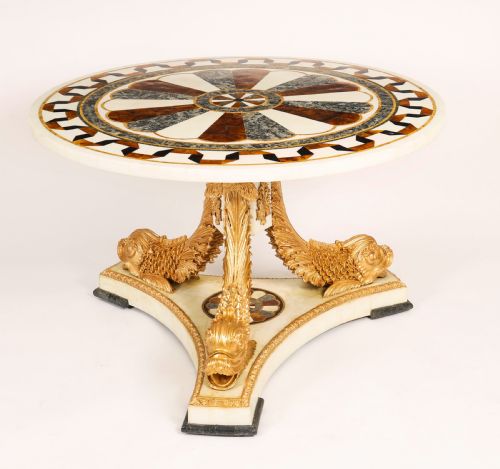
The most common form encountered on this page is the centre table or library table, often pairing heavy timber pedestals with marble or timber tops. Console tables and games tables also appear, anchoring the marine motif in domestic spaces.
Origins span British and continental European workshops, with Italian and Flemish influences strongly represented in the timber and gilt finishes. The presence of nineteenth-century revival styles and mid-century interpretations shows the enduring appeal of these aquatic creatures in furniture design.
Materials and construction methods
Construction relies on dense hardwoods such as oak, rosewood, walnut, and mahogany, chosen for their ability to support substantial marble and stone tops. Timber components are hand-carved to define the scales, fins, and curving tails of the marine motifs.
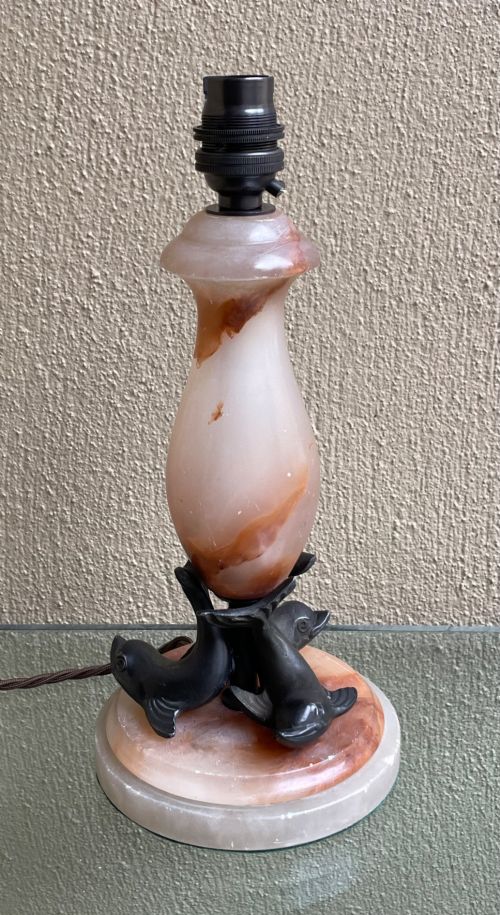
Giltwood, gilt metal, and painted finishes frequently highlight the carved details, creating contrast against darker woods or white stone surfaces. Marble, alabaster, and onyx provide heavy, contrasting tabletops that balance the sculptural weight of the pedestals.
Victorian craftsmen occasionally combined carved dolphins with green men and lion masks on the very same library table.
Evaluating craftsmanship and proportion
Quality rests in the depth and anatomical precision of the carving, distinguishing fluidly rendered scales and fins from stiff, schematic work. The integration of the dolphin supports with the structural plinth determines the overall harmony of the piece.
The choice of materials dictates the standing of the table, with figured timbers and solid marble tops marking out more ambitious commissions. Robust joinery beneath the heavy stone or timber tops ensures the stability required by these substantial architectural forms.
The Carved Dolphin Table Glossary
- Centre table
- A freestanding table designed to be viewed from all sides, placed in the middle of a room rather than against a wall.
- Giltwood
- Wood that has been treated with gold leaf or gold paint to create a luminous, metallic surface finish.
- Console table
- A wall-mounted or freestanding table supported by front legs or brackets, historically designed to stand against a drawing room wall.
- Pedestal
- A structural support or column beneath a tabletop, often carved into figurative or zoomorphic shapes like dolphins.
- Neoclassical revival
- A nineteenth-century design movement drawing inspiration from the classical art and architecture of ancient Greece and Rome.
Carved Dolphin Table: Frequently Asked Questions
How were these tables used originally?
These tables served various domestic functions depending on their form, acting as central library tables for writing and reading or as decorative console tables in grand hallways. Games tables featured folding tops for card play, while smaller occasional versions held lamps and decorative objects.
Their substantial proportions meant they were built to anchor large rooms, often positioned beneath mirrors or in the centre of open floor spaces to display their carved bases.
How do I style a carved dolphin table today?
A carved dolphin table works best as a focal point in a room with generous proportions, allowing the sculptural base to be viewed from multiple angles. Pairing the table with complementary lighting or placing it in an entryway highlights its architectural presence.
Because many examples feature heavy marble or timber tops, placing them on solid flooring ensures stability. They sit comfortably within both traditional period interiors and eclectic contemporary spaces.
How can I tell the period of a carved dolphin table?
Dating relies on examining the timber species, construction techniques, and stylistic revival markers visible in the carving. Nineteenth-century pieces frequently employ oak, walnut, or rosewood with dense, naturalistic carving styles linked to Victorian or Regency revivals.
Later twentieth-century examples incorporate materials like alabaster, onyx, and polished metals alongside streamlined forms. Comparing the joinery methods and surface patination helps establish whether a piece belongs to the nineteenth-century revival period or later decades.