

Antique Mirror Back
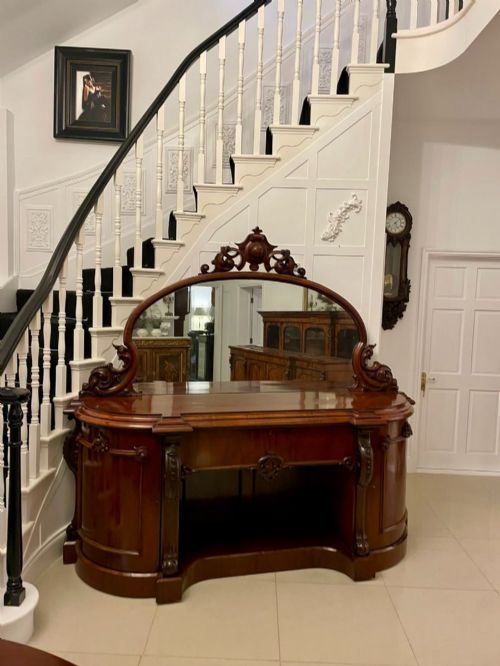
An antique mirror back brings depth and reflected light into a room, most commonly seen on substantial Victorian sideboards and credenzas.
Antique Mirror Back
When searching for an antique mirror back, collectors primarily encounter large dining room furniture designed during the nineteenth and early twentieth centuries.
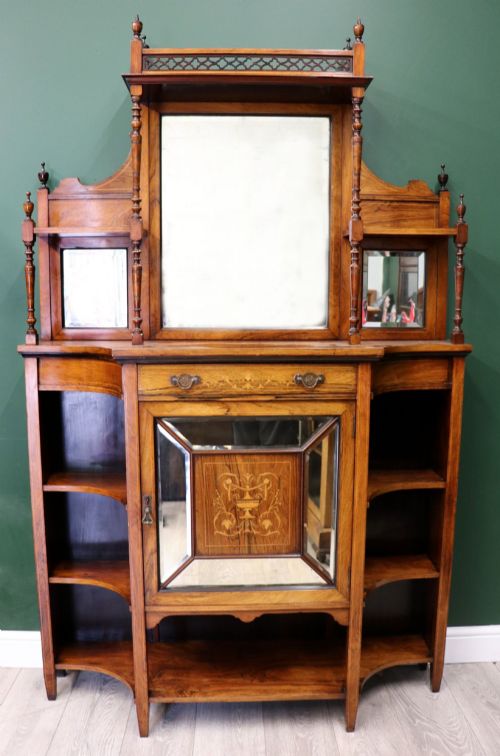
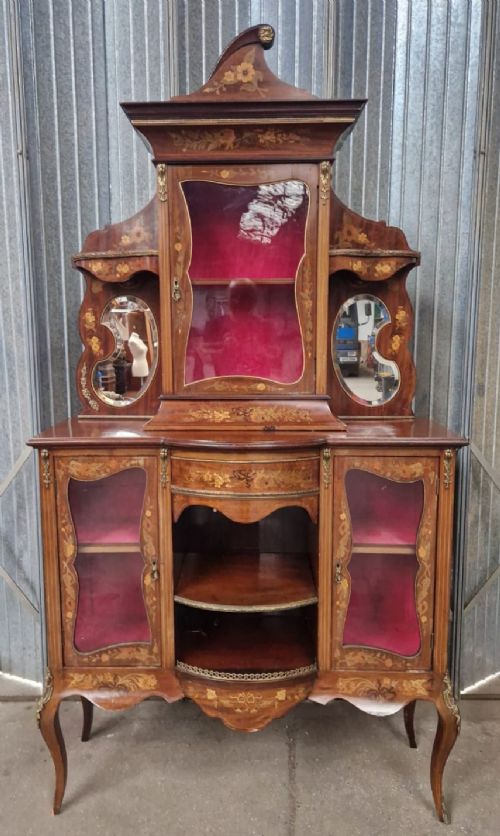
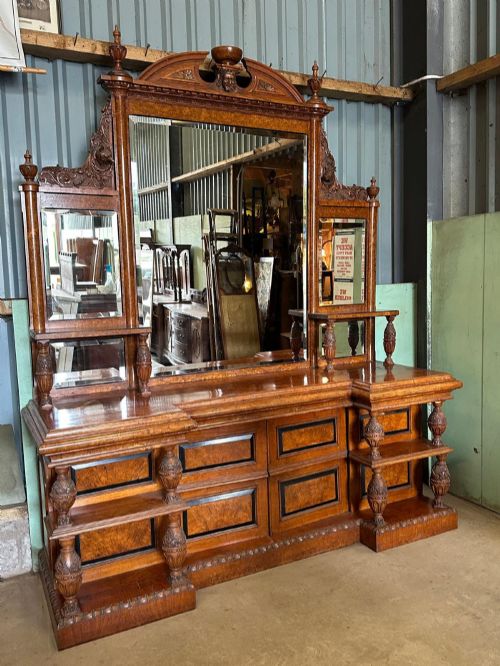
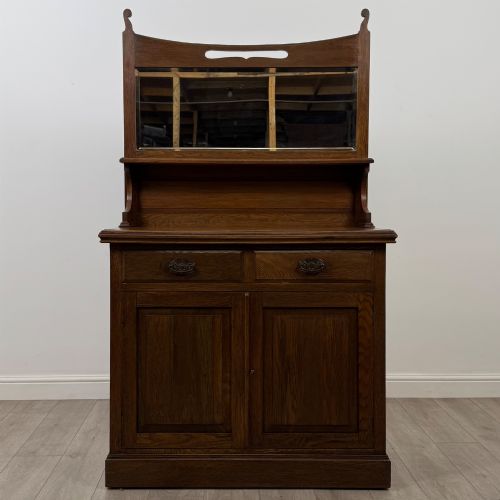
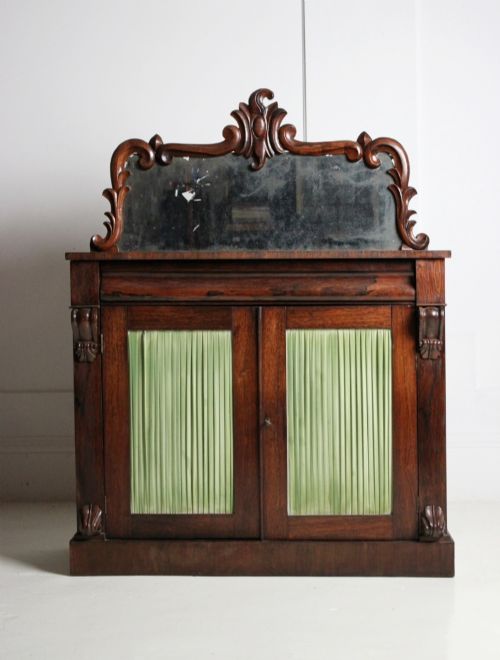
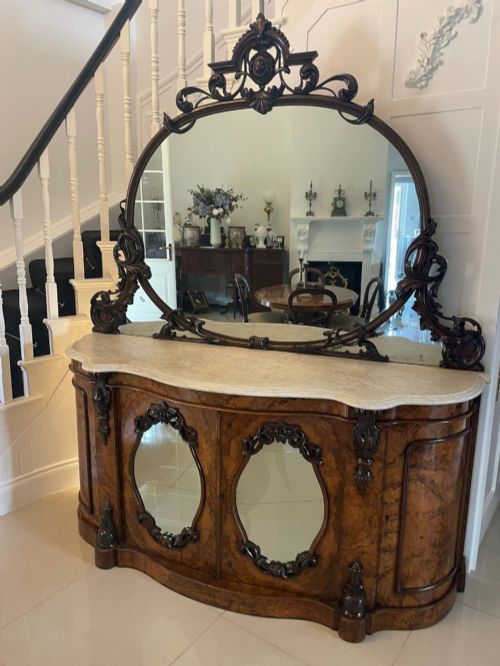
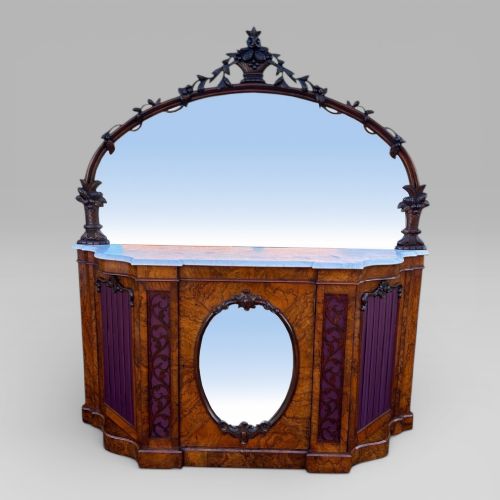
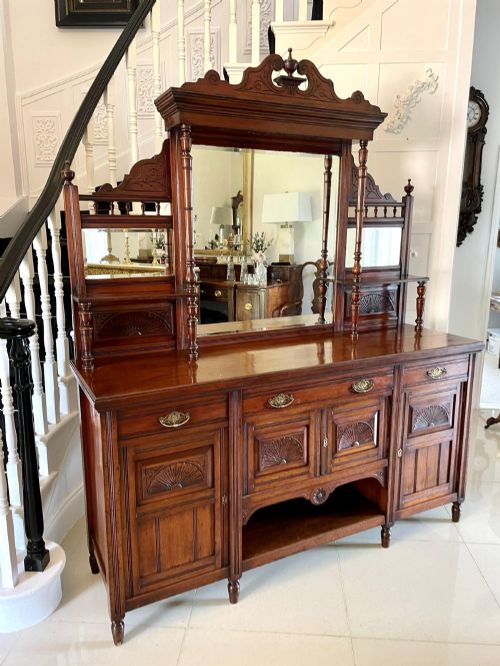
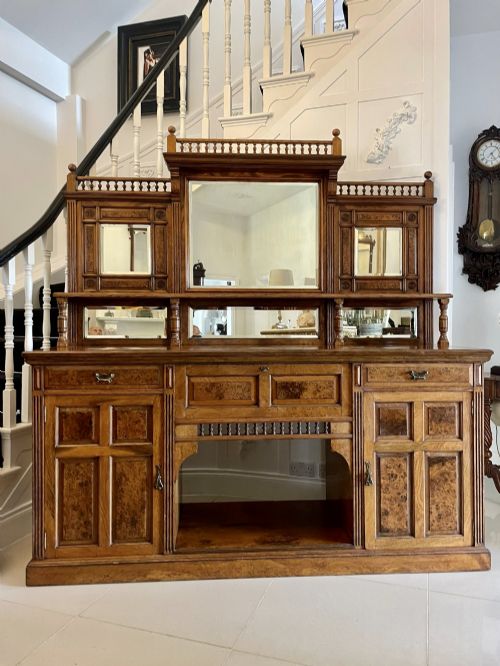
Sideboards, credenzas, and chiffoniers form the majority of these pieces, integrating a polished reflective plate into a timber superstructure above a serving surface or cupboards.
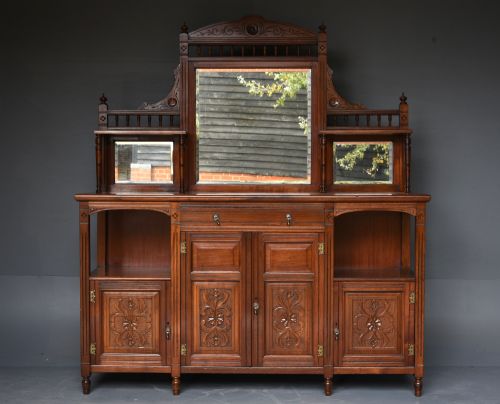
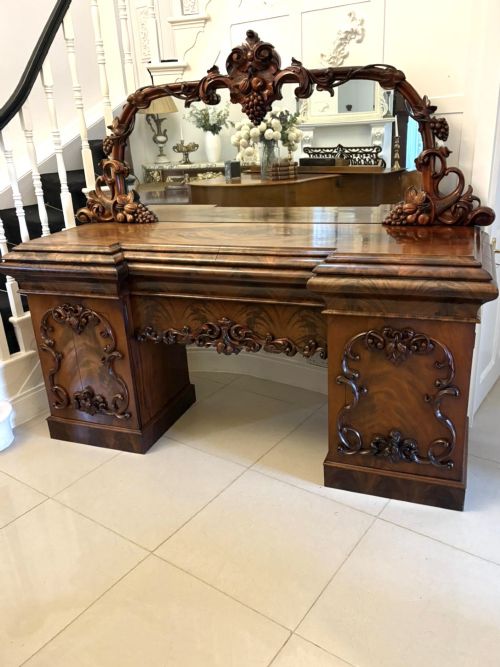
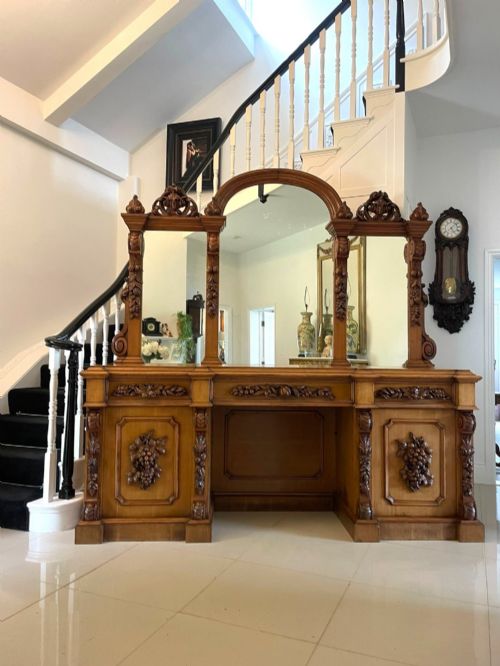
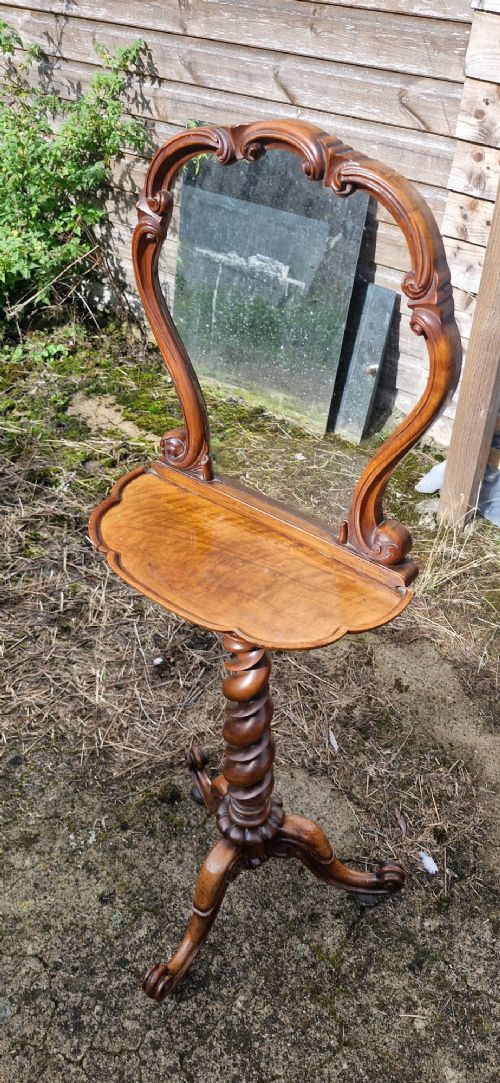
Victorian examples dominate the selection, often featuring elaborate carved woodwork framing bevelled or flat mirror glass.
How They Were Made
Cabinet makers utilised dense hardwoods such as mahogany, oak, burr walnut, and rosewood to construct the heavy frames and base furniture required to support large sheets of glass.
The mirror plates were secured within carved or moulded wooden frames, frequently incorporating brass hardware, marble tops, and detailed hand-carved ornamentation.
Listings feature walnut, mahogany, oak, and rosewood forms spanning the Victorian and Edwardian periods.
What Varies in Quality
The distinction between standard pieces and the finest examples lies in the selection of timber figures, such as pollard oak or burr walnut, and the depth of the hand-carving on the frame.
Superior construction involves integrated structural framing that supports the heavy glass securely without warping the timber over time.
Shoolbred and Co·Collinson and Lock·Edwards and Roberts·Gillingtons of Dublin
The Antique Mirror Back Glossary
- Sideboard
- A large dining room piece with cupboards and drawers used for serving food and storing tableware. Many Victorian versions incorporate a tall mirror back superstructure.
- Credenza
- A sideboard or buffet cabinet, often without legs, closely associated with mid to late nineteenth-century formal interiors.
- Pollard Oak
- Oak timber taken from trees that have been pollarded, producing a highly decorative, clustered grain pattern highly prized by Victorian cabinet makers.
- Chiffonier
- A low sideboard or cabinet, typically featuring enclosed shelving and a small mirror or superstructure.
- Ormolu
- Gilded bronze ornamentation applied to furniture, popular in high-status nineteenth-century cabinet work.
Antique Mirror Back: Frequently Asked Questions
How do I clean an antique mirror back?
Use a soft, dry cloth to remove dust from the wooden frame and carved crestings, avoiding chemical polishes that damage aged finishes.
Clean the glass gently with a mild, non-ammonia glass cleaner applied to the cloth rather than sprayed directly onto the plate, protecting the original silvering at the edges.
Where should I place a mirror back sideboard?
Position the piece against a sturdy load-bearing wall in a dining room, hallway, or principal living space where it can anchor the room's proportions.
Ensure it sits opposite or adjacent to a light source to maximise the reflective glass's ability to brighten the interior.
How can I date an antique mirror back?
Examine the wood species, construction joints, and handle hardware to establish the period, noting that heavy mahogany and burr walnut typically point to the Victorian era.
Look for characteristics of the glass plate itself, as older mirrors often exhibit subtle distortions, bevelled edges, or hand-silvered backs distinct from modern manufacturing.
Are mirror back sideboards difficult to move?
These pieces are exceptionally heavy due to the combination of dense hardwoods, marble tops, and large glass plates within the superstructure.
Many examples allow the mirror back to be detached from the base sideboard, making transport and placement significantly safer and more manageable.