




Hallway Centre Table
A hallway centre table commands the entrance hall with a bold standalone silhouette, offering a practical surface for post and keys while anchoring the spatial flow of the room.

Hallway Centre Table
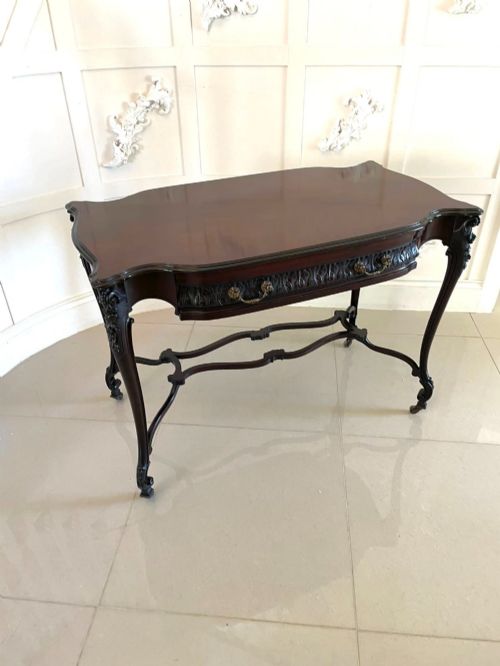
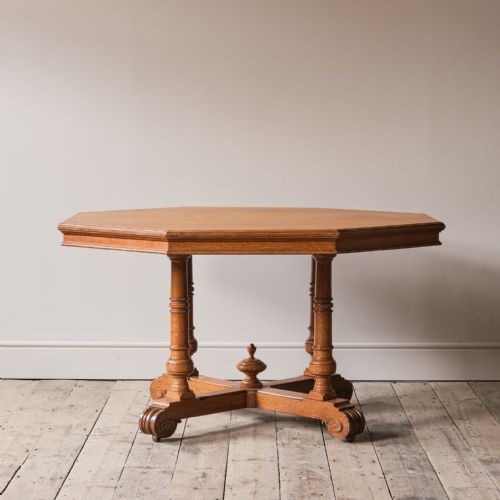
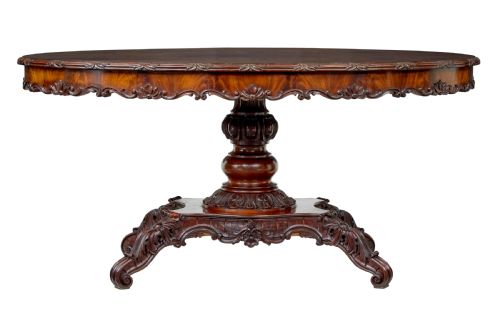
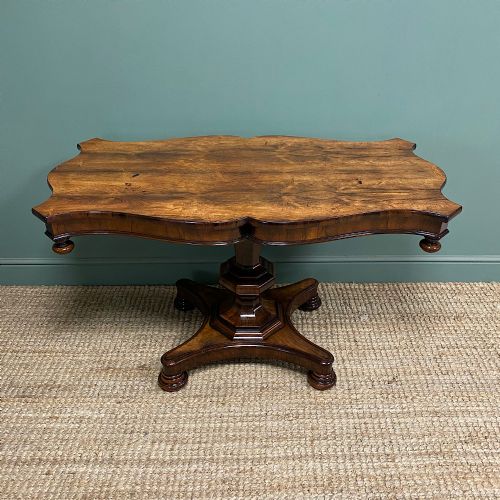
A hallway centre table is a freestanding piece designed to sit in the middle or focal point of a grand entrance hall, rather than pushed flat against a wall. The pieces gathered under this phrase span various forms including console tables, occasional tables, and shaped stretcher tables.
Most examples you encounter date from the nineteenth century, including Victorian walnut and mahogany creations, alongside Georgian and William IV pieces. They appear in diverse woods such as oak, rosewood, burr walnut, and amboyna, occasionally featuring marble tops or intricate inlays.
Some variations lean towards continental aesthetics like French Rococo and Baroque styles, while others showcase Chinese Qing Dynasty carved hardwood craftsmanship. Each form provides a distinct architectural presence suited to welcoming visitors into a home.
Materials and construction methods
Cabinet makers utilised dense hardwoods like mahogany, walnut, and rosewood for their stability and capacity for rich carving and polish. Inlaid details and amboyna veneers demonstrate the fine decorative work applied to the upper surfaces.
Structural integrity relied on solid timber frames, pedestals, and stretcher supports designed to bear the weight of heavy stone or marble tops. Hand carving shaped the legs, aprons, and borders of octagonal, oval, and shaped top forms.
Listings span the nineteenth century, featuring Victorian, Georgian, and William IV periods alongside materials like mahogany, walnut, marble, and giltwood.
Differentiating quality across examples
The choice of primary timber and the selection of veneer figure set the foundation for a piece's visual weight and refinement. High quality manifests in the depth of hand carving on wooden mounts and the crispness of inlaid motifs.
Engineering of the sub-frame, stability in pedestals or stretcher bases, and the integration of secondary materials like inset marble or giltwood define the overall calibre of construction. Balance between proportions and decorative restraint separates standard production from superior craftsmanship.
The Hallway Centre Table Glossary
- Centre table
- A freestanding table designed to be viewed from all sides and placed in the middle of a room. These pieces often serve as the focal point of an entrance hall.
- Console table
- A table fixed or placed against a wall, though historical terminology often overlaps console tables with centre tables in entrance settings.
- Tilt top
- A tabletop mechanism that allows the surface to pivot to a vertical position when not in use. This feature saves space and demonstrates clever nineteenth-century carpentry.
- Stretcher table
- A table featuring horizontal wooden rails connecting the legs to provide structural bracing. These rails often intersect centrally beneath the main surface.
Hallway Centre Table: Frequently Asked Questions
What is a hallway centre table used for?
These tables occupy the middle of large entrance spaces to create a striking first impression. They provide a practical surface for placing decorative items or incoming post.
Historically, they also served as a central drop-off point in grand hallways before entering the main reception rooms.
How do I distinguish a Victorian table?
Victorian tables frequently utilise dense timbers like walnut, mahogany, and burr walnut with rich patination. They often display deep hand carving and shaped oval or pedestal tops.
Look for structural traits such as stretcher bases or inlaid surfaces that typify nineteenth-century British cabinet making.
Where should I place a centre table?
A centre table requires ample surrounding floor space to allow movement and appreciation from all angles. Entrance halls with high ceilings and generous proportions suit them best.
Positioning the piece centrally lets its silhouette and timber grain become the focal point of the room.
What woods were commonly used?
Mahogany and walnut appear frequently in nineteenth-century British examples for their strength and dark tones. Rosewood and burr walnut provided more decorative surfaces with distinct grain patterns.
Exotic woods like amboyna and carved hardwoods also feature in specific regional or period interpretations.