


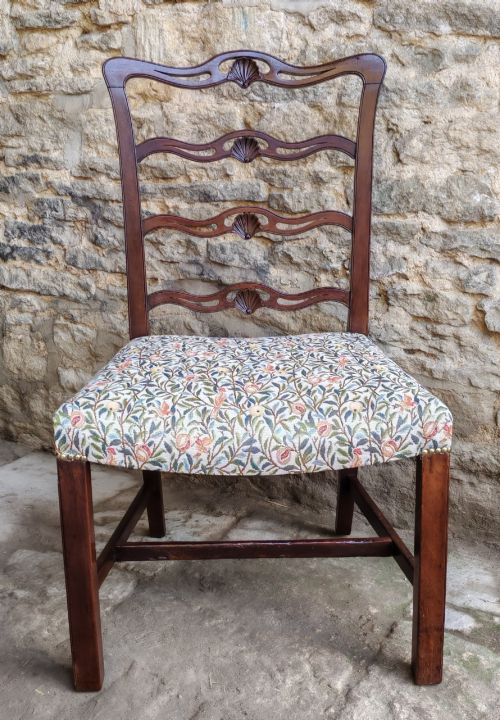
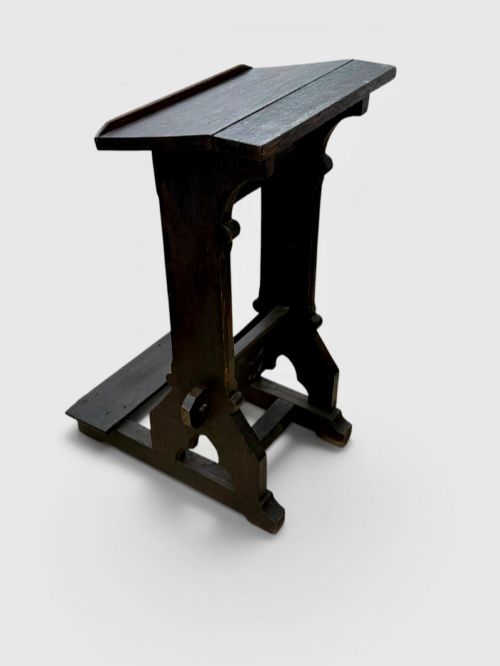
Carved Dark Wood Desk
A carved dark wood desk provides a sturdy working surface shaped by hand, bringing nineteenth-century utility and deep grain into a room.
Carved Dark Wood Desk
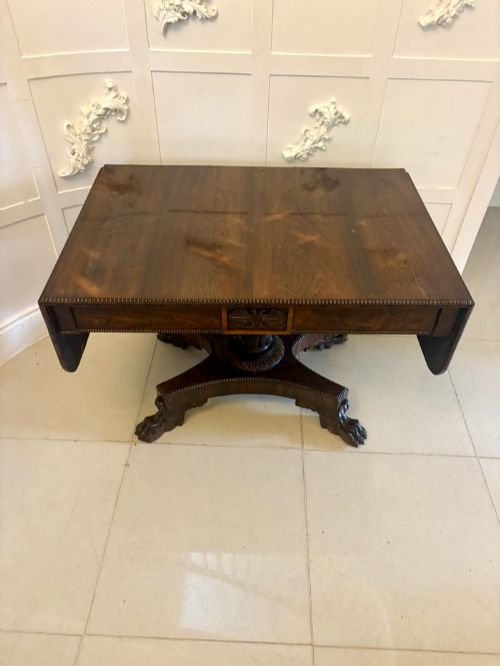
When you search for a carved dark wood desk, you find substantial writing furniture built primarily during the Victorian and Edwardian eras. These pieces range from pedestal forms and side tables with drawers to fitted bureaus.
The versions most common in these listings combine rich mahogany or oak timbers with deliberate hand-carved ornamentation. They reflect nineteenth-century and early twentieth-century domestic and library workspaces.
How they were made
Cabinet makers utilised dense hardwoods such as mahogany and oak, selecting timber for strength and deep natural colour. Surfaces were shaped using traditional hand tools, mortise and tenon joints, and pegged or glued assembly.
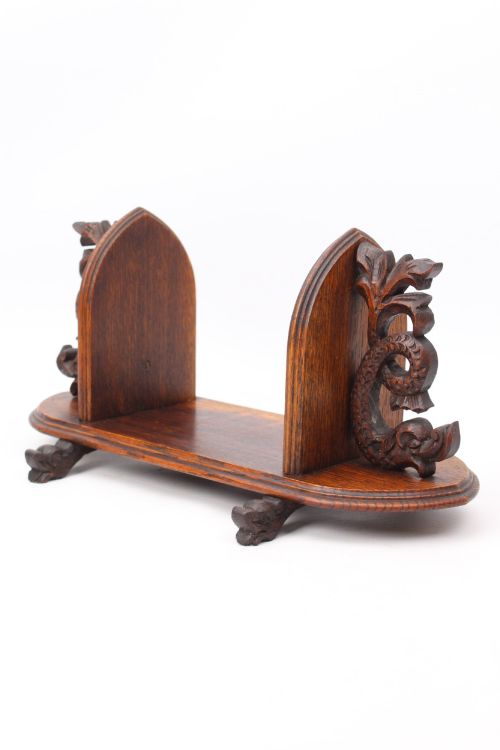
Carving was executed by hand directly into the solid wood, incorporating linenfold panels, gadrooning, or classical motifs. Drawers were constructed with hand-cut dovetails to ensure long-term durability under daily use.
Listings feature Victorian, Edwardian and Georgian periods, constructed from mahogany, oak and rosewood.
What varies in quality
The standard of a carved dark wood desk depends largely on the crispness of the hand-carving and the selection of the timber. Deeply undercut relief work and well-figured mahogany or quarter-sawn oak distinguish finer examples.
Internal construction also defines the grade of the piece, visible in the precision of the drawer dovetails and the weight of the brass hardware. Uniformity in the timber grain and substantial secondary woods elevate certain examples above standard commercial output.
Gillows·Alfred Allen of Birmingham
The Carved Dark Wood Desk Glossary
- Pedestal desk
- A heavy writing table supported by two vertical banks of drawers rather than four legs. This form offers generous storage and a finished back for freestanding placement in a room.
- Bureau
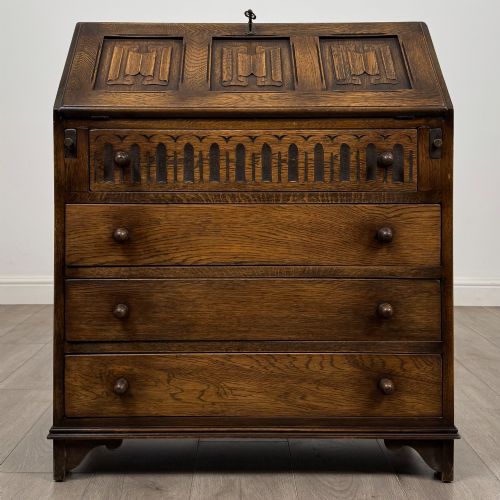
- A writing cabinet featuring a sloping fall-front lid that opens to reveal internal pigeonholes and small drawers. Edwardian examples often display carved panels such as linenfold.
- Davenport
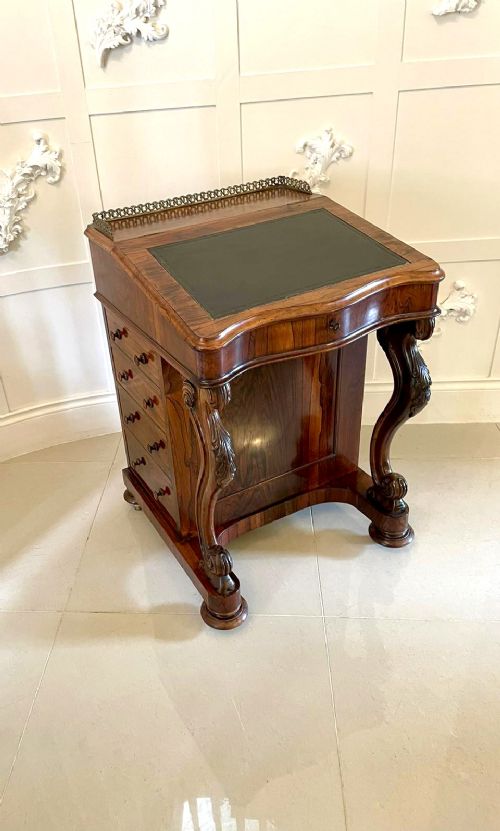
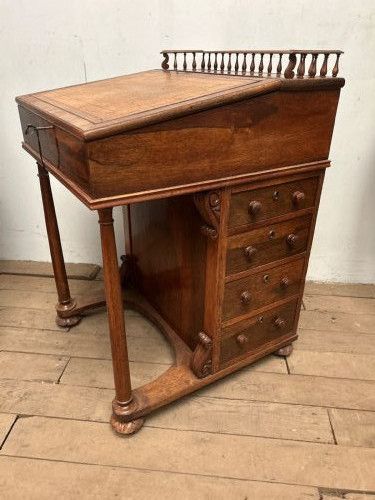
- A compact Victorian writing desk featuring a sloped, hinged writing surface above a set of side drawers. They frequently incorporate fine rosewood or mahogany timbers.
- Linenfold
- A style of relief carving applied to wooden panels to imitate folded fabric. It appears commonly on early twentieth-century oak furniture.
- Dovetail
- A joint formed by interlocking wedge-shaped fingers used to secure drawer corners. Hand-cut versions indicate traditional cabinet-making methods.
Carved Dark Wood Desk: Frequently Asked Questions
What is a pedestal desk?
A pedestal desk is a large, freestanding writing table supported by two structural columns of drawers. The top surface typically includes inset leather or polished wood.
These pieces were designed for central placement in studies or libraries, providing access to storage from a seated position.
How do I care for dark wood?
Dark wood furniture requires regular dusting with a soft, dry cloth and occasional application of appropriate wax to nourish the grain. Avoid placing these pieces in direct sunlight or near heat sources to prevent timber splitting.
Consistent indoor humidity helps maintain the stability of nineteenth-century joints and polished surfaces.
What is a Davenport desk?
A Davenport is a small nineteenth-century writing desk featuring a sloping, hinged top for correspondence. A bank of small drawers usually opens to one side of the pedestal base.
Their compact footprint made them suitable for drawing rooms and smaller Victorian parlours where space was limited.
How do I date an oak bureau?
Dating an oak bureau involves examining the construction methods of the internal drawers and the style of the exterior carving. Hand-cut dovetails and solid timber secondary woods point toward nineteenth or early twentieth-century manufacture.
Edwardian interpretations often reproduce earlier Jacobean styles, using machine assistance alongside traditional hand finishing.