




Chinese Writing Desk
A Chinese writing desk brings heavy hardwood grain and carved export craftsmanship straight to the study.
Chinese Writing Desk
A Chinese writing desk combines traditional Eastern carving with practical writing surfaces, ranging from compact campaign boxes to substantial partner tables. Buyers encountering these pieces will frequently find them dated to the nineteenth century, constructed in heavy timbers and styled with distinct regional or export flourishes.
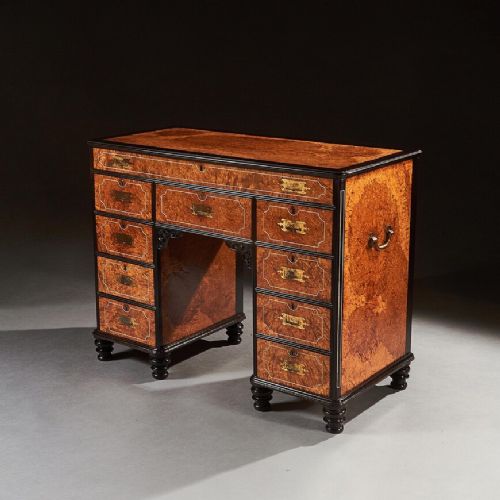
Forms span from portable writing slopes and lap desks to large kneehole desks, pedestal desks and side tables adapted for correspondence. Many examples reflect the intersection of Western form and Chinese craftsmanship, particularly within the Chinese Export and Qing traditions.
The material palette is dominated by dense tropical hardwoods and characteristic lacquers, often accompanied by brass campaign mounts. These desks served colonial officers, merchants and scholars, creating a functional workspace defined by intricate hand-carved detail.
Materials and construction
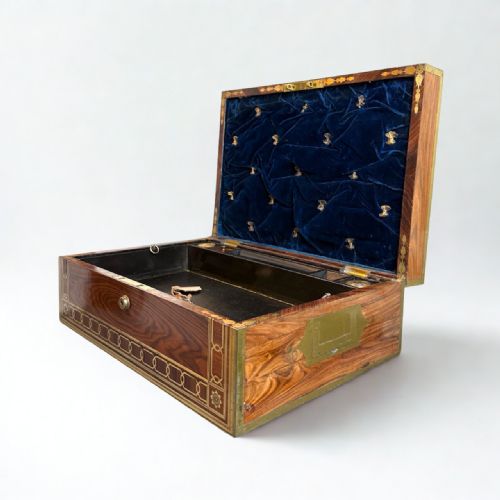
Construction relies heavily on dense timbers such as mahogany, rosewood, elm, camphorwood and padouk, selected for durability and rich natural grain. Cabinetmakers joined these woods using traditional mortise and tenon joinery capable of withstanding shifting climates.
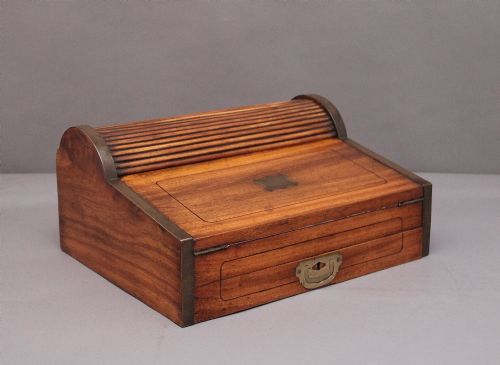
Surface decoration frequently involves black or red lacquer, applied in multiple layers and sometimes accented with gold leaf or hand-painted motifs. Brass handles, corner brackets and campaign flush mounts provide both structural reinforcement and utilitarian hardware.
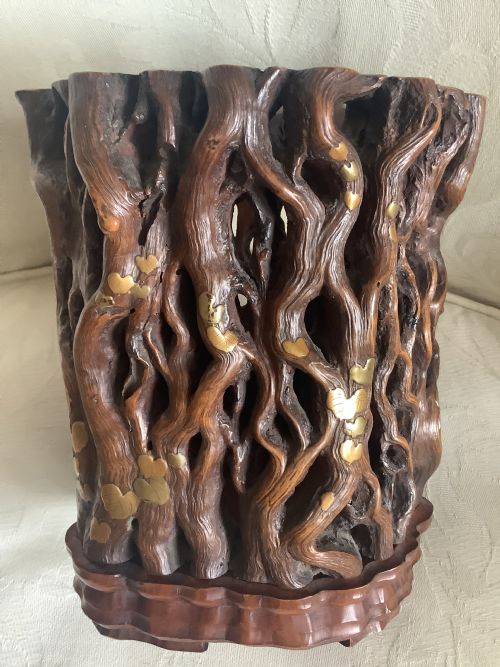
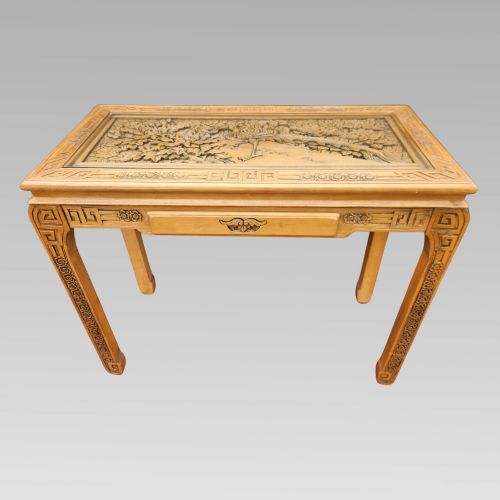
Carved elements, including dragon motifs and floral panels, demonstrate high relief hand-carving directly into the solid hardwood structure. Secondary woods appear in internal drawer linings, while amboyna and ebony veneers add decorative contrast to specific export pieces.
Watch for hidden compartments inside nineteenth-century writing boxes, built to stash secret letters and ink pots away from prying eyes.
Evaluating the pieces
Quality rests primarily on the density and selection of the timber, with solid rosewood, padouk and camphorwood outperforming softer secondary woods. The crispness and depth of the hand-carving distinguish master workshops from standard commercial output.
Hardware integration plays a vital role, as original brass campaign mounts, locks and inset handles indicate a higher grade of manufacture. The stability of the joinery and the preservation of original lacquer finishes determine the structural integrity and visual preservation of the desk.
Edwards and Roberts·Shapland and Petter
The Chinese Writing Desk Glossary
- Campaign desk
- A portable or modular desk designed for military travel, featuring recessed brass handles and folding or removable elements. These pieces were built for durability during transit.
- Lacquer
- A durable resin finish applied in thin layers to wood, often polished to a high gloss and decorated with gold or painted scenes. It protects the timber beneath while offering a smooth writing surface.
- Writing slope
- A portable box with an angled lid that lifts to reveal storage for paper and ink, folding flat to form a desk surface. They were essential items for travellers and writers.
- Kneehole desk
- A desk featuring a central recess for the user's legs, flanked by pedestals of drawers on both sides. This form became standard for formal administrative work.
Chinese Writing Desk: Frequently Asked Questions
How do I identify a genuine piece?
Examine the timber weight, joinery methods and hardware to confirm period authenticity. Traditional mortise and tenon construction alongside hand-cut dovetails in the drawers typically indicate older manufacture.
Check for consistent ageing in the wood and verify that brass campaign mounts or locks show appropriate patination from use.
Where were these desks made?
Many were produced in Chinese treaty ports and export workshops specifically to meet Western demand during the nineteenth century. Others reflect British cabinetmakers applying Chinese Chippendale revival styles domestically.
Regional Chinese workshops also constructed scholarly desks for local use using native timbers like elm and rosewood.
How should I care for hardwood?
Keep the wood away from direct heat sources and sudden temperature shifts to prevent the dense tropical timbers from splitting. Maintain stable indoor humidity levels in the room.
Apply a minimal amount of appropriate furniture wax occasionally to nourish the grain without buildup on lacquered or polished surfaces.
What is camphorwood used for?
Camphorwood is utilised for its natural insect-repellent properties, making it ideal for interior linings and travel chests designed to protect documents and textiles. Its aromatic qualities help safeguard contents from moths and dampness.
On this page, it frequently forms the primary structure of portable writing slopes and campaign chests.