






Vintage Oriental Writing Desk
A vintage oriental writing desk brings lacquer, rosewood, and elm into a room, offering a surface for letters with deep regional character.
Vintage Oriental Writing Desk
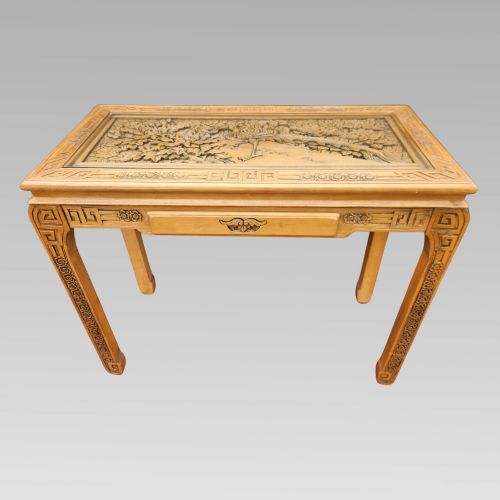
A vintage oriental writing desk encompasses forms from the nineteenth century to the Edwardian period, including bureau bookcases, partner desks, writing boxes, and side tables. Buyers seeking this phrase encounter pieces shaped by Chinese export and regional traditions, constructed in woods like elm, rosewood, camphorwood, and padouk.
The selection ranges from elaborate red lacquered side tables to carved hall consoles and fitted bureaux. These items reflect both traditional Chinese craftsmanship and the styles adapted for Western interiors around nineteen hundred.
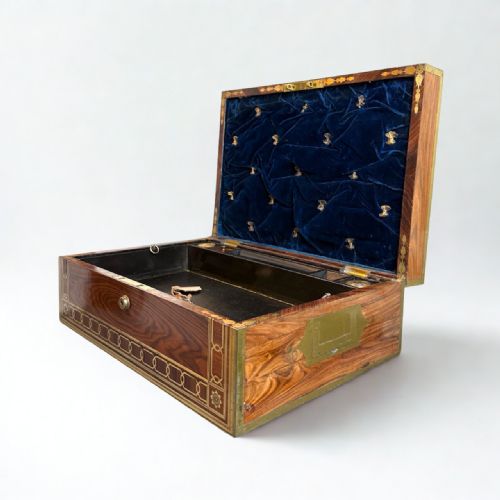
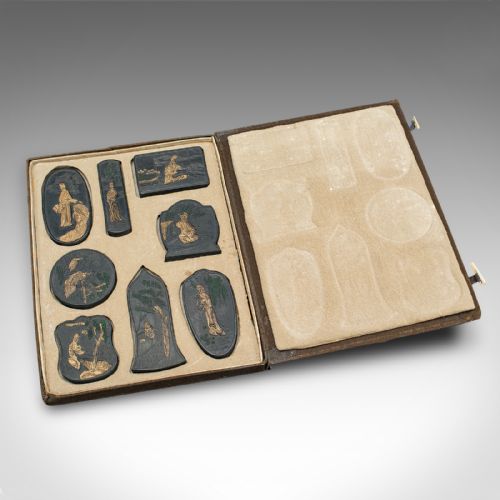
Smaller portable writing boxes and calligraphy ink sticks appear alongside substantial furniture pieces. Each object provides a functional writing surface rooted in nineteenth and early twentieth century workshops.
How they were made
Cabinet makers utilised dense hardwoods such as rosewood, padouk, and elm, often combined with brass hardware for reinforcement and decoration. Lacquer work applied to wood formed durable, glossy surfaces finished with intricate detailing.
Carpenters constructed structural elements using traditional joinery, integrating carved panels and fitted compartments into bureaux and writing boxes. Glass doors and brass mounts appeared on larger nineteenth century and Edwardian hybrid forms.
Cased calligraphic ink blocks preserve the quiet residue of nineteenth century printing and writing rituals.
What varies in quality
Quality rests upon the selection of timber and the precision of the joinery, distinguishing heavy rosewood and padouk frames from simpler pine or elm carcases. The depth and clarity of carved decoration and lacquer finish separate standard regional production from finer workshop output.
The integrity of internal fittings, such as drawers within bureaux and writing boxes, indicates the level of care taken during construction. Surface preservation of the original lacquer and brass mounts dictates the visual strength of each piece.
The Vintage Oriental Writing Desk Glossary
- Chinoiserie
- European interpretation and imitation of Chinese artistic traditions and motifs, popular in furniture decoration. This style frequently appears on Edwardian and Victorian bureaux.
- Camphorwood
- An aromatic timber utilised in the construction of trunks and boxes to protect contents from insects. Its scent remains a key identifier for these pieces.
- Padouk
- A heavy, durable tropical hardwood with a reddish hue used for nineteenth century desks and tables. It provides exceptional structural stability.
- Bureau bookcase
- A writing cabinet featuring a sloping desk flap above drawers, topped with a shelved bookcase section. These large items date primarily to the early twentieth century.
Vintage Oriental Writing Desk: Frequently Asked Questions
What woods were used for these desks?
Cabinet makers utilised elm, rosewood, camphorwood, and padouk, alongside pine and glass components. These materials provided the structural strength needed for heavy desks and fine writing boxes.
Dense hardwoods formed the primary frames, while softer woods served for internal linings and secondary structures.
How do I date a Chinese bureau?
Dating relies on stylistic markers from the nineteenth century, Victorian era, Edwardian period, and nineteen thirty. Construction techniques and hardware changes help narrow the manufacturing period.
Larger bureau bookcases often reflect the crossover between traditional Chinese forms and British domestic furniture styles of nineteen hundred.
Are writing boxes different from desks?
Writing boxes are portable containers designed to hold writing materials and provide a small sloped surface for correspondence. Desks are larger, stationary furniture pieces intended for permanent placement in a room.
Both items served the practical needs of writers during the nineteenth and early twentieth centuries.