
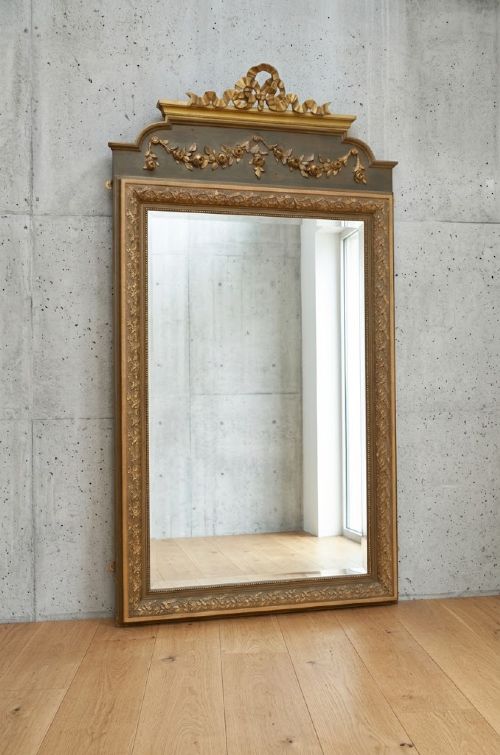
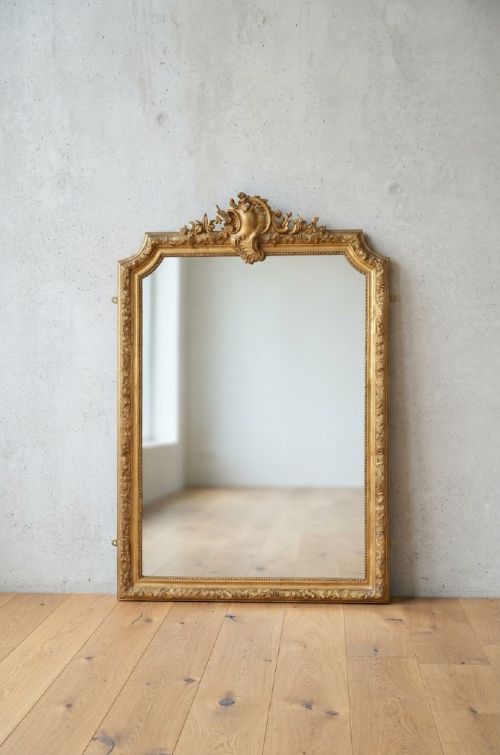
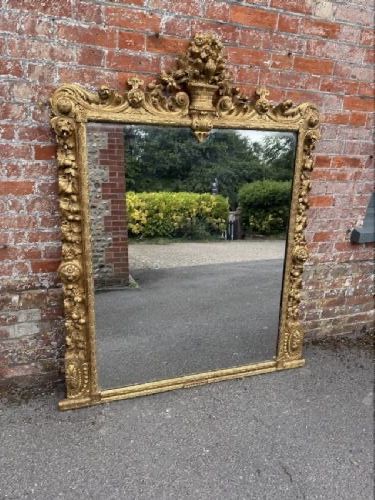
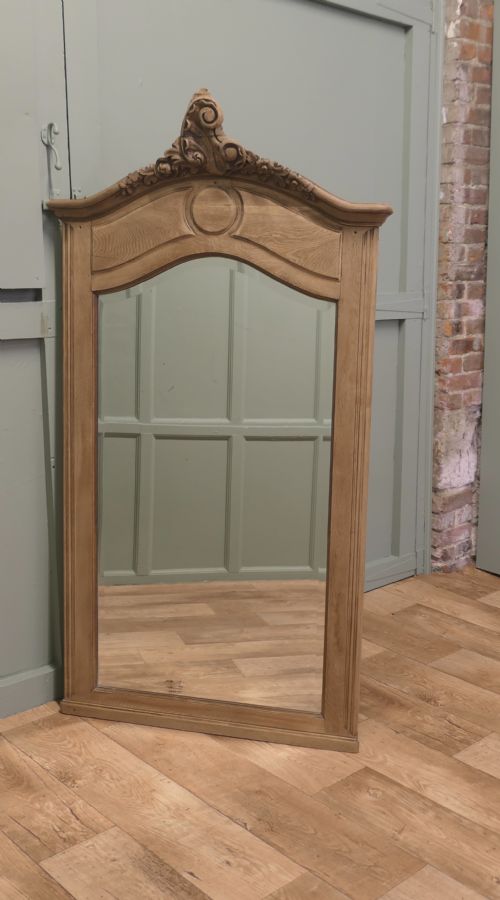
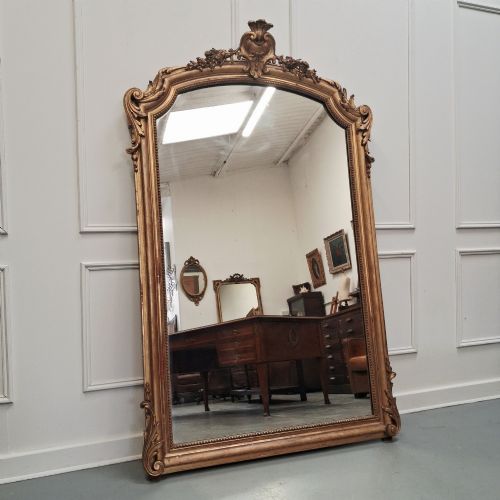
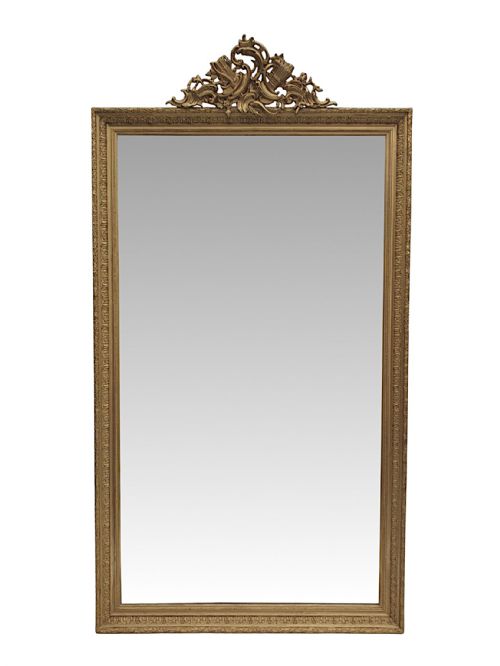
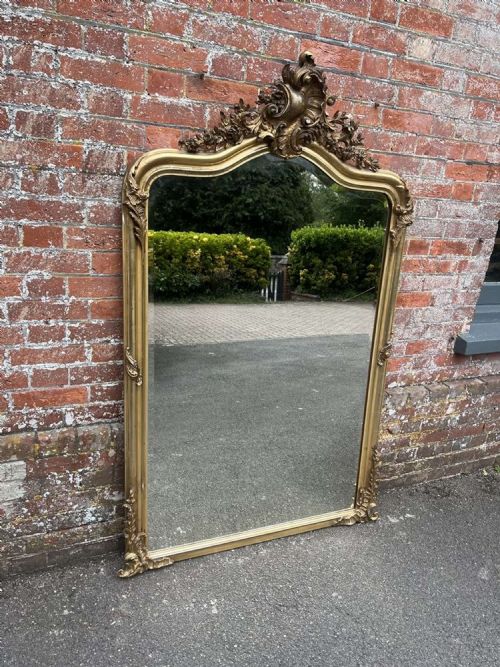
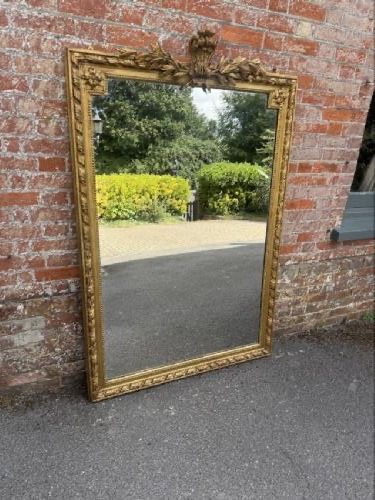
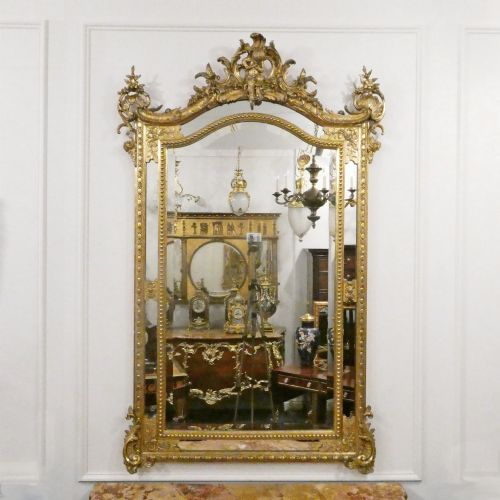
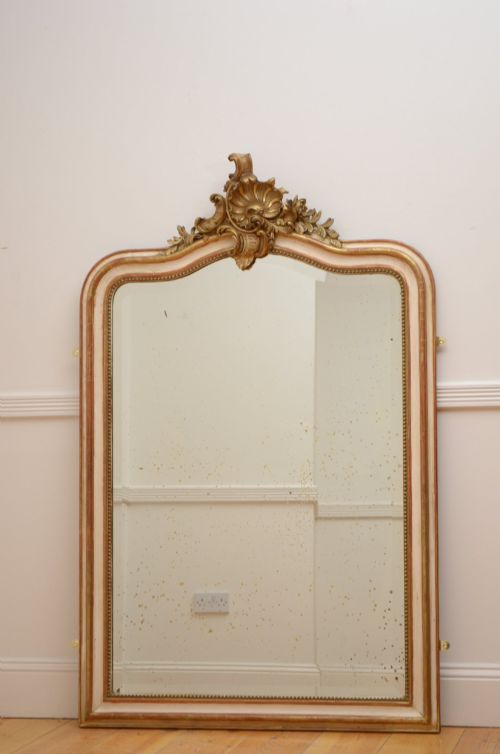
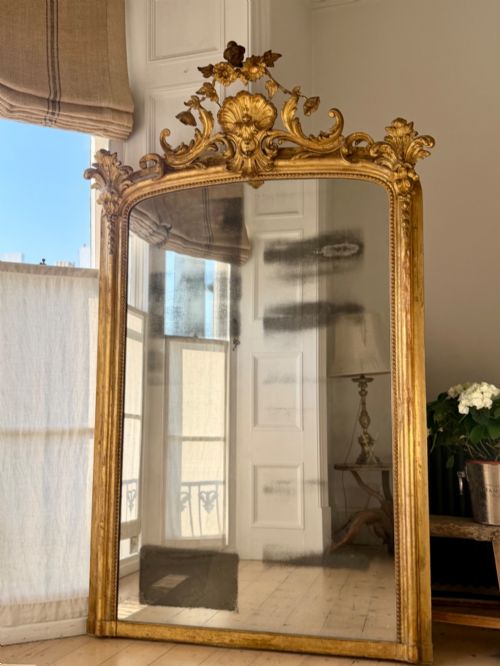
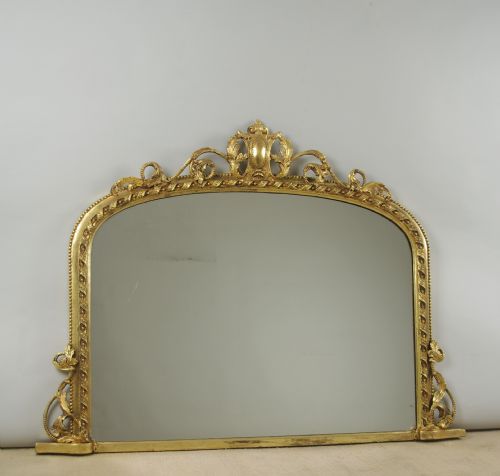
Carved Cresting Overmantel Mirror
A carved cresting overmantel mirror brings architectural weight and reflected light to a chimney breast, offering grand proportions designed for period interiors.
Carved Cresting Overmantel Mirror
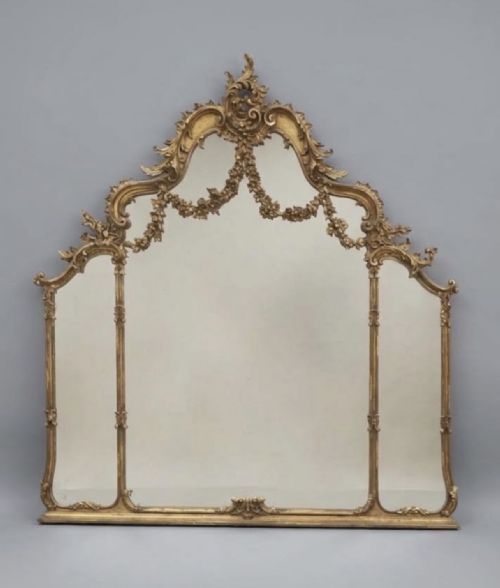
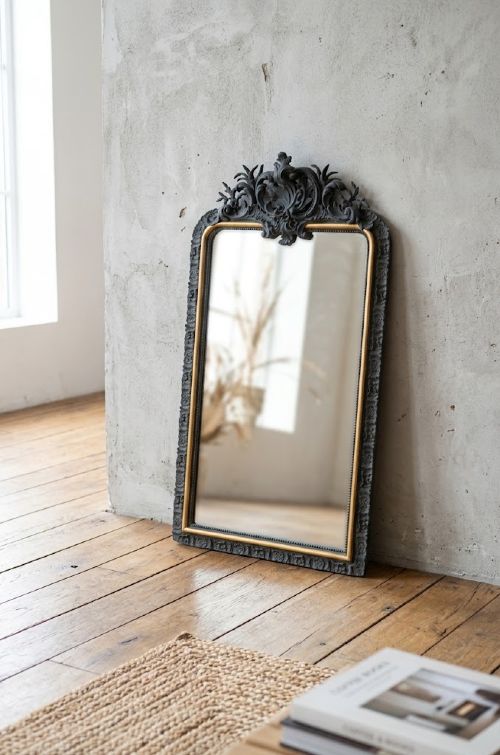
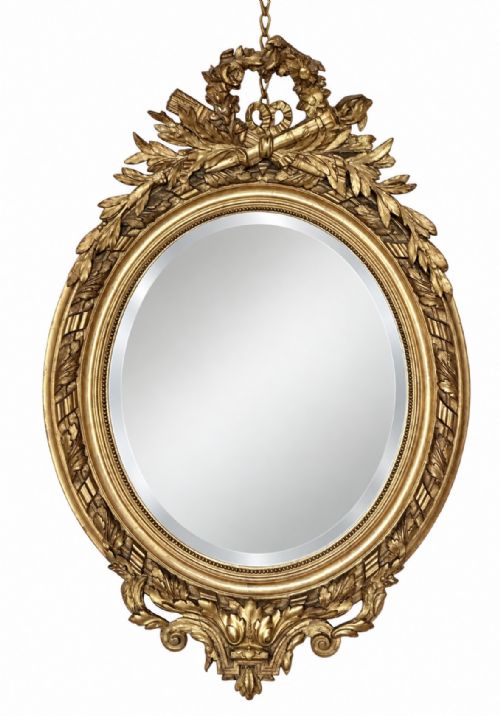
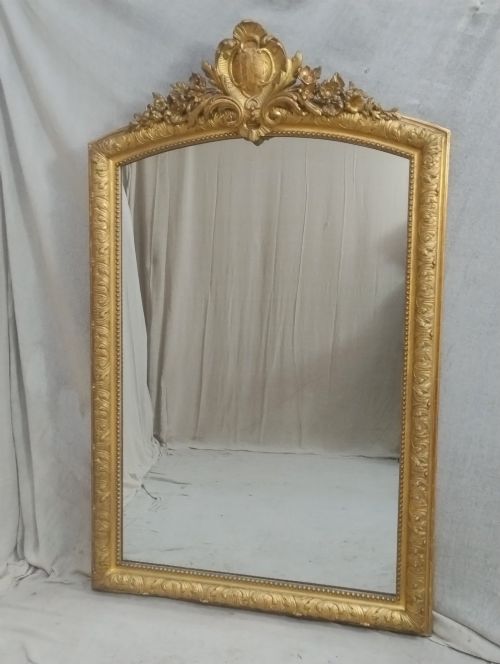
A carved cresting overmantel mirror is designed specifically to sit above a mantelpiece, drawing the eye upwards with an elaborate architectural or sculptural top. These pieces appear predominantly in nineteenth-century interpretations of French and English decorative traditions, including Louis XVI, Rococo Revival, and Victorian styles.
The buyer meets large formats built for principal reception rooms, often spanning significant heights and widths to dominate the hearth. Common variations include arched tops, shaped frames, and triptych configurations incorporating central cartouches or figurative crests.
Origin points span French chateau pieces finished in gold leaf alongside English carved wood and gesso examples. While the majority belong to the nineteenth century, earlier eighteenth-century manifestations and later turn-of-the-century revivals also occur.
Materials and Construction
Makers built the structural carcases using timber substrates such as mahogany, oak, or softer painted woods. Artisans then applied layers of gesso to the carved wooden foundations, building up the complex relief work necessary for ornate crests and frames.
Gilding involved the application of gold leaf or silvered finishes over the prepared gesso surfaces, creating the luminous metallic sheen characteristic of these large mirrors. Glazing relied on mirror glass, occasionally showing period traits such as foxing.
Listings feature periods spanning the eighteenth century, the Victorian era, and the early twentieth century, alongside regional styles including French Chateau, Louis XVI, and Rococo Revival.
Distinctions in Quality
Quality rests upon the depth, crispness, and hand-carved definition of the wooden ornamentation and gesso relief work on the cresting. Superior examples display spirited modelling in the foliage, scrolls, or figurative elements without the softened edges typical of mechanical casting.
The integrity of the original gilding and the preservation of the antique mirror plate further separate standard iterations from exceptional survivors. Cohesion between the architectural proportions of the frame and the scale of the decorative crest determines the visual harmony of the piece.
The Carved Cresting Overmantel Mirror Glossary
- Overmantel mirror
- A large mirror specifically proportioned to hang on the wall directly above a fireplace mantel. They often incorporate horizontal or vertical formats designed to echo the width of the hearth below.
- Gesso
- A plaster-based mixture applied to wood frames and carved to form a smooth, responsive base for gilding. It allows for intricate relief ornamentation.
- Giltwood
- Timber that has been coated in gold leaf or gold paint. It provides a bright, reflective surface favoured in formal period interiors.
- Foxing
- Age-related spots and discolouration within the silvering of antique mirror glass. This chemical oxidation appears as dark speckles across the reflective surface.
- Pier mirror
- A tall mirror designed to hang on the narrow wall space between windows. They share many decorative characteristics with overmantel mirrors.
- Cartouche
- An ornamental tablet or oval frame design resembling a rolled-up piece of parchment. It frequently occupies the central position of a mirror crest.
Carved Cresting Overmantel Mirror: Frequently Asked Questions
How do I hang a heavy overmantel mirror safely?
These mirrors carry substantial weight due to their timber frames and thick glass plates. Secure attachment requires fixing directly into wall studs or using heavy-duty masonry fixings matched to the wall type.
Professional installation is recommended to distribute the load evenly across the structure of the wall, ensuring the mirror rests securely above the mantelpiece.
Are these mirrors meant to sit on the mantel or hang above it?
Historical placement depended on the scale of the piece and the design of the fireplace. Many large overmantel mirrors were designed as leaner mirrors, resting directly on the mantel shelf while anchored to the wall for stability.
Others are built with hanging loops intended to be wall-mounted at a specific height above the hearth. Both methods were common in nineteenth-century interiors.
How do I clean antique mirror glass without damage?
Preserving original mirror plates and silvering requires gentle cleaning methods using a soft, dry cloth to remove dust. Avoid harsh chemical sprays or abrasive cloths that can penetrate the edges of the glass or damage the surrounding gesso and gilding.
If moisture is necessary, apply a mild solution sparingly to the cloth rather than directly onto the glass surface.
What is the difference between an overmantel and a wall mirror?
Overmantel mirrors are specifically proportioned to coordinate with the width of a fireplace surround, often featuring wide horizontal formats or tall arched crests suited to chimney breasts. Standard wall mirrors were designed for general placement throughout a room.
While construction materials overlap, overmantel mirrors tend to be heavier and more architecturally dominant.