

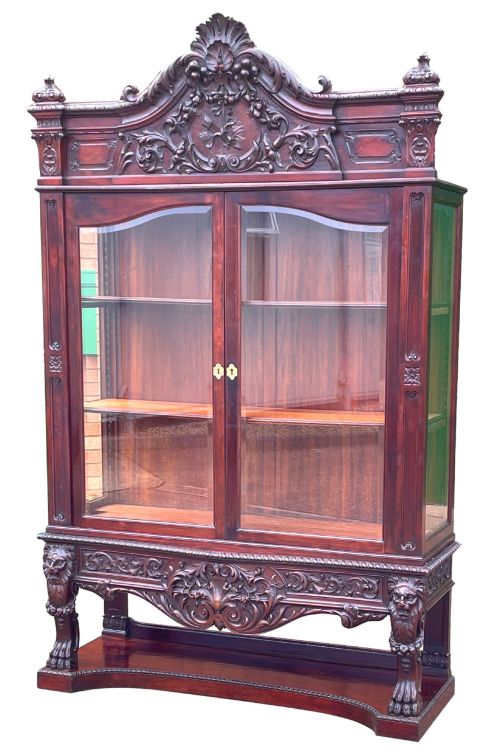

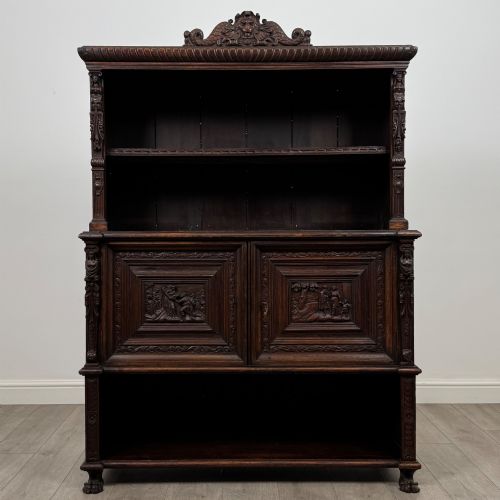
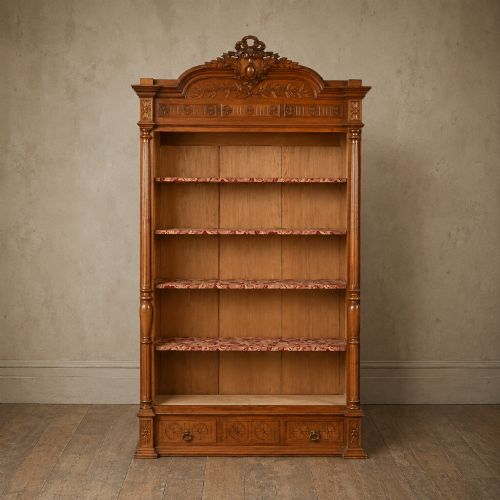
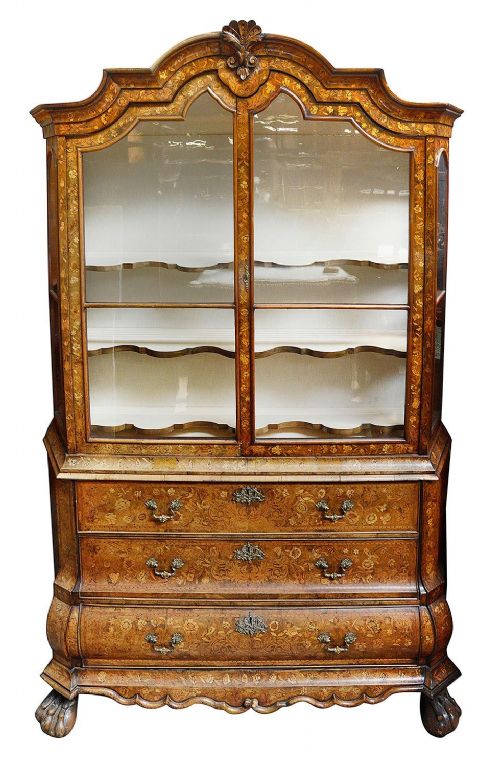


Carved Crest Bookcase
These carved crest bookcase pieces bring substantial timber and distinct ornamentation into a room, offering both display space and architectural presence.
Carved Crest Bookcase
A carved crest bookcase combines practical shelving or display space with distinct architectural woodwork at the top. Buyers seeking this form encounter items spanning the eighteenth, nineteenth, and early twentieth centuries, reflecting diverse regional tastes.
The selections on this page range from open library bookcases and tall mahogany storage units to glass-fronted vitrines and display cabinets. Materials include oak, walnut, mahogany, rosewood, amboyna, and solid wood, frequently decorated with intricate carving.
Origins stretch from continental Europe and Britain to Dutch, French chateau, and Chinese workshops. Styles traverse Victorian, Victorian Renaissance Revival, Aesthetic Movement, Queen Anne, and Dutch Baroque traditions.
How they were made
Construction relies on solid timbers such as oak, walnut, and mahogany, shaped by cabinetmakers using traditional joinery methods. Glass panels are incorporated into glazed doors for display cabinets and vitrines, secured within wooden frames.
Decoration is achieved through manual carving on crests and panels, complemented in certain pieces by marquetry inlay or specialised wood selections like amboyna and rosewood. Brass hardware and fabric linings appear across specific cabinet interiors.
Carved Crest Bookcase Retail Price Guide 2026
Typical asking prices for carved crest bookcase among the pieces listed under this phrase on Sellingantiques today, from the lower quarter to the upper quarter. They describe what is for sale here now, not the wider market.
Some nineteenth-century cabinets include secret compartments hidden behind intricately carved crests for storing private correspondence.
What varies in quality
Quality rests upon the crispness and depth of the carved crests, where hand-chiselled detail distinguishes superior examples from simpler work. The choice of timber grain, such as figured walnut or rich mahogany, further elevates a piece.
Construction integrity determines longevity, seen in how doors hang, how drawers run, and how securely glazed panels are seated. The sophistication of the stylistic execution, whether Dutch Baroque, Aesthetic Movement, or French chateau, dictates the overall character.
John Moyr Smith
The Carved Crest Bookcase Glossary
- Vitrine
- A glass-fronted cabinet or display case designed to showcase porcelain, books, or objects. These pieces often feature glazed doors and delicate woodwork.
- Etagere
- A piece of furniture consisting of a set of open shelves for small objects and displays. They typically appear in exotic woods like amboyna during the nineteenth century.
- Marquetry
- Decorative inlay work using strips of wood, shell, or ivory fitted into a veneer to form patterns. Dutch examples frequently employ this technique on cabinet surfaces.
- Aesthetic Movement
- A late nineteenth-century design style focusing on artistic visual qualities over moral or narrative purpose. Pieces from this movement often bear specific maker attribution.
Carved Crest Bookcase: Frequently Asked Questions
What is a carved crest bookcase?
A carved crest bookcase is a storage or display unit featuring decorative woodwork carved into the top crown or pediment. These items combine practical shelving with sculptural detail.
They appear across various periods including the eighteenth and nineteenth centuries, utilising woods like oak, walnut, and mahogany.
How were these cabinets used historically?
These pieces served primarily for the storage and display of valued volumes, porcelain collections, and curated curiosities. Glazed doors protected delicate items from dust while maintaining visibility.
Larger open library versions provided direct access to working collections of books in grand rooms.
How do I style a cabinet at home?
Position these substantial pieces against a solid wall in a study, library, or living room to anchor the space. Use the internal shelving to balance books with ceramics or glassware.
Ensure adequate clearance for doors that swing open and consider room lighting to highlight glazed display sections.
How do I identify different periods?
Dating relies on observing structural characteristics, timber choices, and stylistic vocabulary such as Queen Anne curves or Victorian revival motifs. Eighteenth-century pieces often feature intricate marquetry, whereas later Victorian items display heavier moulded timber.
Cabinet construction methods, from dovetailing to hardware types, provide further clues to age.