
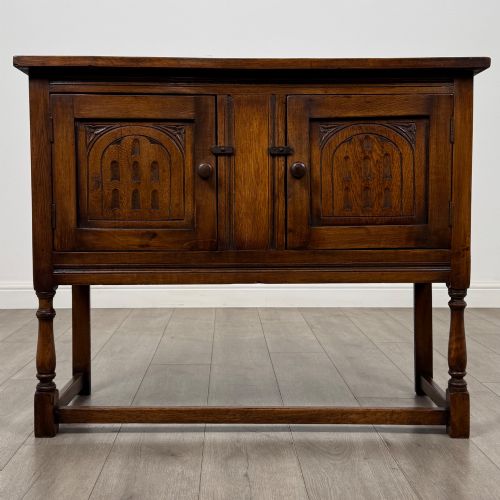
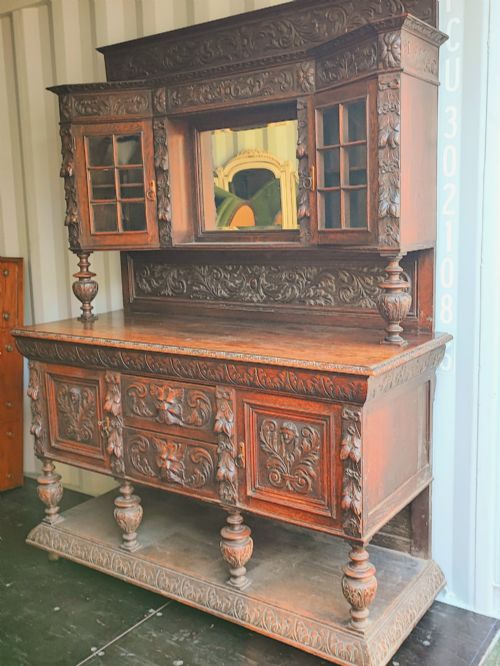
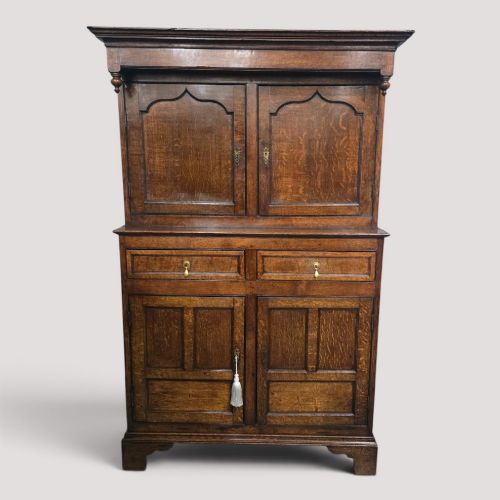
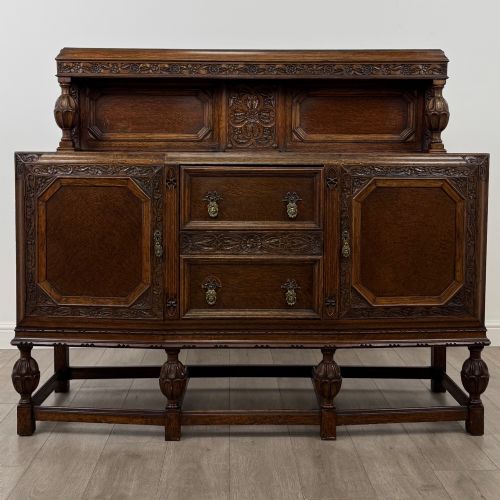
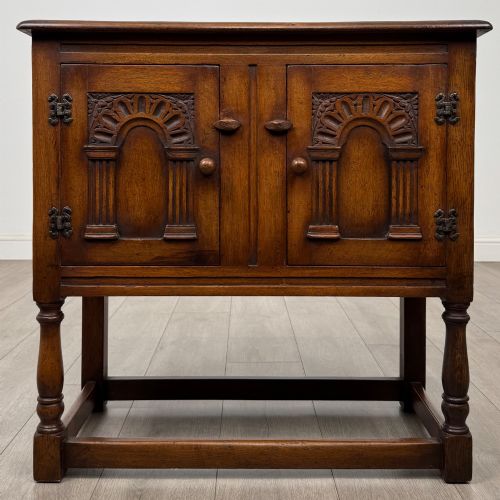

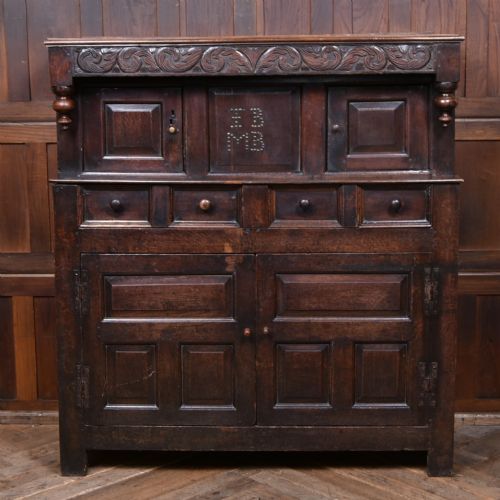

Carved Court Cupboard
A carved court cupboard is a sturdy timber storage piece designed to display plate and hold dry goods.
Carved Court Cupboard
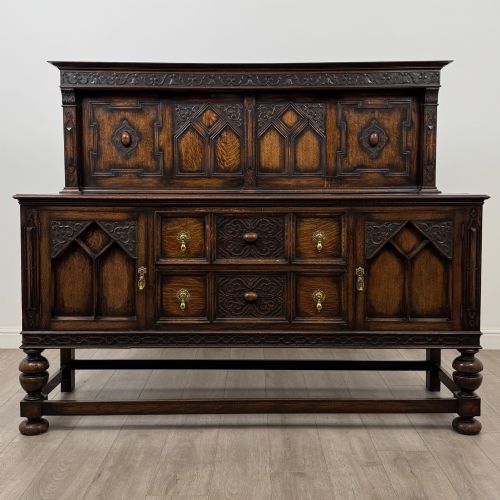
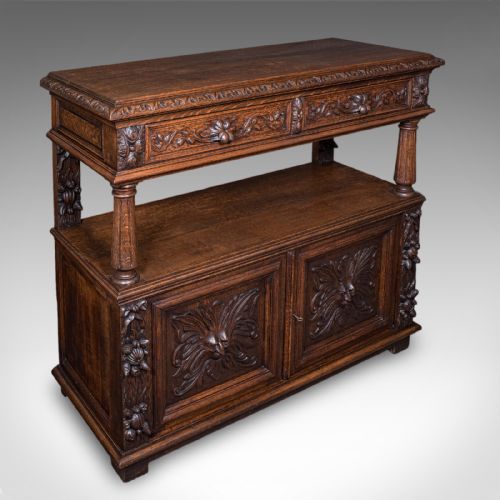
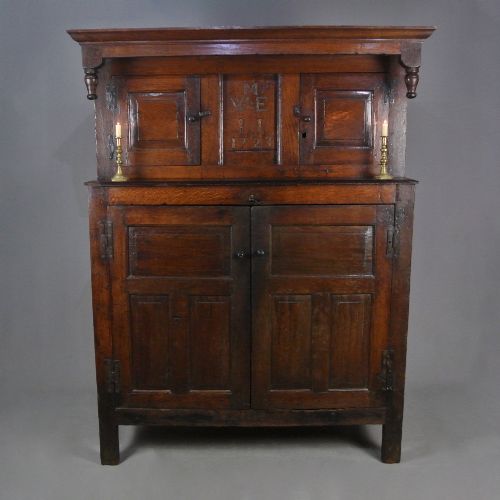
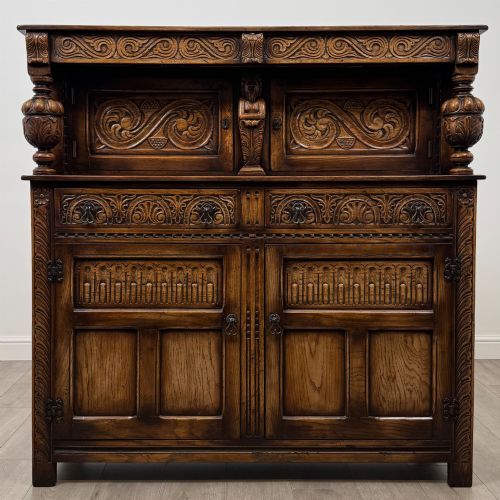
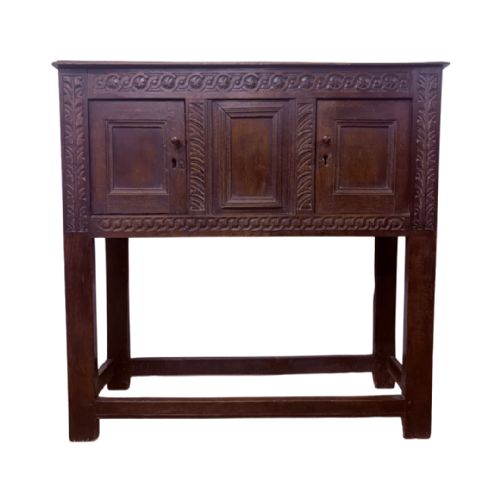
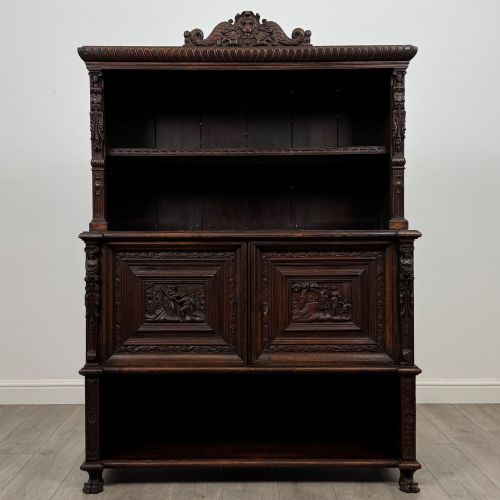
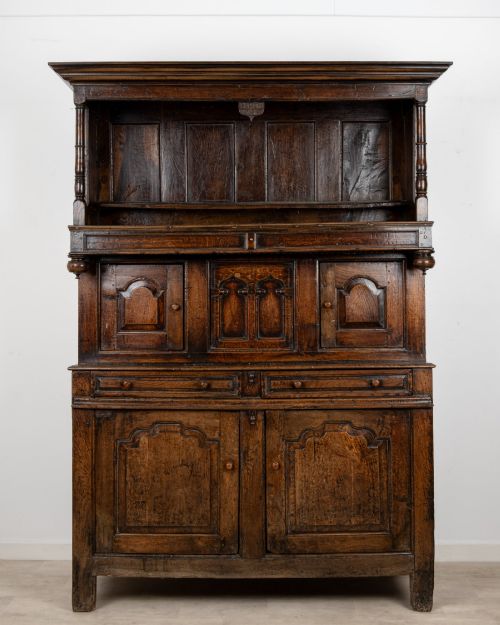
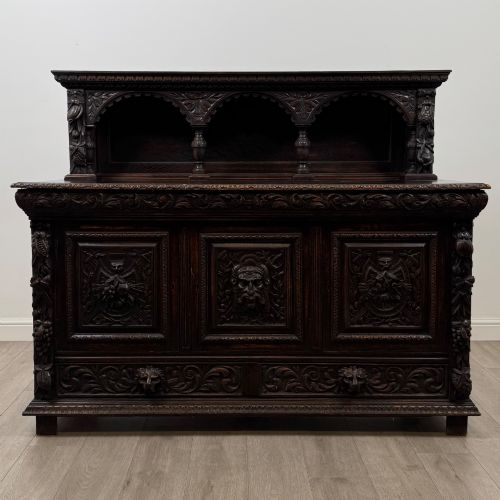
A carved court cupboard represents a centuries-old tradition of domestic joinery, spanning origins from seventeenth-century English farmhouses to later revival iterations. These substantial multi-tiered storage items surface across periods including the seventeenth century, eighteenth century, Georgian era, and Victorian epoch. Buyers most frequently encounter sturdy oak examples featuring recessed upper stages supported by turned columns and enclosed lower compartments.
Regional variations appear in domestic forms such as the Welsh tridarn and deuddarn, alongside continental Flemish and French alternatives. Forms range from compact cottage cupboards to imposing multifunctional sideboards and press cupboards designed for linens and provisions. Surviving pieces bridge formal estate joinery and vernacular country craftsmanship.
The layout typically combines an open or enclosed upper tier with cupboards below, offering display space and concealed storage simultaneously. Construction methods rely heavily on joined timber framing, panelled doors, and heavy cornices rather than modern hardware.
What varies in quality
The depth and crispness of hand-carving distinguish superior examples from plain or later revival pieces, with Ipswich-style motifs and deep relief work showing greater artisan skill. Originality of surface condition, including untouched patination and early timber boards, dictates historical integrity.
Proportion and structural balance also separate utilitarian regional items from ambitious architectural commissions. The retention of original pegged joints, period brass or iron hardware, and minimal structural timber replacement preserves the inherent value of the piece.
Carved Court Cupboard Retail Price Guide 2026
Typical asking prices for carved court cupboard among the pieces listed under this phrase on Sellingantiques today, from the lower quarter to the upper quarter. They describe what is for sale here now, not the wider market.
Listings feature oak, walnut, and fruitwood spanning the seventeenth century through to Edwardian revival interpretations.
The Carved Court Cupboard Glossary
- Court cupboard
- A traditional standing cupboard featuring a recessed upper section supported by pillars above a lower storage base. These items were traditionally used to display ceremonial plate and store food.
- Tridarn
- A three-tiered Welsh storage cabinet featuring an open display stage beneath enclosed cupboards. This regional form provides exceptional vertical storage capacity.
- Deuddarn
- A two-part Welsh cupboard utilising enclosed upper and lower compartments with panelled doors. These pieces reflect vernacular domestic design from the eighteenth century.
- Joined oak
- Furniture construction utilising interlocking mortise and tenon joints secured by wooden dowels rather than nails. This technique provides immense structural longevity.
- Frieze
- The horizontal decorative band situated beneath the cornice of a cupboard, frequently carved with dates or geometric patterns. It anchors the visual proportion of the upper stage.
- Linenfold
- A style of wood carving depicting overlapping folds of fabric, commonly found on sixteenth and seventeenth-century panels. This linen-like texture added subtle relief to flat doors.
Carved Court Cupboard: Frequently Asked Questions
What is a court cupboard?
A court cupboard is an early form of tiered storage furniture designed for displaying plate and housing household provisions.
These pieces typically feature a recessed upper stage supported by columns above a larger enclosed cupboard base.
Where were court cupboards used?
They originated primarily in domestic halls, dining parlours, and manor houses across England and Wales.
Over the centuries, they transitioned from utilitarian estate furniture to decorative antique showpieces in residential interiors.
How do I care for antique oak?
Antique oak benefits from stable room temperatures and protection from direct sunlight to prevent timber shrinkage.
Applying traditional beeswax periodically helps maintain the natural sheen and rich patina of the dry wood.
How do I date a court cupboard?
Dating relies on examining construction methods, tool marks, joinery styles, and carved dates or initials on the frieze.
Early seventeenth-century examples display pegged mortise and tenon joinery, whilst later nineteenth-century revival pieces utilise machine-sawn components.