


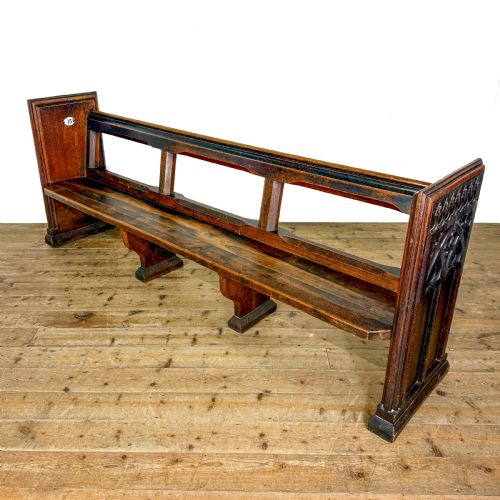


Carved Church Pew
These heavy wooden seats bring centuries of ecclesiastical history straight into a hallway, and a carved church pew makes an imposing statement in any room.
Carved Church Pew
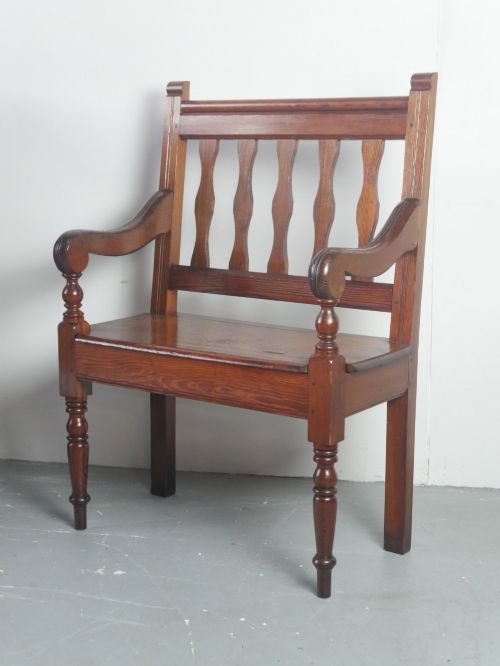
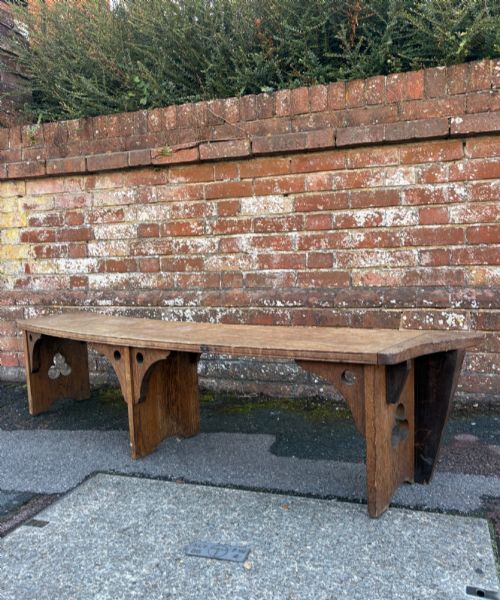
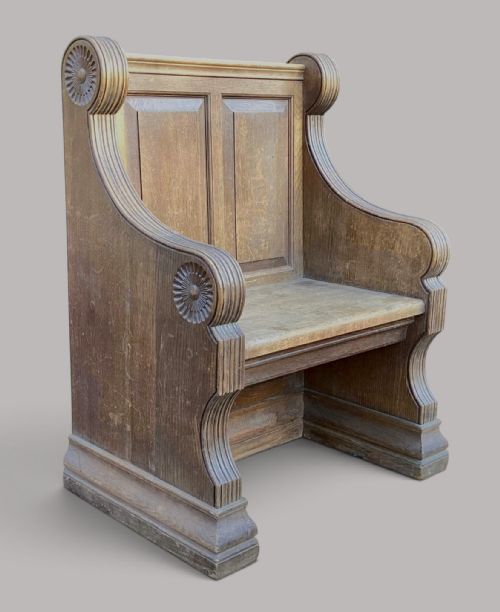
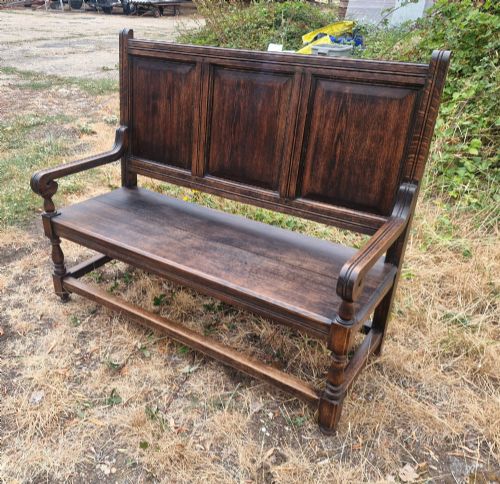
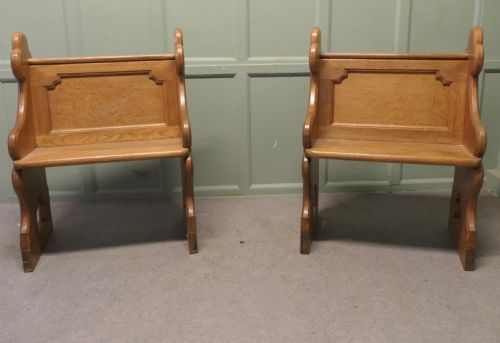
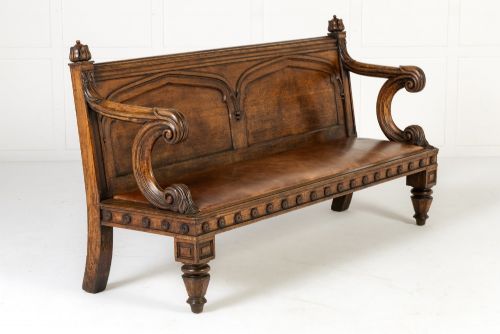
When you search for a carved church pew, you are looking at substantial seating salvaged from ecclesiastical settings, ranging from full-length benches to individual panels and bench ends. The most common examples you will meet on this page are nineteenth-century oak and pine pieces featuring Gothic Revival ornamentation, architectural forms, and regional vernacular details.
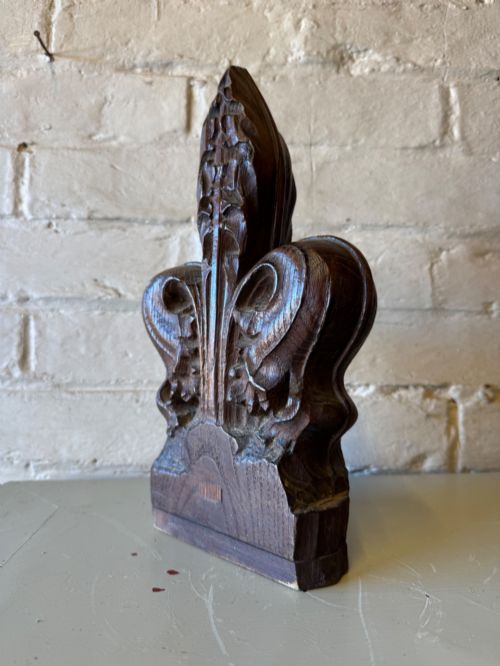
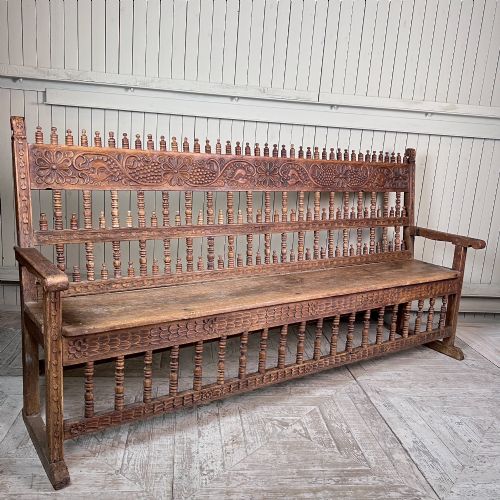
Beyond complete benches, the category includes settles, hall seats, and decorative architectural fragments such as poppy head finials and carved panels depicting saints, lions, or angels. These items reflect various historical revivals, spanning Jacobean and Spanish Colonial influences alongside standard Victorian Gothic styles.
Originating from British, European, and colonial churches, these utilitarian furnishings were built to endure centuries of congregational use. Today, buyers utilise them as practical seating in large hallways, kitchens, and libraries where their robust construction and carved details command attention.
Factors of quality
The distinction between ordinary and exceptional pieces rests upon the ambition and execution of the woodwork. Crisp, deeply undercut relief carvings on poppy heads, bench ends, and figural panels demonstrate a superior standard of craftsmanship compared to shallow or mechanically produced ornamentation.
Proportion and architectural integrity also define the better examples in this category. Pieces retaining their original length, untouched timber surfaces, and structural components without excessive modern alteration command greater interest among collectors of ecclesiastical salvage.
Carved Church Pew Retail Price Guide 2026
Typical asking prices for carved church pew among the pieces listed under this phrase on Sellingantiques today, from the lower quarter to the upper quarter. They describe what is for sale here now, not the wider market.
Listings in this category span the eighteenth, nineteenth, and early twentieth centuries, featuring oak, pine, pitch pine, walnut, and painted finishes.
The Carved Church Pew Glossary
- Poppy head
- An ornamental finial carved on the top of a bench end, typically featuring botanical, human, or mythical motifs. This architectural detail is common in Gothic church seating.
- Settle
- A wooden bench with a high back, solid arms, and often a storage box beneath the seat. It was designed to keep draughts away from the occupant in large rooms.
- Gothic Revival
- An architectural and decorative style popular during the nineteenth century that imitates medieval Gothic forms. It is characterised by pointed arches, trefoils, and elaborate tracery.
- Architectural salvage
- Building elements, fittings, and furniture rescued from demolition or refurbishment. These pieces retain their original function or serve decorative purposes in new settings.
- Tracery
- Openwork stone or woodwork patterns found in Gothic windows and panels. In church pews, it appears as intersecting ribwork or geometric designs carved into the timber.
Carved Church Pew: Frequently Asked Questions
How do I clean an antique wooden pew?
Dust the carved surfaces regularly with a soft, dry cloth to prevent the accumulation of dirt in the recesses of the woodwork. Avoid harsh chemical cleaners that can strip the historic finish.
Apply a traditional beeswax polish occasionally to nourish the dry timber and maintain a natural sheen. Buff the wood gently after application to protect the patina without creating an artificial gloss.
Are these pews comfortable for daily sitting?
Most historic church pews feature upright wooden backs and solid seats designed for formal congregation rather than lounging. Their ergonomics reflect nineteenth-century standards of utility.
Many owners add loose cushions or custom squab pads to make them more comfortable for use in dining areas or hallways. This provides practical seating while preserving the visible wooden structure.
How can I tell a Victorian pew from an earlier one?
Nineteenth-century examples often display machine-assisted elements, standardised Gothic Revival motifs, and pitch pine alongside traditional oak. They frequently date from the widespread church restoration movement of that era.
Earlier eighteenth-century pieces usually exhibit hand-Hewn tool marks, pegged joinery, and distinct regional vernacular styles such as Welsh high-back settles. The timber grain and wear patterns also offer clues to their age.
Where should I place a church bench at home?
These long seats fit naturally in wide hallways, boot rooms, or against large living room walls where their linear form can anchor a space. Their shallow depth makes them suitable for narrow circulation areas.
Ensure the floor is level so the heavy timber frame does not twist or strain its joints over time. Placing them away from direct heat sources prevents the old wood from drying out and splitting.