

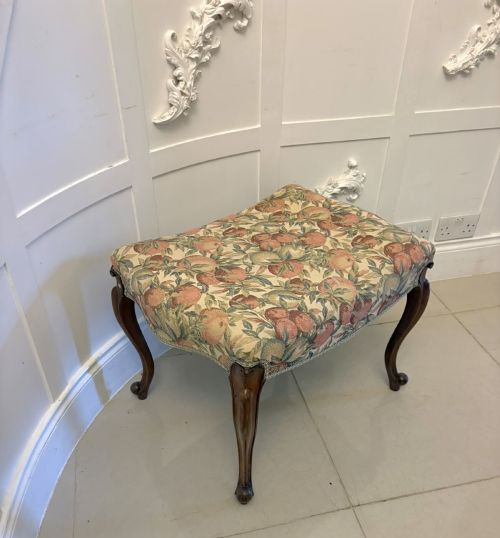
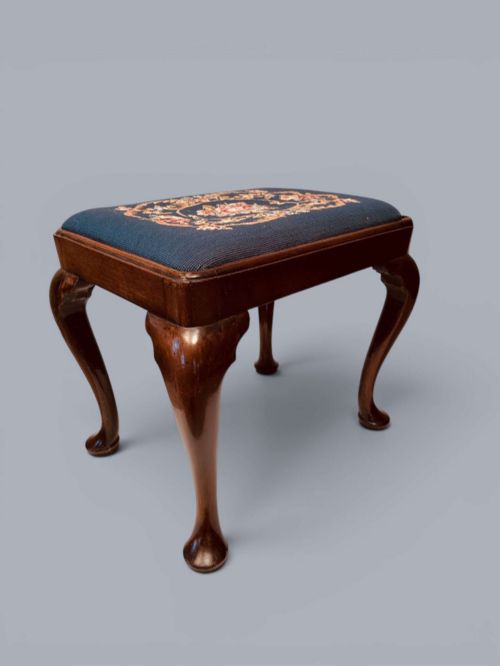
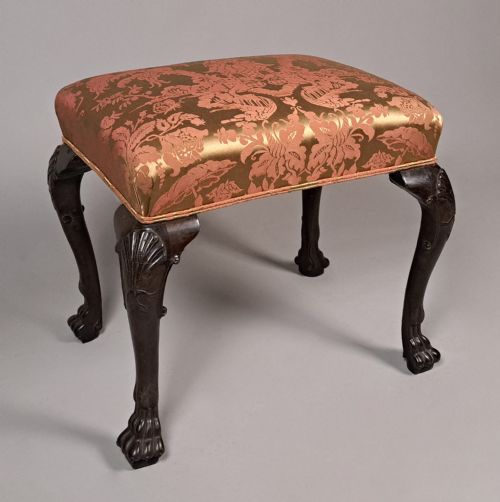
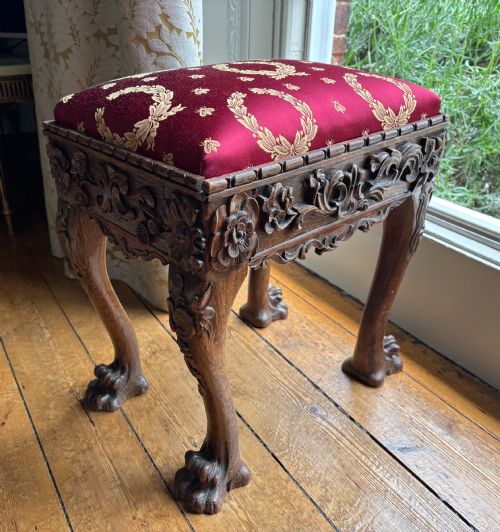
Carved Cabriole Stool
A carved cabriole stool combines curved supports with substantial upholstery, offering practical seating that dates primarily from the nineteenth and early twentieth centuries.
Carved Cabriole Stool
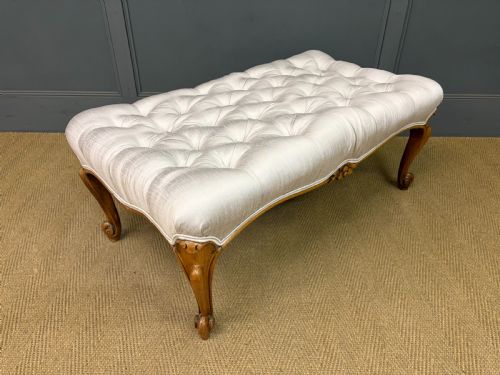
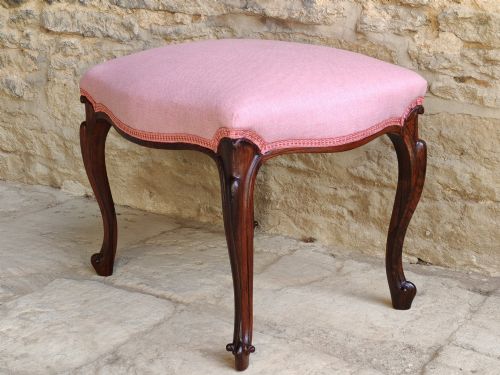
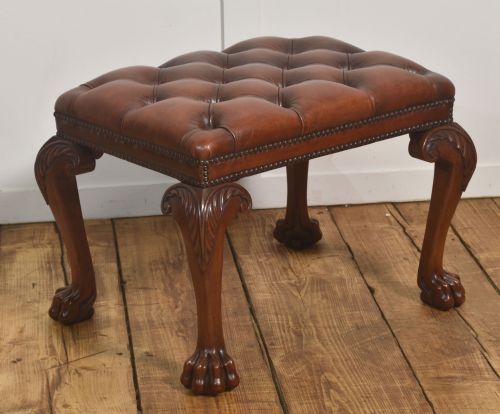
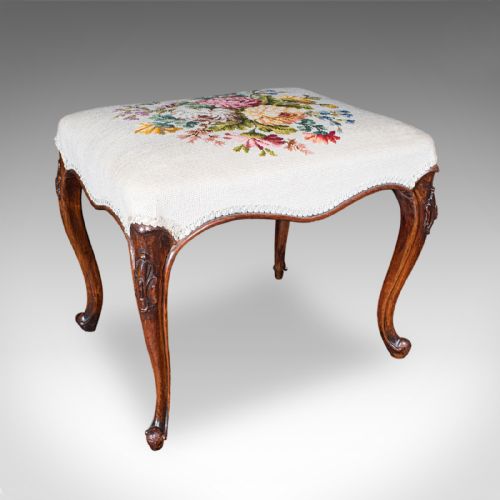
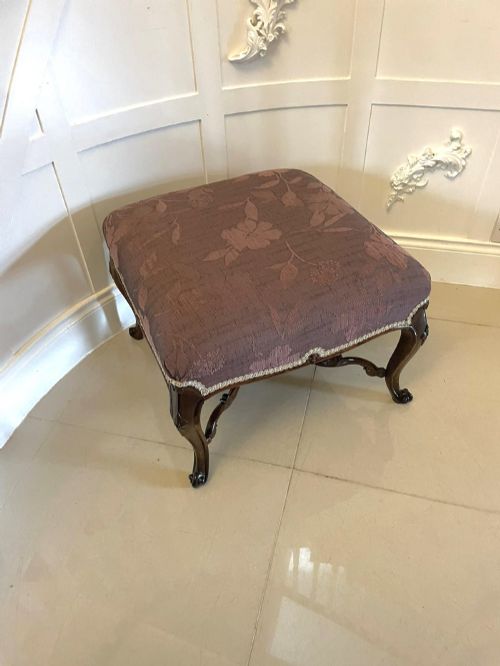
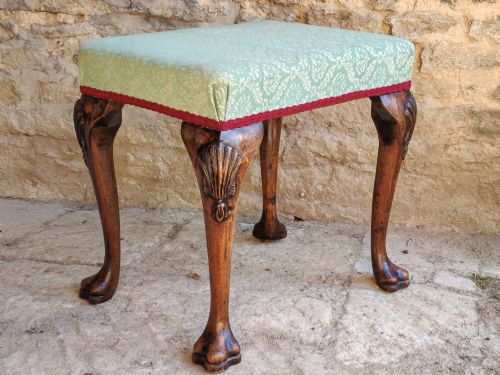
A carved cabriole stool is a low seat supported by distinctive double-curved legs that typically sweep outward at the knee and inward at the ankle. These pieces appear frequently in Victorian, Edwardian, and revival iterations, functioning variously as dressing table seats, piano stools, or fireside footstools. Walnut and mahogany predominate among the timber frameworks, paired with period textiles ranging from needlepoint to leather.
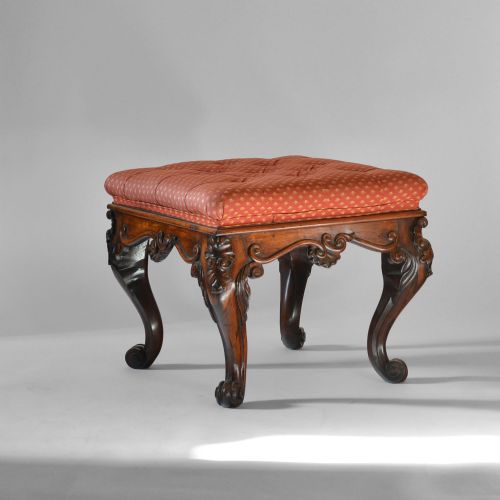
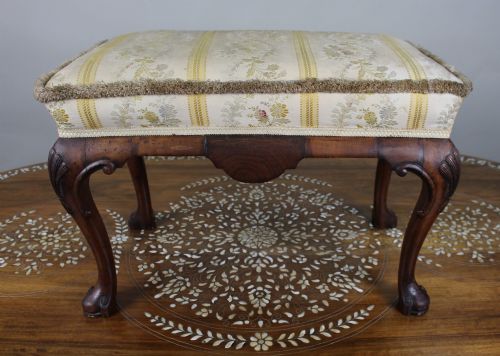
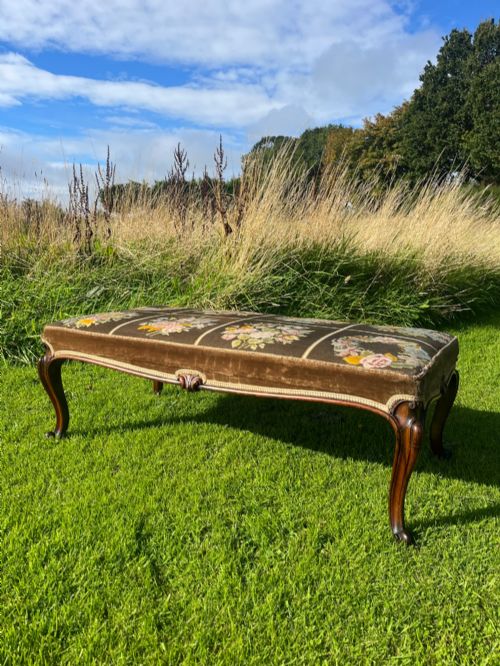
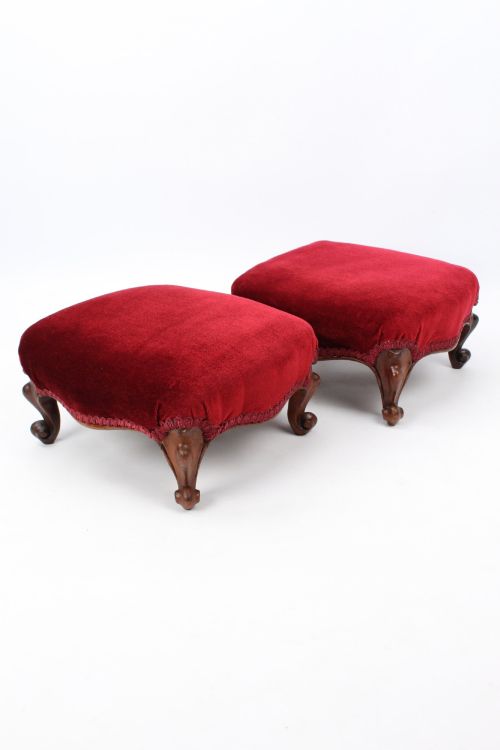
Buyers encountering this phrase will find forms stretching from compact footstools to large rectangular dressing seats. The nineteenth century yields numerous walnut and rosewood examples featuring elaborate foliage carvings upon the knees, while later revival pieces often emulate Queen Anne or Chippendale aesthetics. Occasional Continental and Anglo-Indian variations introduce alternative woods and decorative finishes to the selection.
How they were made
Cabinetmakers shaped the characteristic cabriole leg from solid hardwoods like walnut, mahogany, and rosewood, often integrating hand-carved shell, scroll, or foliage motifs directly into the timber. Frame construction relied on traditional joinery techniques to support the downward pressure exerted on upholstered seating surfaces.
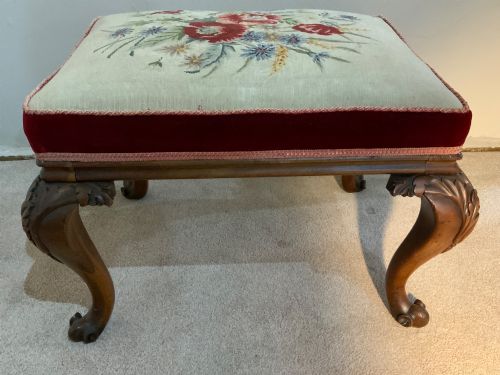
Upholstery methods involved securing textiles such as velvet, needlepoint, tapestry, or leather over stuffing supported by webbing or squab units. Brass tacks or decorative gimp often finished the perimeters where fabric met the wooden rail.
Carved Cabriole Stool Retail Price Guide 2026
Typical asking prices for carved cabriole stool among the pieces listed under this phrase on Sellingantiques today, from the lower quarter to the upper quarter. They describe what is for sale here now, not the wider market.
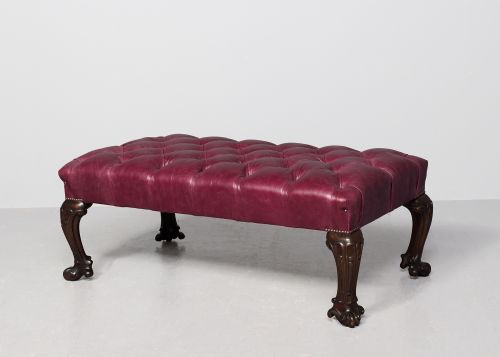
The archive indicates that cabriole-legged seating frequently incorporates needlepoint, tapestry, and buttoned red hide among its historic upholstery options.
What varies in quality
The definition of the wood carving marks the primary distinction between standard production and exceptional work. Crisp, deeply undercut details on the knees and feet indicate superior artisan involvement compared to shallow, machine-rounded contours.
Proportion and timber selection further separate examples. Dense, well-figured walnut or mahogany with cohesive graining across the frame demonstrates higher initial craftsmanship than mixed secondary timbers.
The Carved Cabriole Stool Glossary
- Cabriole leg
- A furniture support shaped with a convex curve outward at the top and a concave curve inward toward the foot, imitating an animal's natural leg. This form became a defining characteristic of eighteenth-century and subsequent revival seating.
- Claw and ball foot
- A terminal carved to resemble an animal's talons gripping a spherical ball. This detail frequently appears at the base of cabriole legs on high-status seating.
- Needlepoint
- Hand-stitched canvas embroidery utilising wool or silk yarns to create dense pictorial or geometric patterns. It serves as a traditional upholstery textile on period stools.
- Gimp
- A narrow woven fabric trimming used to conceal tacks and finish the edges where upholstery meets the wooden frame. It provides a neat visual border on padded seats.
- Frieze
- The decorative horizontal band situated immediately beneath the seat cushion or top rail of the frame. This area occasionally displays carved ornamentation or moulding.
Carved Cabriole Stool: Frequently Asked Questions
How were these stools used?
These pieces served multiple domestic functions, acting as dressing table seats, piano benches, and fireside footstools. Their compact dimensions allowed easy movement around reception rooms.
Larger versions accommodated dual seating or served as extended ottomans within period interiors.
How do I date a stool?
Dating relies upon timber choice, joinery construction, and stylistic revival markers. Nineteenth-century examples often employ solid walnut or rosewood with dense, hand-carved ornamentation.
Later twentieth-century reproductions frequently display standardised machine milling and different secondary woods beneath the finish.
Are the upholstery coverings original?
Most surviving stools have undergone reupholstery during their lifespan to maintain usability. Original needlepoint or leather coverings appear on select pieces but remain uncommon.
Many listings explicitly note whether the textile is contemporary to the frame or a later replacement.