

Carved Cabriole Leg Sofa
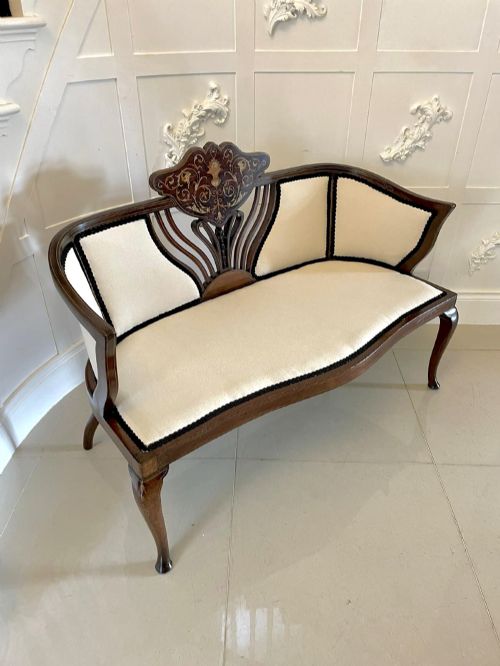
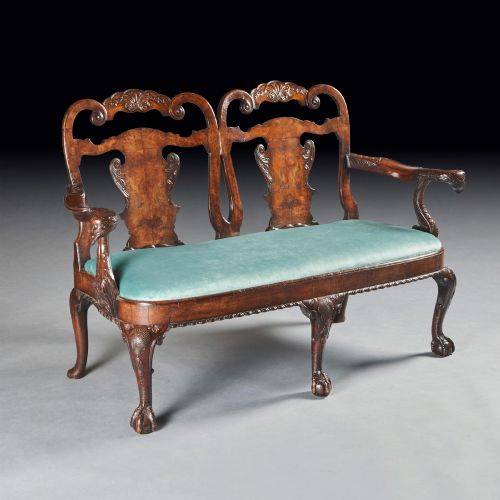
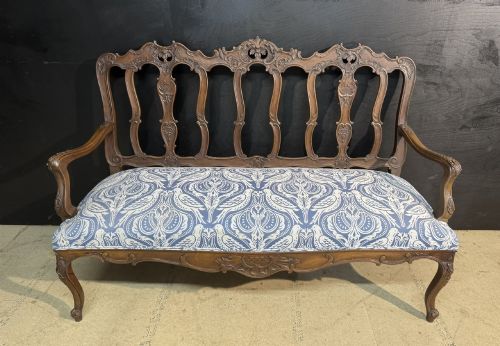
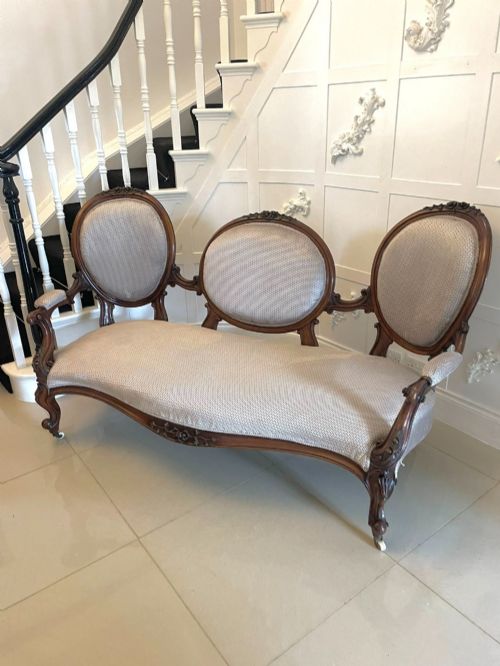
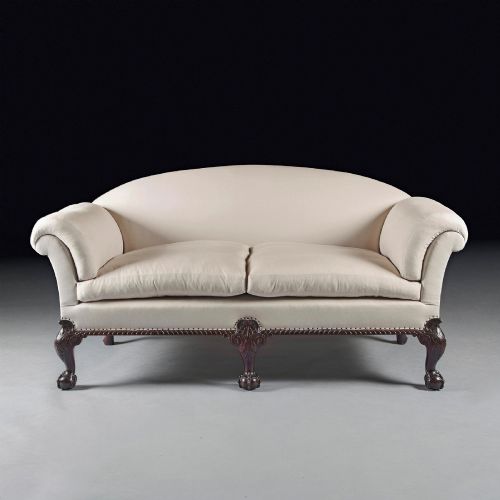
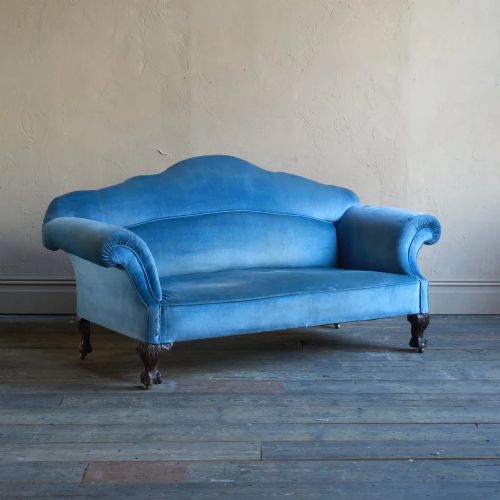
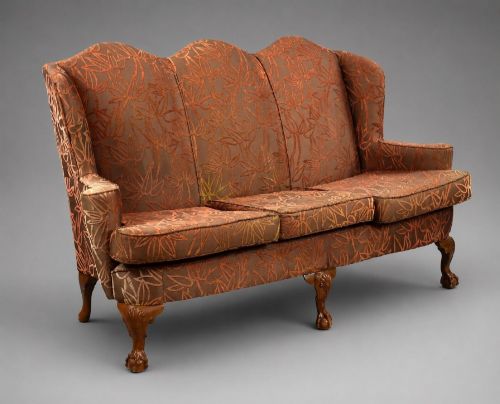
A carved cabriole leg sofa brings curving eighteenth-century grace into a room, offering generous upholstered seating supported by distinctive double-curved supports.
Carved Cabriole Leg Sofa
A carved cabriole leg sofa combines traditional seating forms with the distinctive undulating legs that define its silhouette. Buyers search for these pieces to anchor a traditional interior with historic seating forms.
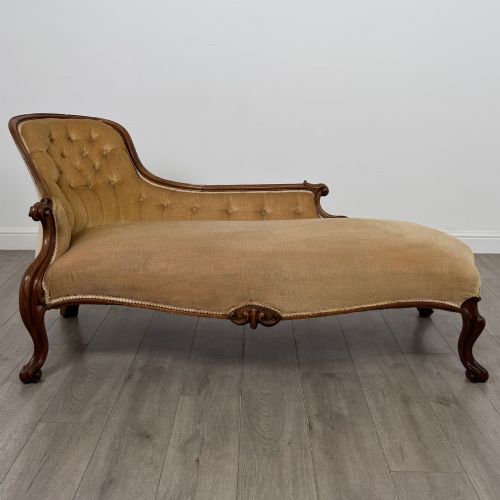
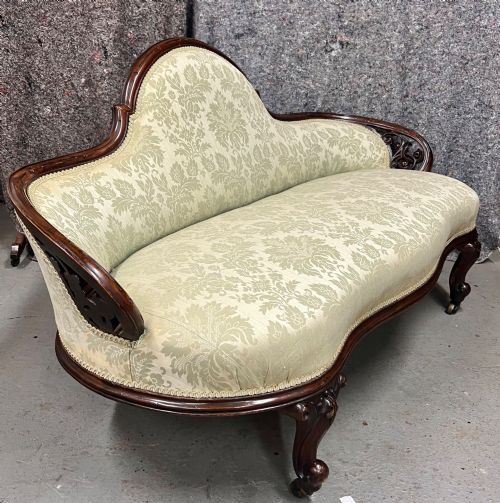
The versions most commonly met on this page date from the nineteenth and early twentieth centuries, spanning Victorian, Edwardian, and revival periods. These range from walnut framed couches to mahogany settees and cane-panelled seating.
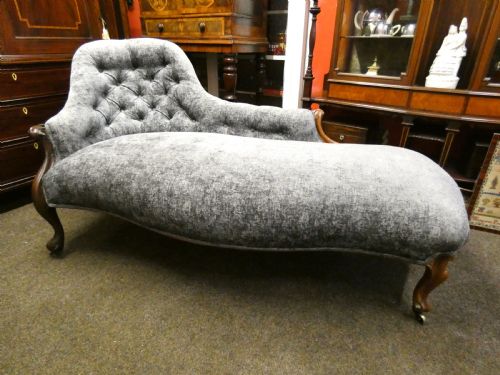
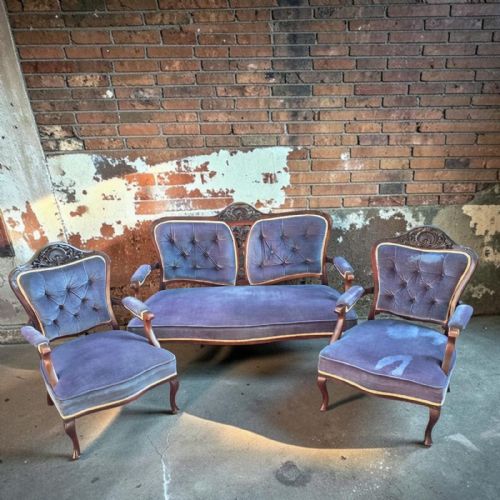
Makers drew on earlier design traditions, producing pieces styled after George II, Queen Anne, Louis XV, and Chippendale aesthetics. Alongside standard sofas, related forms like chaise longues and multi-piece salon suites appear across the listings.
Materials and construction
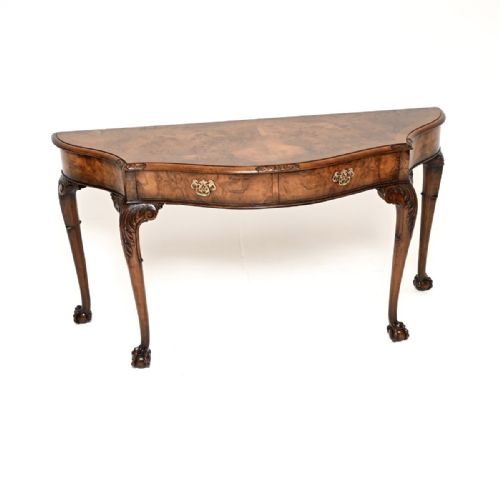
Frames rely on hardwoods like walnut, mahogany, and rosewood, chosen for strength and finished with carved details along the woodwork. Burr walnut and figured veneers add decorative grain patterns to select surfaces.
Upholstery materials include traditional fabric, deep buttoned velvet, and cane work, paired with internal stuffing and occasionally supported by brass elements or gold leaf highlights.
Listings feature eighteenth-century pieces alongside nineteenth-century Victorian interpretations and twentieth-century Edwardian revivals.
Distinguishing quality
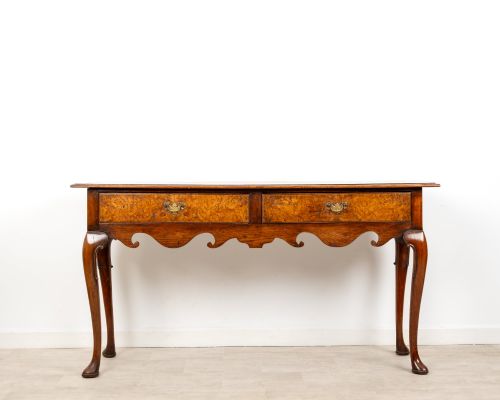
The crispness and depth of the carved woodwork separate standard frames from finer examples, particularly where floral or scroll motifs meet the curve of the leg. The choice of timber grain, such as figured walnut or rich mahogany, elevates the visual presence of the frame.
The integrity of the joinery and the execution of revival styles dictate how faithfully a piece honours historical precedents like Queen Anne or George II designs. Original upholstery treatments and well-preserved cane panels also influence the character of the seating.
Howard and Sons·Giles Grendey·Butlers of Dublin
The Carved Cabriole Leg Sofa Glossary
- Cabriole leg
- A furniture leg that curves out at the knee and tapers inward to an ankle, finishing in a foot such as a ball and claw. This form originates from ancient times and became prominent in seventeenth and eighteenth-century design.
- Settee
- A medium-length upholstered seat with a back and arms, designed for multiple occupants. It shares its function with the sofa and couch.
- Chaise longue
- An upholstered long chair intended for reclining, featuring a backrest and typically a single raised end. Examples frequently appear paired with the same carved woodwork seen on settees.
- Revival
- A nineteenth or twentieth-century stylistic movement that recreates historical design eras like the Queen Anne or Chippendale periods. These pieces adapt earlier forms for later domestic interiors.
- Salon suite
- A matching set of seating comprising a settee and accompanying armchairs or chairs. They were designed for formal reception rooms.
Carved Cabriole Leg Sofa: Frequently Asked Questions
How do I date a carved cabriole leg sofa?
Dating relies on timber selection, carving depth, and the specific revival style adopted by the maker. Nineteenth-century pieces often display denser mahogany or walnut frames influenced by earlier reigns.
Later Edwardian and twentieth-century interpretations introduce variations in proportion and lighter framing techniques while retaining traditional leg shapes.
What is the difference between a settee and a sofa?
Historically, a settee described an upholstered bench with a back and arms designed for multiple people, whereas a sofa often implied a fully upholstered couch for lounging. Today these terms are frequently used interchangeably by makers and dealers.
Both forms utilise the characteristic curved legs and carved wooden frames found across this category.
Are these sofas comfortable for daily use?
Many period pieces offer deep seating and supportive upholstered backs suited for everyday sitting. Deep buttoned upholstery and sprung frames provide structured comfort in nineteenth-century iterations.
Buyers should consider the seat height and depth relative to their own living space and intended use.
How do I care for the wooden frame?
Wooden frames require dusting with a soft cloth and occasional treatment with appropriate furniture wax to nourish the timber. Avoid placing walnut or mahogany frames in direct sunlight or near heat sources to prevent the wood from drying out.
Checking joints periodically helps maintain the stability of the carved legs.