
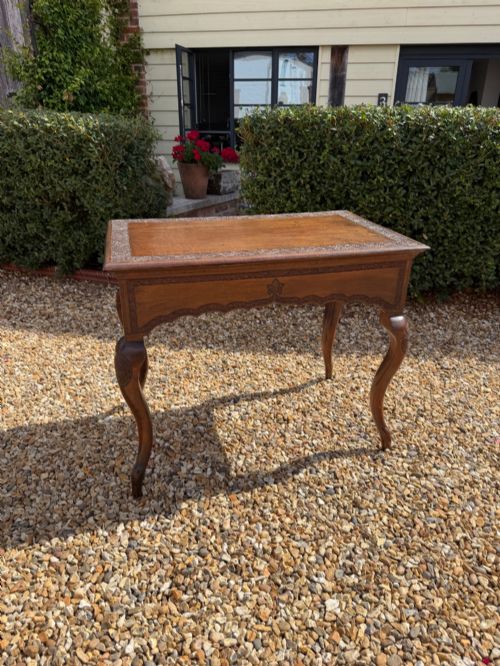
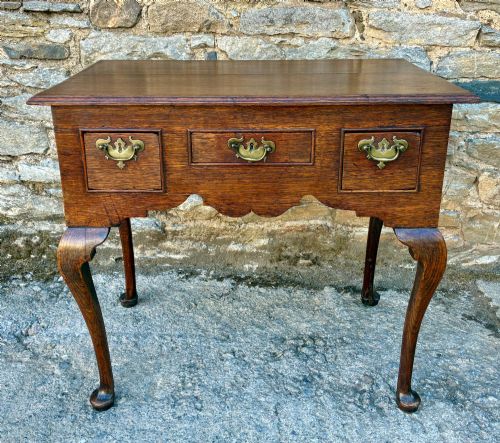
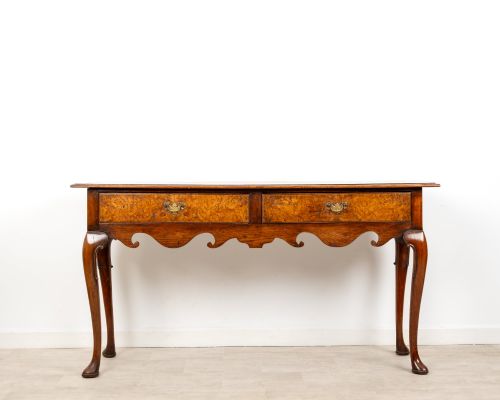
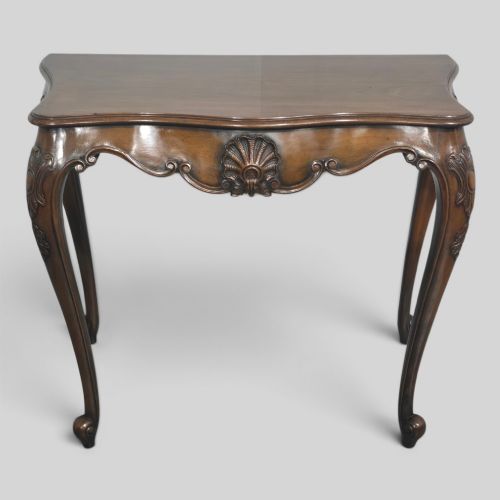
Carved Cabriole Console Table
A carved cabriole console table brings fluent, sinuous 18th-century line into a room while offering a practical narrow surface for display.
Carved Cabriole Console Table
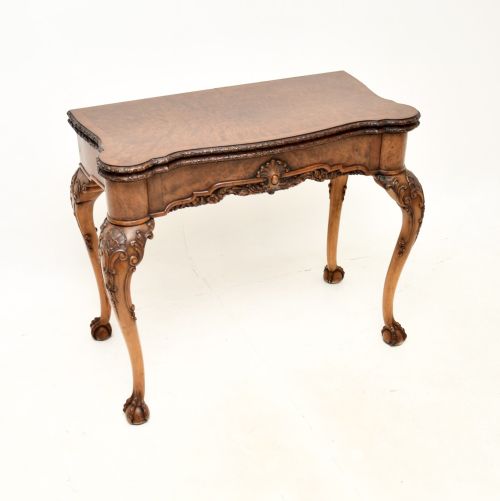
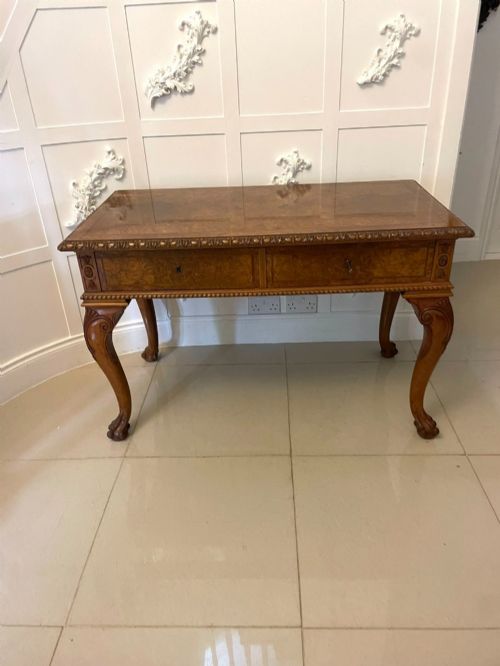
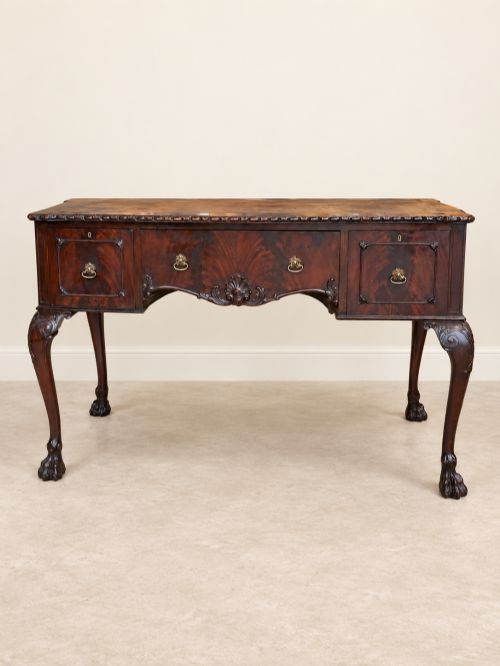
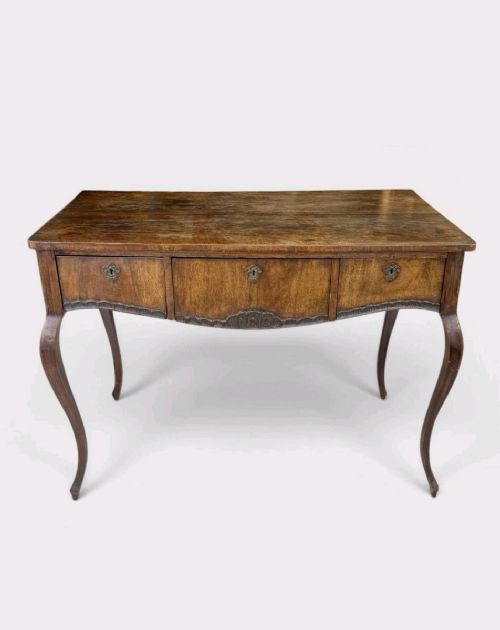
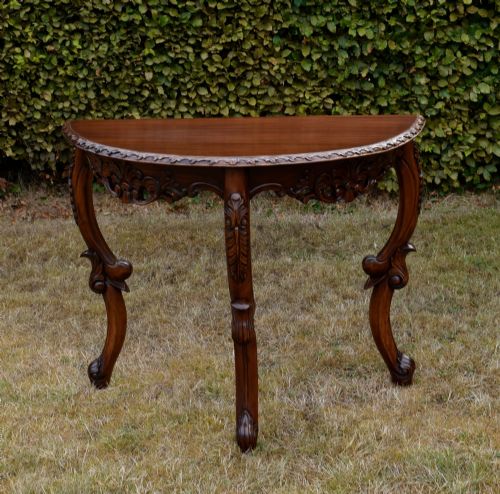
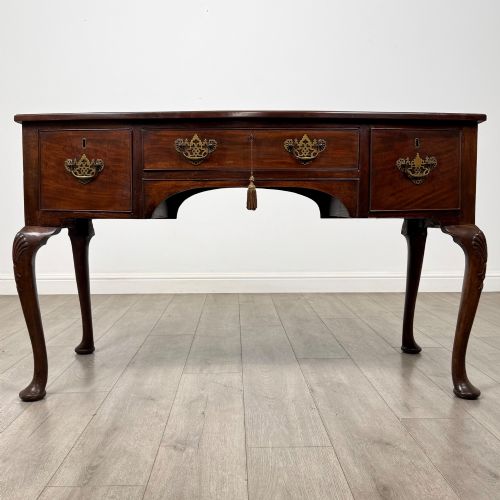
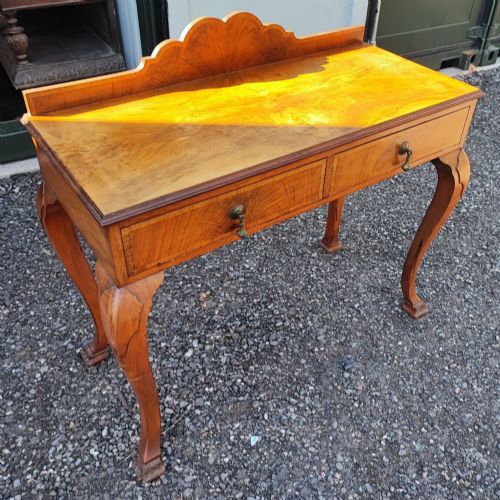
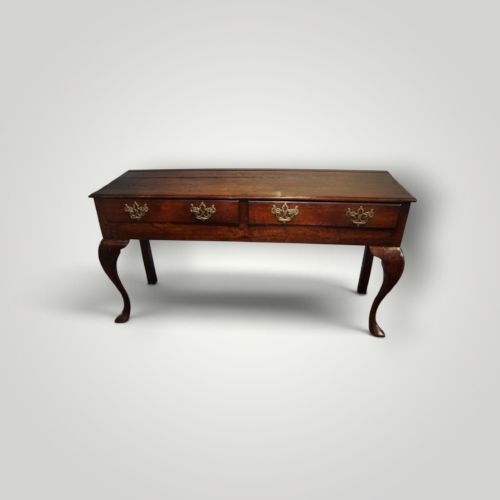
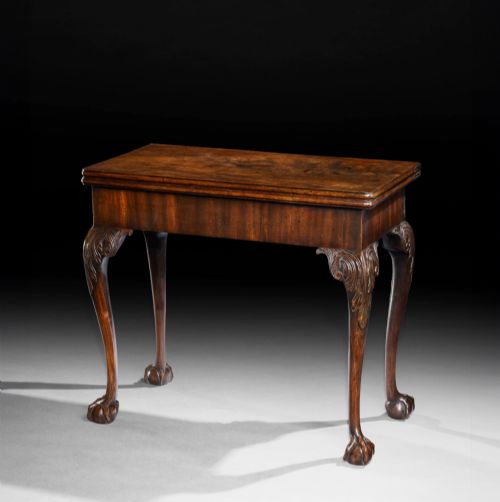
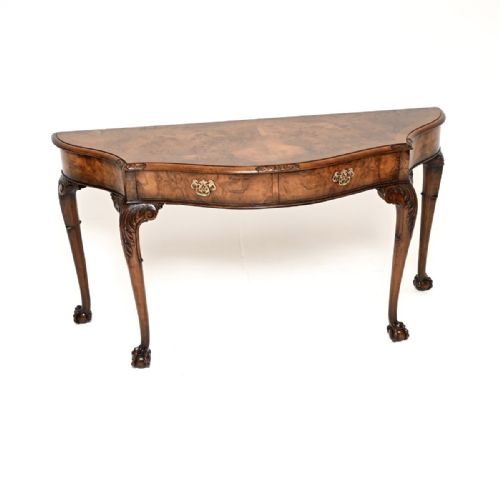
A carved cabriole console table is defined by its double-curved legs that swell outward at the knee and taper down to a pad, claw, or hoof foot. When searching this phrase, buyers encounter examples ranging from 18th-century Georgian originals to Queen Anne revivals and later 20th-century interpretations.
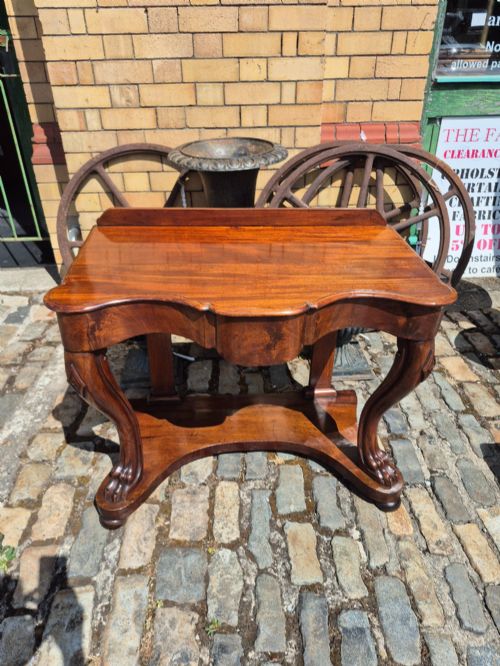
The form appears most frequently in walnut, mahogany, and oak, often taking the shape of a console, side table, or card table designed to stand flat against a wall or float as a centre table.
Revival pieces from the Edwardian era and the 1920s and 1930s make up a substantial portion of what is seen here, capturing earlier proportions with varying degrees of decorative carving on the knees and apron.
How they were made
Cabinetmakers constructed these tables using native and imported timbers, principally mahogany and walnut, frequently selecting burr veneers for figured top surfaces and drawer fronts. Solid oak and pine served as secondary woods for internal framing and drawer construction.
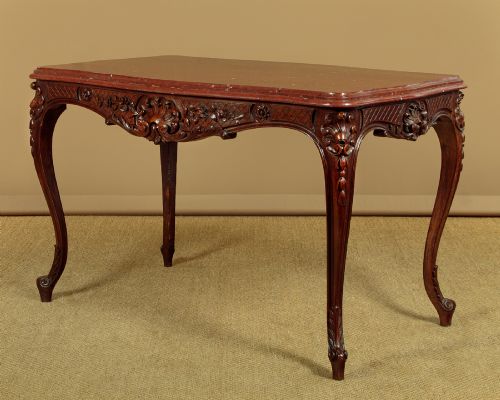
Carving was executed directly into the solid wood of the frame and legs, particularly around the cabriole knees, where acanthus leaves, shells, or scrollwork were applied. Ormolu mounts and rouge marble tops also appear on select formal examples from the 18th and 19th centuries.
Listings span multiple decades from the Georgian era through the 1930s, featuring walnut, mahogany, oak, and marble.
What varies in quality
Quality rests heavily on the depth and crispness of the carving on the cabriole knees and the integrity of the timber selection. Superior pieces display hand-carved ornamentation with sharp relief, whereas lesser examples rely on shallower tool work or simpler mouldings.
The structural integration of the cabriole leg into the seat rail dictates durability, as does the quality of the veneer matching on burr walnut or mahogany surfaces. Original hardware, undisturbed timber patination, and uncompromised structural joints elevate an example above later alterations.
Giles Grendey·François Linke·Gillows
The Carved Cabriole Console Table Glossary
- Cabriole leg
- A furniture leg that curves out at the knee and in at the ankle, mimicking animal limbs. This form became a defining feature of 18th-century design and later revival periods.
- Console table
- A table designed to stand against a wall, traditionally supported by brackets or console legs. Many versions in this group double as card or serving tables.
- Lowboy
- A small oak or walnut dressing or side table with drawers, typically raised on cabriole legs. These pieces date primarily from the 18th century.
- Concertina action
- An expanding frame mechanism used on antique card tables that allows the rear legs to pull out with the hinged top. This engineering supports the opened leaf without sagging.
- Burr walnut
- Wood taken from the abnormal growth of a walnut tree, yielding highly figured grain patterns. It was sliced into veneers for prominent table tops.
Carved Cabriole Console Table: Frequently Asked Questions
Where should I place a console table?
These tables suit narrow circulation spaces such as hallways, entrance passages, or reception rooms where floor space is limited. Because their shallow depth keeps them close to the wall, they provide a display surface without obstructing movement.
In living areas, they function effectively behind sofas or beneath large mirrors, serving as a focal point for lamps and decorative objects.
How do I tell an original 18th-century piece from a revival?
Examination of the timber construction, tool marks, and secondary woods offers the clearest indication of age. 18th-century pieces often exhibit hand-cut dovetails, shrinkage patterns in the secondary timbers, and patination acquired through extended use.
Revival pieces from the Edwardian period or the 1920s tend to show machine-assisted manufacturing marks and more uniform interior woods, even when utilising older stylistic vocabulary.
Can these tables be used for everyday writing or dining?
Certain variations within this group, specifically writing tables and games or card tables, were engineered for functional daily use. Card tables feature folding leaves that open to create a baize-lined surface for activities.
Standard console tables and side serving tables are primarily intended for display and light support rather than heavy writing or seated dining.
How do I care for a walnut or mahogany top?
Maintenance requires protecting the polished wood finish from excessive moisture, direct sunlight, and extreme heat fluctuations. Regular dusting with a soft, dry cloth preserves the wax or polish patination without building up residue.
Applying a specialist furniture wax occasionally helps nourish the timber and maintain the sheen on figured surfaces like burr walnut.