

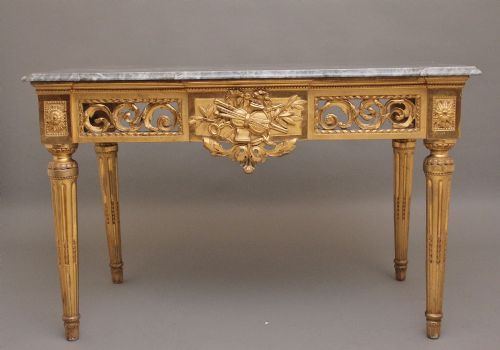
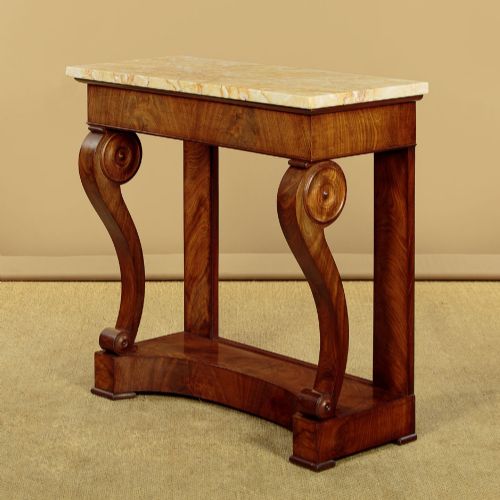
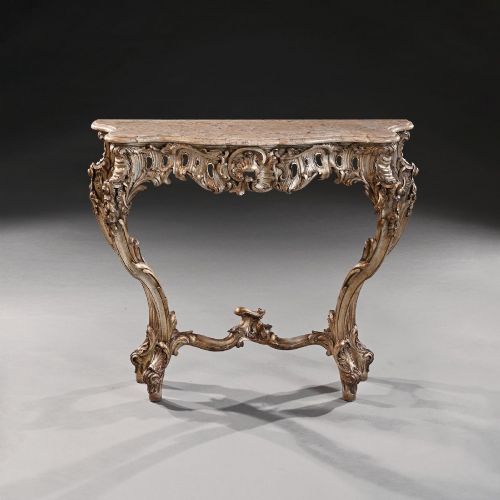
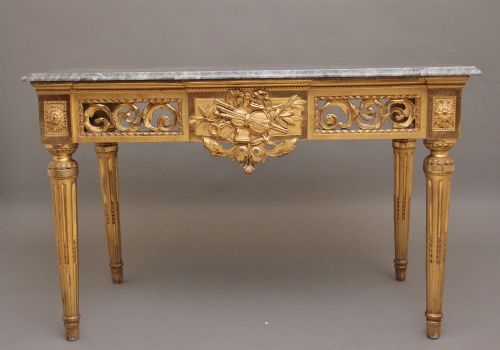
Carved Marble Wall Table
A carved marble wall table brings classical weight and presence to a room, anchoring the wall with solid stone and carved timber.
Carved Marble Wall Table
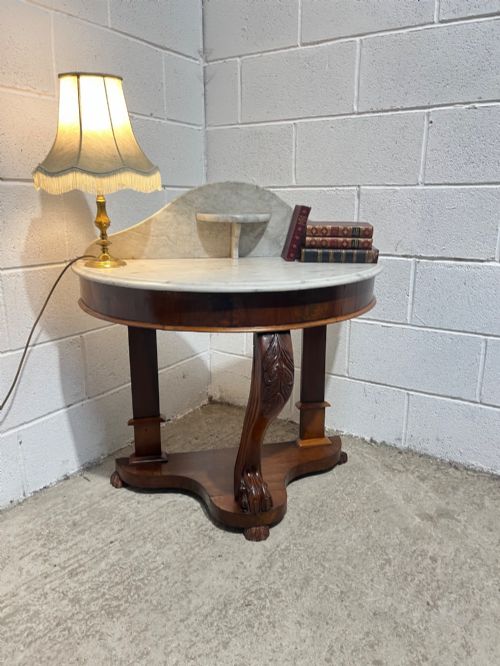
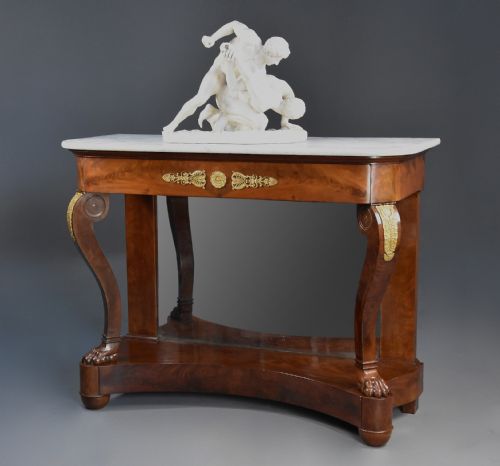
When you search for a carved marble wall table, you are looking at console and side tables designed to fix against a wall or stand on bracket supports. The form predominantly bridges the eighteenth and nineteenth centuries, spanning Regency, Victorian, and various revival movements from French and Italian workshops.
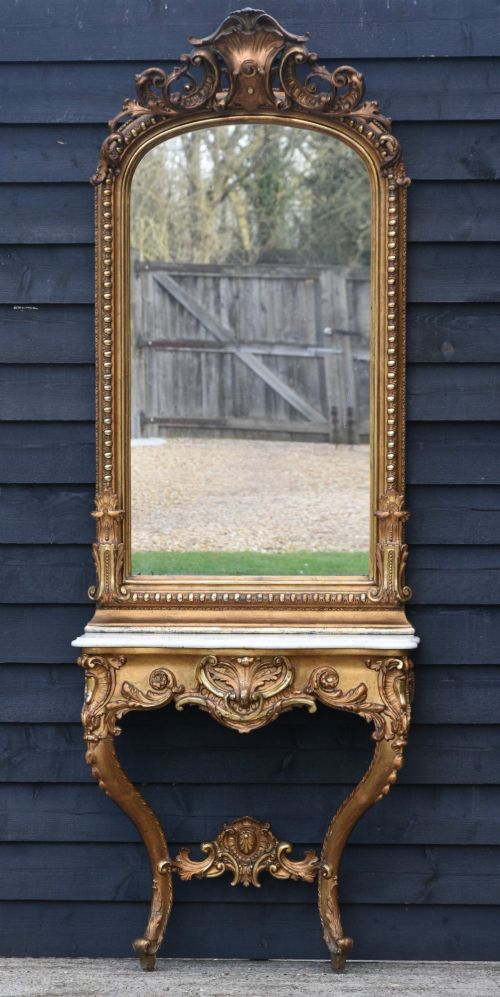
You will most frequently meet nineteenth-century examples on this page, often paired with matching pier mirrors or executed in carved giltwood and mahogany. Many pieces combine heavy figured stone tops with elaborately shaped wooden frames, functioning as both decorative ledges and functional furniture.
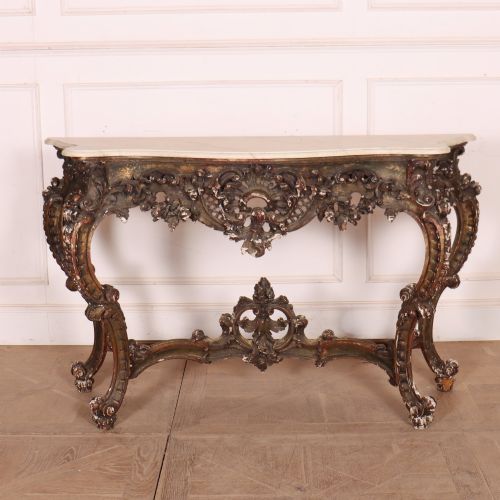
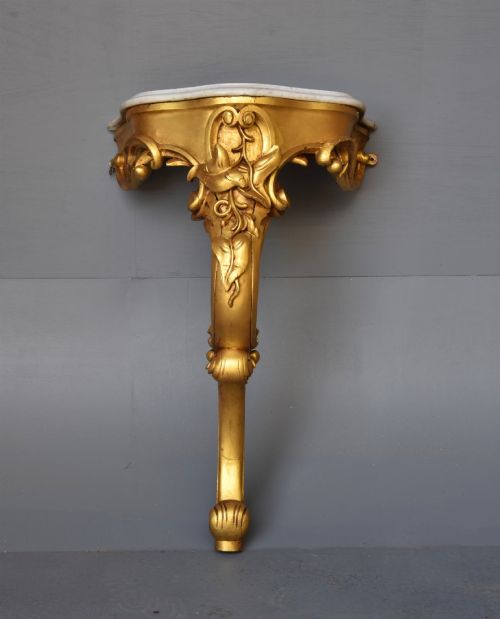
Origins stretch across French, Italian, and Swedish traditions, taking forms from serpentine fronts to monumental Baroque and Neoclassical designs. They range from small scaled tables suitable for intimate hallways down to large paired console sets.
How they were made
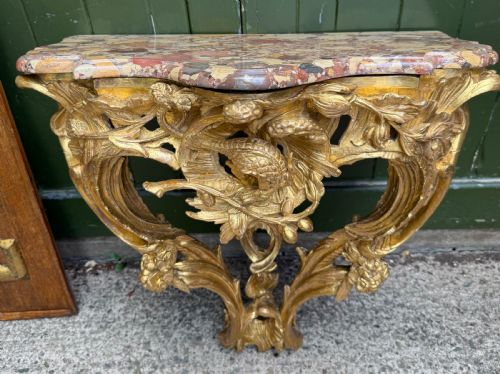
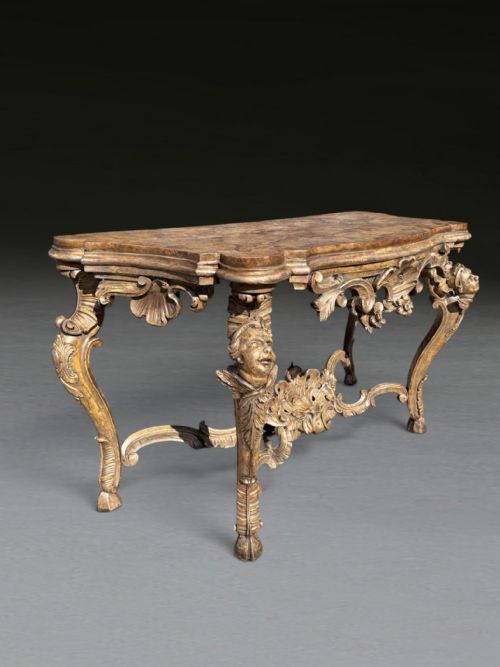
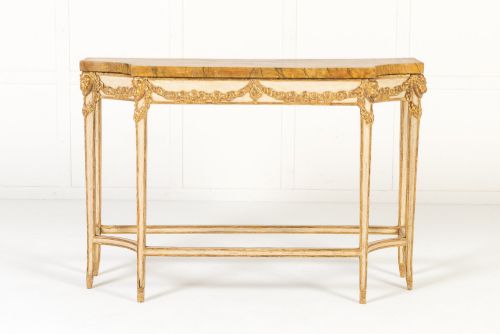
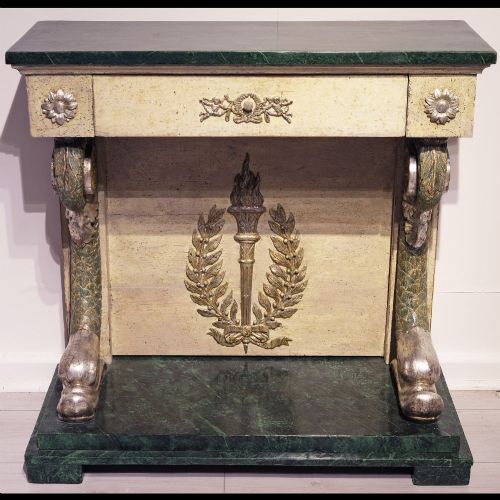
Makers shaped the structural framework from timbers such as mahogany, oak, walnut, and pine, applying layers of gesso before gilding with gold leaf or silver leaf. Alternatively, surfaces received paint, cream finishes, or parcel gilding to achieve regional decorative effects.
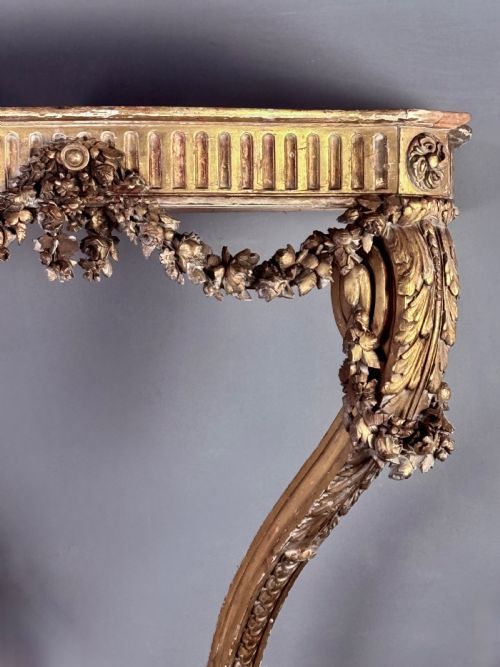
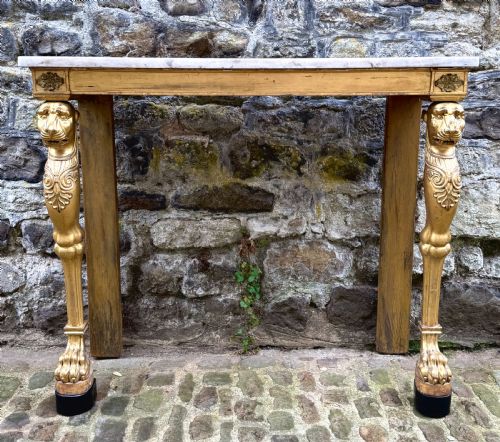
Heavy stone surfaces, including specialised varieties like breccia and breche d’alep, were cut and polished to fit shaped wooden rails. Carvers worked directly into the timber or gesso ground to produce intricate scrolling foliage, lion paw supports, and rococo motifs.
Listings feature eighteenth and nineteenth-century pieces alongside Regency and Victorian examples, utilising materials like marble, giltwood, gesso, mahogany, and glass.
What varies in quality
Quality rests in the depth and crispness of the wood carving, distinguishing hand-chiselled organic detail from repetitive or soft moulding. The choice of marble also marks the standard, with richly figured or unusual stone slabs elevating the piece above standard utilitarian tops.
Structural integrity of the wall mountings and the quality of the original gilding or paint finish determine the tier of the piece. Tables retaining their original matching pier mirrors or possessing documented maker attributions command greater distinction.
Felix-Alfred Ternisien·Jean Joseph Chapuis
The Carved Marble Wall Table Glossary
- Console table
- A table supported against a wall by console brackets or legs, historically designed to stand beneath a mirror.
- Giltwood
- Timber coated with gold leaf applied over a prepared gesso ground. This technique creates a luminous, reflective surface characteristic of formal period furniture.
- Breccia marble
- A composite stone made of broken rock fragments embedded in a fine-grained matrix. It provides highly variegated, multicoloured patterns on table tops.
- Pier mirror
- A large wall mirror designed to hang in the pier space between windows, frequently matched with a companion console table below.
- Gesso
- A plaster mix applied to wood surfaces as a smooth base for gilding and fine carving detail. It allows artisans to crisp up edges before applying gold leaf.
Carved Marble Wall Table: Frequently Asked Questions
How do you mount a wall table?
Many wall tables rely on structural wall fixings or console brackets to bear the weight of the heavy stone top. Legs often provide supplementary support rather than carrying the entire load independently.
Professional installation ensures the stone and carved frame secure safely to the wall without placing undue strain on the historic timber joints.
Are these tables freestanding?
Traditional console tables designed for wall placement generally require fixing to the vertical surface for stability. Some variations include front legs while still depending on wall anchors to prevent tipping.
Side tables found within the selection operate as freestanding furniture, whereas true console and pier configurations connect directly to the architecture of the room.
How do I clean a marble top?
Natural stone requires gentle maintenance using soft cloths and pH-neutral cleaners formulated specifically for marble. Aversive chemicals and acidic substances etch the polished surface and dull the vintage finish.
Regular dusting preserves the stone, while careful handling prevents moisture from seeping into unsealed portions of the underside or joints.
What periods do these pieces span?
The selection covers items ranging from the eighteenth century through the Regency era and deep into the Victorian period. Later nineteenth-century revival styles and early twentieth-century interpretations also appear frequently.
Distinguishing between eras involves examining the characteristics of the wood carving, the profile of the marble edge, and the specific gilding techniques employed.