
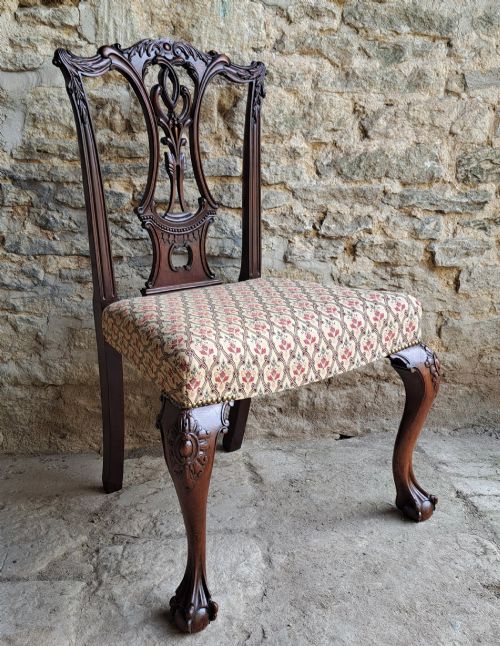
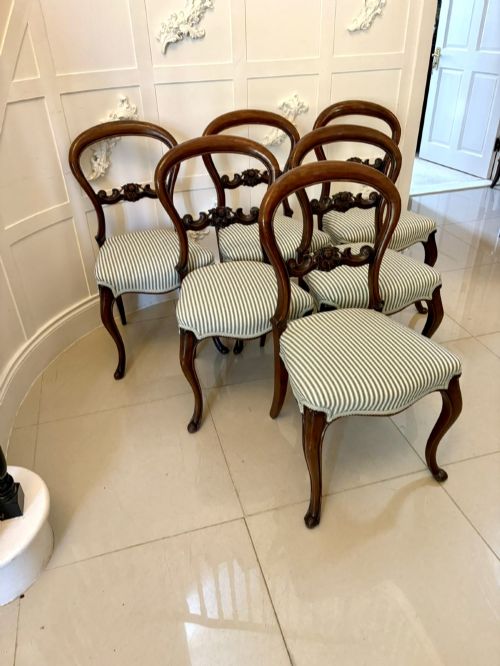
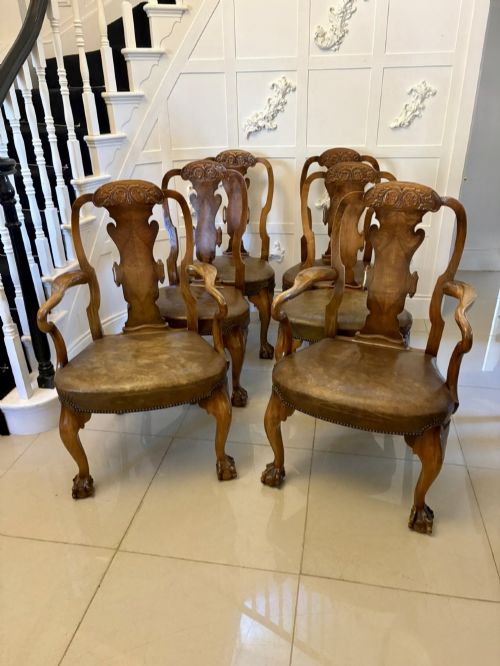
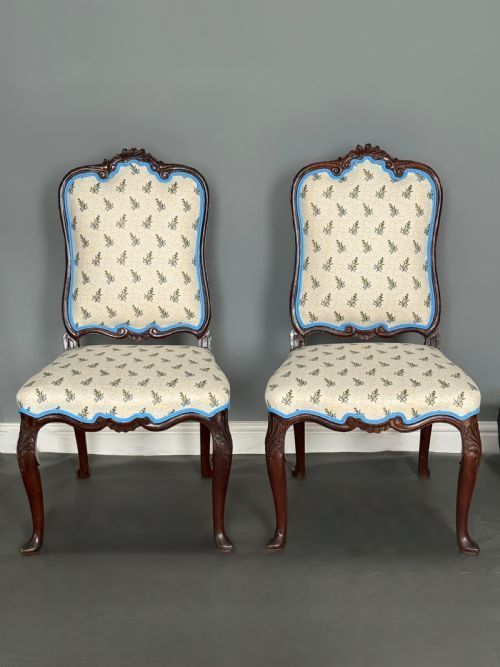
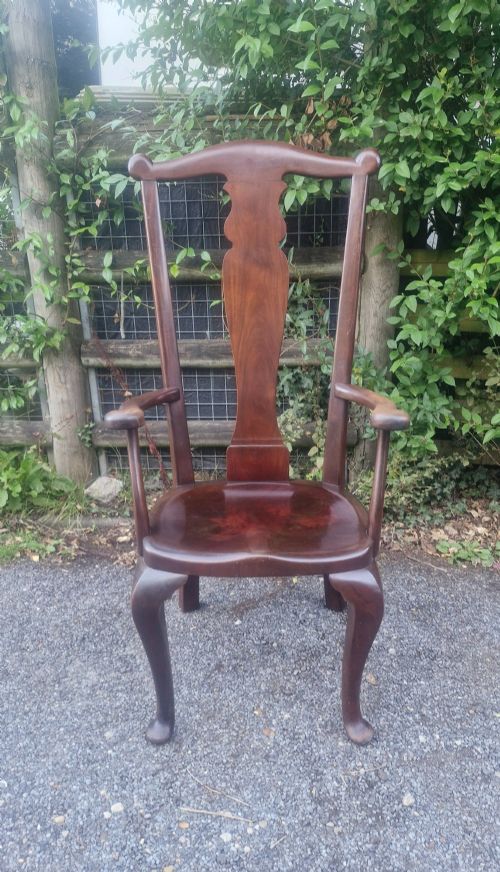
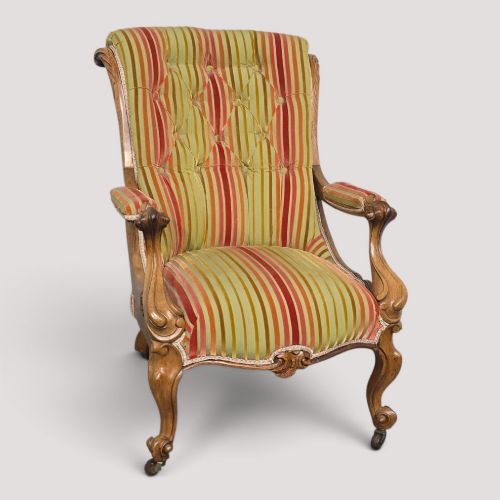
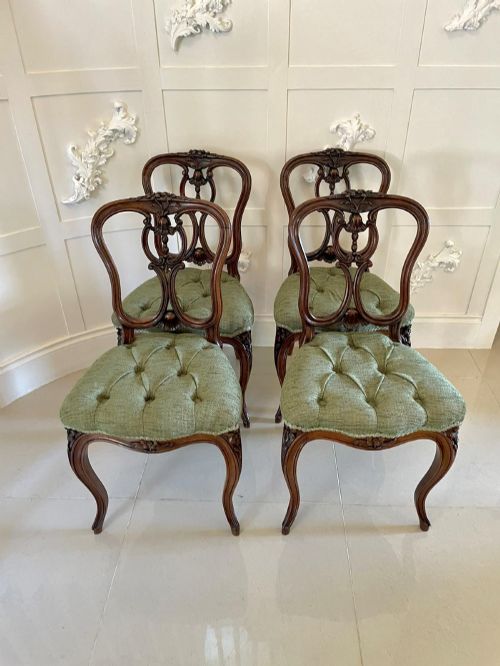
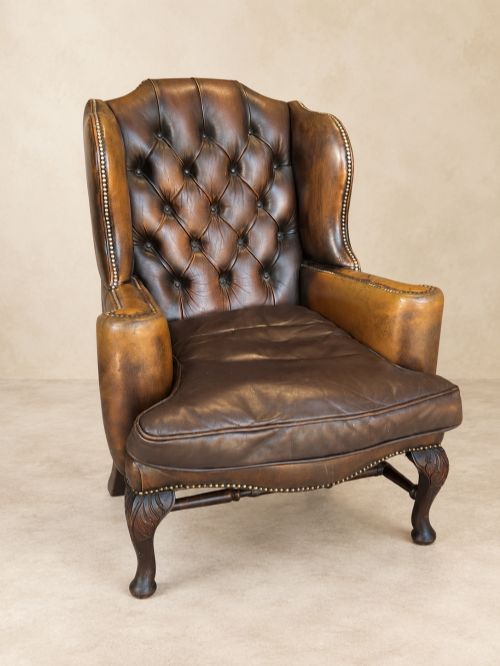


Carved Cabriole Chair
A carved cabriole chair brings sculptural movement and traditional seating to a room, defined by its distinctive curving legs and shaped timber frame.
Carved Cabriole Chair
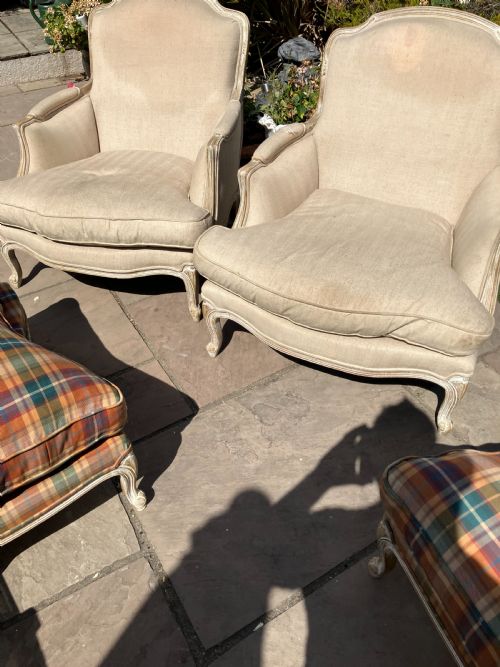
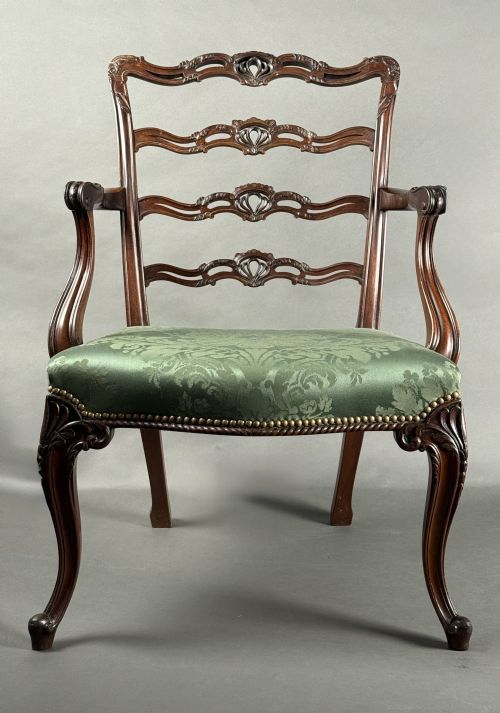
A carved cabriole chair is a seat featuring legs that curve outward in a convex arc before tapering inward to a foot, frequently seen in walnut or mahogany. The listings show these pieces appearing across multiple periods, from eighteenth-century examples to later revival pieces influenced by Queen Anne, George II, and Louis styles.
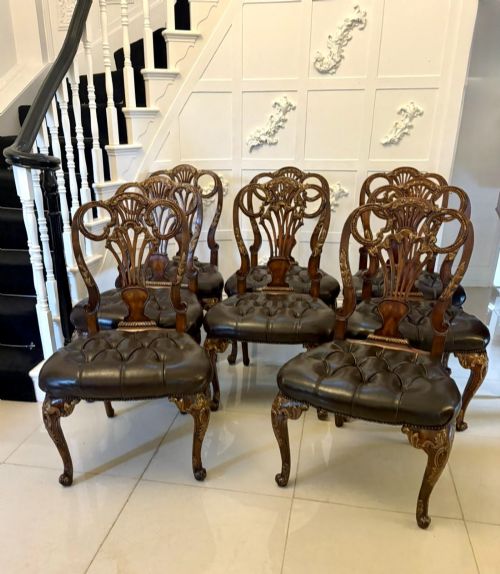
Buyers will encounter various forms, ranging from single side chairs and dining sets to library armchairs, wing chairs, and nursing chairs. Walnut and mahogany predominate, often paired with traditional upholstery fabrics, leather, velvet, or needlepoint tapestry.
The aesthetic draws heavily on historical revivals, particularly Queen Anne, Chippendale, and Rococo styles, executed with carved knee details and shaped wooden frames.
How they were made
Makers shaped these chairs from dense hardwoods, predominantly walnut and mahogany, relying on the tensile strength of the timber to support the dramatic curves of the legs without additional bracing. Carving was applied directly to the solid wood of the knees, aprons, and crest rails.
Joinery involved traditional techniques such as mortise and tenon frames, while seat structures relied on webbing, springs, or stuffing covered in textiles, leather, or silk.
Listings feature eighteenth-century origins alongside Victorian and 1920s revival pieces, constructed from walnut and mahogany.
What varies in quality
Quality in a carved cabriole chair rests upon the harmony of the silhouette and the depth of the carving on the timber. Crisp execution of details on the knees and frame distinguishes superior examples from simpler production.
The choice of primary timber, such as figured burr walnut or dense Cuban mahogany, alters the visual weight of the piece, alongside the integrity of the underlying frame and joinery.
Charles Tozer·Warings·Whytock and Reid
The Carved Cabriole Chair Glossary
- Cabriole leg
- A furniture leg that curves outward at the knee and inward at the ankle, mimicking the shape of an animal's leg. This form became a defining feature of eighteenth-century and revival seating.
- Ball and claw foot
- A carved terminal representing a bird's talon clutching a ball, frequently found at the base of cabriole legs on Georgian furniture.
- Splere
- A vertical slat placed in the middle of a chair back, often shaped or pierced for decorative effect. It provides structural support while offering visual detail.
- Serpentine seat
- A seat front that curves outward in the centre and inward at the sides in an undulating wave line. This contour adds refinement to dining and side chairs.
- Bergere
- A closed-arm upholstered armchair with an exposed wooden frame and cane or upholstered sides. French in origin, it appears in several revival variations.
Carved Cabriole Chair: Frequently Asked Questions
What is a cabriole leg?
A cabriole leg is a curved furniture support that bows outward at the knee and tapers inward toward the foot. This design provides structural stability while creating an elegant silhouette.
The form was popularised during the early eighteenth century and returned in various revival periods throughout the nineteenth and twentieth centuries.
How do I date a chair?
Dating relies on timber selection, construction methods, and stylistic cues present in the carving and upholstery frame. Pieces from the eighteenth century typically display hand-cut joinery and native hardwoods suited to the era.
Revival pieces from later centuries often incorporate machine assistance or mimic earlier historical styles like Queen Anne and Chippendale while retaining the aesthetic of their actual period of manufacture.
Are these chairs for daily use?
Many of these chairs are structurally robust enough for regular seating, particularly dining sets and solid mahogany armchairs. Proper maintenance of the joints and upholstery ensures they endure frequent use.
Consider the seat height and arm clearance when placing them around modern tables or desks to ensure comfort during extended sitting.
What woods were used?
Makers predominantly worked with dense hardwoods like walnut and mahogany, which could hold intricate carved details without splitting. Some regional or period pieces utilise elm, rosewood, or red walnut.
Grain patterns often dictate the visual appeal of the timber, with figured veneers or solid cuts selected for prominent display areas.