

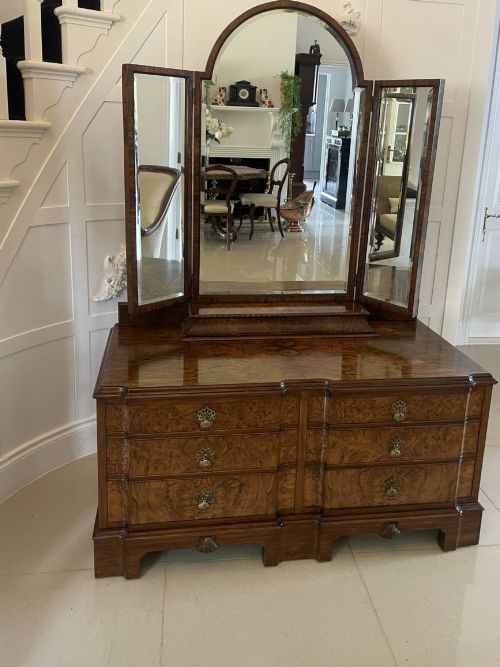
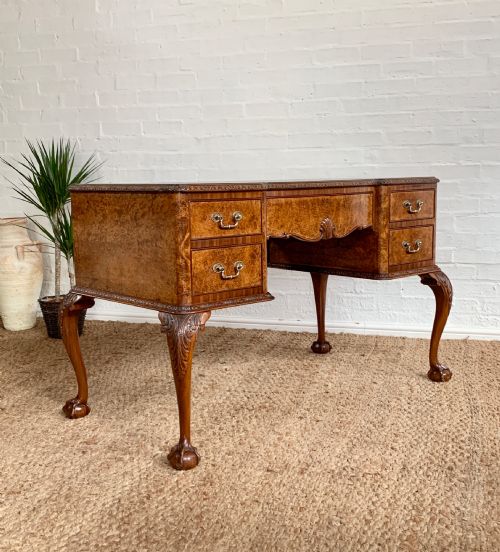
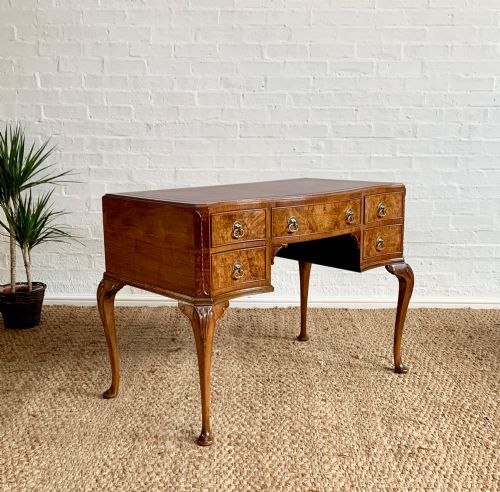
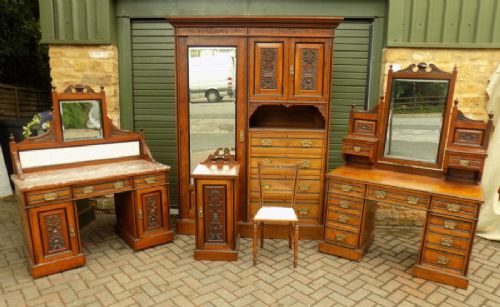




Carved Burr Walnut Vanity
A carved burr walnut vanity brings remarkable timber figure and period elegance to a dressing room or bedroom.
Carved Burr Walnut Vanity
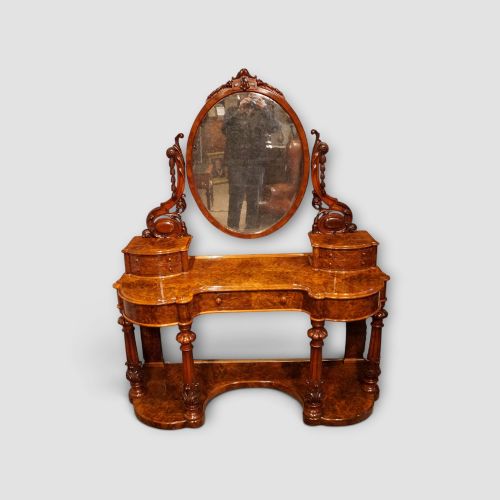
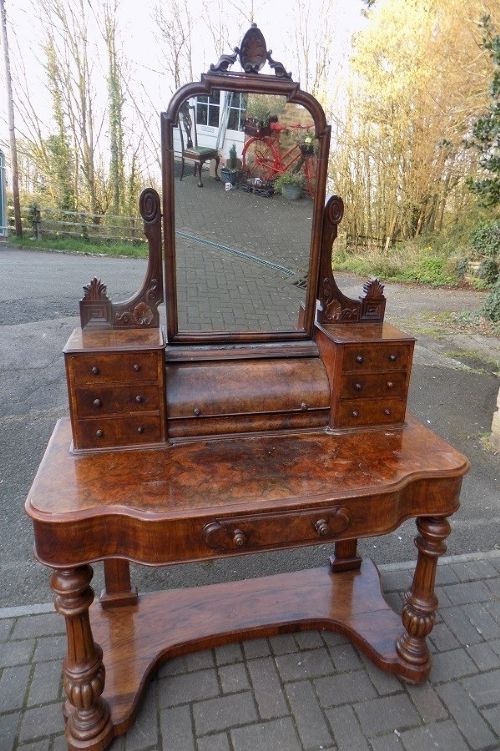
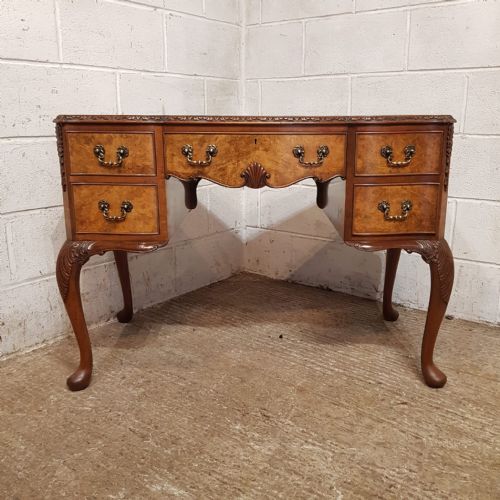
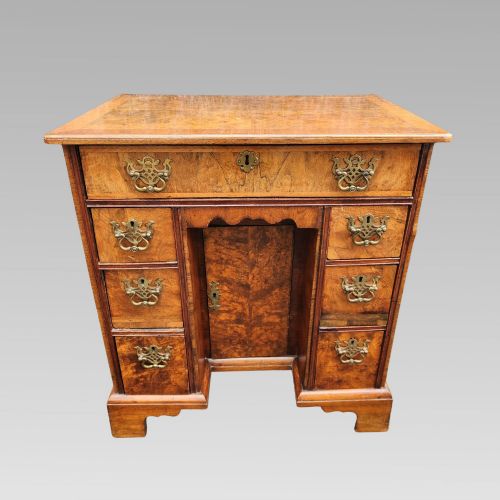
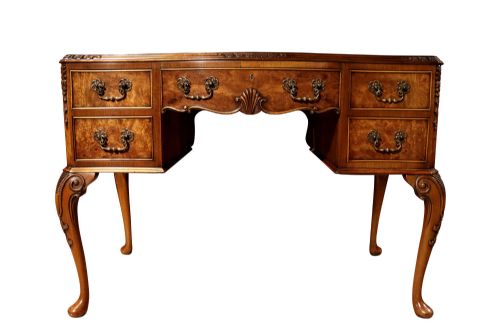
A carved burr walnut vanity encompasses dressing tables, duchesse dressing tables, lowboys, and writing desks produced across the Victorian, Edwardian, and Art Deco eras. Buyers searching this phrase typically encounter pieces designed for personal grooming or writing, featuring the distinctive swirling grain patterns of burr timber.
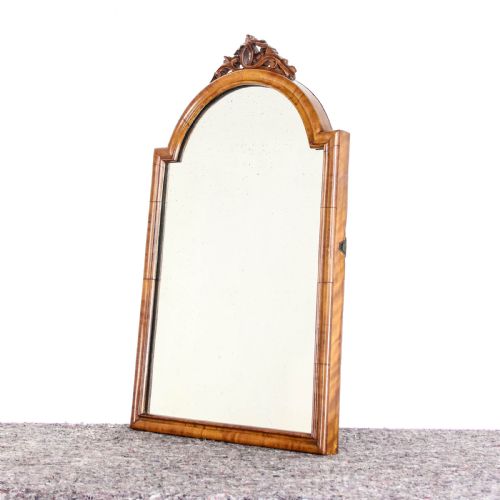
The pieces on this page span from the mid-nineteenth century through the 1930s, incorporating revival aesthetics such as Queen Anne style and French revival forms. Dressing tables often retain original mirror glass, while desks and writing tables frequently integrate fitted drawers and tooled leather surfaces.
Originating predominantly from British workshops and cabinet makers, these items combine functional storage with decorative presence. A buyer is most likely to meet Victorian and 1920s examples that utilise walnut veneers over solid carcases alongside intricate carved details.
Materials and construction methods
Cabinet makers constructed these pieces by applying thin veneers of burr walnut to stable secondary timbers, highlighting the natural irregularities and knots of the wood. This technique produced rich, highly figured surfaces across table tops, drawer fronts, and mirror frames.
Brass hardware, glass mirror plates, and occasionally leather writing inserts completed the construction. Carved wooden elements, particularly cabriole legs and scrolled pediments, added structural ornamentation characteristic of Queen Anne revival and Victorian designs.
Carved Burr Walnut Vanity Retail Price Guide 2026
Typical asking prices for carved burr walnut vanity among the pieces listed under this phrase on Sellingantiques today, from the lower quarter to the upper quarter. They describe what is for sale here now, not the wider market.
Several mirrors come with secret compartments behind the glass for stashing love letters.
Factors of craftsmanship and distinction
Quality rests in the selection and bookmatching of the burr walnut veneer, where symmetrical grain patterns create a balanced visual rhythm across large surfaces. Finer pieces demonstrate precise joinery in the drawers and crisp execution in the carved wooden details rather than reliance on applied ornamentation.
The presence of original components, such as bevelled mirror glass, brass handles, and leather writing surfaces, elevates a piece's integrity. The depth of the timber's natural colour and the condition of the polish further separate standard production items from exceptional cabinet work.
Wylie & Lochhead Glasgow
The Carved Burr Walnut Vanity Glossary
- Burr walnut
- A veneer sliced from the growth warts or burls of walnut trees, prized for its swirling, highly figured grain patterns.
- Duchesse dressing table
- A large Victorian dressing table featuring a large central mirror flanked by smaller pivoting side mirrors and tiered small drawers.
- Lowboy
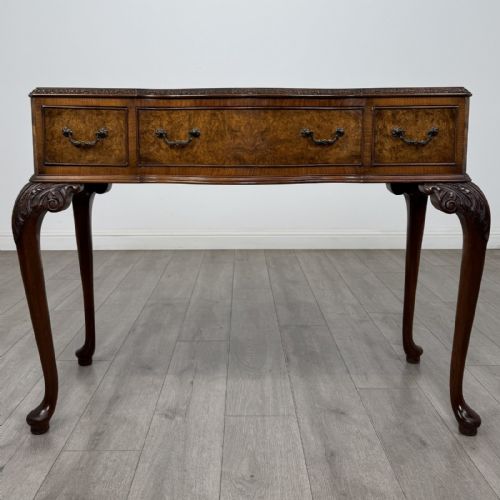
- A small side table with one or more rows of drawers, typically raised on tall cabriole legs and associated with the Queen Anne style.
- Kneehole desk
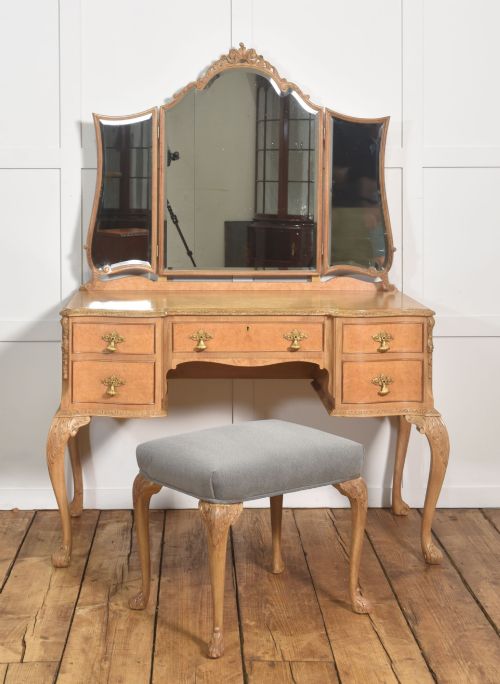
- A desk or dressing table featuring a central recess for the user's legs, flanked by pedestals of stacked drawers.
- Bonheur du jour
- A light lady's writing desk featuring a small cabinet or set of pigeonholes and drawers on the upper surface.
Carved Burr Walnut Vanity: Frequently Asked Questions
How do I date a burr walnut vanity?
Dating relies on structural characteristics, hardware styles, and prevailing revival aesthetics found in the woodwork. Victorian examples often display heavier proportions and darker finishes, whereas 1920s and 1930s pieces can incorporate simpler lines or specific revival details like Queen Anne cabriole legs.
Examining secondary timbers inside the drawers and the backing boards provides additional clues regarding the period of manufacture.
Are mirrors on these dressing tables original?
Many Victorian and early twentieth-century dressing tables retain their original glass, which can exhibit slight foxing or age spots. Replacements are sometimes fitted when the historical mirror plate has deteriorated beyond practical use.
Checking the silvering behind the glass and the mounting fixings helps determine whether the mirror plate has remained with the stand since construction.
How should I care for burr walnut furniture?
Maintaining burr walnut involves keeping the timber away from direct sunlight and consistent heat sources to prevent veneer lifting or drying out. Gentle dusting with a soft, dry cloth preserves the polished surface without abrasive chemical polishes.
Applying a traditional beeswax periodically nourishes the wood and maintains its natural lustre.
What is the difference between a lowboy and a dressing table?
A lowboy is a compact side table with drawers and tall legs, originally utilised for various domestic tasks including grooming and writing. A dressing table is typically larger and specifically constructed to hold a mirror, either fixed to a superstructure or resting on the top surface.
Lowboys often follow Queen Anne proportions, while dressing tables range from Victorian architectural forms to 1920s kneehole configurations.