



Serpentine Dressing Table
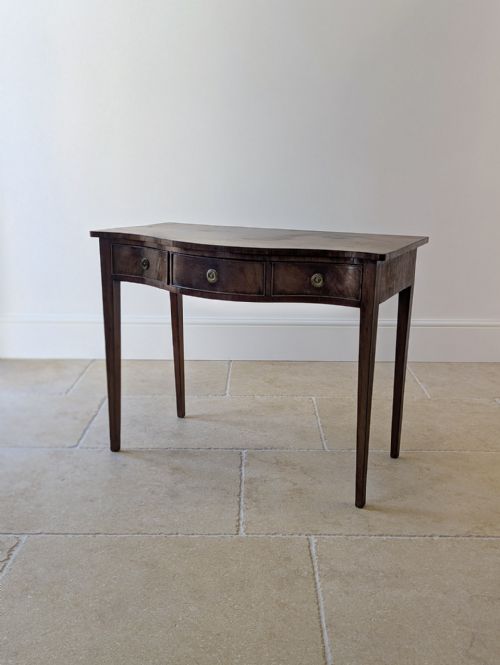
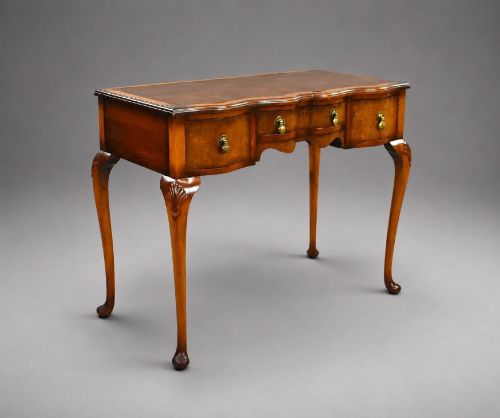
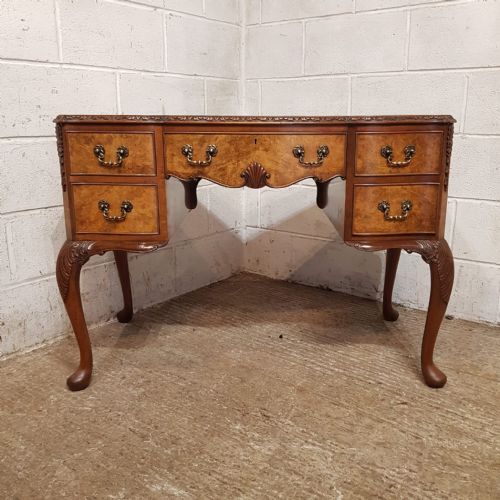
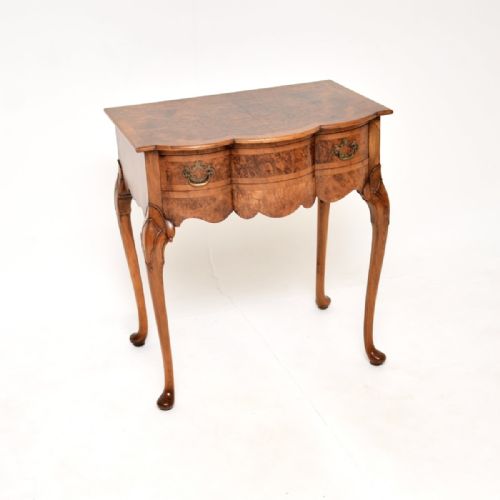
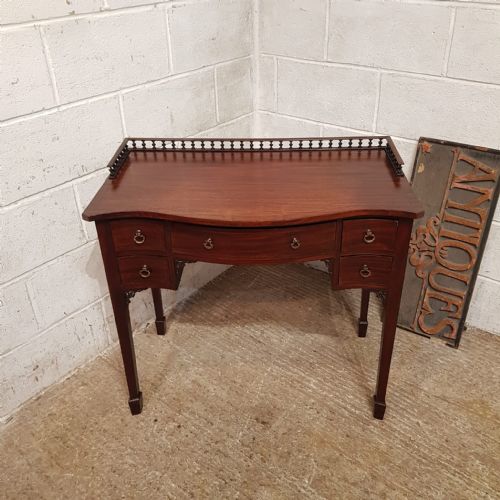
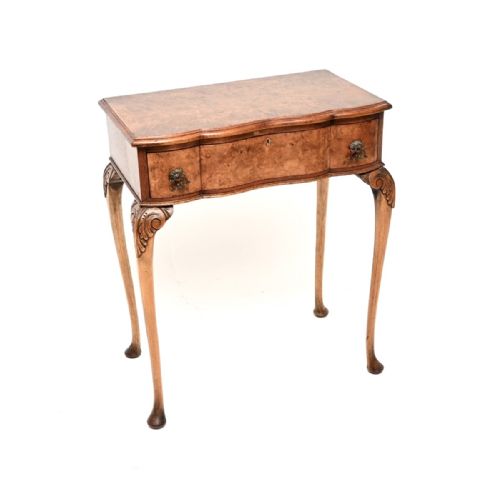
When you examine a serpentine dressing table, you encounter the graceful, undulating curve of 18th-century and later case furniture designed for the bedroom or dressing room.
Serpentine Dressing Table
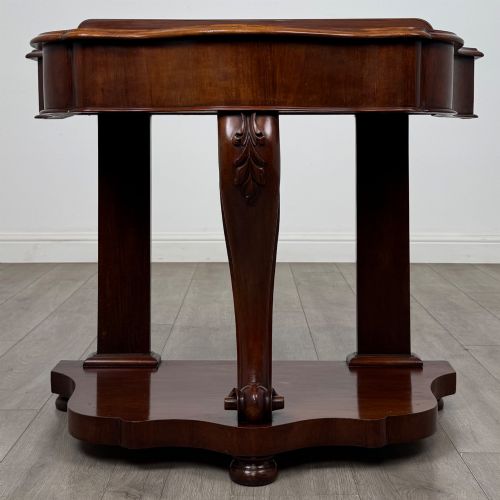
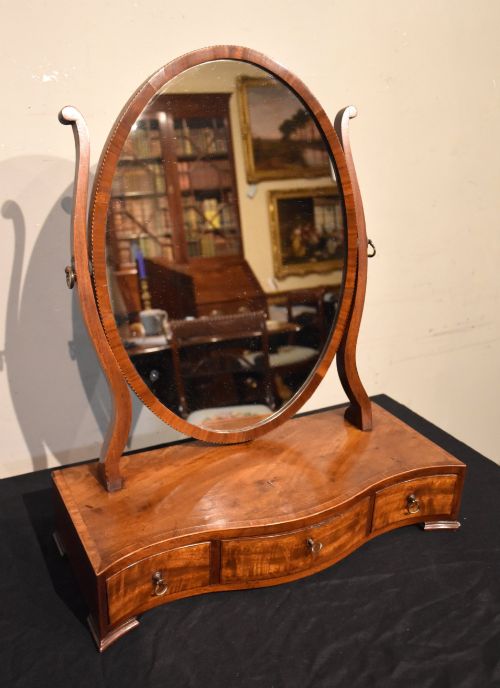
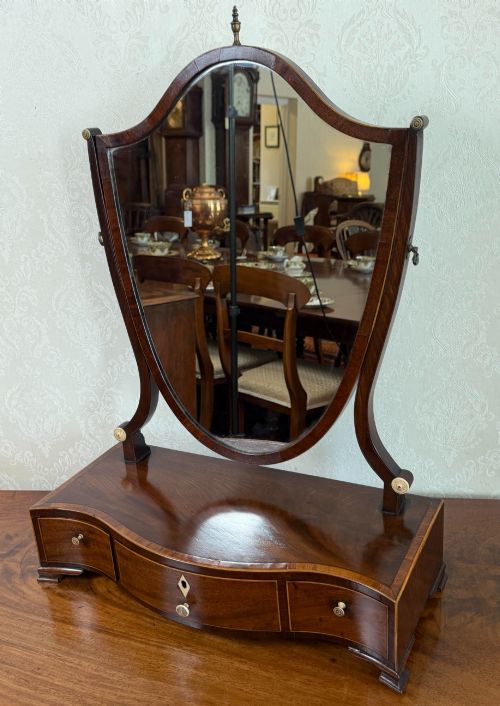
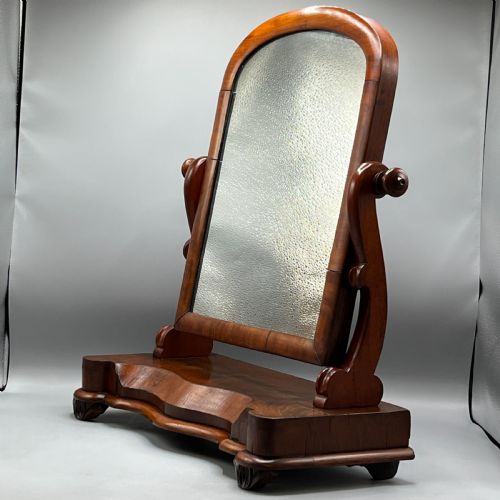
The term also covers related forms in the evidence such as dressing table mirrors, side tables, writing desks, and sideboards sharing the same curved geometry. These pieces originate from English and French workshops across the eighteenth, nineteenth, and early twentieth centuries.
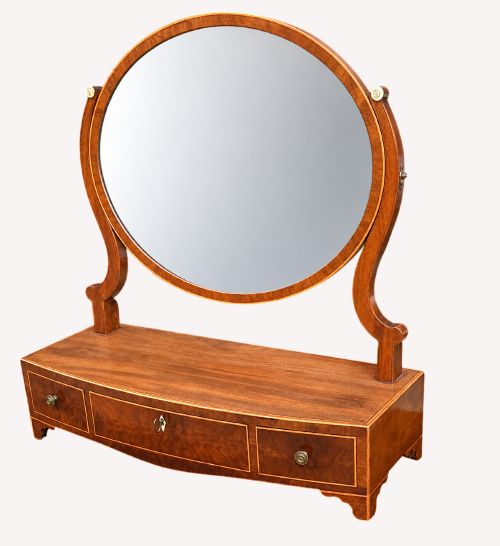
The surviving examples display considerable variety in scale, ranging from compact tabletop toilet mirrors with serpentine drawers to large freestanding kneehole desks and full dressing tables.
How they were made
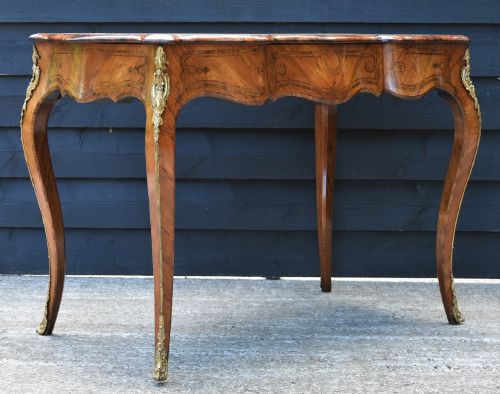
Cabinetmakers constructed these pieces primarily using solid timbers and veneers of mahogany and burr walnut, frequently incorporating boxwood stringing and marquetry inlay. The curved serpentine drawer fronts required skilled shaping of the wood to follow the undulating line of the frame accurately.
Hardware such as brass handles and swing mirror fittings complemented the polished timber surfaces. Secondary materials like glass provided the reflective surface for the associated dressing mirrors.
Some miniature tabletop mirrors pack fully functioning serpentine drawers scaled down just enough to hold a gentleman's collar studs.
What varies in quality
Quality in a serpentine dressing table rests upon the precision of the cabinetmaker's curve and the selection of the timber figures, particularly in burr walnut and mahogany veneers. Superior pieces exhibit seamless matching of the grain across the undulating drawer fronts and frame.
The sophistication of the internal joinery, the integrity of the original brass hardware, and the subtlety of any inlay work distinguish finer examples from standard production.
Maple and Co
The Serpentine Dressing Table Glossary
- Serpentine
- A front profile characterised by a central convex curve flanked by two concave curves, creating an undulating line. This shape demands advanced woodworking skill to execute on drawers and tabletops.
- Toilet mirror
- A smaller mirror designed to sit upon a table or chest, frequently equipped with small serpentine drawers in the base. These pieces functioned as personal grooming aids before full-length dressing tables became widespread.
- Kneehole desk
- A writing table featuring a central recess for the user's legs, flanked by pedestals containing banks of drawers. They often incorporate the curved front profile associated with serpentine furniture.
- Stringing
- A narrow strip of contrasting wood inlaid into the surface of a piece to create decorative borders and linear patterns. It is commonly found on Georgian and Regency pieces.
- Marquetry
- The art of applying decorative pieces of veneer to a structure to form intricate floral or geometric designs. This technique appears on French-influenced writing desks and tables.
Serpentine Dressing Table: Frequently Asked Questions
How do I date a serpentine dressing table?
Dating relies on timber selection, construction methods, and hardware styles across the Georgian, Victorian, and later periods. Secondary wood choices and drawer dovetailing offer reliable clues to the decade of manufacture.
Examining the mirror glass bevels, the backboards, and the framing techniques helps distinguish an 18th-century original from later revival pieces produced in the 1920s.
Were these tables used in bedrooms?
These tables served primarily in bedrooms, dressing rooms, and boudoirs for personal grooming and writing correspondence. The fitted drawers held cosmetics, jewellery, and writing materials.
Associated swing mirrors provided the necessary reflection for shaving or styling hair during the Georgian and Victorian eras.
What is the difference between a side table and a dressing table?
A side table provides a flat surface primarily for display or occasional use in reception rooms. A dressing table incorporates specific storage compartments, drawers, or companion mirrors tailored for personal preparation.
Many surviving pieces bridge these categories by featuring writing and dressing fitments within a compact table format.
How do I care for walnut and mahogany surfaces?
Maintenance requires keeping the timber away from direct sunlight and extreme temperature fluctuations to prevent veneer cracking. Regular dusting with a soft, dry cloth preserves the polished finish.
Applying microcrystalline wax occasionally feeds the wood without building up heavy residue or attracting dust.