
Carved Mirror Vanity Table
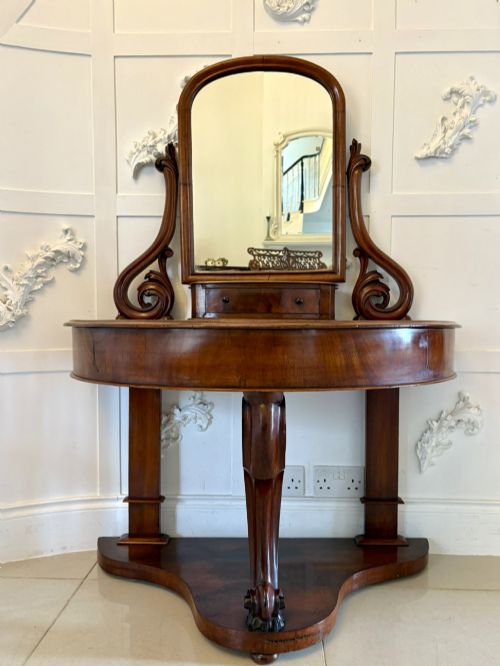
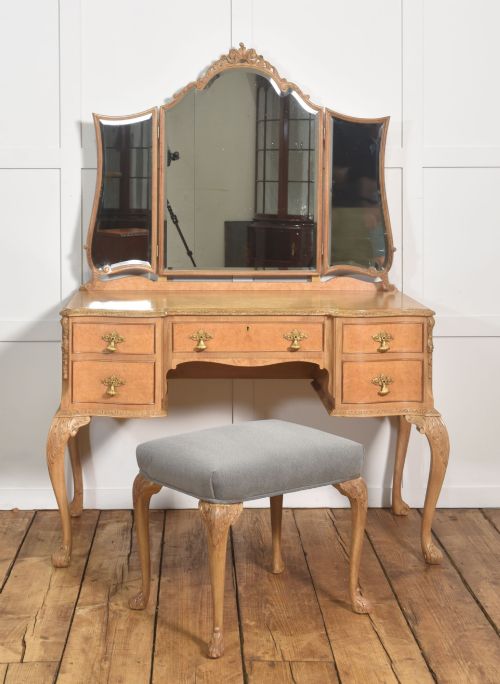
A carved mirror vanity table brings together fitted glass and timber craftsmanship to anchor a dressing space with period character.
Carved Mirror Vanity Table
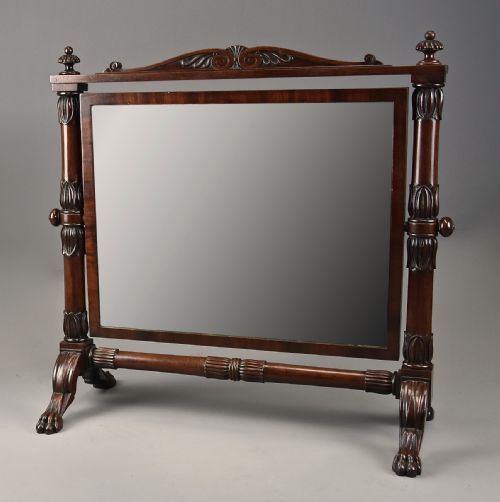
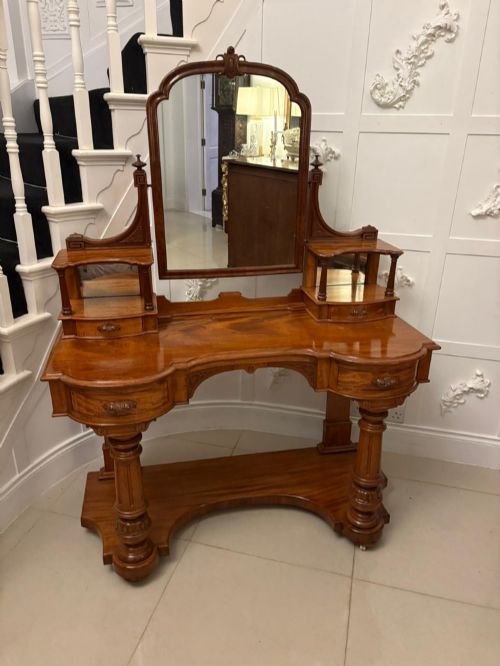
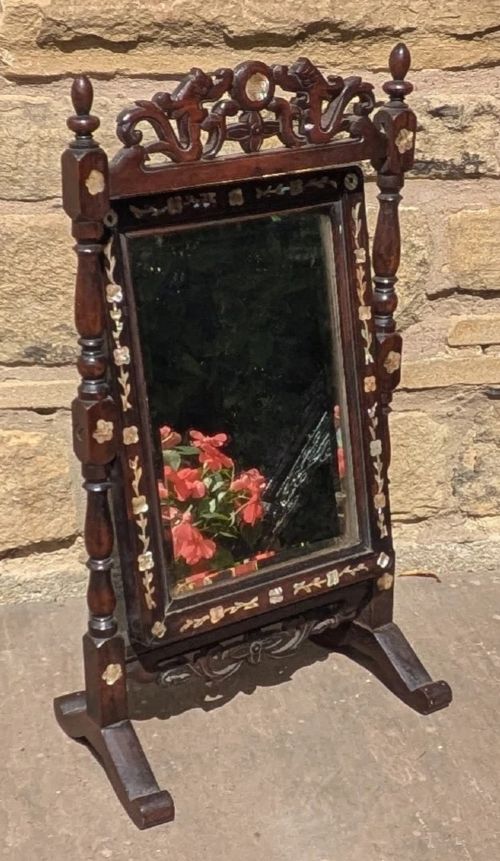
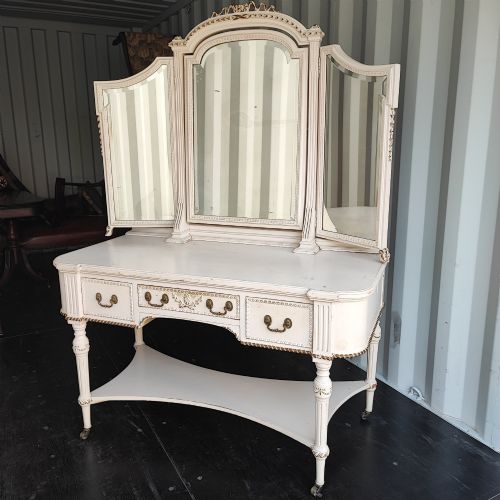
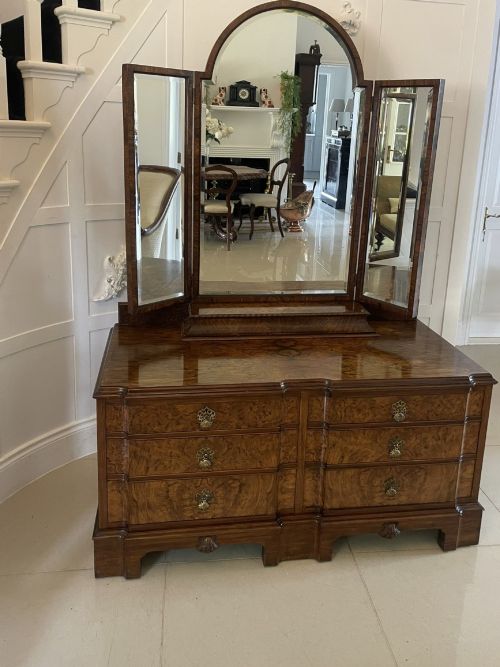
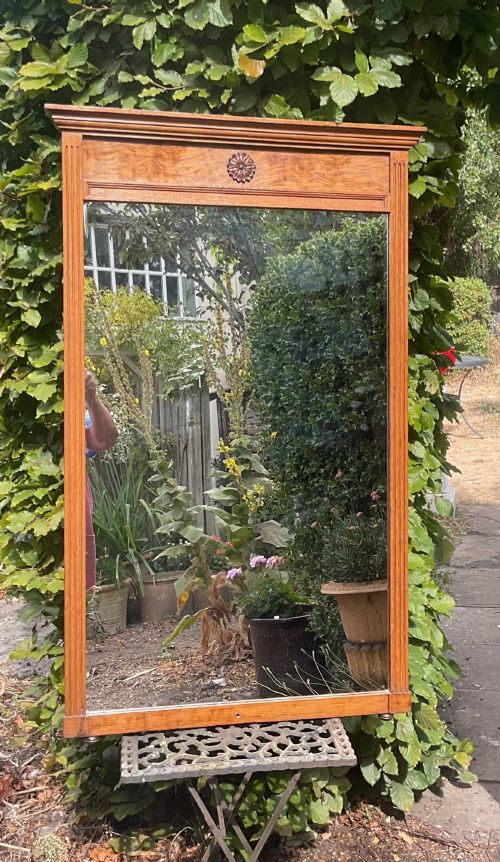
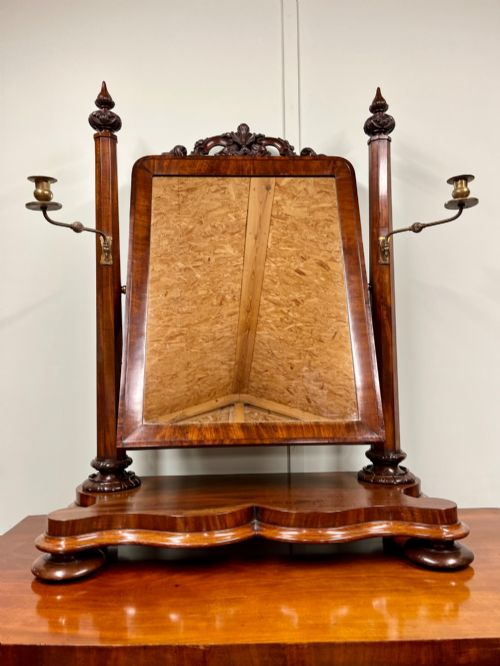
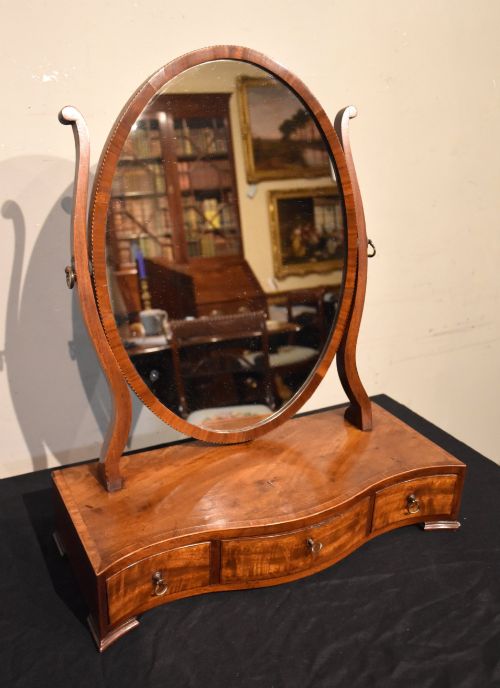
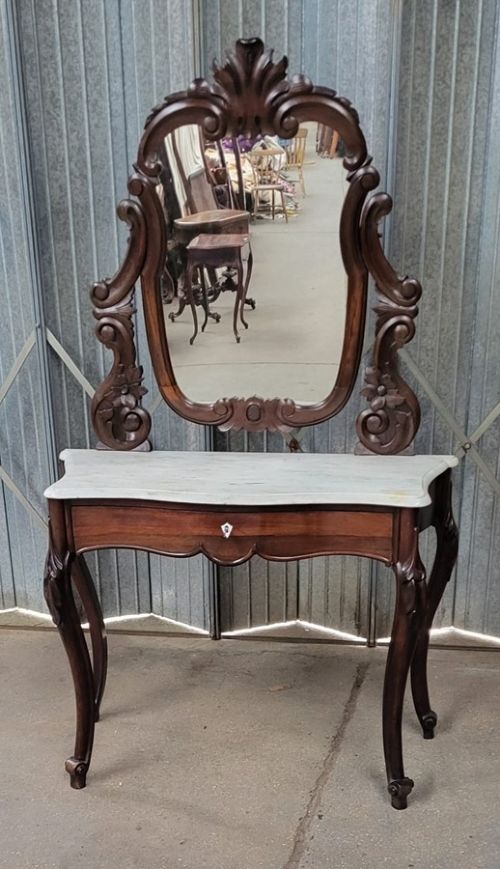
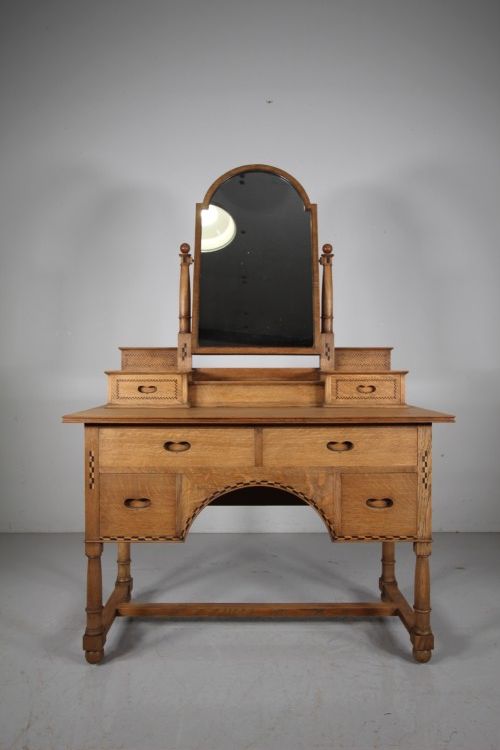
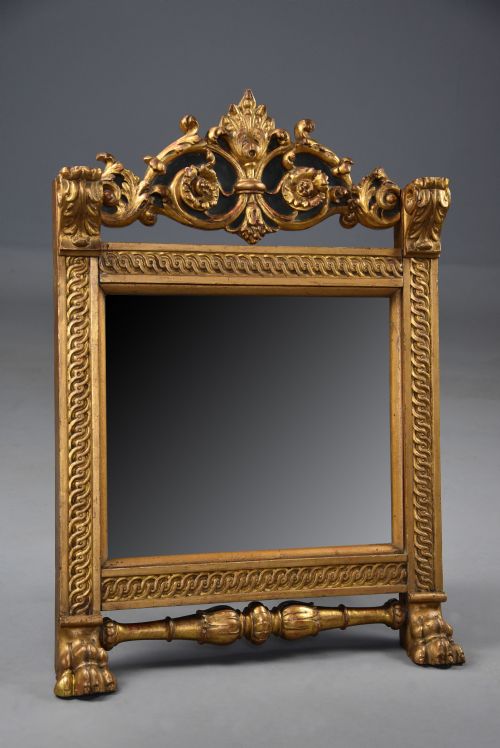
A carved mirror vanity table encompasses everything from full dressing chests with integrated swing glasses to compact table-top toilet mirrors and cheval stands. Pieces spanning the Victorian, Edwardian, and Regency periods appear frequently, alongside earlier Georgian and 18th-century examples.
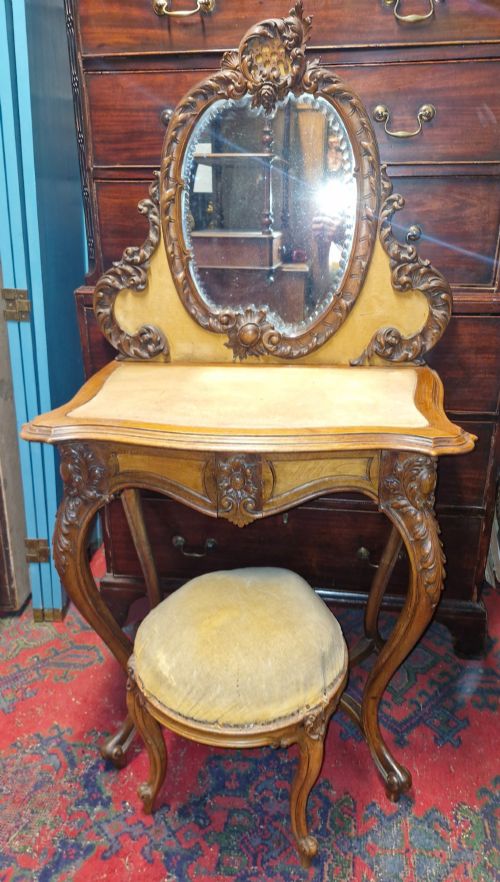
The materials range from mahogany, walnut, and burr walnut to oak, lime wood, and giltwood. Formats vary from simple single-glass swing frames to triple-mirror dressing tables with matching stools and marble tops.
Distinctions in standard
Quality rests upon the crispness of the carving, the selection of timber veneers, and the structural integrity of the mirror supports. Pieces produced by established workshops exhibit refined joinery, well-matched grain patterns, and heavy cast brass hardware.
Lesser examples display simpler construction methods, coarser timber selection, or later replacements to the mirror glass and pivoting hardware. The depth of hand-carving and the retention of original surface finishes dictate the standing of individual items.
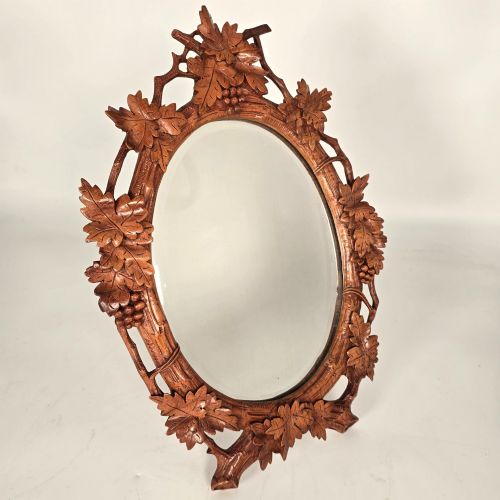
Swiss woodcarvers immortalised alpine forests in lime wood, fashioning delicate table mirrors framed by tumbling foliage.
Maples of London and Paris·Shapland and Petter·P and MA Nicholson
The Carved Mirror Vanity Table Glossary
- Cheval glass
- A full-length mirror hung on vertical pivots within a freestanding frame. This allows the glass to swing freely to various angles.
- Toilet mirror
- A smaller glass mounted on a box base or small frame designed to sit upon a chest of drawers or dressing table.
- Burr walnut
- Timber taken from the gnarled growths of a walnut tree, yielding complex, swirling grain patterns highly prized for veneer work.
- Gesso
- A plaster-like mixture applied to wood surfaces as a base for gilding or painting, allowing for sharp moulded relief work.
Carved Mirror Vanity Table: Frequently Asked Questions
What is a cheval mirror?
A cheval mirror is a tall dressing glass supported by a freestanding frame on vertical pivots. This design allows the user to tilt the glass to check full-length attire.
Such pieces range from Regency mahogany versions to later Edwardian interpretations, often placed directly on the floor rather than upon a table surface.
How do I date a dressing mirror?
Dating relies upon timber choice, construction joints, and mirror glass characteristics. Earlier 18th-century pieces utilise walnut and Georgian proportions, while Victorian examples frequently employ heavy mahogany or burr walnut.
Hand-beveled edges, original brass pivot screws, and secondary softwood framing provide further clues to the decade of manufacture.
Where should I place a vanity mirror?
These pieces suit bedrooms, dressing rooms, or hallways where natural light can strike the glass surface. Table-top versions require a sturdy chest of drawers or dedicated dressing table for support.
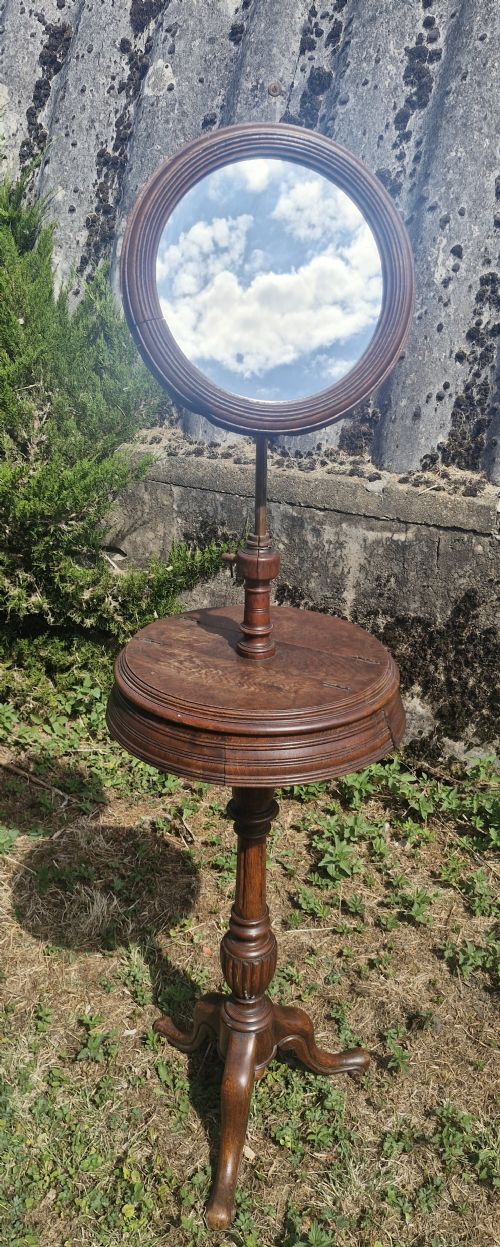
Freestanding cheval and shaving stands occupy a modest floor footprint, fitting well into bedroom corners or beside wardrobes.
Are the mirror plates original?
Many surviving pieces retain their original mercury or silvered glass, which often exhibits gentle foxing and age spots. Some items have received modern replacement glass for clearer reflection.
Examining the thickness of the glass and the backboards helps determine whether the mirror plate dates to the same period as the surrounding frame.