

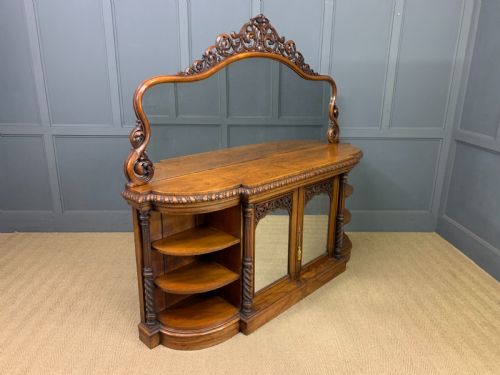


Carved Burr Walnut Credenza
A carved burr walnut credenza delivers rich timber grain and architectural presence, offering a sophisticated focal point for a formal interior.
Carved Burr Walnut Credenza
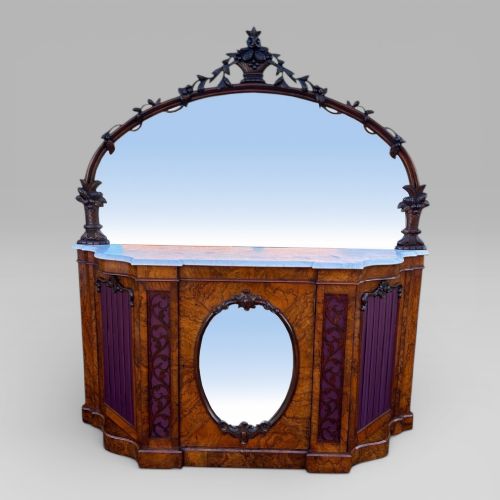
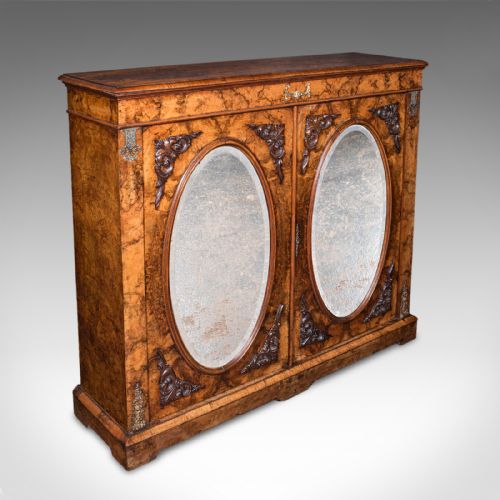
A carved burr walnut credenza brings together high-status reception furniture from the Victorian era alongside later Edwardian and Art Deco iterations. These substantial pieces function primarily as display and storage cabinetry for formal entertaining spaces.
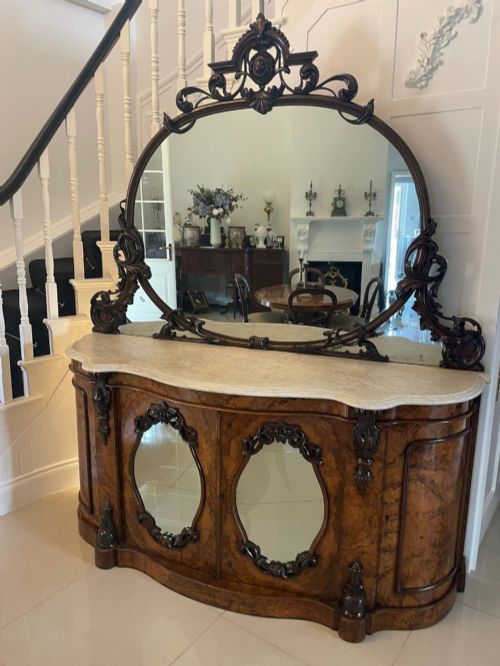
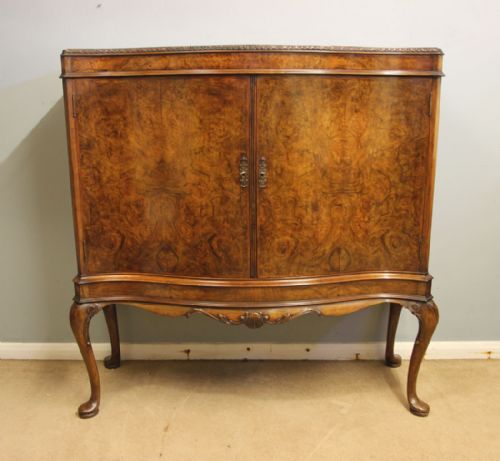
The Victorian examples most frequently met on this page combine mirror backs, marble tops, and carved serpentine woodwork. Later twentieth-century forms transition towards clean-lined side cabinets, servers, and dedicated drinks cabinets while retaining the defining burr veneer.
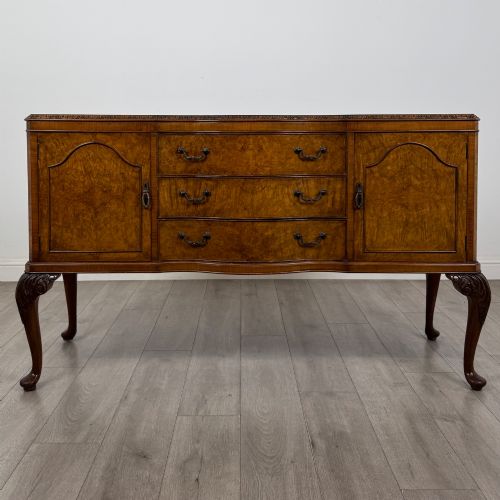
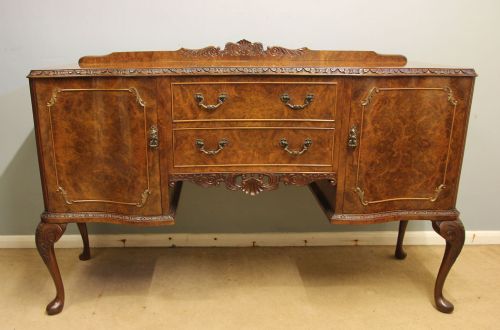
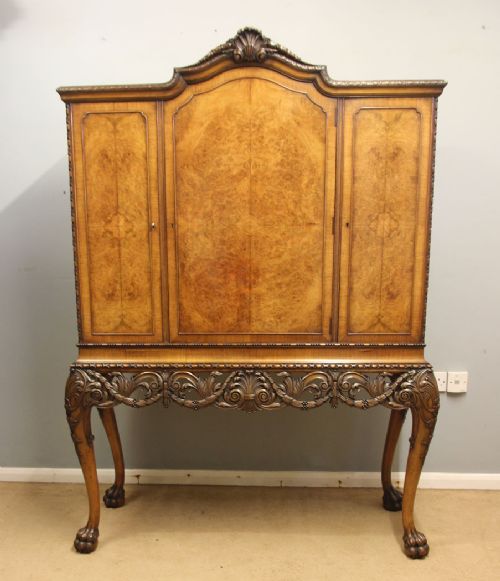
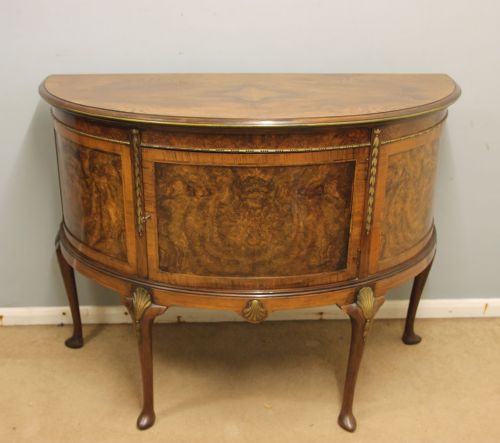
Makers adapted the form through various revivals, producing Queen Anne style sideboards alongside Neoclassical salon cabinets. Each variation maintains a focus on prominent timber figuring and substantial architectural presence.
Materials and construction
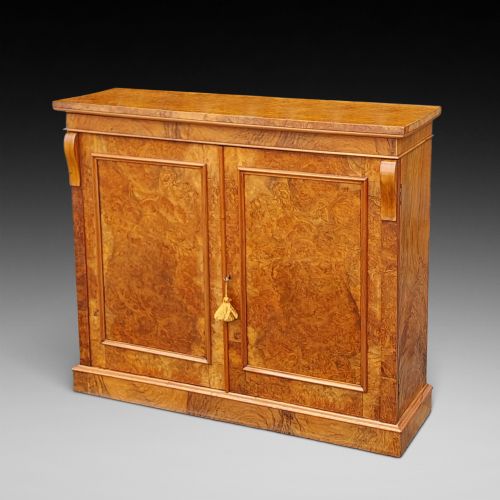
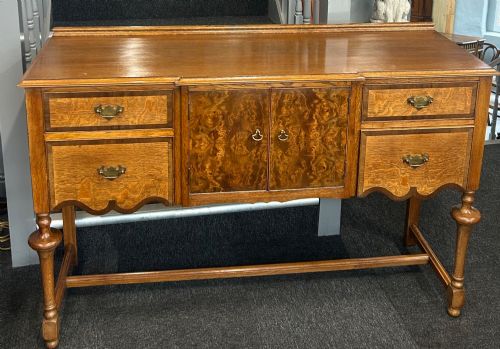
Cabinet makers utilised highly figured burr walnut veneers applied over solid secondary timbers such as oak and pine to achieve rich, swirling surface patterns. These decorative veneers are carefully matched across doors and panels to create symmetrical visual rhythms.
Structural embellishments rely on hand-carved solid walnut mouldings, applied brass hardware, and polished marble surfaces. Ormolu mounts and mirrored glass backplates frequently supplement the primary woodwork in mid-nineteenth-century pieces.
Listings span the Victorian, Edwardian, and Art Deco periods, encompassing walnut, marble, brass, and mirrored glass.
Judging quality
Quality rests upon the selection and bookmatching of the burr walnut veneer across the primary elevations, where denser and more complex grain patterns indicate superior timber selection. The depth and crispness of the hand carving on structural wooden elements separate standard workshop production from exhibition-grade pieces.
Construction methods determine long-term stability, with heavier marble slabs, thick bevelling on mirror glass, and substantial brass mounts pointing to robust original manufacture. Secondary timbers such as solid oak drawer linings further distinguish finer workshops from mass production.
Hille of London·Epstein
The Carved Burr Walnut Credenza Glossary
- Burr walnut
- A distinctive timber harvested from the irregular growth knots of walnut trees, yielding intricate, swirling grain patterns. It is sliced into thin veneers for decorative furniture surfaces.
- Credenza
- A low cabinet traditionally used for serving food and displaying plate, evolving into an enclosed sideboard or display piece during the Victorian period.
- Serpentine front
- A furniture elevation curving outward in the centre and inward towards the ends, requiring precise joinery and shaped timber framing.
- Ormolu
- Gilt bronze ornamentation applied to furniture, popular in nineteenth-century decorative schemes for mounts and handles.
- Demi-lune
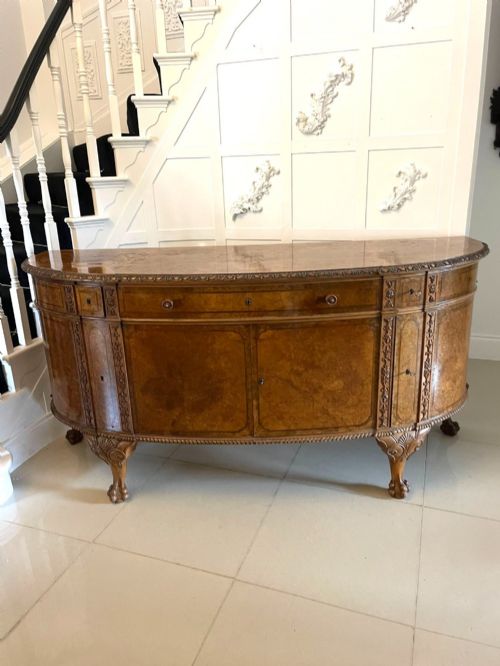
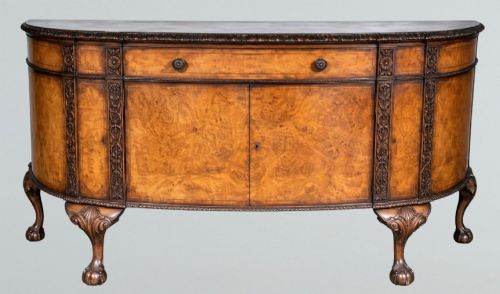
- A half-moon or semicircular shape commonly utilised for the footprint and top surface of side cabinets and console tables.
Carved Burr Walnut Credenza: Frequently Asked Questions
Where should a credenza go?
These low cabinets suit dining rooms, living rooms, and large entrance halls where their decorative timber fronts can be fully appreciated.
Position them against a principal wall away from direct sunlight to protect the polished walnut surfaces and delicate wood veneers.
How do I care for burr walnut?
Maintain the finish by dusting with a soft, dry cloth and avoiding modern spray polishes that contain silicones.
Keep the timber away from extreme temperature shifts and direct heat sources to prevent the burr veneer from drying out or lifting.
How do I identify Victorian pieces?
Nineteenth-century examples frequently incorporate mirror backs, carved serpentine frames, and heavy white or grey marble tops.
Construction details such as hand-cut dovetails in the drawer linings and solid oak secondary woods point towards this mid-century period.