

Carved Burr Walnut Console
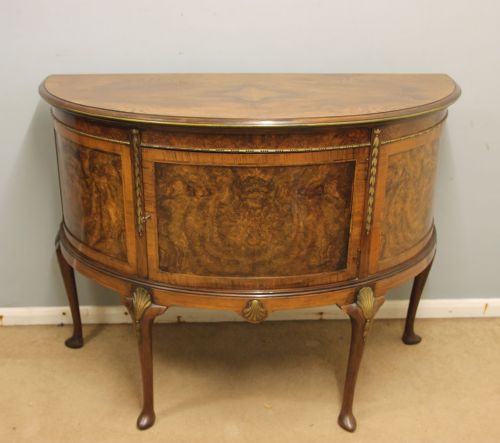
A carved burr walnut console brings rich, swirling grain patterns and sculptural timber supports into a hallway or reception room.
Carved Burr Walnut Console
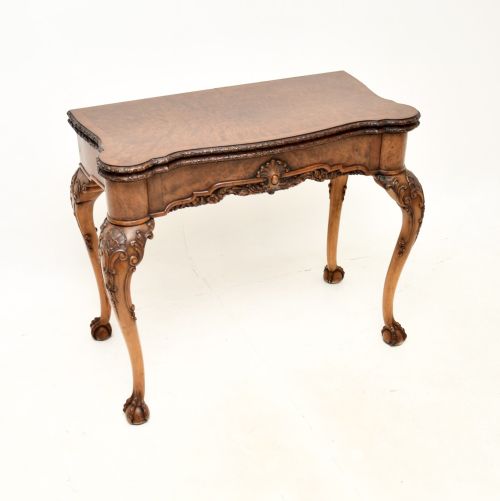
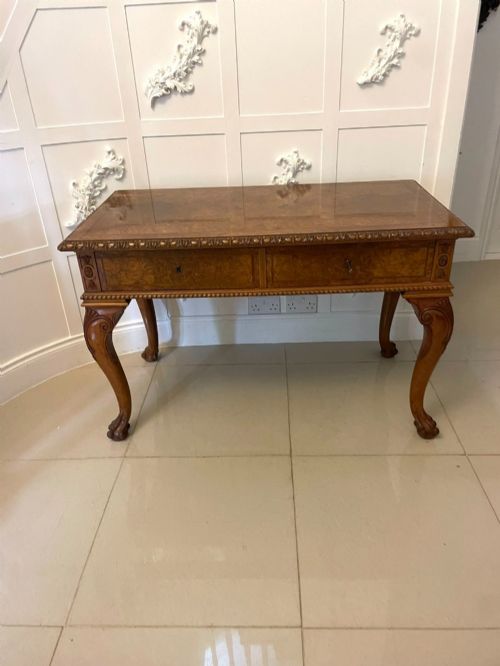
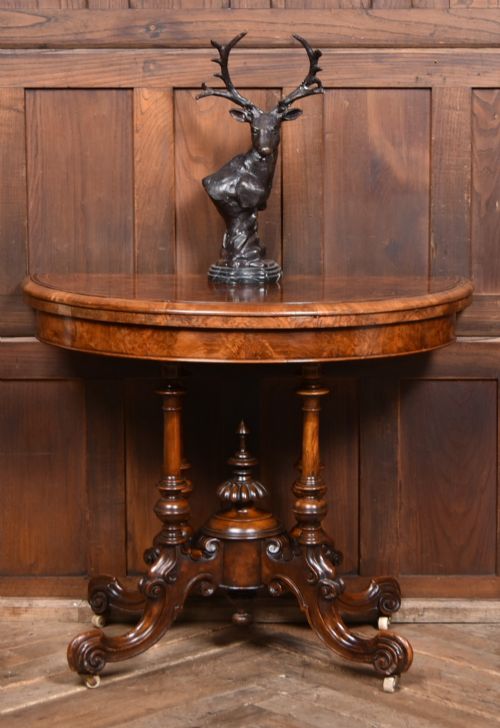
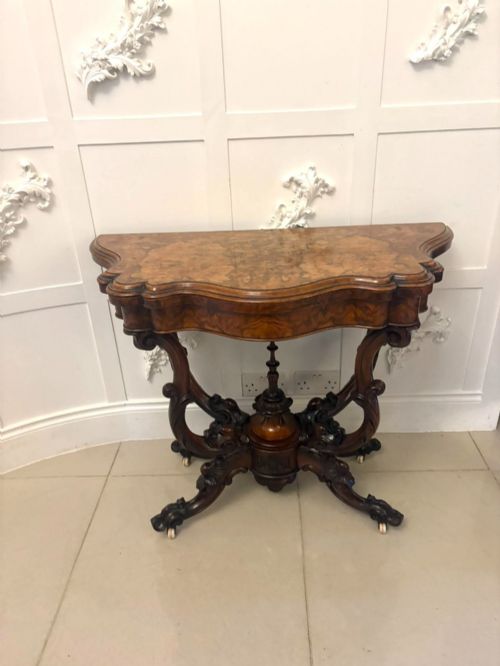
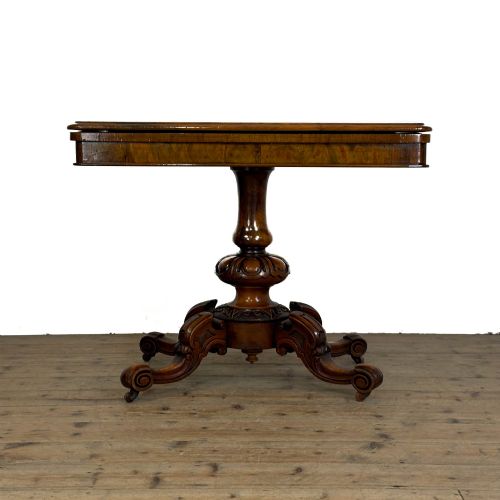
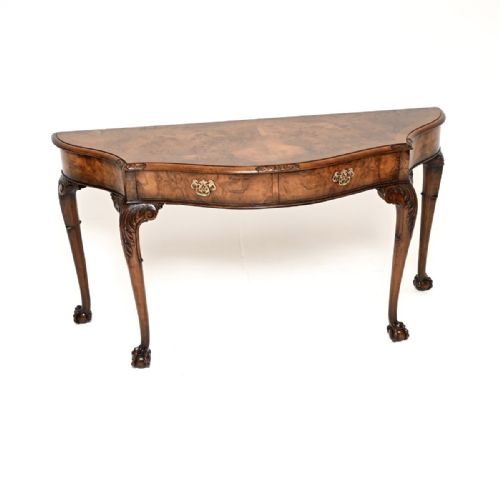
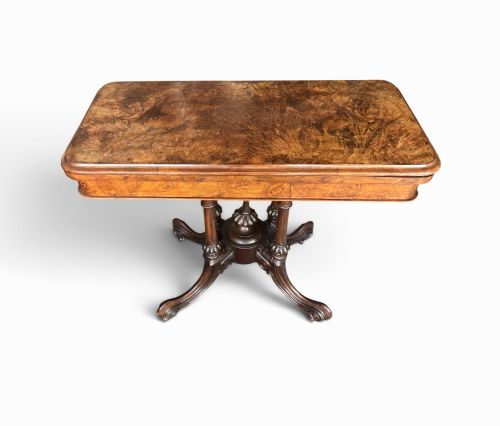
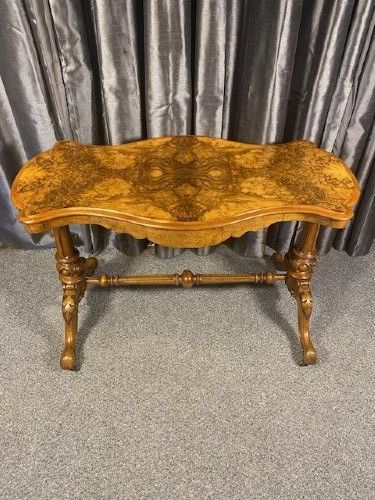
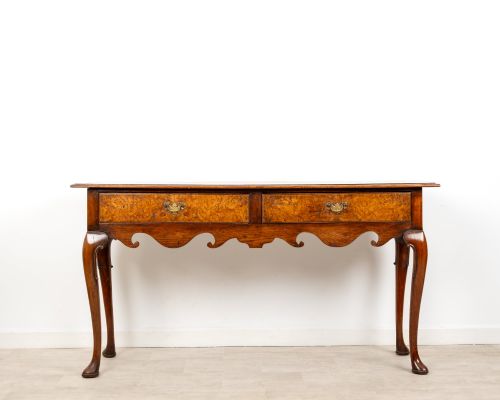
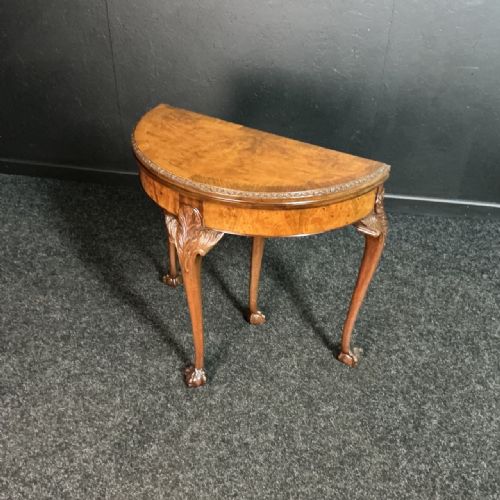
A carved burr walnut console is a decorative table designed to stand against a wall, frequently taking the form of a console table, side table, or card table. These pieces emerge across periods spanning from the Victorian era through the 1920s and 1930s, reflecting shifts in taste from elaborate mid-nineteenth-century styling to cleaner early twentieth-century lines.
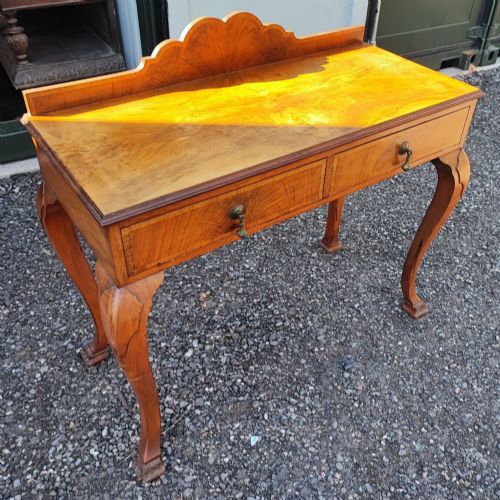
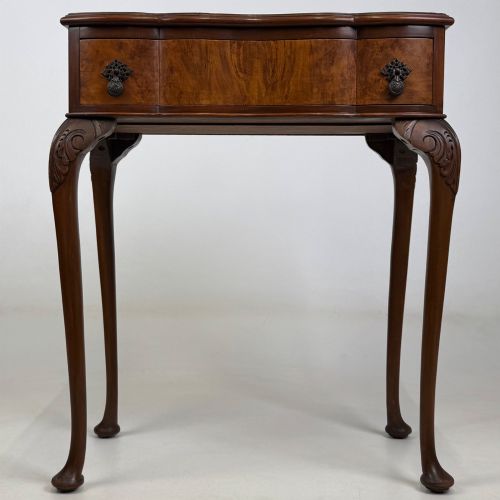
The most common formats on this page include console tables, hall tables, and multi-purpose card or games tables with fold-over tops. Makers frequently employ Queen Anne Revival influences, featuring characteristic cabriole legs and shaped aprons alongside Rococo Revival carved details and Edwardian proportions.
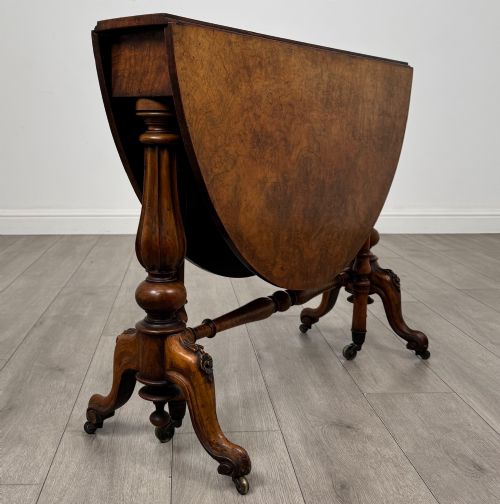
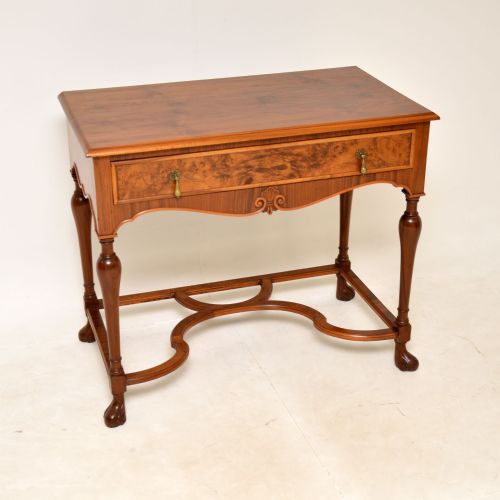
Examples often incorporate functional elements such as carved basket bases, pedestal supports, and occasional drawers. Buyers encounter variations that double as serving tables, occasional tables, and low boys, constructed primarily during the Victorian, Edwardian, and interwar decades.
How they were made
Craftsmen construct these tables using solid woods for structural framing while applying burr walnut and figured walnut veneers to visible surfaces to showcase intricate, swirling grain patterns. Secondary timbers provide stability for tabletops and internal drawer components, occasionally accented with boxwood inlay.
Carved supports, pedestals, and bases are shaped from solid timber to complement the figured veneers on the top and apron. Brass hardware appears on operational elements like drawers and pivoting leaves, while marquetry inlay techniques add geometric or floral ornamentation to specific table tops.
Listings feature burr walnut and figured walnut furniture produced across Victorian, Edwardian, and interwar periods.
What varies in quality
The visual impact of a carved burr walnut console depends heavily on the selection and matching of the veneer, with dense, highly figured grain patterns commanding greater attention than plain walnut surfaces. Superior examples display seamless veneer work across wide table tops and curved aprons without lifting or disruption.
The execution of the carved woodwork separates standard pieces from exceptional ones, particularly on basket bases, legs, and scrolled supports. Crisp hand-carving with deep relief and well-defined motifs indicates superior workshop execution compared to soft or mechanical detailing.
Maple and Co·Edwards and Roberts·Epstein and Co
The Carved Burr Walnut Console Glossary
- Burr walnut
- Timber taken from a tree growth or burr, yielding an intricate, swirling grain pattern highly valued for decorative furniture veneers. It provides the distinctive mottled surface seen on these tables.
- Console table
- A table designed to stand against a wall, frequently secured or supported by decorative brackets or carved legs. They serve functional and display purposes in entrance halls and reception rooms.
- Fold-over top
- A table surface hinged to fold out or rotate, doubling the top area when opened for games or dining. This mechanism appears frequently on Victorian and Edwardian card and games tables.
- Cabriole leg
- A furniture leg featuring a double curve, typically arching outward at the knee and tapering inward toward the foot. This form is central to Queen Anne Revival styling.
- Marquetry
- The art of applying pieces of veneer to a structure to form decorative patterns and pictures. Craftsmen utilise different wood tones to create contrasting floral or geometric designs.
Carved Burr Walnut Console: Frequently Asked Questions
Where should I place a console table?
A console table fits naturally against a flat wall in an entrance hall, landing, or living room where floor space is limited. Its shallow depth allows it to function as a surface for lamps and decorative objects without obstructing pathways.
In reception rooms, these pieces often sit beneath mirrors or paintings to anchor the wall space visually. Models with fold-over tops offer the flexibility to expand outward into the room when hosting guests.
How do I distinguish Victorian from 1920s tables?
Victorian tables typically exhibit heavier proportions, darker finishes, and dense, elaborate carving around the pedestal or base. Marquetry inlay and serpentine edges are also common hallmarks of this mid-to-late nineteenth-century period.
Pieces from the 1920s often lean toward Queen Anne Revival or Art Deco influences, featuring cleaner lines and lighter figured walnut veneers. Makers during this later era occasionally adopted simplified cabriole legs and minimal surface ornamentation.
What is a card table used for?
A card table serves as a compact side table during daily use and expands via a hinged or rotating top to accommodate card games and writing. The folding mechanism provides a stable baize-lined or polished wood surface when opened.
In contemporary interiors, these tables function effectively as small desks or hallway side pieces while retaining their traditional mechanical versatility.
How do I care for burr walnut veneer?
Burr walnut veneer requires protection from direct sunlight and extreme temperature fluctuations to prevent the wood from drying out or warping. Dusting with a soft, dry cloth maintains the polished finish without damaging the delicate grain.
Applying microcrystalline wax occasionally helps nourish the wood and preserve the depth of the figured surface. Avoid placing damp items directly onto the veneer to protect the underlying adhesive.