
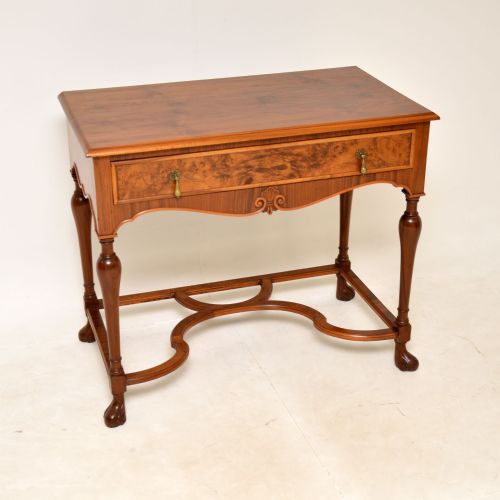
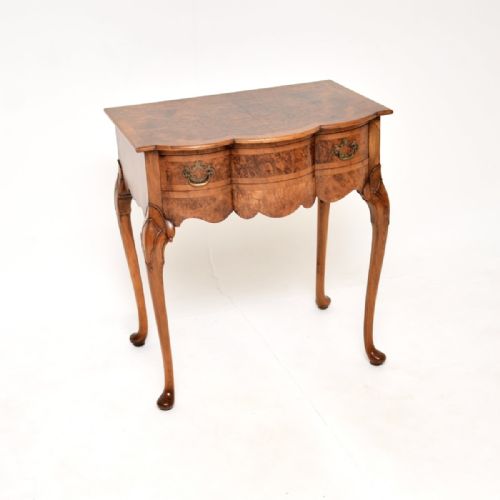
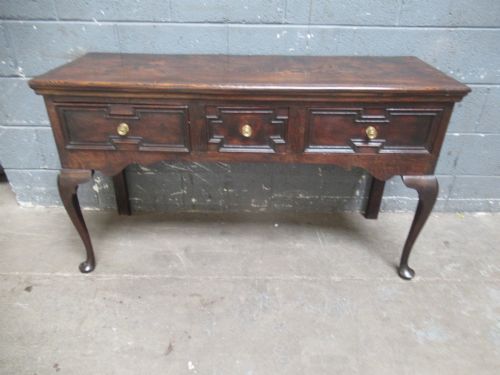

Queen Anne Server Table
A queen anne server table brings restrained elegance to a dining room or hallway, offering a surface for serving with character.
Queen Anne Server Table
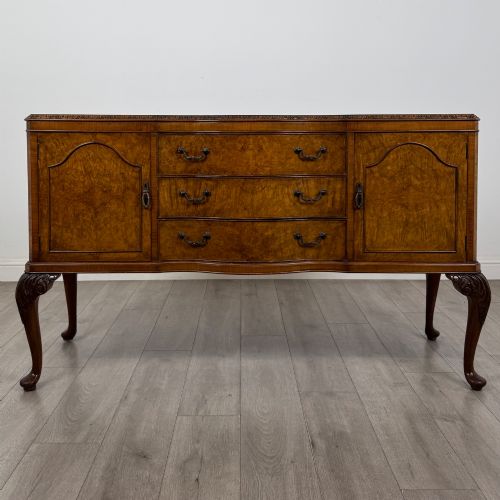
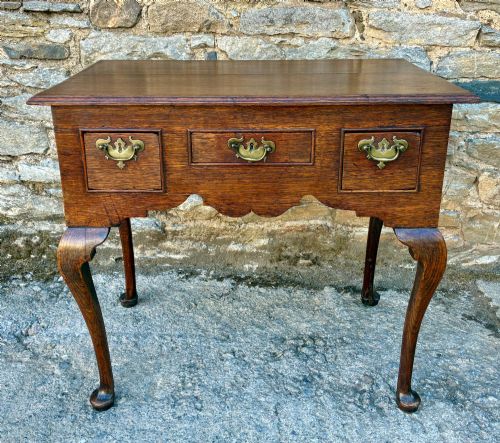
A queen anne server table combines utility with the graceful proportions characteristic of early eighteenth-century furniture and later revivals. Buyers seeking this form encounter examples ranging from authentic period pieces dating to the eighteenth century up to later revival interpretations from the twentieth century.
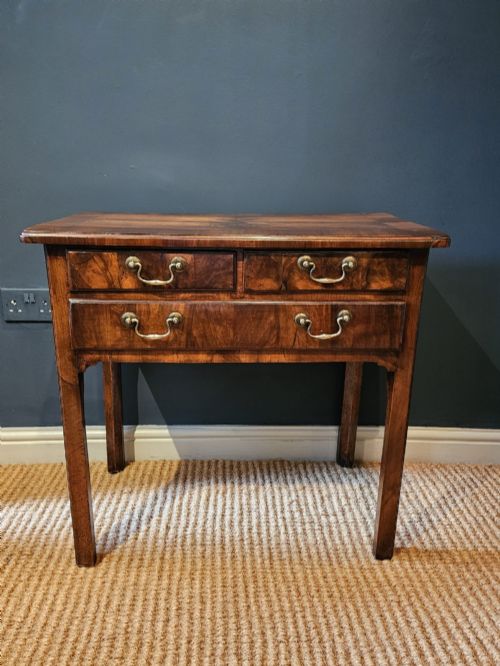
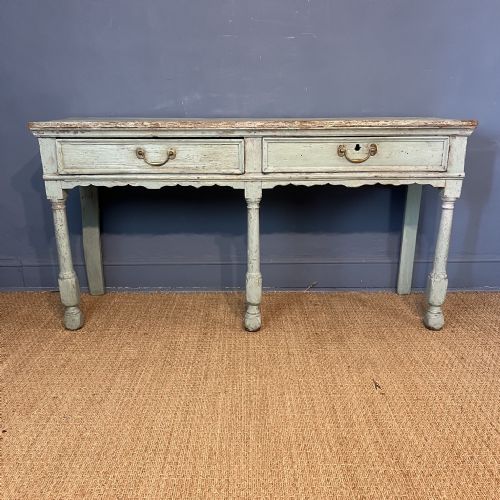
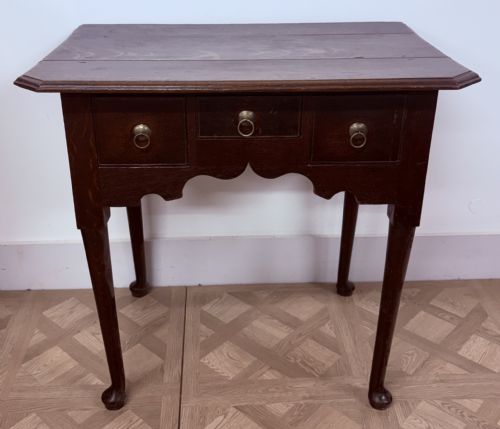
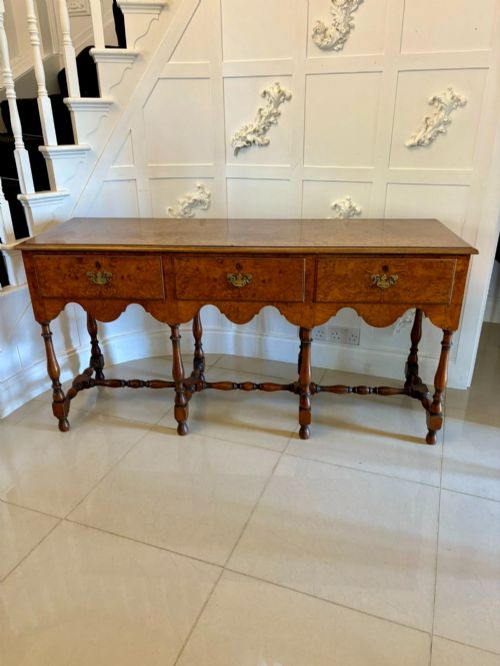
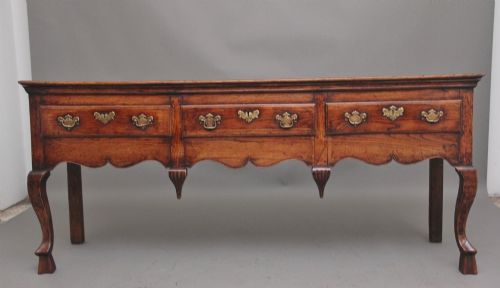
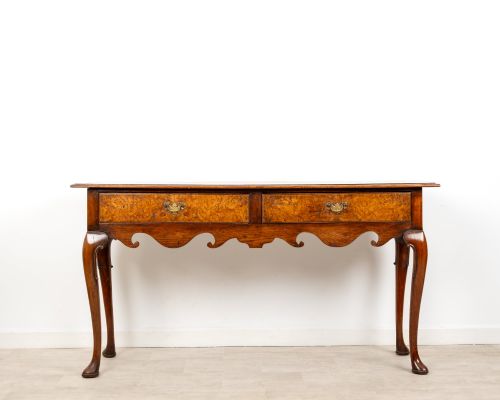
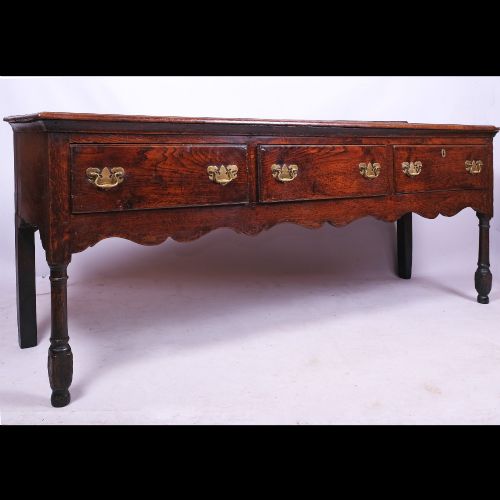
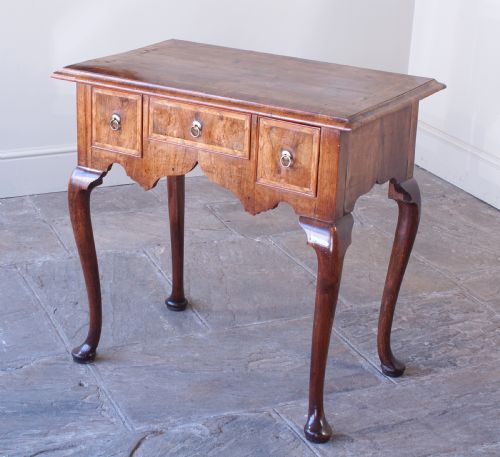
The materials span native and imported timbers, with walnut, burr walnut, and oak appearing frequently across both original and revival pieces. Forms vary from lowboys and side tables to larger console tables and dresser bases, each fulfilling the role of a serving piece.
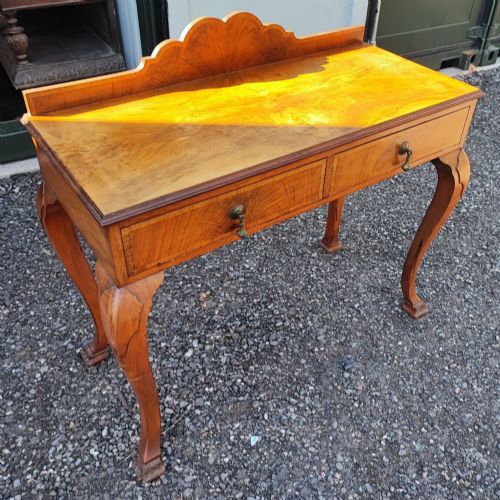
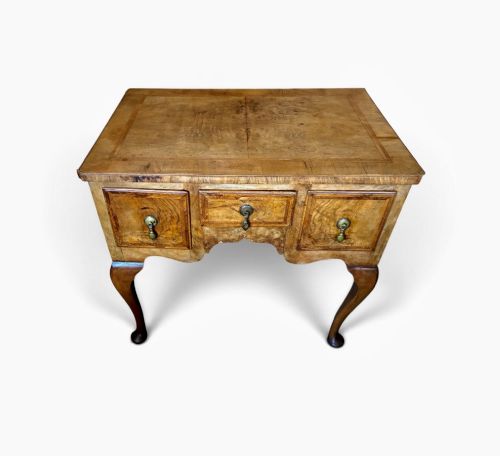
Period examples sit alongside Edwardian and 1920s reinterpretations that adopt the distinctive cabriole leg and curved apron associated with the style. These revival pieces provide the visual warmth of burr walnut veneer alongside the functional proportions of earlier serving tables.
Materials and Construction
Cabinetmakers utilised solid timbers such as oak and mahogany for structural integrity, while selecting figured veneers like burr walnut for visible surfaces. These veneers were carefully matched and applied to secondary woods, creating intricate grain patterns across the top and drawer fronts.
Legs were shaped into characteristic cabriole forms, frequently terminating in pad or club feet, and joined to the frame with traditional mortise and tenon joints. Brass hardware, including drop handles and batwing escutcheons, was fitted to the drawers of period and revival examples alike.
Listings span the eighteenth, nineteenth, and twentieth centuries, incorporating oak, walnut, mahogany, and brass.
Craftsmanship and Proportion
The distinction between tiers rests upon the selection of timber and the precision of the cabinetmaker's hand. Superior examples display highly figured burr walnut veneers with balanced grain symmetry, whereas simpler pieces rely on plain walnut or oak boards.
Proportion and execution of the cabriole leg define the aesthetic success of the piece, with finer items showing fluid curves that flow naturally into the foot. Secondary wood selection and the neatness of dovetail joints inside the drawers further indicate the standard of construction.
Hille of London·Epstein
The Queen Anne Server Table Glossary
- Cabriole leg
- A furniture leg that curves outward at the knee and tapers inward toward the ankle, mimicking an animal's limb. This form became a defining feature of eighteenth-century design.
- Lowboy
- A small table with one or more rows of drawers, commonly used as a dressing table or side table. They typically feature cabriole legs and a shaped apron.
- Burr walnut
- A veneer sliced from the knotty growth of a walnut tree, prized for its swirling, decorative grain pattern. Cabinetmakers applied this to the primary surfaces of high-status tables.
- Dresser base
- A low wooden sideboard fitted with drawers, originating in country houses for storing and serving food. They are frequently constructed from oak.
- Pad foot
- A simple, rounded foot terminating the bottom of a cabriole leg, resting flat on the floor without a separate shoe.
Queen Anne Server Table: Frequently Asked Questions
What is a lowboy?
A lowboy is a small table with drawers, typically standing on four cabriole legs, designed for domestic use in bedrooms or living spaces.
Historically, these tables functioned as dressing tables or side serving pieces, offering convenient surface space and concealed storage beneath.
How do I date a table?
Dating relies on examining the construction methods, timber choices, and secondary woods used inside the drawer framing. Eighteenth-century pieces show hand-cut dovetails and native woods, whereas twentieth-century revivals often feature machine-sawn elements and burr walnut veneers.
Stylistic cues, such as the sharpness of the cabriole curve and the type of brass hardware fitted to the drawers, also assist in determining the era.
Where should I place a server?
These tables suit dining rooms, hallways, and living areas where a surface is needed for display or serving. Their narrow profile allows them to sit against walls without obstructing pathways.
Pairing the table with a mirror or hanging artwork above creates a balanced focal point in an entryway or reception room.
What timber is most common?
Walnut and oak appear most frequently across these listings, spanning both the early eighteenth-century period and subsequent twentieth-century revivals. Burr walnut veneer is particularly prevalent in revival pieces from the nineteen-twenties and nineteen-thirties.
Mahogany and painted pine also occur, offering alternative finishes and grain patterns depending on the origin and style of the piece.