


Carved Burr Walnut Buffet
A carved burr walnut buffet brings deep figured timber and grand proportion to a dining room, offering substantial storage with undeniable presence.
Carved Burr Walnut Buffet
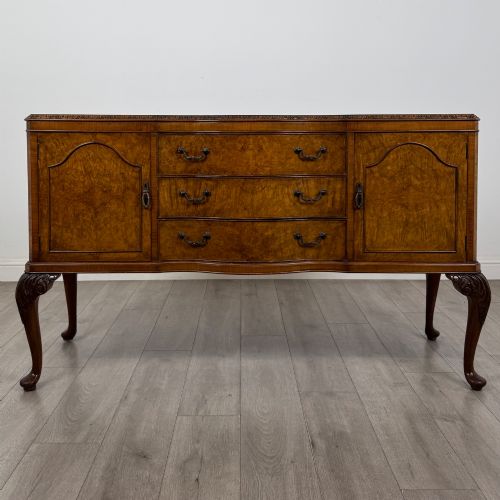
A carved burr walnut buffet is a substantial serving and storage piece, spanning periods from the mid-nineteenth century through the Art Deco era of the nineteen thirties. These pieces appear in forms such as sideboards, credenzas, servers, and consoles.
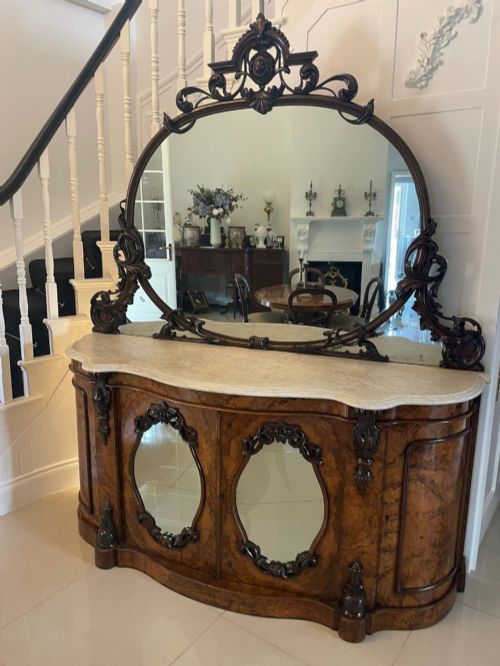
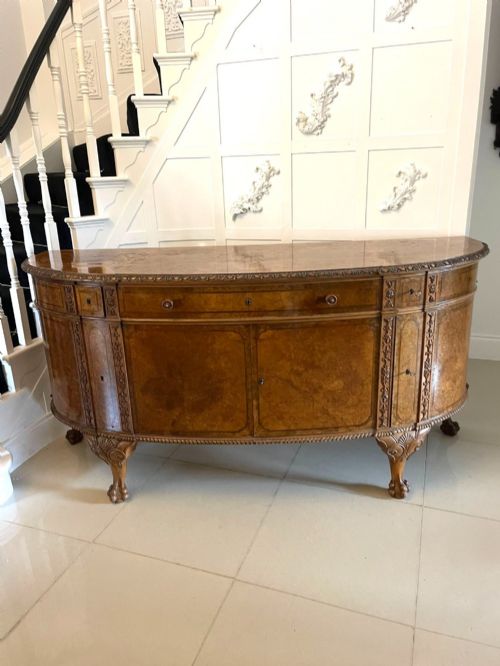
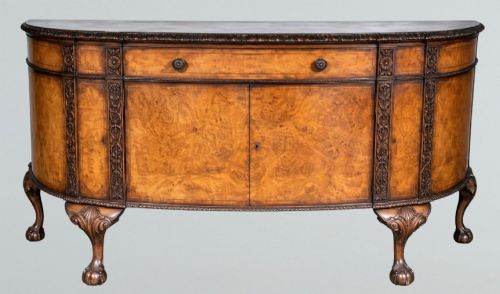
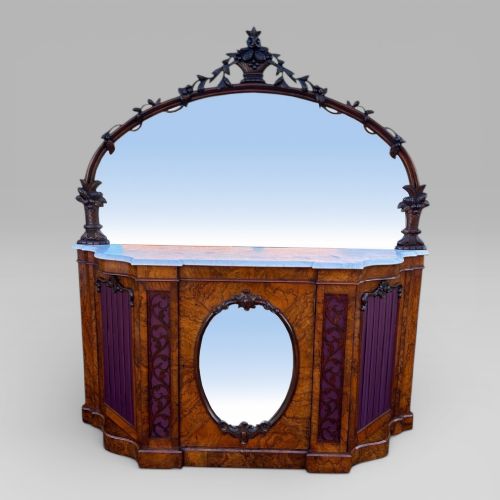
The Victorian version dominates the selection, frequently featuring carved mirror backs, serpentine fronts, and marble tops alongside traditional buffets. Edwardian and later twentieth-century examples introduce cleaner lines, bow fronts, and occasional French neoclassical or Art Deco styling.
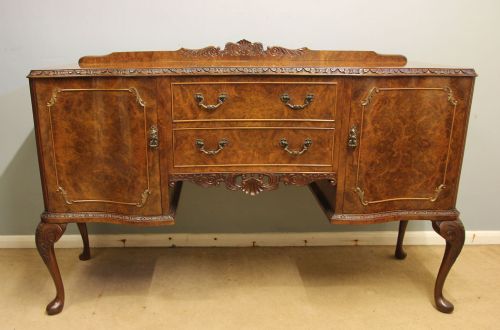
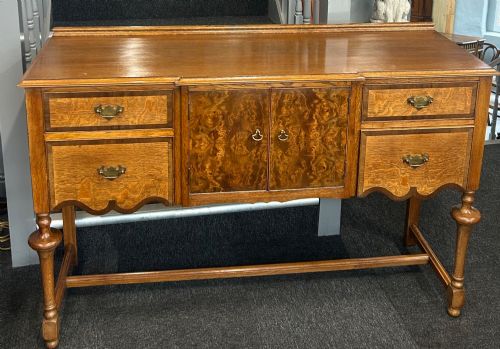
Makers and workshops construct these large items using robust carcases of oak, hardwood, and walnut, overlaid with highly figured burr veneers. They serve equally as display surfaces and functional storage cabinets within grand dining spaces.
What varies in quality
The richness and continuity of the burr walnut veneer determine visual impact, with symmetrical book-matching marking the finer examples. Dense, intricate hand-carving elevates a piece far above simpler moulded versions.
Construction heft and secondary wood selection distinguish workshops, where heavy marble tops, solid brass mounts, and sound internal joinery indicate high-tier production.
Listings span periods from the eighteenth century through the Art Deco era, with Victorian walnut credenzas and Edwardian sideboards forming the core group.
Hille of London·Epstein
The Carved Burr Walnut Buffet Glossary
- Burr walnut
- A veneer taken from the gnarled growth on a walnut tree, prized for its swirling grain and complex patterns. It provides the primary decorative surface on these buffets.
- Credenza
- A low cabinet or sideboard, frequently featuring mirrored backs and glazed side cupboards in Victorian iterations. These pieces are often grouped under the broader buffet and sideboard category.
- Serpentine front
- A furniture front curved in a wave shape, convex in the centre and concave at the sides. This technique requires considerable skill from the veneer layer.
- Cross-banding
- A narrow strip of veneer laid around the border of a larger panel, running perpendicular to the main grain. This frames the burr walnut surfaces with contrasting lines.
Carved Burr Walnut Buffet: Frequently Asked Questions
Where should I place a buffet?
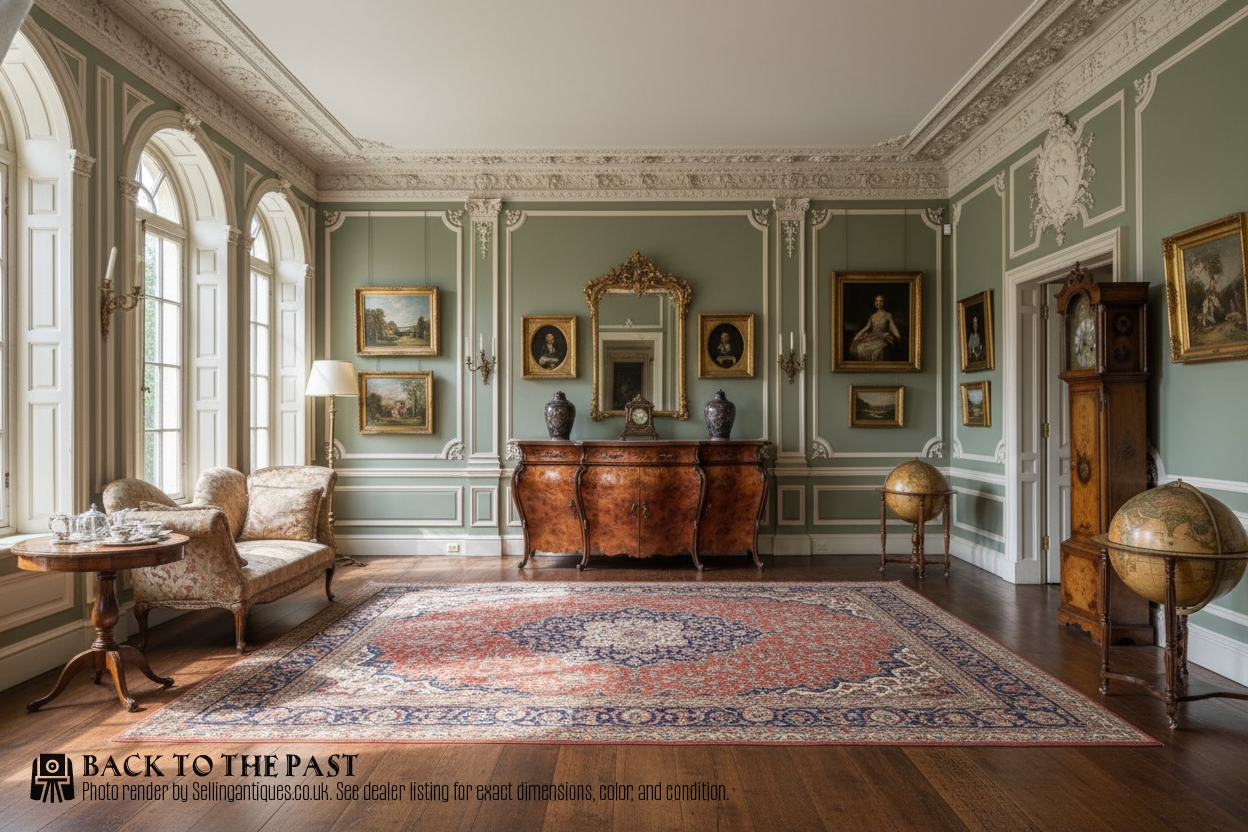
These large serving pieces fit naturally against the main dining room wall, where they provide a surface for serving food and displaying silver. Their deep proportions require adequate floor space and clearance for opening doors or drawers.
In contemporary interiors, smaller credenzas and servers function effectively in hallways or large reception rooms to hold lamps and books, utilising the cabinet storage below.
How do I care for burr walnut?
Keep burr walnut furniture away from direct sunlight and heat sources to prevent the thin veneers from drying, cracking, or lifting from the carcase. Dust regularly with a dry cloth and apply occasional natural wax to maintain the polish.
Avoid using modern liquid polishes or silicone sprays, which can penetrate aged finishes and damage the timber over time. Lift items rather than sliding them across the wooden or marble surface.
How do I date a sideboard?
Victorian examples generally feature heavy carved mirror backs, serpentine fronts, and occasional marble tops, reflecting mid-nineteenth-century taste. Edwardian pieces offer lighter proportions, while nineteen-thirties models show geometric Art Deco influences.
Examine the secondary timbers inside drawers and cabinet backs, as pine and oak usage shifts across the decades. Hardware styles and construction methods inside the carcase also confirm the period.
What is the difference between a buffet and a credenza?
A buffet traditionally functions as a dining room sideboard designed for serving food and storing tableware. They tend to stand at a convenient height for serving dishes during meals.
A credenza often includes a superstructure with a mirror and shelves, traditionally serving a display purpose in drawing rooms. On this page, makers and dealers frequently use these terms interchangeably.