


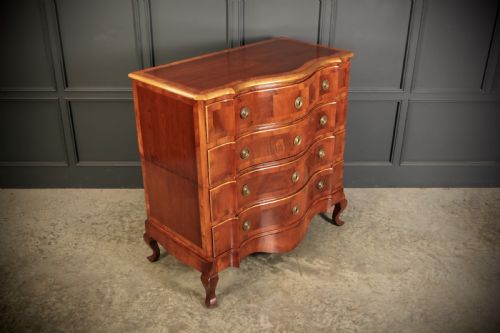


Rococo French Sideboard
A rococo french sideboard brings sweeping serpentine lines and rich timber into a room, offering both display and storage with undeniable historic presence.

Rococo French Sideboard
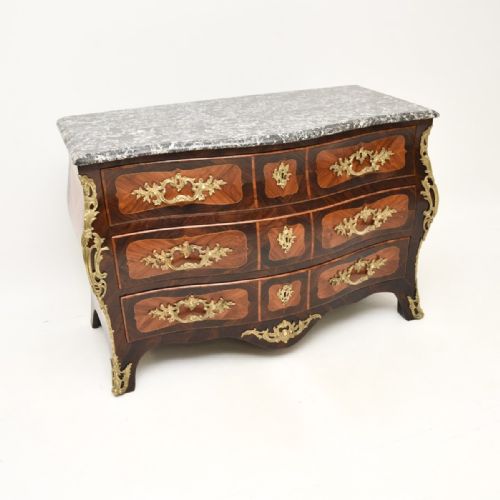
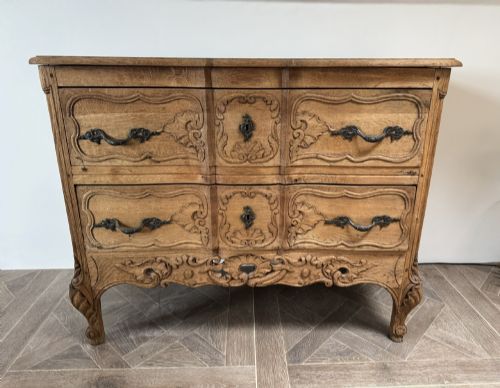
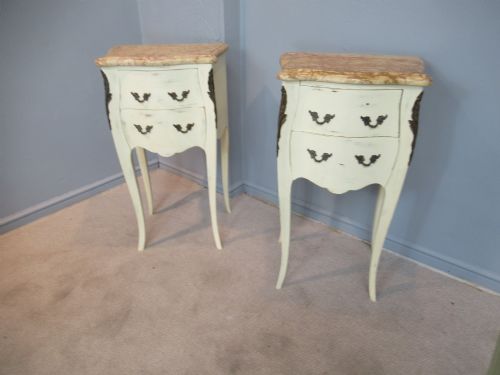
When searching for a rococo french sideboard, buyers encounter a striking array of antique commodes, side cabinets, and larger buffets spanning from the eighteenth century into the twentieth century. These pieces originate primarily from French provincial and chateau contexts, adopting the flowing, asymmetrical curves characteristic of the Louis XV style and its later revivals. The selection on this page leans heavily toward marble-topped commodes and serpentine-fronted cabinets rather than formal dining sideboards.
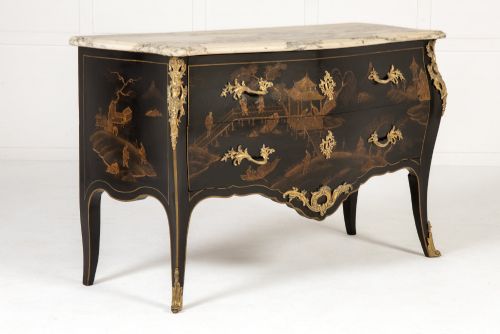
Forms vary from compact bedside tables and side cupboards to monumental bombé commodes and inlaid mahogany or kingwood sideboards. Many examples display the distinct serpentine contour, swelling out in graceful bulges or curving gently along the front and sides. Whether finished in bleached oak, painted surfaces, or intricate japanned lacquer, each form serves to anchor a room with distinct continental character.
How they were made
Cabinet makers constructed these pieces using dense hardwoods such as walnut, oak, kingwood, and mahogany as the structural carcass. Surfaces frequently received elaborate marquetry or parquetry inlays, arranging contrasting timbers in geometric or floral patterns, while some examples utilised painted finishes or chinoiserie japanned lacquer.
Metal mounts in ormolu, gilt bronze, and brass accent the corners, handles, and aprons, following the organic scrolls of the rococo idiom. Heavy polished marble tops, often shaped to match the serpentine contour of the wooden base below, complete the construction.
Several pieces arrive equipped with heavy marble tops, ensuring your sideboard is secretly prepared for pastry rolling.
What varies in quality
The degree of refinement in the carved wooden contours and the precision of the serpentine shaping set individual examples apart. Crisp handling of the wood and balanced proportions distinguish finer cabinets from simpler provincial pieces.
Jacques Bircklé·Gaudreaux·Gillows·Germain Landrin
The Rococo French Sideboard Glossary
- Bombe
- A swelling, bulging outward curve on the front and sides of a cabinet or commode. This voluptuous silhouette is a hallmark of mid-eighteenth-century design.
- Ormolu
- Gilded bronze used for decorative mounts and accents on furniture. The technique involves applying a finely ground gold-mercury amalgam to bronze.
- Marquetry
- Decorative veneer patterns formed by fitting together small pieces of various coloured woods. Craftsmen apply these veneers to the structural carcase of the furniture.
- Serpentine
- A curved line or surface that waves inward and outward, resembling a snake. This contour defines the fronts of many commodes and sideboards.
- Commode
- A low chest of drawers, often standing on relatively tall legs. In French furniture history, it evolved into a principal decorative and storage form for the salon.
Rococo French Sideboard: Frequently Asked Questions
What rooms suit a rococo french sideboard?
These pieces sit comfortably in a grand dining room, a spacious hallway, or as a focal point in a drawing room. Their decorative surfaces and storage capacity make them versatile for displaying objects while concealing household items.
Because many feature marble tops, they also function well in principal bedrooms or studies where a durable, decorative surface is useful.
How do I distinguish eighteenth-century pieces from later revivals?
Eighteenth-century pieces display construction methods, timber patination, and hand-cut joinery consistent with the period of their origin. They carry the natural wear of centuries of careful use.
Later revivals from the nineteenth and twentieth centuries often utilise machine-cut elements or show revival styles like Louis XV Revival, while still employing traditional hardwoods and mounts.
How should I care for the marble top?
Marble requires gentle cleaning with a soft cloth and warm water, avoiding acidic substances like vinegar or citrus that can etch the polished surface. Placing protective pads under heavy objects prevents scratching.
Applying a specialist stone wax periodically helps maintain the sheen without building up harmful residues.
What is the difference between a commode and a sideboard?
A commode is traditionally a low chest of drawers or cabinet designed for the bedroom or salon, often featuring a serpentine front and marble top. Sideboards and buffets are generally longer pieces intended for dining rooms to serve food and store tableware.
In French cabinetmaking, the commode remains lighter in scale than the massive buffets de corps.