
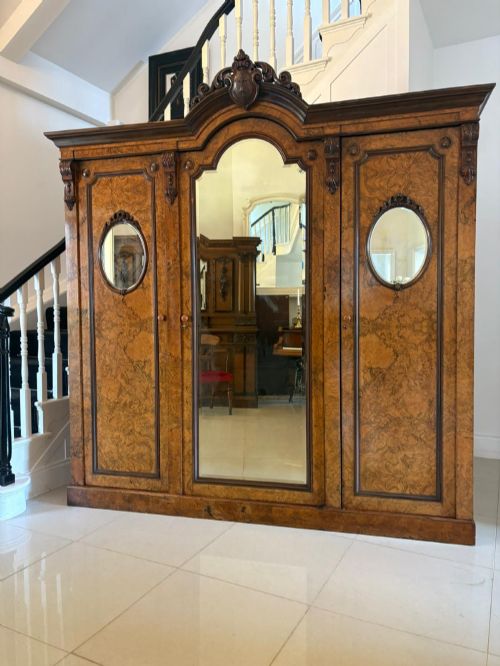
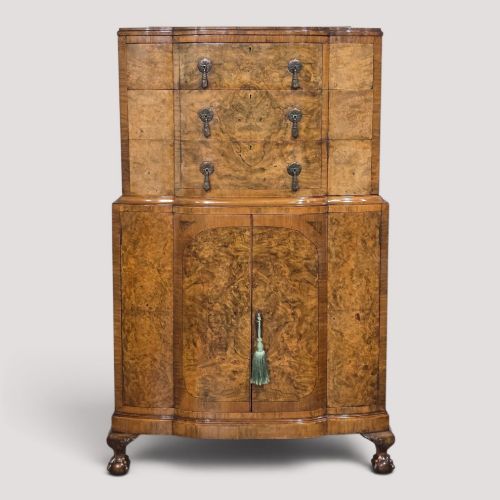
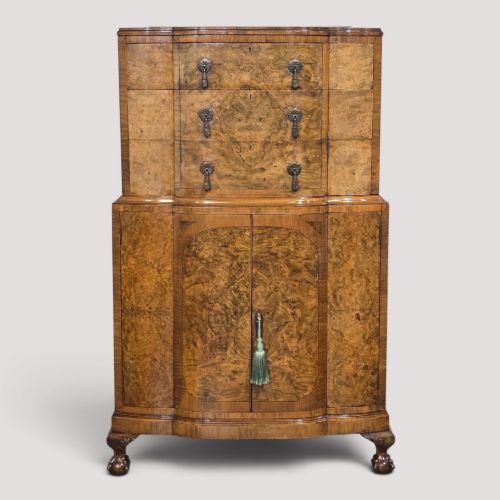
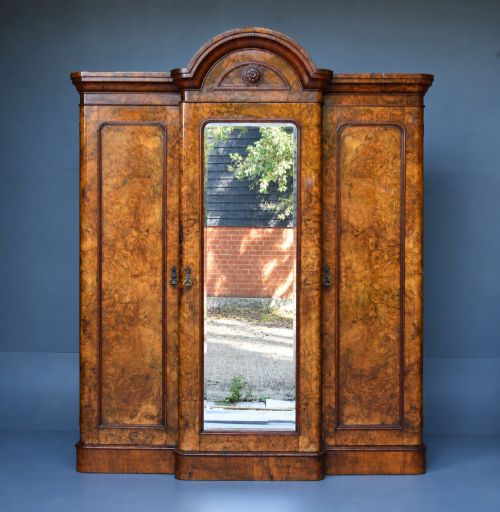



Carved Burr Walnut Armoire
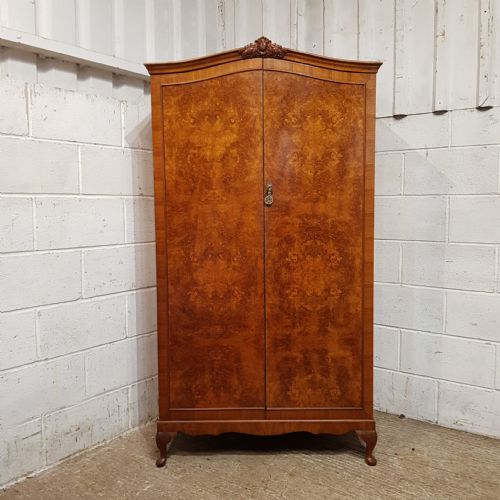
These large storage pieces known as a carved burr walnut armoire bring dramatic timber figure and deep period character to a bedroom.
Carved Burr Walnut Armoire
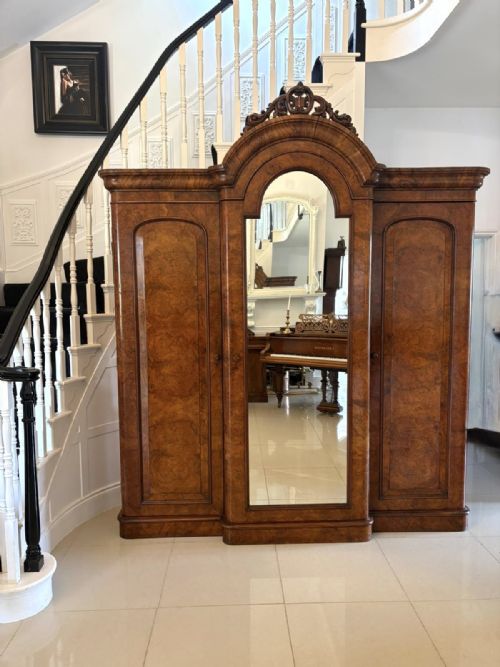
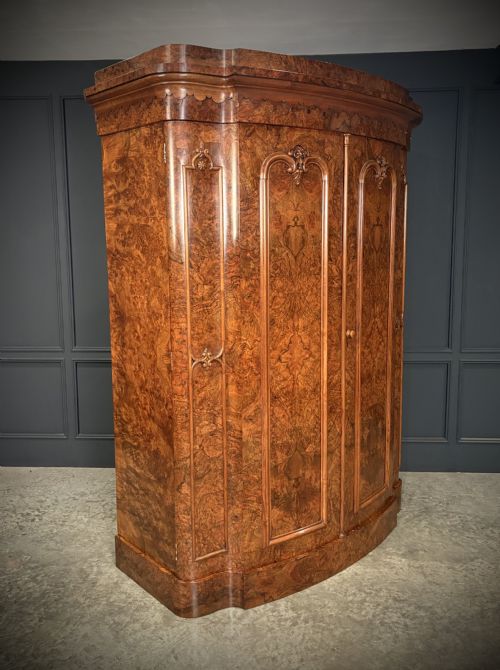
A carved burr walnut armoire provides substantial hanging space and linen storage through grand architectural cabinets produced across the nineteenth and early twentieth centuries. These large wardrobes and compactums appear in Victorian, Edwardian, and later revivals, utilising rich timber veneers across triple, double, and serpentine configurations.
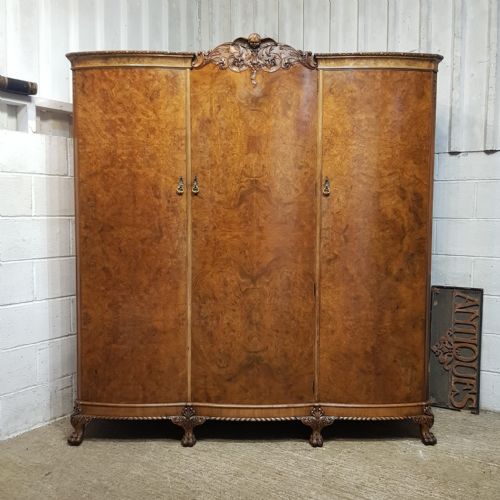
Makers shaped these grand storage pieces in varied regional idioms, ranging from English Victorian workshops to continental French Rococo Revival and Grunderzeit traditions. Buyers will frequently encounter triple door wardrobes and fitted linen presses that showcase the swirling grain of burr walnut alongside solid walnut framing.
The internal layouts of these cabinets frequently include hanging compartments, sliding linen trays, and drawers, designed to meet the rigorous storage demands of historical households. Architectural cornices and carved details anchor the imposing scale of these impressive bedroom pieces.
Materials and construction methods
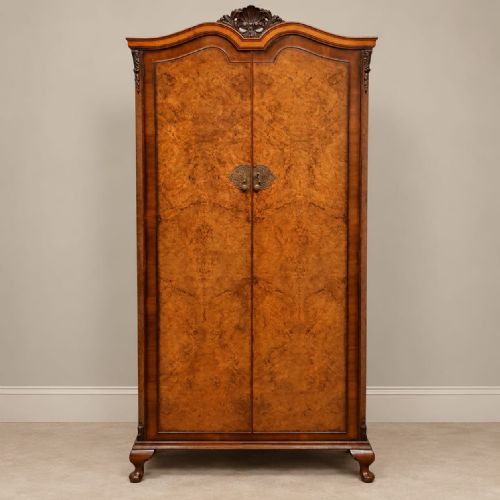
Cabinetmakers applied highly figured burr walnut and walnut veneers over stable secondary timbers such as oak, creating striking geometric and book-matched patterns across large cupboard doors. These decorative surfaces required meticulous hand-polishing to highlight the intricate swirls and knots inherent in the burr growth of the walnut tree.
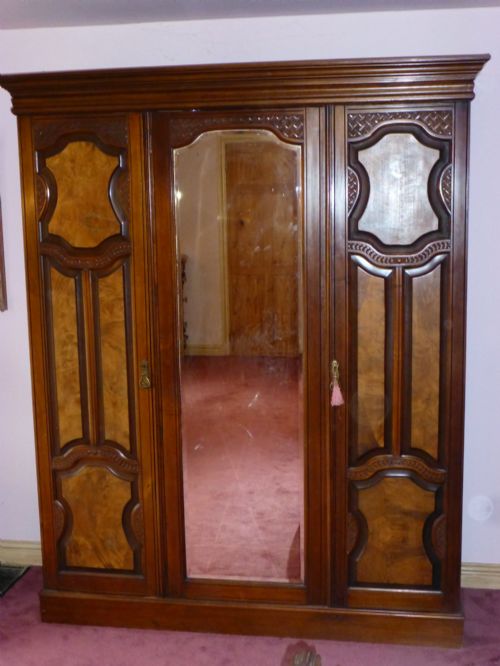
Structural integrity relied on traditional joinery methods combined with substantial brass hardware, mirror glass panels, and occasional ormolu mounts. Carved elements were worked directly into solid walnut mouldings and cornices to frame the figured veneer panels.
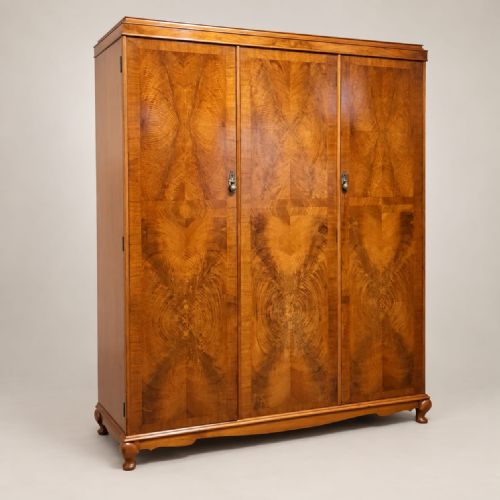
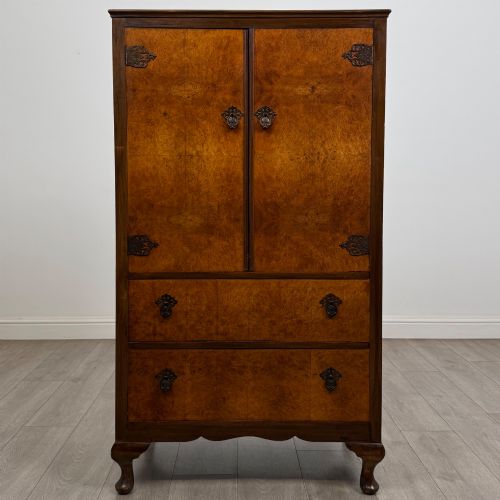
Cabinet forms on this page include compactums, linen presses, and multi-door wardrobes reflecting English and continental traditions.
Evaluating craftsmanship and proportion
The distinction between standard production and exceptional craftsmanship rests in the selection and matching of the burr walnut veneer across wide expanses like triple wardrobe doors. Superior examples display symmetrical grain patterns that flow seamlessly across panels and drawers without interruption.
Proportion and architectural detailing also define the upper tier of these pieces, where carved mouldings, panel depth, and original brass fittings demonstrate superior workshop standards. The complexity of internal fittings, such as compactum configurations and sliding linen trays, further separates utilitarian pieces from master cabinet work.
Holland and Sons
The Carved Burr Walnut Armoire Glossary
- Armoire
- A large upright cupboard or wardrobe used historically for storing garments and linens. These pieces often feature double or triple doors enclosing hanging space and internal drawers.
- Compactum
- A multi-functional wardrobe designed to combine hanging space, sliding shelves, and internal drawers within a single fitted unit. This layout maximises storage efficiency in period bedrooms.
- Linen press
- A tall cupboard featuring upper shelving enclosed by doors and lower pull-out drawers. Originally built to store folded textiles and linens flat.
- Serpentine front
- A furniture facade featuring a gentle undulating curve that bulges outward in the centre and recedes at the sides. This shape requires skilled joinery to execute across large wardrobe doors.
Carved Burr Walnut Armoire: Frequently Asked Questions
How do I fit a large armoire in a modern bedroom?
These grand wardrobes require careful measurement of ceiling height and floor space before placement, as their imposing cornices and deep wardrobes demand substantial clearance. Many nineteenth-century triple wardrobes and compactums were constructed with knock-down panels or modular sections to assist with movement and assembly.
Positioning the piece away from direct sunlight and heat sources protects the fragile burr walnut veneer and polished finish from drying out over time. Adequate wall clearance also ensures that large doors can swing open fully to access internal drawers and sliding trays.
What is the difference between a wardrobe and an armoire?
While both terms describe large storage cabinets, traditional wardrobes focus primarily on vertical hanging space for garments. Armoires often incorporate a more architectural presence with flexible internal configurations including shelves and linen presses.
Continental European examples frequently use the armoire designation for deep storage cupboards that combine hanging capacity with extensive internal shelving. Both forms share a common heritage of grand scale and decorative timber work.
How should I care for burr walnut veneer?
Maintenance involves dusting with a soft, dry cloth and applying traditional wax polish sparingly to nourish the timber surface. Avoiding synthetic sprays and maintaining stable room humidity prevents the fine walnut veneers from lifting or cracking.
Periodic inspection of hinges and locks ensures that heavy doors remain properly aligned and supported on their frames. Gentle handling of original brass hardware preserves both the function and historical integrity of the piece.
How can I tell the period of a wardrobe?
Dating relies on observing construction techniques, timber choices, and stylistic markers such as Victorian architectural cornicing or Edwardian proportions. The presence of secondary woods like oak inside drawers and the style of internal fittings offer reliable clues to the era of manufacture.
Cabinet backs, screw types, and lock mechanisms also provide physical evidence of the working methods used during specific decades. Comparing these structural details against known stylistic periods helps establish an accurate timeframe.