

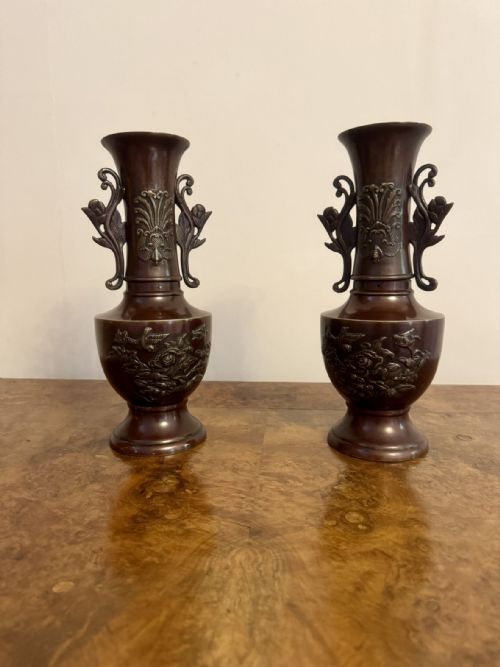


Carved Bronze Vases
These carved bronze vases bring heavy cast metal and detailed surface work together from nineteenth-century workshops.
Carved Bronze Vases
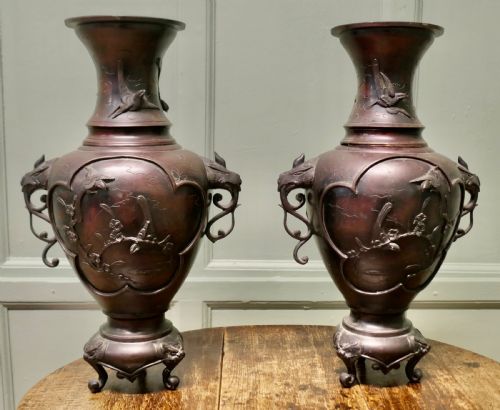
When you search for carved bronze vases, you find heavy metal vessels shaped as baluster urns, stem vases, and twin-handled forms intended for display. The pieces met on this page originate predominantly from nineteenth-century Japanese Meiji workshops and Chinese kilns and foundries, alongside Italian Grand Tour productions and Victorian adaptations.
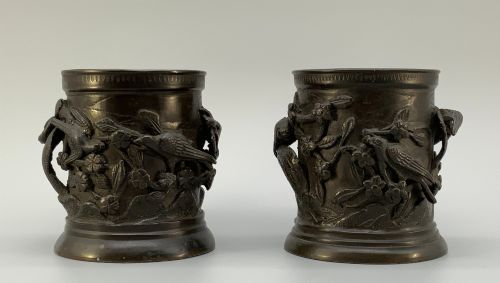
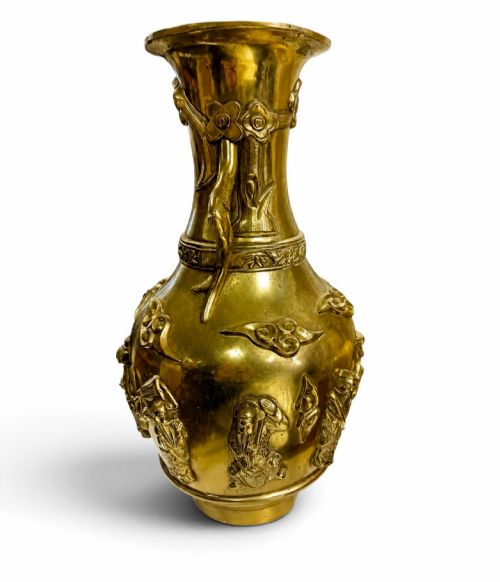
The selection ranges from tall, high-relief baluster vessels depicting Daoist immortals and dragons to smaller pairs featuring birds, blossom, and elephant motifs. Alongside standard vessels, related forms include decorative ewers, posy vases, urns, and occasional adaptations into table lamps or candle holders.
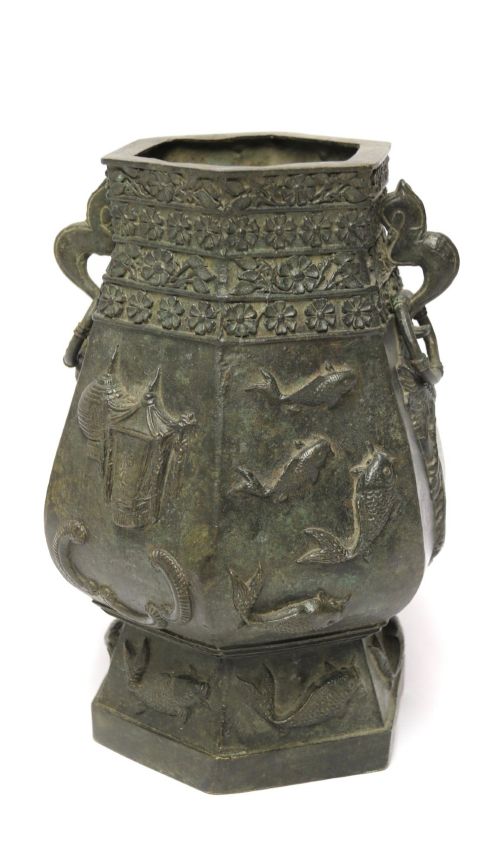
Japanese Meiji examples dominate the available selection, often presenting patinated surfaces with incised or applied details. Chinese vessels from similar decades provide alternative forms such as hexagonal vessels and high-relief copper-alloy bodies bearing base marks.
How they were made
The construction of these pieces relies primarily on casting bronze and copper alloys, yielding solid metal bodies that sometimes exceed five kilograms. Foundries utilised lost-wax and sectional casting methods to achieve complex shapes like baluster urns and twin-handled vessels.
Makers completed the surfaces through deep hand-carving, chasing, and high-relief modelling to depict figures, dragons, and natural scenes. Chemical patination and applied enamels provided distinct surface tones, ranging from dark aged patinas to polished highlights.
Certain examples incorporate mixed media such as marble bases, porcelain bodies, or fabric elements within lamp conversions. Base marks, signatures, and cast details indicate individual workshop origins.
Listings feature items from the nineteenth century, including the Victorian era, Edwardian period, and Japanese Meiji years.
What varies in quality
Quality rests in the crispness of the hand-carved and chased surface details, separating sharply defined subjects like feathers and scales from softer, shallow stampings. The depth and execution of high-relief elements demonstrate the skill of the original metalworker.
Proportion and weight distinguish superior casting, as denser, heavier vessels demonstrate greater material substance. Signed pieces or those bearing specific workshop marks carry distinct attribution value compared to unmarked production items.
The condition and integrity of the patinated bronze surface dictate visual appeal, where undisturbed patination retains historical character.
Genryusai Seiya
The Carved Bronze Vases Glossary
- Meiji Period
- The era in Japanese history spanning from 1868 to 1912, associated with detailed bronze casting and export art. Pieces from this period frequently feature birds, dragons, and floral motifs.
- Baluster
- A vase form with a rounded body and a narrow neck, resembling an architectural baluster. This shape provides a stable base for heavy metal casting.
- Chasing
- The technique of finishing cast metal by indenting the surface with hammers and punches. This process sharpens details on motifs like feathers and drapery.
- Grand Tour
- The nineteenth-century practice of travellers collecting souvenirs across Europe, including Italian bronze urns and decorative ewers. These items reflect classical antiquity and Renaissance revival styles.
- Patinated Bronze
- Metal treated with chemical solutions to produce a controlled surface coloration. This layer protects the bronze and adds depth to carved details.
Carved Bronze Vases: Frequently Asked Questions
How do I date a bronze vase?
Dating relies on stylistic markers, period attribution, and any recorded signatures or base marks present on the piece. Nineteenth-century examples often exhibit specific Meiji or Victorian design traits.
Material composition and manufacturing techniques also help establish the decade of production. Comparing the patination and casting style to documented pieces provides further chronological context.
Were these vases used for water?
Many of these decorative vessels served primarily as ornamental display pieces or garniture sets rather than functional flower holders. Their heavy construction and intricate carved surfaces suited mantelpieces and display cabinets.
Some examples include interior liners or accommodate posies, but others function entirely as sculptural objects or were later converted into table lamps.
How should I clean patinated bronze?
Maintaining patinated bronze requires minimal intervention to preserve the aged surface chemistry. Dusting gently with a soft, dry cloth prevents particulate accumulation.
Harsh commercial polishes, water, or chemical cleaners will strip the original patina and damage the metal. Professional conservation advice is recommended for deeper cleaning.
What is a garniture set?
A garniture set consists of matching vases or urns designed to be displayed together on a mantelpiece or sideboard. These matched groups typically share identical casting, carving, and patination.
Sets varied in size and component count, often combining central urns with flanking smaller vases or ewers.