



Meiji Carved Bronze Urns
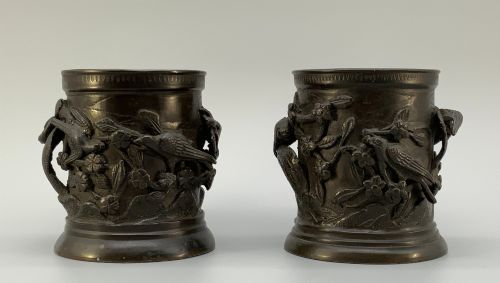
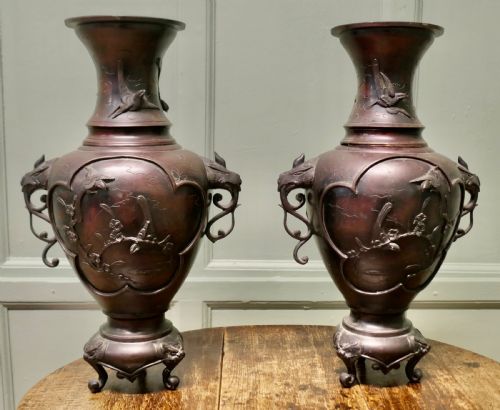
Meiji carved bronze urns bring striking Japanese metalwork into interior spaces, offering intricate birds, dragons, and floral motifs.
Meiji Carved Bronze Urns
Meiji carved bronze urns encompass a diverse selection of Japanese metalwork created during the late nineteenth and early twentieth centuries, spanning the Victorian era and the Meiji period.
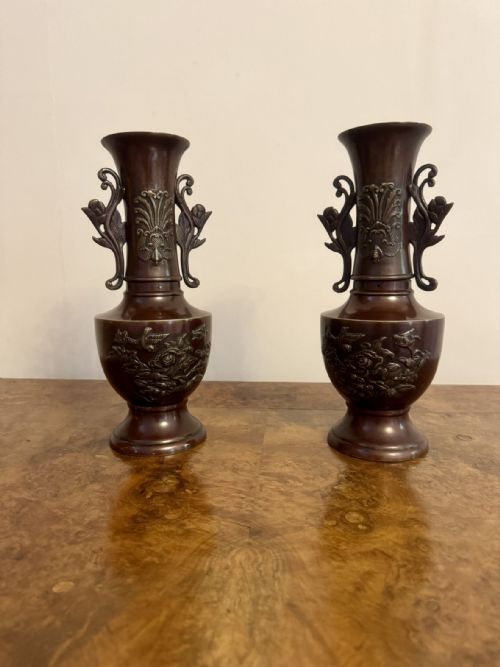
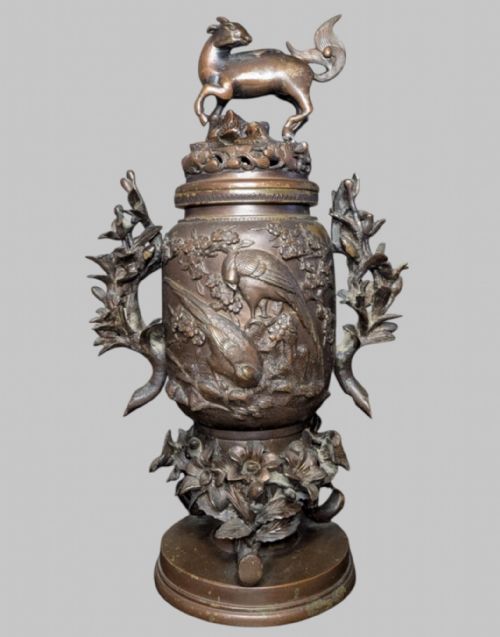
Buyers frequently encounter pairs of baluster vases, large jardinieres, and incense burners decorated with motifs such as birds, blossoms, elephants, and dragons.
These vessels arrive in various forms, including stem vases, twin-handle vessels, and censer bowls originating from Japanese workshops.
Materials and methods
Artisans formed these vessels primarily using bronze and brass, often applying a dark patination to the metal surface to highlight the sculptural details.
Many examples incorporate mixed metal elements, including deliberate applications of gold inlay and silver inlay alongside enamel highlights.
Surface ornamentation relies on casting, carving, and signed detailing executed by period metalworkers.
Listings demonstrate that bronze urns and vases from this era frequently incorporate decorative elements such as dragons, elephants, and floral motifs.
Assessing quality
The sophistication of the surface carving distinguishes standard production from exceptional examples, particularly in the rendering of feathers, scales, and floral textures.
Proportion and scale play significant roles, with large presentation pieces and balanced pairs demonstrating greater ambition from the foundry.
The crispness of inlay work and the depth of the bronze patina indicate the level of care taken during the manufacturing process.
Genryusai Seiya
The Meiji Carved Bronze Urns Glossary
- Meiji Period
- The era in Japanese history spanning from 1868 to 1912, associated with the opening of trade and a surge in decorative arts exportation. This period produced the majority of the bronze vases and urns found on the market.
- Patinated Bronze
- Bronze treated with chemical solutions to produce a darkened or coloured surface layer. This technique protects the metal and accentuates carved details.
- Koro
- A traditional Japanese incense burner, often featuring a decorative lid and supported on small feet or legs. These vessels appear frequently alongside standard vases.
- Jardiniere
- A large ornamental pot or planter designed to hold growing plants. Examples in this category often feature robust handles and heavy bronze walls.
- Garniture Set
- A matched grouping of three or more vases or urns displayed together on a mantelpiece or sideboard. These sets demonstrate uniform decorative themes from the workshop.
Meiji Carved Bronze Urns: Frequently Asked Questions
What is a koro?
A koro is a traditional incense burner equipped with a pierced lid for releasing scented smoke. These pieces often feature sculptural finials shaped like animals or mythical beasts.
They function both as decorative objects and vessels for traditional incense use within interior settings.
How do I clean bronze urns?
Cleaning requires only gentle dusting with a soft, dry cloth to prevent the accumulation of debris in the carved recesses. Avoid commercial metal polishes or liquid cleaners, which can strip the original patination.
Maintaining the dry surface preserves the historical finish and prevents damage to any gold or silver inlay.
Are these pieces marked?
Certain examples feature signature marks cast or engraved directly into the bronze by the maker or foundry. These signatures provide attribution to specific workshops active during the period.
Unsigned vessels remain common, reflecting the large volume of decorative export ware produced at the time.
How were jardinieres used?
Jardinieres served as large decorative planters designed to house potted plants within domestic interiors. Their robust bronze construction and waterproof metal walls supported damp soil and foliage.
Today, they function as standalone decorative floor or table pieces without necessarily holding plants.