
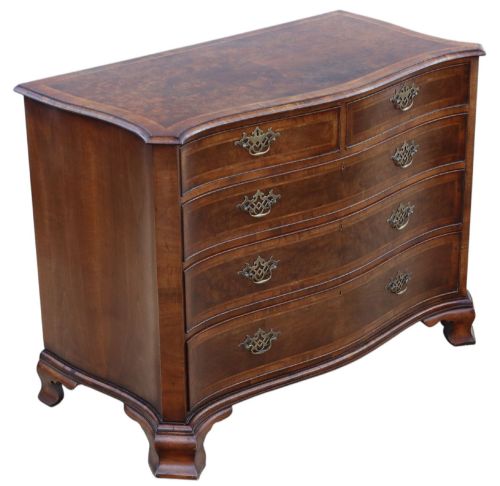
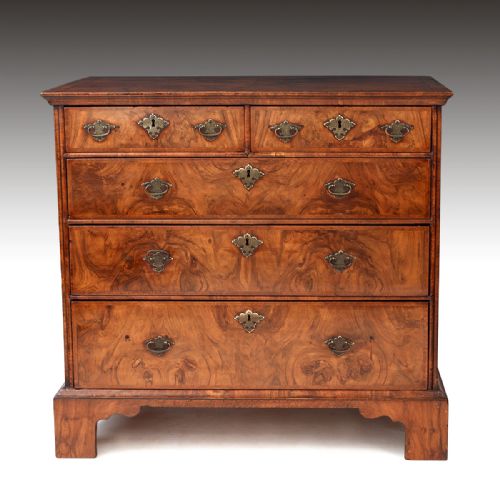
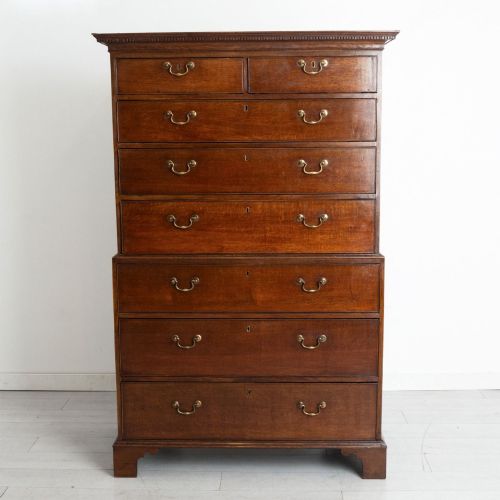
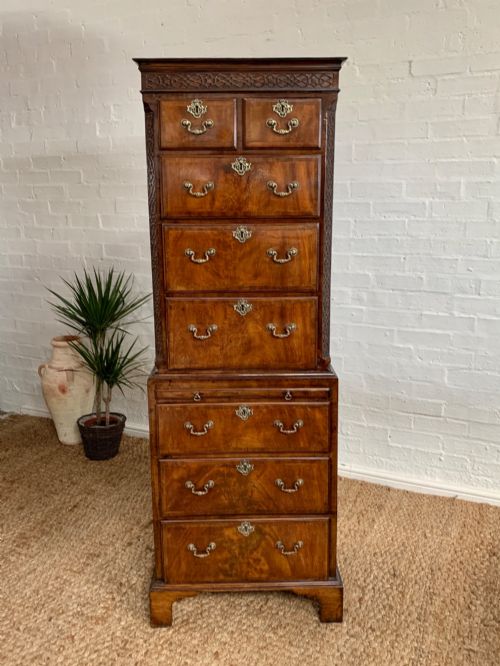


Carved Bracket Foot Chest
A carved bracket foot chest offers sturdy storage and timber grain, bringing period proportion and functional depth to a room.
Carved Bracket Foot Chest
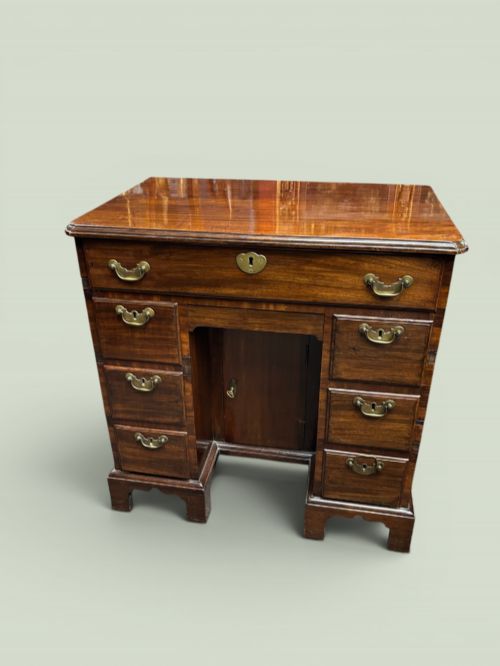
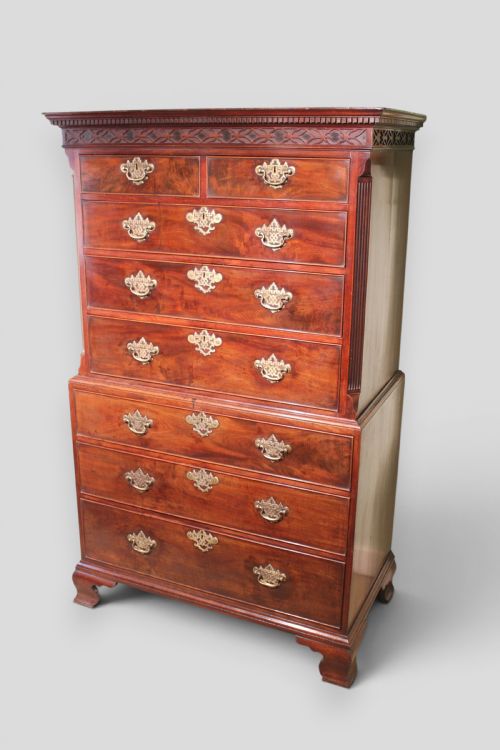
A carved bracket foot chest provides deep drawer storage raised on neat corner supports, appearing across Georgian, Victorian, and early periods. These timber pieces emerge in various forms, including tallboys, mules, and compact kneeholes.
Most examples found here date from the eighteenth century or follow Georgian and William and Mary styles. They combine practical compartments with architectural feet that anchor the cabinet to the floor.
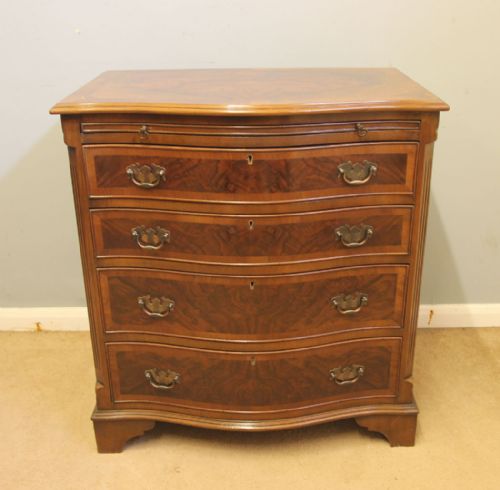
Makers utilised oak, mahogany, and burr walnut, sometimes adding crossbanding or brass handles. The surviving items range from small proportions to large serpentine commodes.
How they were made
Cabinetmakers constructed these pieces using solid oak, mahogany, and walnut, often applying walnut veneers or flame mahogany to the primary surfaces. Timber selection governed the visual rhythm of the drawer fronts and top panels.
Bracket feet were shaped and joined at the lower corners to support the heavy carcase above. Brass handles and escutcheons were fitted to drawers, while interior compartments relied on traditional joinery.
Some chests hide sliding shelves inside, offering a flat surface for folding garments right above the drawers.
What varies in quality
The choice of timber grain and veneer work separates standard pieces from finer examples, particularly when burr walnut or flame mahogany is utilised. Rich figure and careful matching across drawers elevate the visual presence.
Proportion and the crispness of the carved bracket feet dictate the architectural balance of the chest. Untouched surfaces retain patination that enhances the historical character of the wood.
The Carved Bracket Foot Chest Glossary
- Bracket foot
- A simple, corner-supporting foot shaped like a bracket, often mitred at the corner and used extensively on Georgian chests. It lifts the heavy timber carcase slightly off the floor.
- Tallboy
- A tall chest of drawers made in two sections, typically stacking one chest upon another to maximise vertical storage. They appear in oak, walnut, and mahogany.
- Serpentine
- A curved front shape with a convex centre flanked by concave ends, found on advanced commodes and desks. This undulating contour demands skilled woodworking.
- Crossbanding
- A narrow strip of veneer laid around the border of a drawer front or top so that the grain runs at right angles to the central panel. It provides a neat framing effect.
- Mule chest
- A storage chest fitted with one or more drawers at the bottom, bridging the gap between a traditional kist and a chest of drawers.
Carved Bracket Foot Chest: Frequently Asked Questions
What is a bracket foot?
A bracket foot is a corner support shaped from timber that lifts the cabinet off the floor while maintaining a stable base. It provides a neat architectural finish without heavy legs.
These feet are mitred at the corners and appear frequently on Georgian and eighteenth-century chests of drawers.
How do I date a walnut chest?
Dating relies on timber choice, construction methods, and hardware styles such as original brasses. Walnut was predominant in the late seventeenth and early eighteenth centuries.
Early pieces often display smaller proportions and specific carcase construction that distinguish them from later Victorian revivals.
What is a tallboy?
A tallboy is a tall chest of drawers built in two stacked sections, offering substantial storage capacity within a compact floor footprint. They are frequently seen in mahogany and oak.
The upper section usually contains multiple small and large drawers resting upon a lower chest base.
Are original handles important?
Original brass handles and escutcheons contribute significantly to the historical integrity and appearance of a period chest. They show the wear and patination consistent with age.
Replacements are common, so inspecting the fixing holes helps determine whether the hardware is contemporary to the cabinet.