


Walnut Veneer Storage Chest
A walnut veneer storage chest brings rich, figured timber and historic craft into a room, offering both generous capacity and decorative presence.
Walnut Veneer Storage Chest
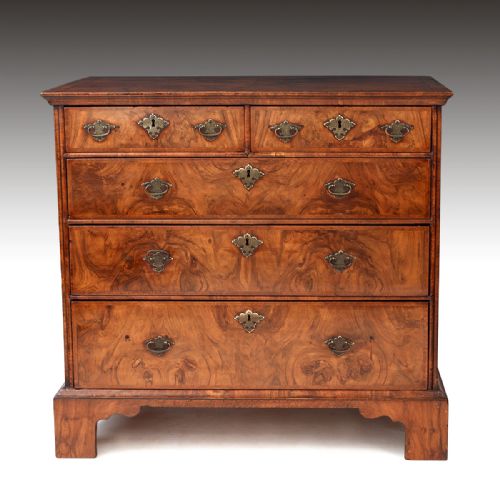
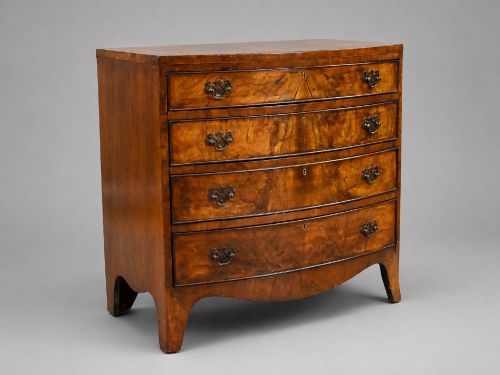
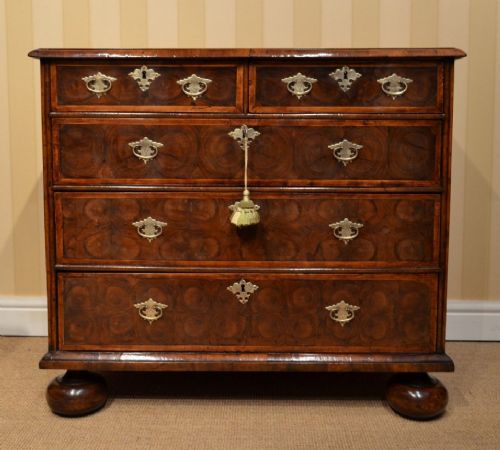
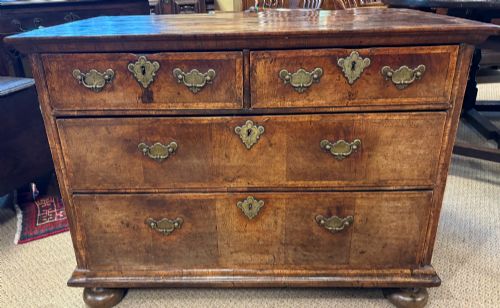
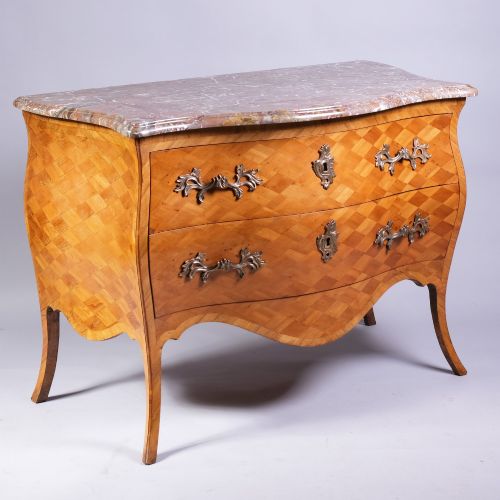
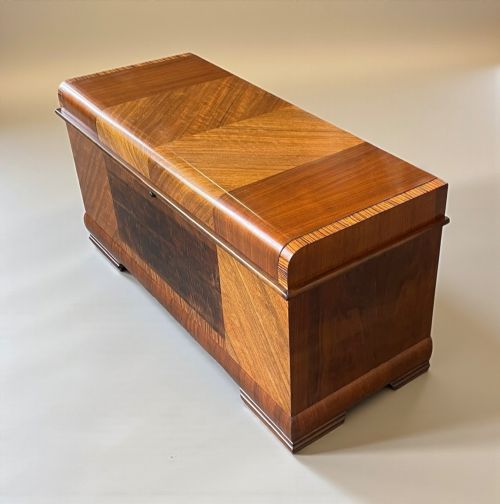
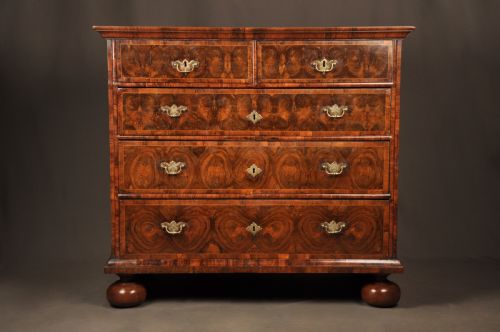
A walnut veneer storage chest encompasses diverse forms ranging from seventeenth-century oyster veneered examples to early twentieth-century art deco drawers and blanket chests. Buyers encounter period pieces from the seventeenth, eighteenth, and nineteenth centuries alongside later Biedermeier, Regency, and Art Deco interpretations.
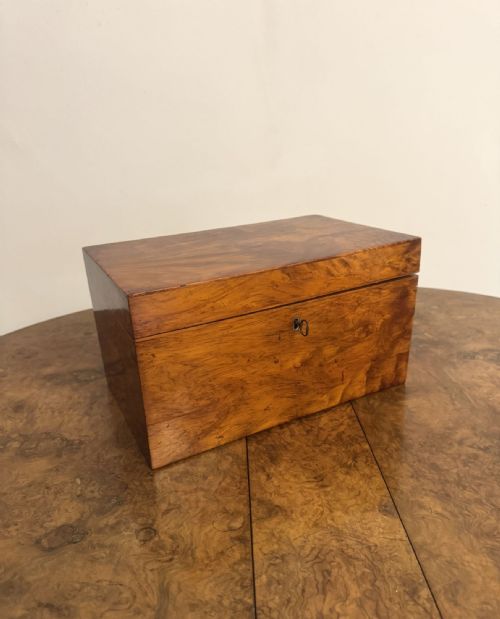
The core selection on this page spans traditional chests of drawers, commodes, tallboys, and cabinets on stand, as well as smaller bedside tables and tea caddies. Pieces originate from British workshops and European continental makers, utilising distinct regional silhouettes and proportions.
Earlier examples often display intricate circular oyster patterns or rich figured grains, whilst later twentieth-century iterations favour clean lines and blonde tones. Each form provides enclosed storage whilst showcasing the decorative potential of walnut timber.
Materials and Construction
Craftsmen applied thin slices of walnut, figured walnut, and olive wood veneer over secondary woods such as oak, creating striking geometric patterns across drawer fronts and surfaces. Specialised sawing techniques yielded circular oyster veneers and parquetry designs that highlighted the natural grain of the wood.
Joinery incorporated solid walnut and oak carcassing, complemented by brass handles, escutcheons, and occasionally marble tops on continental commodes. Boxwood stringing and contrasting inlay frequently framed the veneered panels, adding definition to the structure.
Listings feature walnut veneer storage chests spanning the seventeenth century to the Art Deco era, incorporating marble, brass, and oak elements.
Evaluating Quality
Quality rests upon the preservation and visual impact of the veneer work, where tightly fitted patterns and harmonious grain matching distinguish finer examples. The crispness of the underlying joinery and the integrity of secondary timbers like oak also determine the structural caliber of the piece.
Surface finish and the retention of period brass hardware contribute significantly to the standing of a chest. Pieces that maintain their original patination and balanced proportions demonstrate superior craftsmanship from their respective periods.
The Walnut Veneer Storage Chest Glossary
- Veneer
- A thin layer of fine wood applied to a base timber to provide a decorative surface. This technique allowed cabinetmakers to utilise striking grain patterns efficiently.
- Oyster Veneer
- Slices cut transversely from small branches or roots to produce circular or oval patterns resembling oyster shells. It appears prominently on seventeenth-century pieces.
- Commode
- A low chest of drawers or cabinet originating in France. Many period examples feature marble tops and sophisticated continental proportions.
- Tallboy
- A tall chest of drawers consisting of one section stacked upon another. This form maximised vertical storage space in domestic interiors.
- Parquetry
- A geometric mosaic of wood pieces used for decorative surfaces. It frequently appears on tabletops and drawer fronts of later periods.
Walnut Veneer Storage Chest: Frequently Asked Questions
How do I date a walnut chest?
Dating relies upon examining the construction methods, drawer linings, hardware, and veneer patterns used during specific eras. Seventeenth-century pieces often feature oyster veneers, while later nineteenth and twentieth-century examples display distinct revival styles or modernist lines.
Secondary woods like oak and the style of the feet or handles provide further clues to the manufacturing period. Comparing these elements against known stylistic timelines helps establish the age.
What is oyster veneering?
Oyster veneering involves slicing small branches or roots across the grain to create circular or elliptical wooden discs. These pieces are then arranged closely together to form intricate, repeating patterns across the surface of the chest.
This technique was particularly favoured during the late seventeenth century. It produces a distinctive rippled visual effect that catches the light.
Are marble top commodes fragile?
Marble tops are sturdy and heavy, providing a durable and heat-resistant surface for everyday use. However, they can chip or crack if struck with heavy objects or subjected to thermal shock.
Lifting and moving these chests requires caution to separate the marble top from the wooden base if they are detached. Regular cleaning with appropriate stone care keeps the surface protected.
How do I care for walnut veneer?
Walnut veneer benefits from being kept away from direct sunlight and extreme temperature fluctuations to prevent the wood from drying out or warping. Dusting with a soft, dry cloth maintains the surface without abrasive buildup.
Occasional application of appropriate furniture wax helps nourish the timber and preserve the historic finish. Avoiding excess moisture is essential for protecting the glue beneath the veneer.