
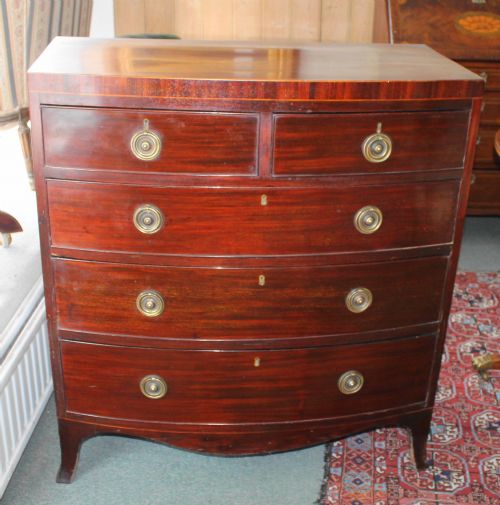

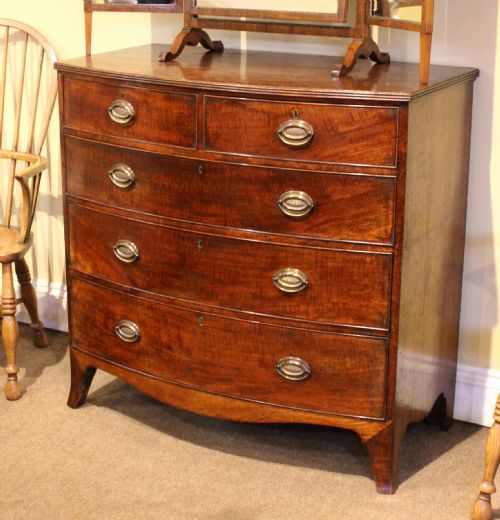


Georgian Five Drawer Chest
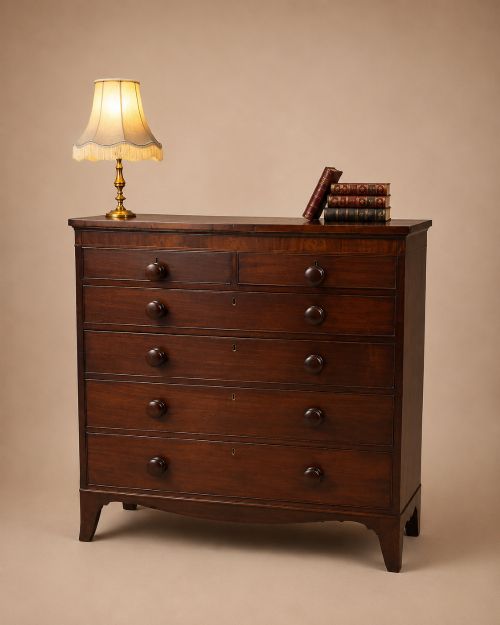
A georgian five drawer chest offers substantial storage and classic proportions, combining timber warmth with the utility needed for daily bedroom use.
Georgian Five Drawer Chest
When you search for a georgian five drawer chest, you encounter case furniture designed to hold garments and household linens in domestic interiors. These examples span the eighteenth and nineteenth centuries, including items from the Georgian and Regency periods alongside later revivals.
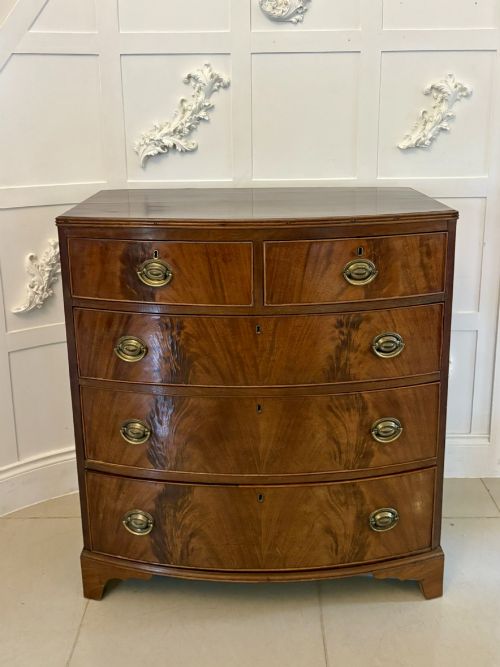
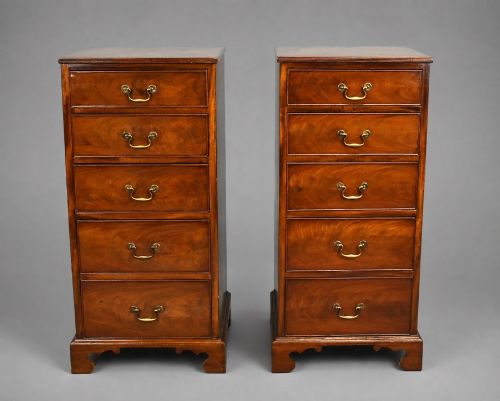
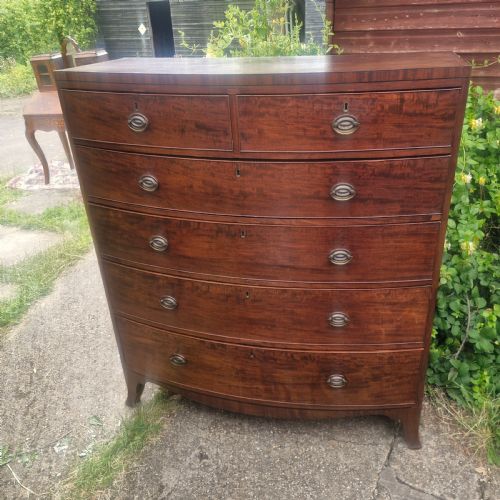
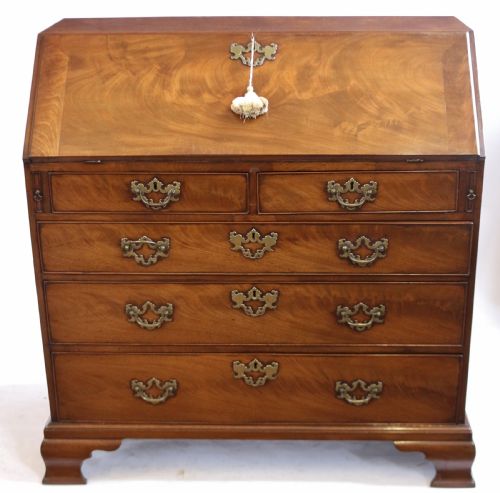
The pieces appearing on this page most frequently take the form of chests of drawers, often featuring bow fronts or tall proportions. You also meet related items such as bedside chests and bureau desks constructed during the same eras.
Makers shaped these storage units from timber varieties recorded across the inventory, including mahogany, burr walnut, oak, and satinwood. Styles range from plain utilitarian carcases to sophisticated pieces decorated with brass hardware.
How they were made
Carpenters constructed the primary structures of a georgian five drawer chest using hardwoods like mahogany and oak, supplemented by secondary softwoods such as pine for internal framing and drawer linings.
Workshops applied decorative veneers including burr walnut and satinwood to primary display surfaces, securing them with traditional animal glues. Cabinet makers fitted brass handles and escutcheons to complete the drawer facades.
Tall mahogany bedside chests prove that eighteenth-century priorities for storage capacity occasionally translated into remarkably tall furniture beside the bed.
What varies in quality
The standard of a georgian five drawer chest depends on the selection of timber grain and the precision of the cabinet work in the drawer joints. Pieces displaying figured mahogany veneers or serpentine outlines demonstrate higher levels of craftsmanship than plain carcases.
Proportion and surface finish distinguish standard examples from finer outputs, particularly where original brass hardware remains intact. The integrity of the secondary pine linings and the smoothness of drawer operation indicate the original skill of the maker.
The Georgian Five Drawer Chest Glossary
- Bow front
- A convex curved cabinet front that projects outward at the centre. This curved shape appears frequently on nineteenth-century mahogany storage chests.
- Serpentine
- A wave-like curved front outline that dips in the middle and swells at the sides. This contour requires advanced woodworking skill to execute properly.
- Burr walnut
- Timber cut from walnut tree growths that produces intricate, swirling grain patterns. Cabinet makers used these figured veneers on decorative drawer fronts.
- Escutcheon
- A protective plate surrounding a keyhole, usually fashioned from brass. These small fittings often match the design of the drawer pulls.
Georgian Five Drawer Chest: Frequently Asked Questions
What is a georgian five drawer chest used for?
A georgian five drawer chest provides functional storage for clothing and household items within a bedroom or dressing room. The internal configuration typically arranges smaller drawers at the top with deeper drawers below.
Historically, these pieces held folded garments and linens. Today, they serve a similar storage role while functioning as decorative furniture.
How do I identify the wood used?
Examination of the grain pattern and colour reveals the primary timber species. Mahogany displays a reddish-brown tone, while oak shows prominent growth rings.
Secondary woods like pine usually appear inside the drawers and on the backboards. Burr walnut and satinwood present distinct figured or pale decorative surfaces on the exterior.
What is the difference between Georgian and Regency styles?
Georgian furniture generally exhibits classical proportions and solid timber construction influenced by eighteenth-century architectural design. Carving and bracket feet often characterise these earlier outputs.
Regency pieces often feature bolder curves, such as bow fronts, and simpler classical lines reflecting nineteenth-century tastes. Brass mounts and veneered surfaces became prominent decorative elements during this period.
How do I care for antique wood furniture?
Maintenance involves placing the chest away from direct heat sources and sunlight to prevent timber warping and veneer cracking. Regular dusting with a dry cloth preserves the polished surface.
Application of traditional wax polish occasionally helps nourish the timber. Avoid using modern liquid sprays containing silicones.