



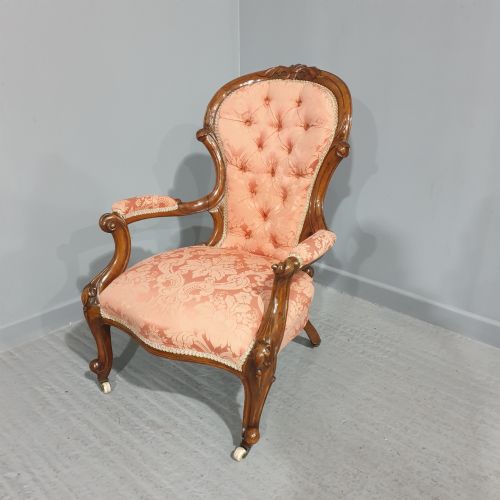
Carved Balloon Back Armchair
A carved balloon back armchair brings distinct Victorian elegance to a room, offering graceful curves and reliable nineteenth-century seating.
Carved Balloon Back Armchair
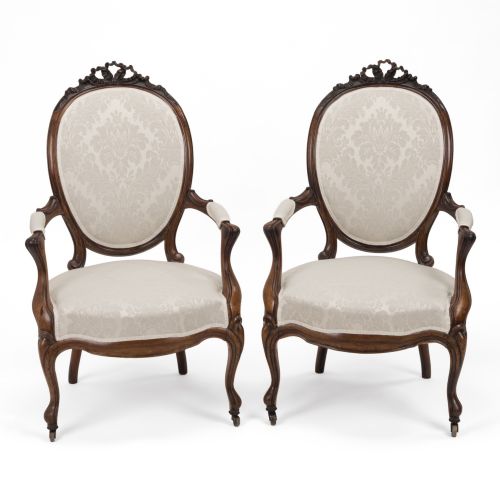
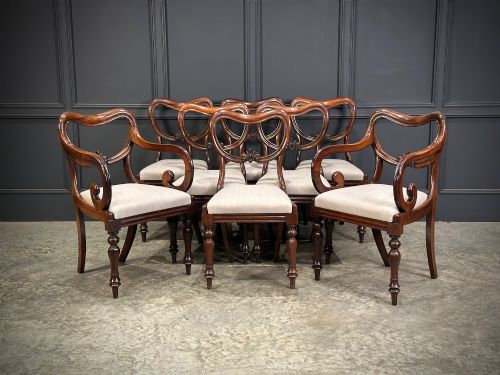
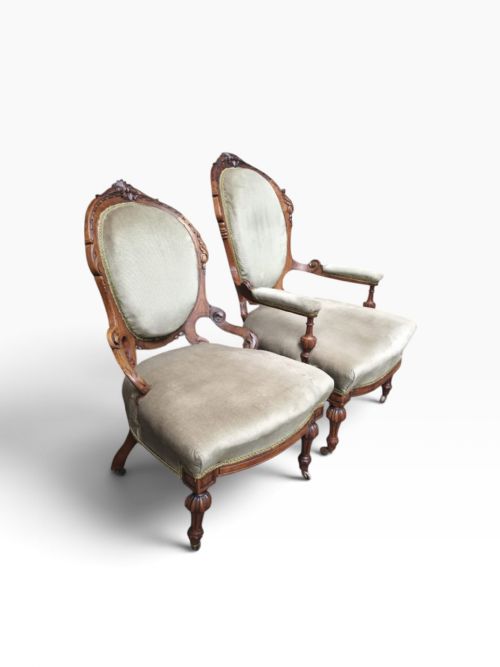
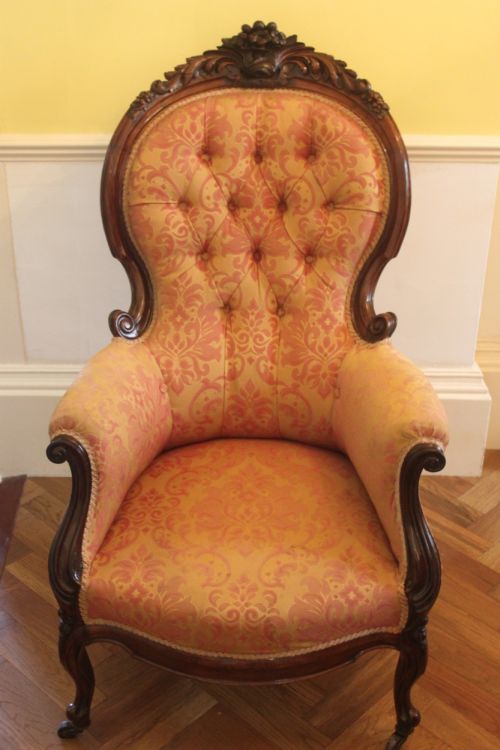
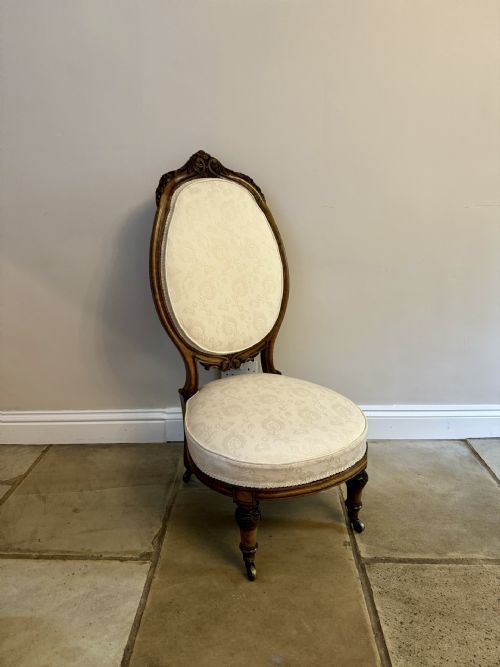
When you search for a carved balloon back armchair, you encounter seating largely originating from the Victorian period, spanning the mid to late nineteenth century. These forms appear in various configurations, including gentleman's armchairs, ladies' chairs, fireside seats, and occasionally as part of larger salon suites.
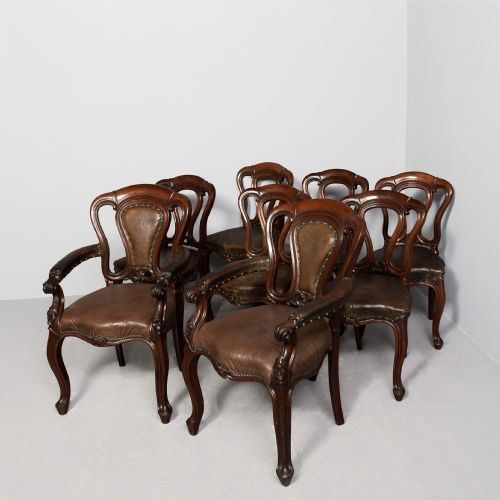
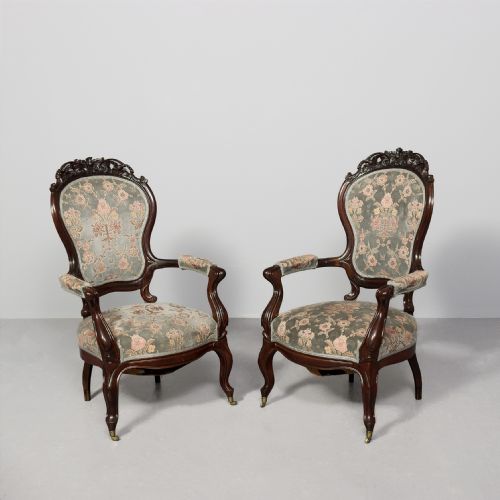
The most common examples on this page are constructed from walnut or mahogany, frequently displaying intricate hand-carved details along the distinctive curved backrest. They serve practical seating roles in drawing rooms, dressing rooms, and firesides while maintaining a strong decorative presence.
Materials and Construction Methods
Cabinet makers built these frames predominantly using solid walnut and mahogany, bending timber under heat to achieve the characteristic oval or rounded upper rail. Artisans then applied hand-carved ornamentation, such as floral motifs or scrollwork, directly to the solid wood frame.
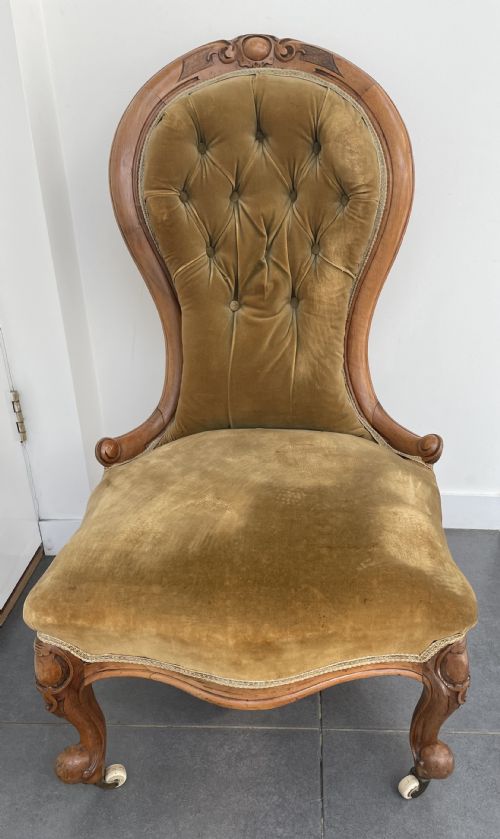
Upholstery techniques of the era involved traditional stuffing materials secured over webbed bases, often finished with buttoning and covered in velvet, leather, or decorative textile. Brass castors frequently appear on the lower legs of heavier armchairs to assist with movement across carpets.
Carved Balloon Back Armchair Retail Price Guide 2026
Typical asking prices for carved balloon back armchair among the pieces listed under this phrase on Sellingantiques today, from the lower quarter to the upper quarter. They describe what is for sale here now, not the wider market.
Distinctions in Quality
Quality rests primarily in the crispness and depth of the timber carving, where superior pieces exhibit sharply defined hand-cut details rather than soft or shallow moulding. The choice of primary timber also marks a distinction, with dense, figured walnut and rich mahogany commanding greater regard than plain secondary woods.
Proportion and scale separate standard seating from exceptional examples, particularly in gentleman's and ladies' pairings where the timber frames maintain balanced curves and sturdy joinery. The integrity of the original wood frame dictates the overall standing of the piece.
The Carved Balloon Back Armchair Glossary
- Balloon back
- A chair back shaped in a continuous oval or rounded loop resembling a balloon, popular during the Victorian era. This contour provides ergonomic support while creating a light visual profile.
- Cabriole leg
- A furniture leg that curves outward in a convex arc and tapers inward in a concave arc, ending in a decorative foot. This design references classical forms adapted by Victorian makers.
- Button back
- An upholstery method where tufting pulls the fabric deep into the padding using buttons arranged in a geometric diamond pattern. This technique secures internal stuffing and adds texture.
- Nursing low chair
- A low-seated chair traditionally used in bedrooms or nurseries for feeding and dressing. These pieces often feature compact proportions and open armrests.
- Salon suite
- A matching set of seating furniture, including sofas, armchairs, and side chairs, designed for formal entertaining rooms. Such suites share identical timber frames and textile upholstery.
Carved Balloon Back Armchair: Frequently Asked Questions
Where should I place an armchair?
These armchairs suit drawing rooms, studies, and bedrooms where their distinct silhouette complements period or eclectic interiors. They function well as reading chairs beside a fireplace or as accent seating in a corner.
Because of their compact nineteenth-century proportions, they fit easily into smaller spaces without overwhelming the room.
How do I care for the wood?
Maintain the polished timber frame by dusting regularly with a soft cloth and applying periodic coats of appropriate furniture wax. Avoid placing the chair near direct heat sources or strong sunlight to protect the finish.
Gentle maintenance preserves the natural grain of the walnut and mahogany.
Are these chairs comfortable for daily use?
Victorian armchairs offer supportive seating, though their ergonomic design reflects nineteenth-century preferences for upright posture. Padded models with sprung or stuffed seats provide adequate comfort for relaxing.
Pairing a nursing chair or fireside armchair with a footstool enhances usability for modern seating habits.
How do I identify a Victorian piece?
Look for characteristic timber choices such as solid walnut and mahogany, combined with hand-carved floral details typical of the nineteenth century. Construction methods often include traditional joinery and hand-stitched upholstery foundations.
Stylistic cues like balloon back rails and cabriole legs point directly to Victorian design periods.