

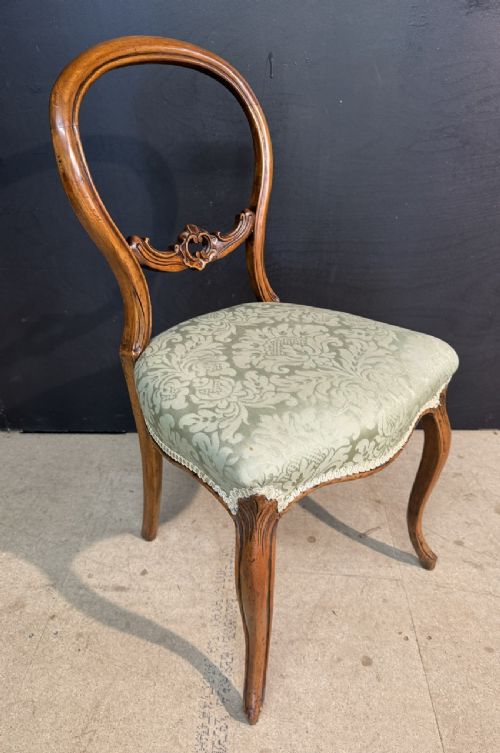


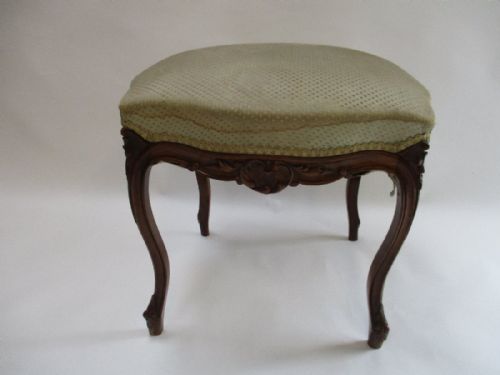
Carved Walnut Dressing Chair
A carved walnut dressing chair offers compact seating with rich timber grain, coming to us primarily as Victorian and Edwardian stools, side chairs, and low nursing seats.
Carved Walnut Dressing Chair
When you search for a carved walnut dressing chair, you encounter a mix of low stools, vanity seats, and compact side chairs designed for the bedroom or dressing room. The selection spans the nineteenth century, including Victorian pieces alongside later revivals from around nineteen twenty.
Most items appearing under this heading take the form of dressing table stools or small nursing chairs rather than high-backed dining seats. Common regional and stylistic variations include cabriole legs, X-frame supports, and occasional French Rococo or Queen Anne revival motifs.
Materials and construction
Makers utilised solid walnut timber for its deep brown tones and receptivity to crisp hand-carving along frames and legs. Brass fittings often appear on adjustable piano and dressing stools, while internal structures rely on traditional joinery methods.
Upholstery materials range from modern damask and textile covers to needlepoint and wool, frequently applied over sprung or padded seat bases during later restoration work.
Carved Walnut Dressing Chair Retail Price Guide 2026
Typical asking prices for carved walnut dressing chair among the pieces listed under this phrase on Sellingantiques today, from the lower quarter to the upper quarter. They describe what is for sale here now, not the wider market.
Certain Victorian window stools feature hand-carved hunting dog heads glaring out from the wooden frame, keeping a silent watch over the bedroom.
Assessing quality in walnut seating
The degree of crispness in the hand-carving separates standard production items from finer decorative pieces, particularly where ornamentation involves animal heads or elaborate scrollwork. Timber selection also dictates overall merit, with rich grain patterns and clean joints elevating the piece.
Original mechanisms on rise and fall or adjustable piano stools demonstrate superior manufacturing standards compared to fixed-height alternatives, reflecting the utility demanded by original owners.
The Carved Walnut Dressing Chair Glossary
- Cabriole leg
- A furniture leg that curves outward at the knee and tapers inward to an ankle, inspired by animal limbs. This form appears frequently on nineteenth-century walnut stools.
- Needlepoint
- A type of counted thread embroidery stitched onto canvas, often used for historical seat covers. It provides a textured, decorative surface on period dressing stools.
- X-frame
- A structural furniture base formed by crossing two diagonal members to create central support. This configuration lends stability to decorative window seats and dressing stools.
- Balloon back
- An oval-shaped chair back resembling the profile of a hot air balloon, popular during the Victorian era. This contour appears on nursing and dressing chairs.
Carved Walnut Dressing Chair: Frequently Asked Questions
Where should I place a dressing stool?
These compact pieces fit naturally in front of a bedroom vanity, beside a dressing table, or serving as extra low seating in a hallway or living space.
Because they take up minimal floor space, they also work well positioned beneath windows or at the foot of a bed.
How do I care for walnut wood?
Dust the carved wooden frames regularly with a soft, dry cloth to prevent the accumulation of grit within the recesses of the carving.
Keep the timber away from direct heat sources and strong sunlight to protect the polish and prevent the walnut from drying out.
Are these chairs comfortable for daily use?
Many examples feature padded or sprung upholstery designed for sitting while attending to hair or makeup. Their lower height makes them ideal for short periods of stationary use rather than lounging.
Several surviving pieces include adjustable mechanisms or supportive backrests for added comfort.
How do I distinguish Victorian pieces?
Nineteenth-century examples often display deep buttoning, balloon backs, or heavy Victorian proportions combined with rich walnut timber. Look for construction details and patination on the wood that indicate nineteenth-century handcraft.
Later revival items from the early twentieth century mimic these earlier styles with slightly different finish qualities.