

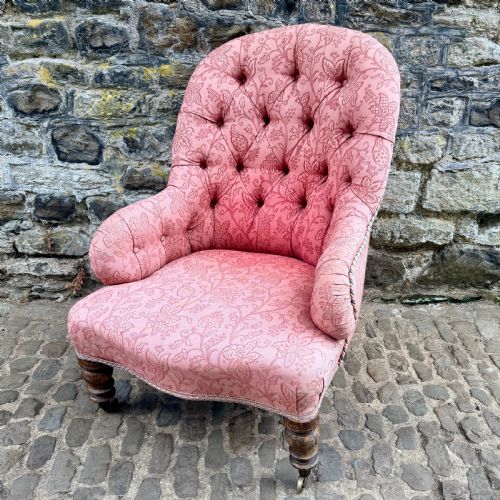
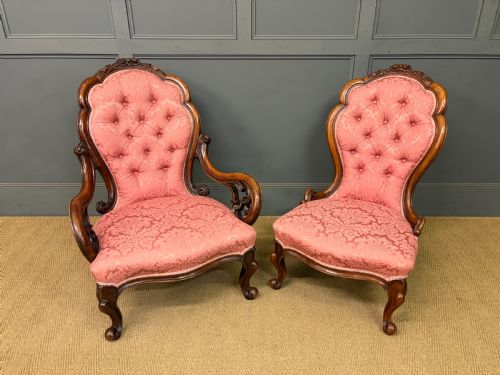
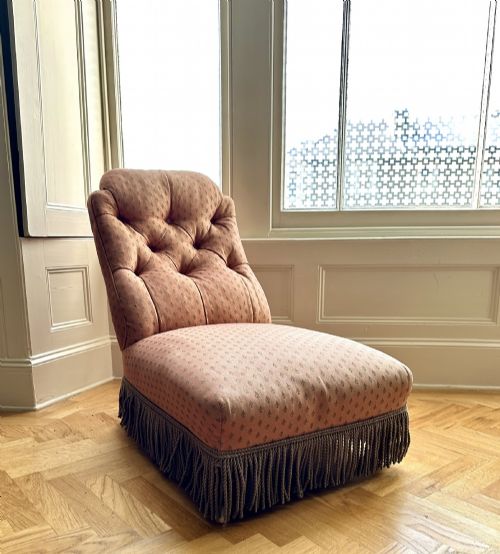
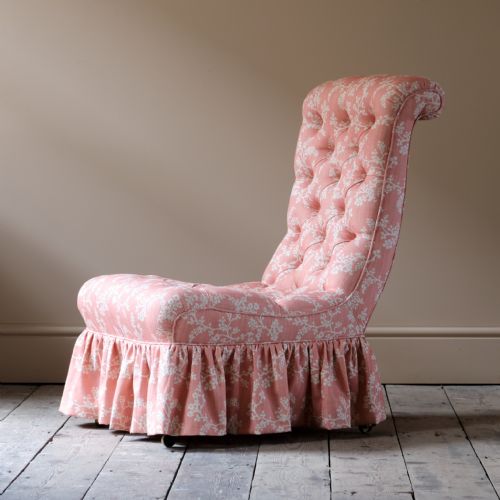
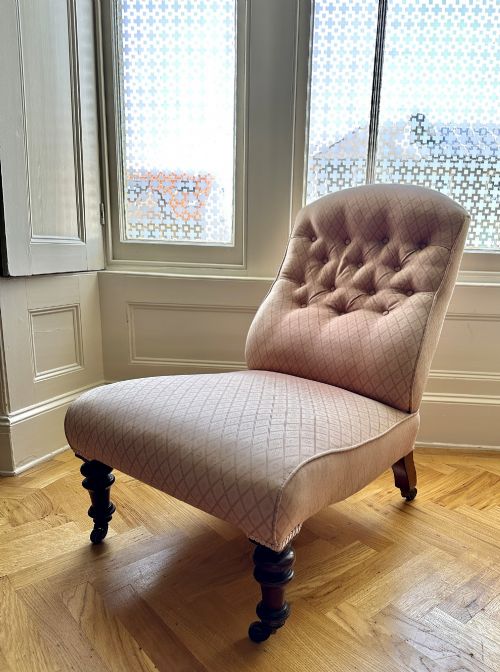


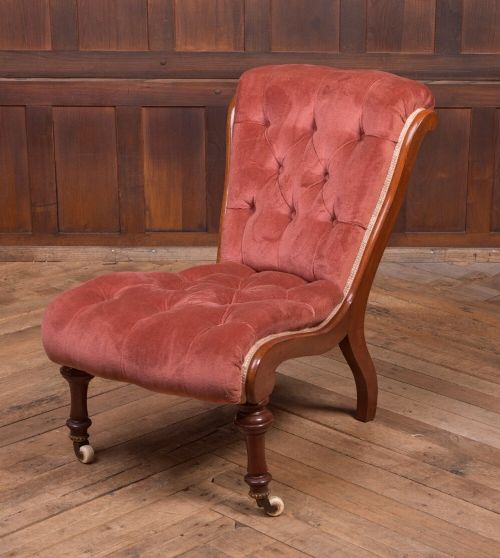

Pink Victorian Slipper Chair
These pink victorian slipper chair options offer low-slung seating designed for comfort and ease of dressing during the nineteenth century.
Pink Victorian Slipper Chair
A pink victorian slipper chair brings low-slung nineteenth-century seating into modern spaces, often appearing alongside related forms like nursing chairs and low bedroom armchairs. These pieces typically feature compact dimensions and upholstered frames designed for nineteenth-century chambers.
The selections span the Victorian and Edwardian eras, incorporating stylistic variations such as Anglo-Indian carving, balloon backs, and spoon backs. Walnut, mahogany, and rosewood serve as the primary timbers supporting velvet, fabric, and textile upholstery.
How they were made
Carpenters shaped frames from dense timbers including walnut, mahogany, and rosewood, frequently employing carved details and barley twist turns. Brass castors and brass components often completed the mobility and structural feet of these low seats.
Upholsterers applied velvet, textile, and fabric over padded foundations, utilising deep buttoning and fringing to finish the padded surfaces. Timber frames were constructed to maintain low profiles suited for dressing rooms and bedrooms.
Pink Victorian Slipper Chair Retail Price Guide 2026
Typical asking prices for pink victorian slipper chair among the pieces listed under this phrase on Sellingantiques today, from the lower quarter to the upper quarter. They describe what is for sale here now, not the wider market.
Listings feature 19th Century, Victorian, and Edwardian periods, utilising walnut, mahogany, rosewood, brass, and velvet.
What varies in quality
The refinement of the timber carving and the integrity of the frame construction distinguish the finer examples from standard production. Cabinetmakers such as Gillows or Holland and Sons invested greater detail in structural joinery and ornamentation.
Original upholstery methods, retained show wood finishes, and the presence of makers' stamps or attributed workshop characteristics elevate the standing of individual pieces. The precision of the buttoning and the choice of dense hardwood frames define the upper tier.
Gillows·Holland and Sons·Hindley and Sons·Lamb of Manchester
The Pink Victorian Slipper Chair Glossary
- Spoonback
- A chair back carved with a concave oval shape resembling the bowl of a spoon, designed to fit the human spine.
- Balloon back
- An oval or rounded upholstered chair back popular during the Victorian period.
- Castors
- Small wheel attachments fitted to the legs of chairs to allow easy movement across carpets and floors.
- Button back
- An upholstery technique where indentations are formed by pulling stitches tightly through padding and securing them with fabric-covered buttons.
- Nursing chair
- A low-seated chair historically used by women for nursing infants, sharing similar proportions with slipper chairs.
Pink Victorian Slipper Chair: Frequently Asked Questions
What is a pink victorian slipper chair used for?
These low chairs were originally placed in bedrooms or dressing rooms to allow women to sit comfortably while putting on footwear or garments. Today they function well as accent seating in living spaces or dressing areas.
The compact height and absence of high armrests made nineteenth-century garments easier to manage during dressing. Their diminutive proportions allow them to fit into smaller corners where standard armchairs would overwhelm the room.
How do I date a nineteenth century chair?
Dating relies on examining the framing timbers, upholstery methods, and stylistic cues such as balloon backs or carved walnut details. Victorian examples typically span from the mid to late nineteenth century.
Cabinetmaking techniques evolved from solid mahogany frames in the mid century to varied stylistic revivals later in the period. Comparing the turning, wood choice, and joinery against documented examples helps narrow the decade.
Are these chairs comfortable for daily sitting?
Most pieces offer supportive padded backs and sprung or stuffed seats designed for relaxed lounging rather than upright desk work. Their low stature provides a distinct sit compared to standard dining chairs.
The deep buttoning and padded upholstery provide substantial cushioning, though nineteenth-century springing differs in feel from modern foam furniture. Many buyers find them well suited for reading corners.
What woods were used for these frames?
Cabinetmakers primarily selected dense hardwoods such as walnut, mahogany, and rosewood to support the compact upholstered frames. Gilt wood also appears on select decorative models.
Walnut and mahogany dominate the surviving nineteenth-century examples, often displaying rich grain patterns beneath the finish. Rosewood is found on specific decorative or high-status regional variants.