




Carved Backboard Server
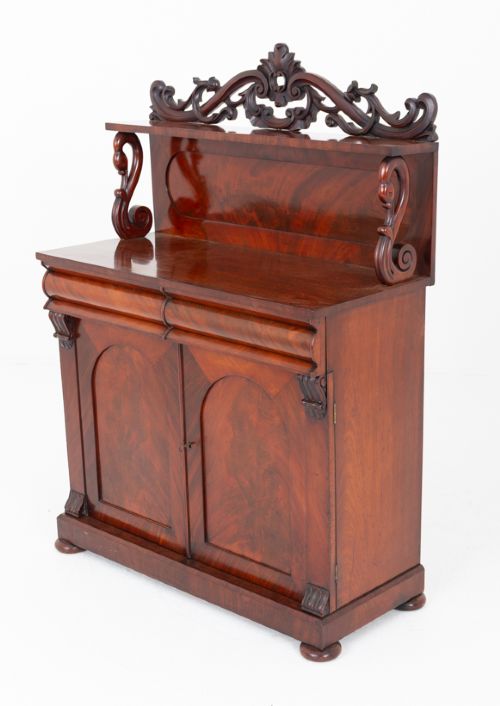
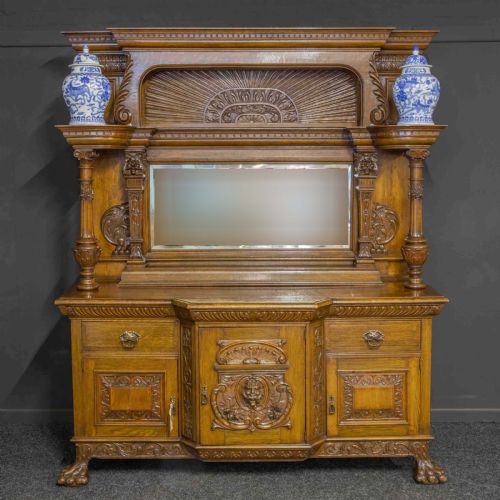
A carved backboard server stands ready to anchor a dining room, offering substantial timber presence and high-relief carving.
Carved Backboard Server
A carved backboard server encompasses nineteenth-century serving tables, sideboards, buffets, and chiffoniers built for formal dining rooms. These pieces provide heavy timber surfaces paired with raised decorative backs designed to protect dining walls and display plate.
The versions most commonly met on this page belong to the Victorian and William IV periods, constructed in rich timbers with substantial carved detailing. Buyers find these forms serving the same practical function today as they did in nineteenth-century interiors.
Makers of these large dining pieces drew upon Georgian proportions while embracing heavier nineteenth-century ornamentation. The resulting forms range from simple pedestals to multi-tiered display stands and four-door sideboards.
How they were made
Cabinet makers utilised solid mahogany, flame mahogany veneer, pollard oak, padouk wood, and oak for these serving pieces. Carpenters applied veneers over secondary timbers to create striking grain patterns across large drawer fronts and cupboard doors.
Carving was executed by hand directly into the dense hardwoods, producing elaborate backboards, scrolling brackets, and applied mouldings. Brass hardware and glass components were integrated into the design where doors or display tiers required them.
Several pieces include hidden cellaret drawers designed specifically to keep nineteenth-century wine bottles cool and secure.
What varies in quality
The distinction between standard examples and superior pieces rests in the depth and sharpness of the hand carving on the backboard. Master carvers achieved crisp relief work and balanced proportions that elevate a functional sideboard into a sculptural focal point.
Timber selection and veneer matching heavily influence the desirability of each piece. Superior examples display carefully chosen flame mahogany or figured pollard oak with continuous grain across wide surfaces.
The Carved Backboard Server Glossary
- Chiffonier
- A low nineteenth-century sideboard or cabinet typically featuring enclosed cupboards beneath a shelf or backboard. The form evolved during the Regency and Victorian periods for dining room use.
- Buffet
- A heavy dining room serving piece dedicated to food presentation. Nineteenth-century examples frequently incorporate multiple tiers and carved supports.
- Flame mahogany veneer
- A thin slice of mahogany timber cut from the fork of the tree to produce a flickering, flame-like grain pattern. Cabinet makers laid this over stable secondary woods.
- Padouk wood
- A dense tropical hardwood imported from Asia and Africa, valued by nineteenth-century makers for its deep reddish hue. It resists warping and takes fine carving.
Carved Backboard Server: Frequently Asked Questions
What is a carved backboard server used for?
These large nineteenth-century pieces served as auxiliary tables during formal meals to hold dishes, silver, and glassware. The raised backboard protected dining room wallpaper from splashes while offering a decorative ledge for display.
Today, buyers use them in dining rooms, large hallways, or living spaces for storage and surface display. Their deep proportions and substantial drawers accommodate modern linens and tableware easily.
How do I tell a Victorian server from a Regency one?
Regency and early nineteenth-century pieces often display cleaner classical lines influenced by ancient Greek and Roman forms. They tend to feature restrained brass inlay and simpler architectural profiles.
Victorian examples generally show heavier proportions, deeper hand carving, and more exuberant scrolling on the backboards. The introduction of four-door pedestals and figured veneers became widespread during the Victorian era.
Are these servers suitable for modern dining rooms?
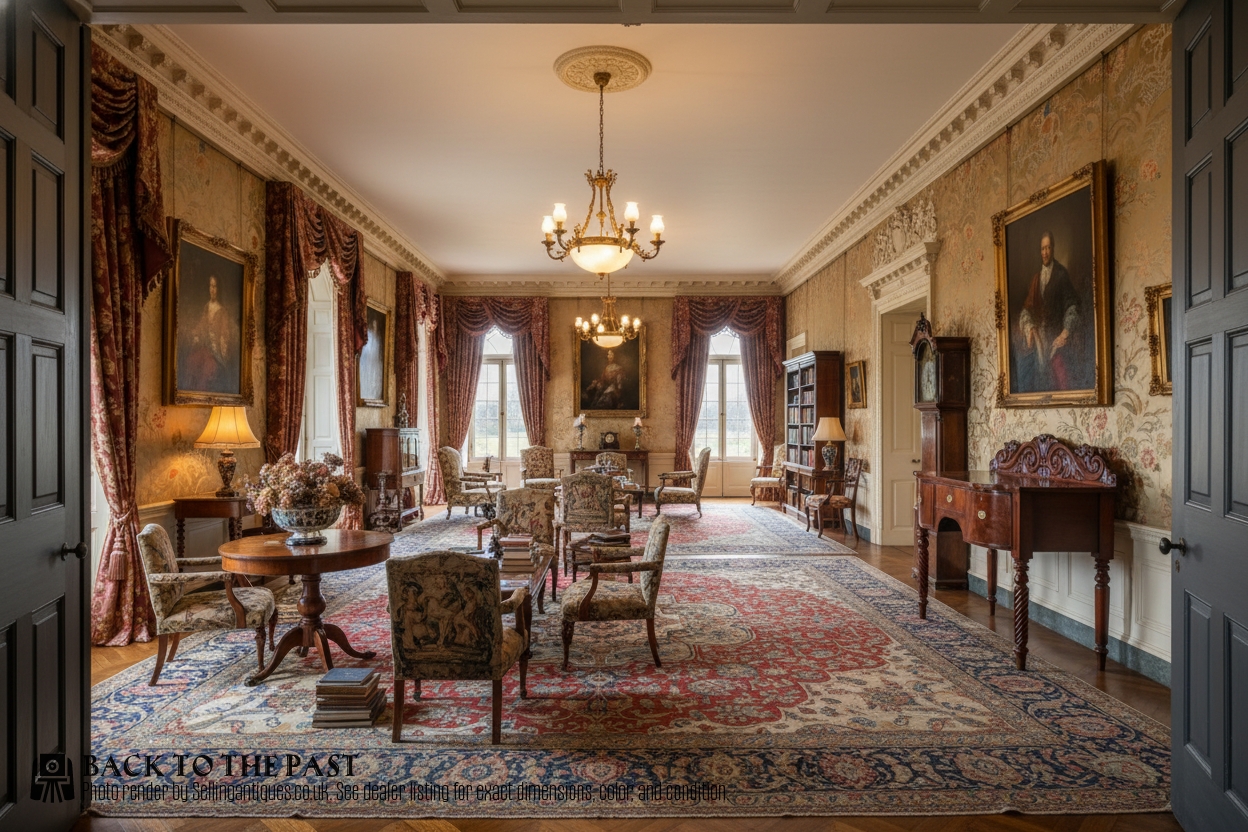
Their generous proportions require substantial wall space and high ceilings to sit comfortably in a room. They work best as anchor pieces in traditional or eclectic dining spaces.
The wide timber surfaces and deep cupboards provide practical storage that outlasts modern manufacturing. They integrate well into rooms designed around dark wood antiques.
What woods were used for these servers?
Mahogany is the primary timber found across these pieces, frequently enhanced by figured veneers like flame mahogany. Cabinet makers also utilised oak for structural integrity and secondary framing.
More unusual materials include pollard oak with its distinctive knotty clusters and dense padouk wood. These exotic hardwoods were selected for their strength and rich natural colour.