




Irish Carved Server
An irish carved server brings monumental presence and deep-carved timber detail into a grand dining room or hallway.
Irish Carved Server
When you search for an irish carved server, you encounter heavy timber serving tables, console tables, and side tables that originate primarily from the eighteenth and nineteenth centuries. These forms reflect the ambitious scale and robust proportions typical of Irish cabinet making during the Georgian, Regency, and Victorian eras.
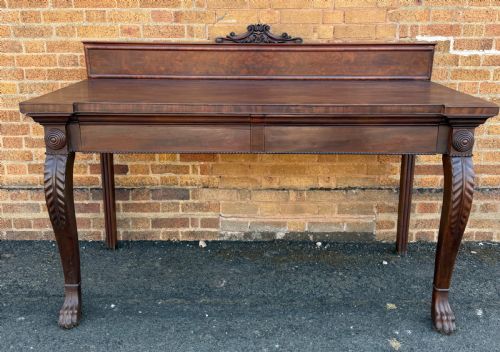
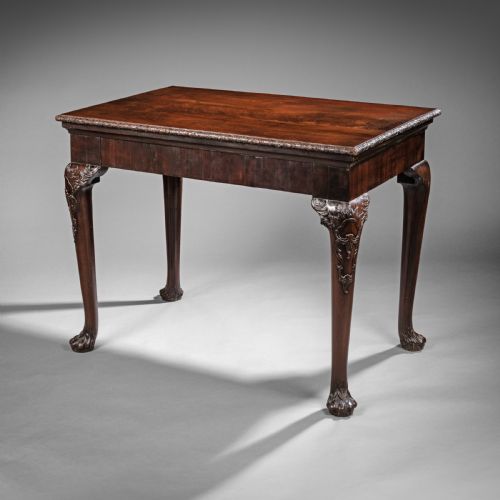
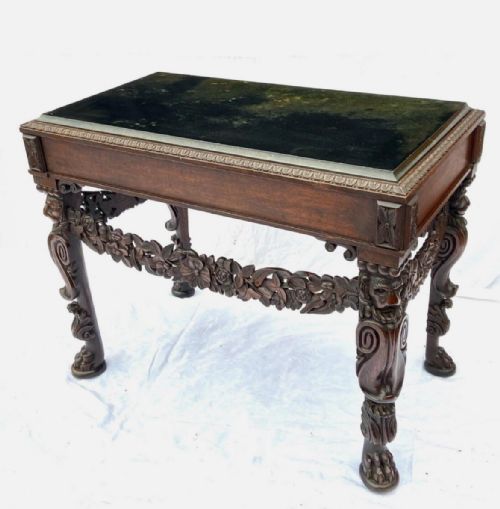
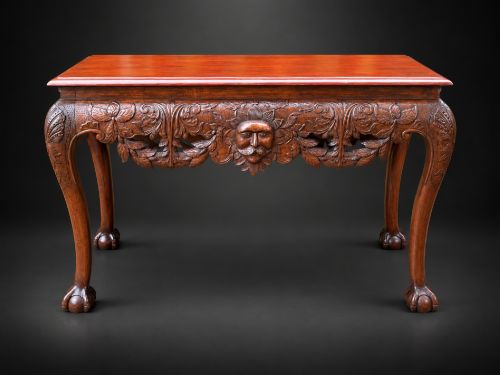
You are most likely to meet mahogany examples spanning from the George II period through to the later nineteenth century, occasionally accompanied by oak alternatives. The designs frequently incorporate substantial woodwork, such as lion masks and paw feet, setting them apart from plainer English equivalents.
How they were made
Workshop makers relied on dense tropical hardwoods like mahogany alongside native oak to build the structural framework of these large tables. These timbers were selected for their ability to hold deep, sculptural relief work without splitting along the grain.
Surface adornment required skilled hand chiselling to shape intricate motifs directly into the solid wood or applied mouldings. Certain late period pieces also integrate green marble tops, combining heavy stone slabs with carved wooden bases.
Irish Carved Server Retail Price Guide 2026
Typical asking prices for irish carved server among the pieces listed under this phrase on Sellingantiques today, from the lower quarter to the upper quarter. They describe what is for sale here now, not the wider market.
Listings feature mahogany and oak timbers alongside green marble top variants from the eighteenth and nineteenth centuries.
What varies in quality
The distinction between standard cabinet work and superior artistry lies in the depth and crispness of the timber carving. Tables featuring fully articulated lion masks and powerful paw feet demonstrate a higher level of sculptural ambition than those with shallow, repetitive edge moulding.
Proportion and scale dictate the visual success of the piece, with commanding dimensions requiring balanced framing to maintain architectural integrity. The integration of high status elements, such as matched marble surfaces or attribution to known Dublin makers, elevates the standing of the piece.
Robert Strahan & Co·Mack Williams And Gibton
The Irish Carved Server Glossary
- Console table
- A wall-mounted or freestanding table designed to stand against a flat surface, often supported by heavy front legs. These tables frequently served as decorative sideboards in grand reception rooms.
- Serving table
- A large dining room table used for holding dishes and silver during meals before the widespread adoption of the dedicated sideboard. They often lack drawers and feature prominent friezes.
- Lion mask
- A carved ornamental motif depicting the face of a lion, frequently placed on the knees of table legs or central aprons. This classical detail became a hallmark of Irish furniture design.
- Paw feet
- Carved furniture feet shaped to resemble the paws of a beast, commonly integrated into heavy console and serving table designs. They anchor the composition visually and physically.
- George II style
- A design idiom recalling the heavy, architectural furniture of the mid eighteenth century. Pieces in this manner emphasise robust proportions and bold carved ornamentation.
Irish Carved Server: Frequently Asked Questions
What rooms suit an irish carved server?
These commanding tables fit naturally into spacious dining rooms, grand entrance halls, and long drawing rooms where their heavy proportions find sufficient breathing space. Their architectural presence anchors a large wall and provides a substantial surface for display.
Because of their significant depth and height, measure your floor space carefully before placement to ensure uninterrupted passage around the piece.
How were these tables used originally?
In large eighteenth and nineteenth century houses, these surfaces held heavy silver platters, serving dishes, and decanters during large dining events. They functioned as staging areas for food before servants transferred items to the dining table.
Over time, their role shifted toward decorative display, acting as console tables for lamps, mirrors, and large decorative objects in formal hallways.
How do I care for mahogany surfaces?
Maintain the timber by applying natural beeswax sparingly and buffing it gently with a soft cloth to nourish the grain. Avoid placing antique wood in direct sunlight or near modern heat sources, which can cause the timber to dry out and split.
Keep marble tops clean using a damp cloth and mild soap, ensuring no acidic liquids remain on the stone surface.
How do I distinguish Regency from Georgian pieces?
Georgian examples often display heavier, more robust carving with deep relief work, prominent lion masks, and substantial cabriole or straight legs. Regency pieces tend to incorporate classical revival motifs inspired by ancient Greece and Rome, sometimes featuring sleeker architectural lines.
Examining the construction methods and secondary timbers underneath helps clarify the manufacturing period.