


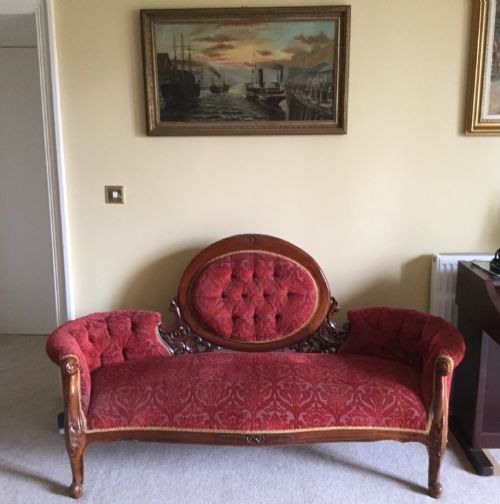
Carved Back Mahogany Chairs
When you search for carved back mahogany chairs, you are looking at seating built from dense tropical timber shaped with detailed woodwork.

Carved Back Mahogany Chairs
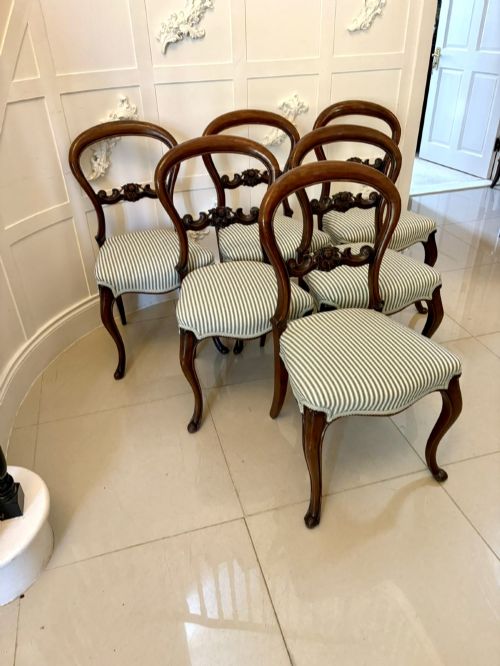
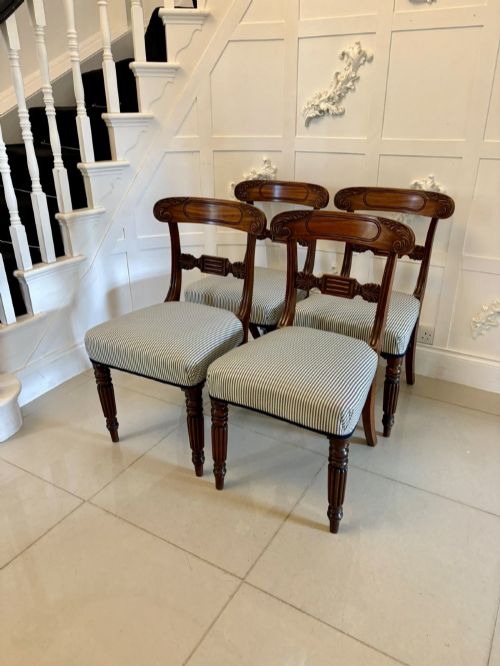
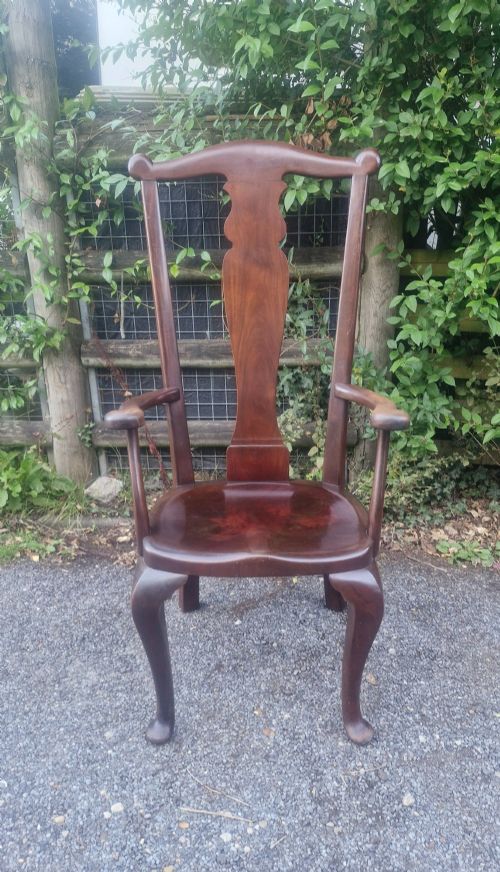
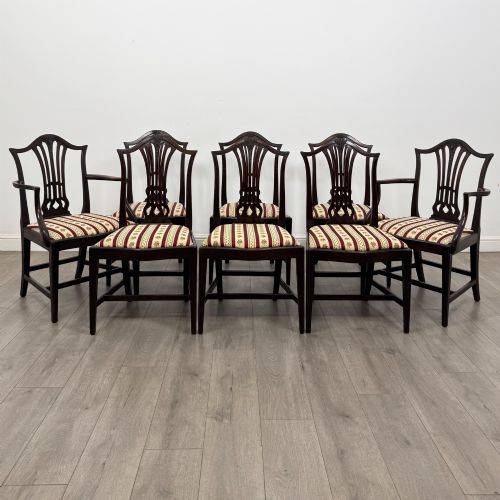
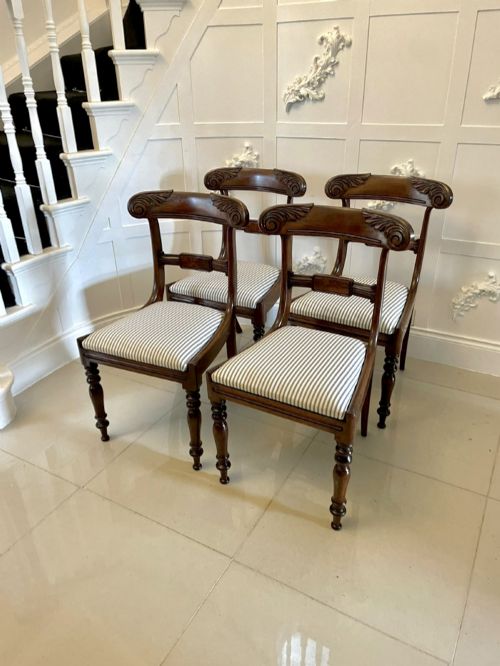
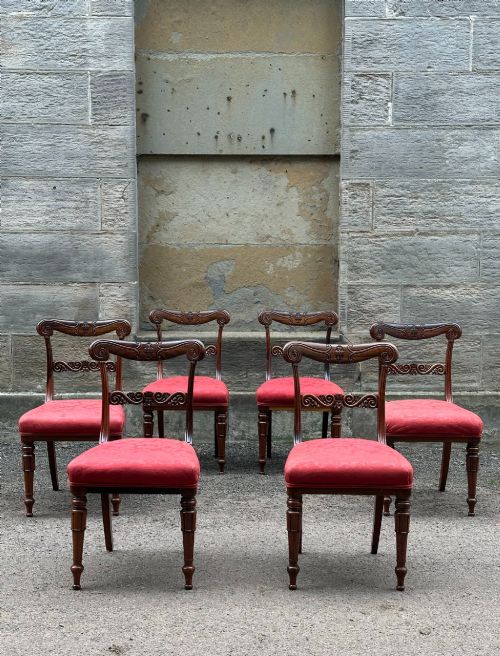
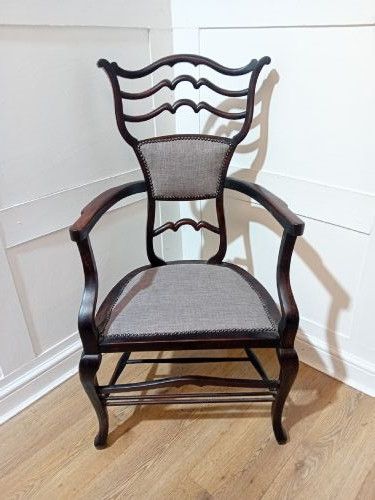
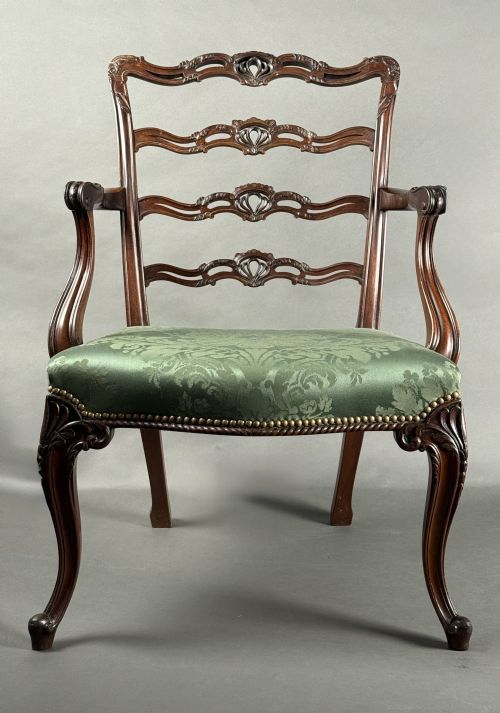
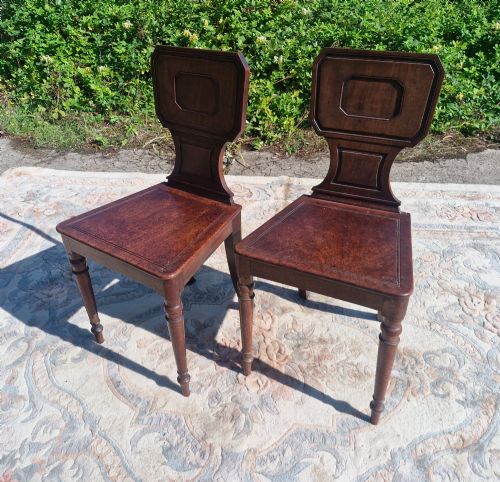
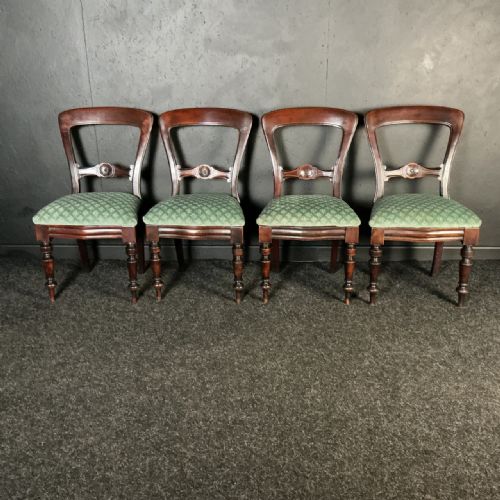
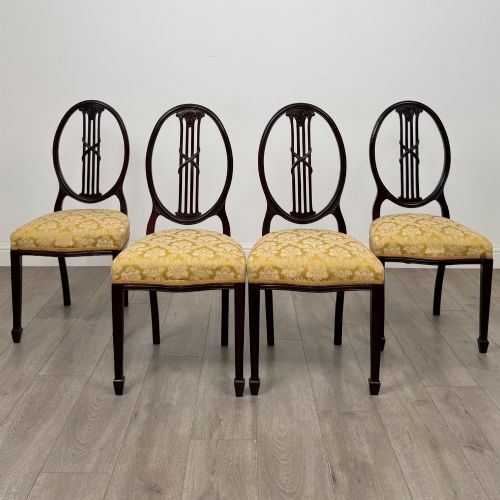
Carved back mahogany chairs comprise dining sets, single armchairs, and hall seating produced across Georgian, Regency, Victorian, and Edwardian eras. The most frequent examples found in this selection are dining sets featuring balloon backs, shield backs, and bar backs.
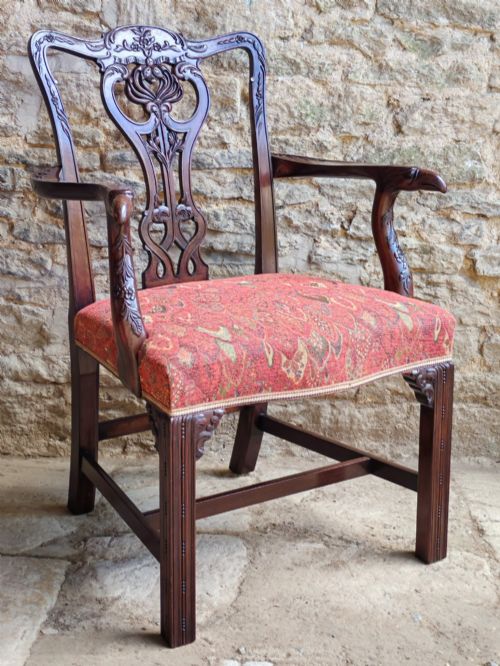
Makers adapted classical motifs into dining and desk seating over centuries, resulting in variations from 18th-century Georgian forms to later revival styles like Chippendale and Hepplewhite. These pieces serve practical dining and library functions while displaying sculptural woodwork along the upper rail and splat.
What varies in quality
The standard of a piece rests upon the crispness and depth of the timber carving, where sharper execution indicates superior hand tool work by skilled joiners. Timber selection also dictates grade, with rich grain patterns and solid framing setting finer examples apart from plainer commercial production.
Proportion and structural integrity define the overall execution, particularly in how the back splat meets the rail and how the legs bear weight. Matching sets maintain uniform timber colour and consistent detail across all items, whereas assembled sets show minor variations in tone and carving depth.
Carved Back Mahogany Chairs Retail Price Guide 2026
Typical asking prices for carved back mahogany chairs among the pieces listed under this phrase on Sellingantiques today, from the lower quarter to the upper quarter. They describe what is for sale here now, not the wider market.
Several Victorian music stools and rocking chairs manage to combine formal carved mahogany with the gentle urge to sway.
Gillows·Howard and Sons·Jennens and Bettridge·James Shoolbred and Co·Maple and Co
The Carved Back Mahogany Chairs Glossary
- Balloon back
- A rounded, oval-shaped upper rail popular during the Victorian period. This form resembles a hot air balloon silhouette.
- Shield back
- A heart-shaped or shield-shaped backrest design developed in the 18th century. It frequently incorporates carved wheat ears, urns, or drapery motifs.
- Splat
- The vertical central strip of wood connecting the seat to the top rail of a chair. Carved versions display openwork designs like lyres or ribbons.
- Carver
- An armchair designed to match a set of dining side chairs. These pieces feature elbow rests alongside the standard back design.
Carved Back Mahogany Chairs: Frequently Asked Questions
How do I date a carved mahogany chair?
Dating relies on identifying stylistic markers, construction methods, and timber characteristics typical of specific eras. Georgian and Regency pieces often show lighter frames and neoclassical motifs, while Victorian examples tend to feature heavier proportions and balloon or spoon backs.
Secondary woods and tool marks underneath the seat rail provide additional clues to the period of manufacture. Comparing the joinery against documented examples helps narrow down the decade of production.
Were these chairs used only for dining?
While the majority of these pieces function as dining sets, the category includes specialised forms intended for various domestic rooms. Hall chairs were placed in entranceways as decorative statements, while armchairs and desk chairs served studies and parlours.
Nursing chairs, music stools, and rocking chairs were also constructed using similar mahogany framing and carved details tailored to specific domestic tasks.
What is the difference between a carver and a side chair?
A carver includes integrated armrests attached to the back frame and seat, designed for the head of a dining table. Side chairs lack arms, allowing multiple seats to tuck neatly side by side along dining tables.
Both types shared matching carved back designs within unified dining sets, ensuring a cohesive appearance around the room.
How do I care for antique mahogany furniture?
Maintenance involves keeping the timber away from direct heat sources and drastic humidity changes to prevent wood splitting. Regular dusting with a soft, dry cloth preserves the finish without requiring heavy polishes.
Upholstered sections benefit from gentle vacuuming using a brush attachment to protect fabric and leather surfaces from wear.