

Carved Arm Library Chair
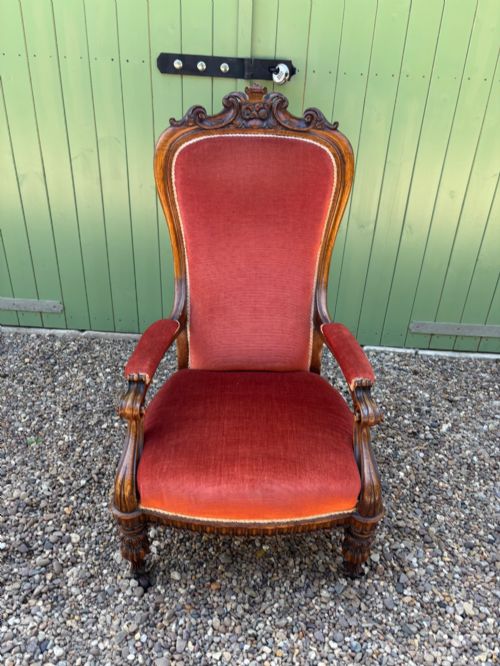
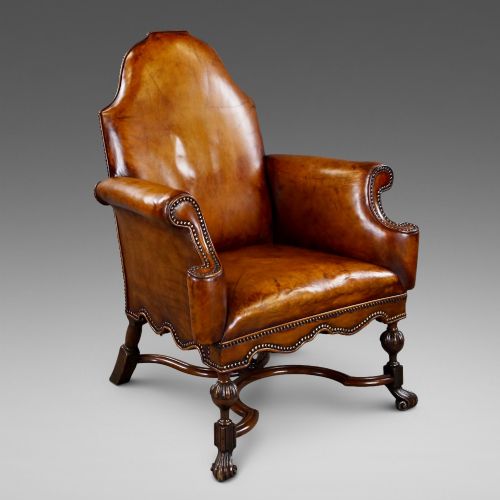
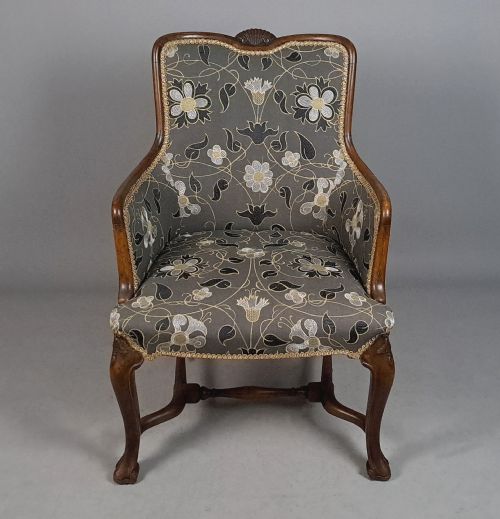
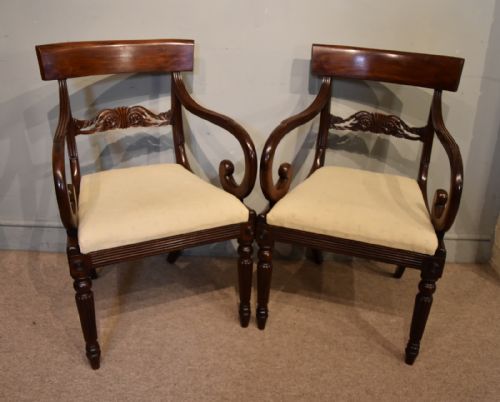
A carved arm library chair offers solid seating for a study, combining timber frames with upholstered or cane seats across Georgian, Victorian, and Edwardian periods.
Carved Arm Library Chair
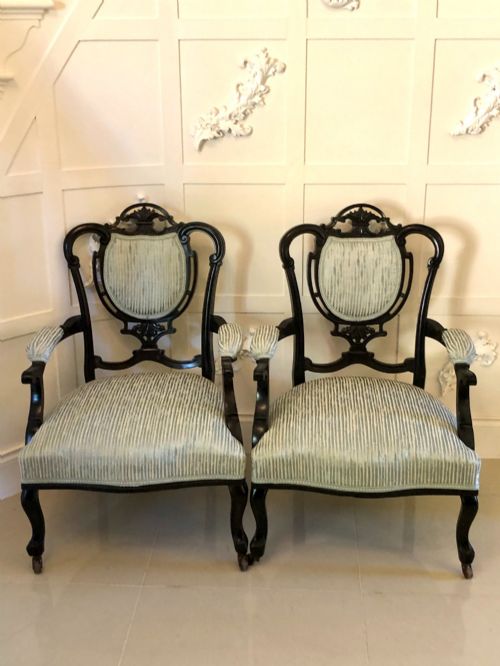
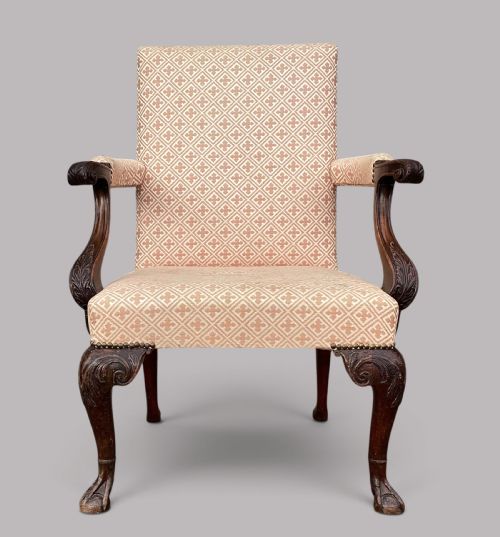
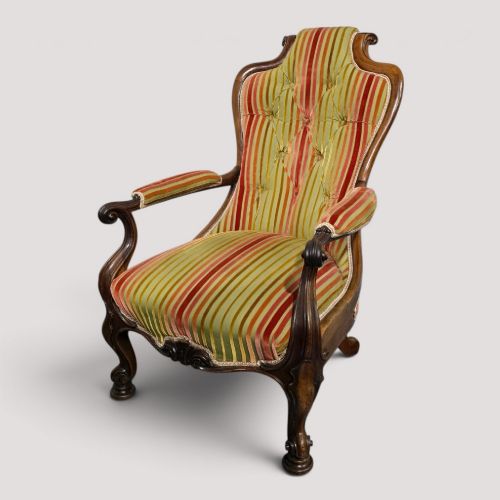
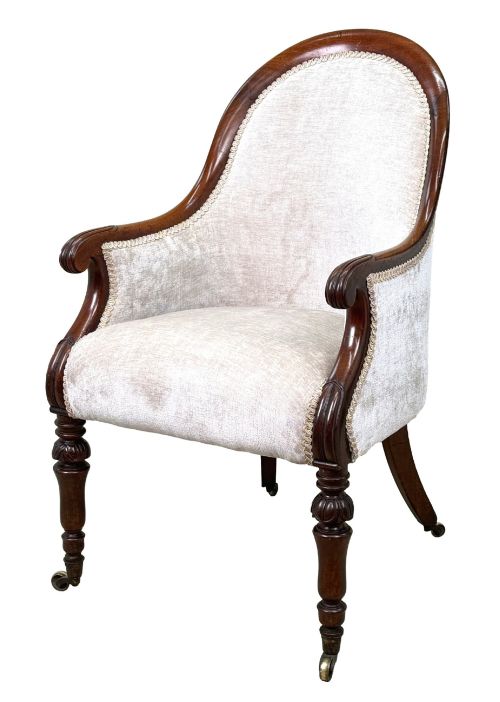
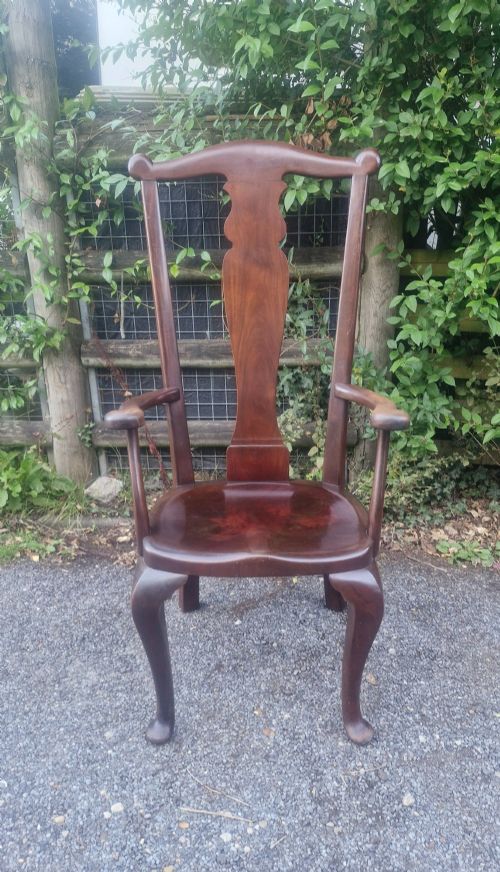
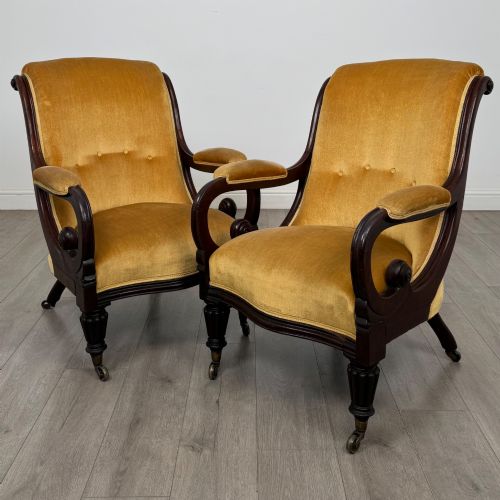
When searching for a carved arm library chair, buyers encounter heavy timber seating designed for reading rooms, studies, and studies from the eighteenth century onwards. The pieces recorded here span forms such as Gainsborough chairs, tub chairs, swivel desk chairs, and high-backed reading seats.
The version most commonly met on this page is the nineteenth-century mahogany or walnut armchair, often featuring padded leather or fabric upholstery. These seating options derive from earlier Georgian and Regency designs, maintaining sturdy arms and substantial frames built for daily use.
Materials and Construction
The timber framework relies heavily on dense hardwoods such as mahogany, walnut, oak, and rosewood, chosen for their structural strength and capacity to hold detailed carving. Joinery techniques connect shaped arm supports and legs to robust seat rails, ensuring stability under regular weight.
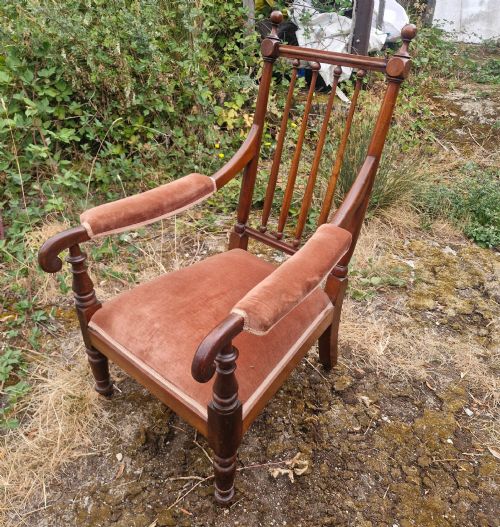
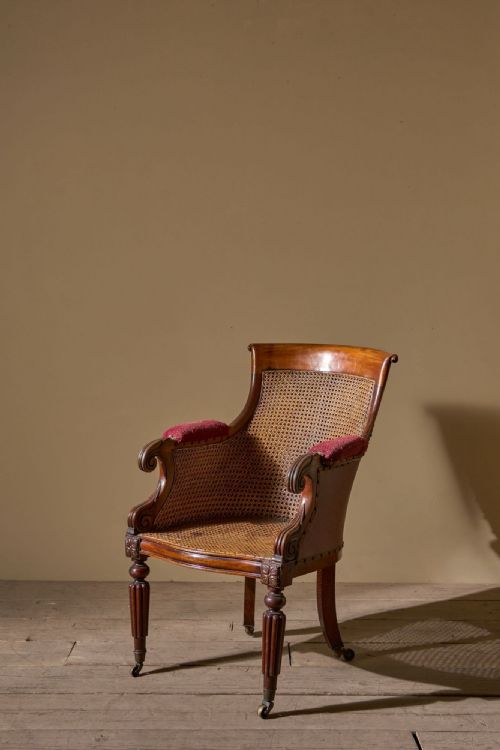
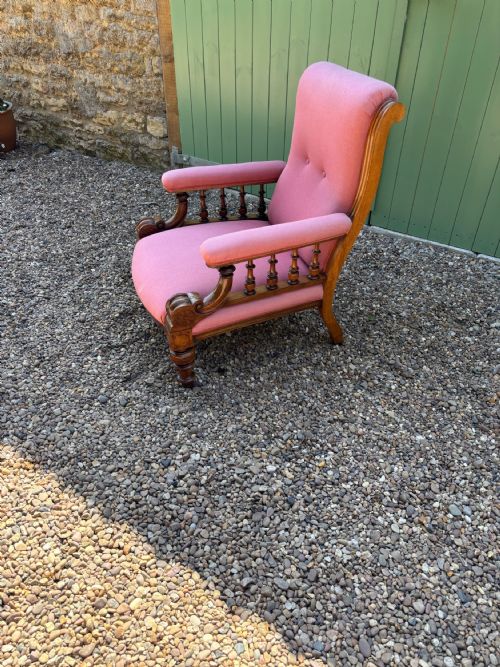
Upholstery materials include leather, velvet, fabric, and cane panels, secured over webbing or stuffing. Brass studs or nails frequently edge the leather panels on Gainsborough and desk chairs, whilst spindle backs and caned inserts lighten the appearance of country house seating.
Smoker's bows provided nineteenth-century readers with sturdy armrests for long hours spent with newspapers and pipes.
Indicators of Excellence
Quality reveals itself in the crispness and depth of the timber carving along the arm supports and knuckle rests. Superior examples display thoughtful proportions where the curve of the backrest matches the sweep of the open arms.
The integrity of the internal frame and the quality of the timber grain determine the standing of each piece. Heavier woods with rich natural patination and uncompromised joinery separate the finer library chairs from simpler utilitarian seating.
Whytock and Reid·Gillow
The Carved Arm Library Chair Glossary
- Gainsborough armchair
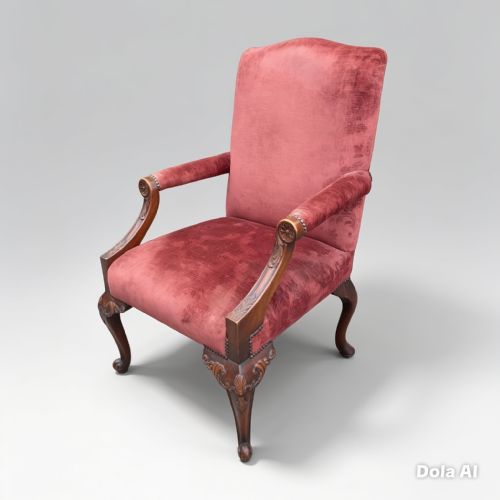
- A wide-seated, upholstered armchair with open padded arms, popular in the mid-eighteenth century and later reproduced. These seats typically stand on moulded square legs connected by stretchers.
- Bergère
- An enclosed armchair with cane or upholstered sides and back panels, usually featuring a loose seat cushion. The wooden frame is often exposed and carved.
- Spindle back
- A chair back constructed from a series of turned vertical wooden rods or spindles. This method provides sturdy back support without excessive weight.
- Captain's chair
- A rounded wooden armchair with a low back and arms forming a continuous rail over spindle supports. They frequently serve as desk or study seating.
- Tub armchair
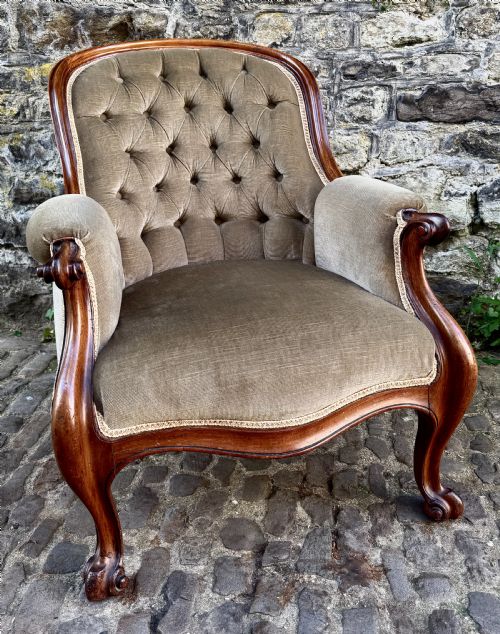
- An upholstered seat with a continuous curved back and armrest forming a deep, protective enclosure. The design wraps around the sitter for added comfort during reading.
Carved Arm Library Chair: Frequently Asked Questions
How do I date a library chair?
Dating relies on examining the timber species, joinery methods, and the style of the carved arm supports. Georgian pieces often show lighter mahogany frames, whilst Victorian examples utilise heavier rosewood or walnut.
Secondary woods and upholstery construction beneath the leather or fabric further help confirm the manufacturing era of the chair.
Where were library chairs used?
These seats were placed in private studies, grand libraries, and country house reception rooms for reading and correspondence. Their robust construction suited domestic and professional workspaces alike.
Desk variants were often built to swivel or adjust, accommodating the practical needs of nineteenth-century offices and studies.
Can I use a library chair at a modern desk?
Many library and desk chairs fit standard modern desk heights, particularly swivel or adjustable oak variants from the Edwardian period. Their ergonomic proportions were originally engineered for long hours of writing.
Checking the seat height and arm clearance ensures the chair slides comfortably beneath a contemporary desk surface.