

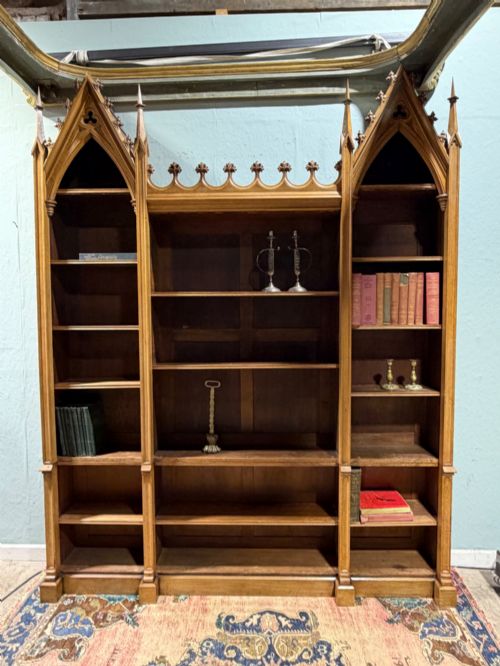
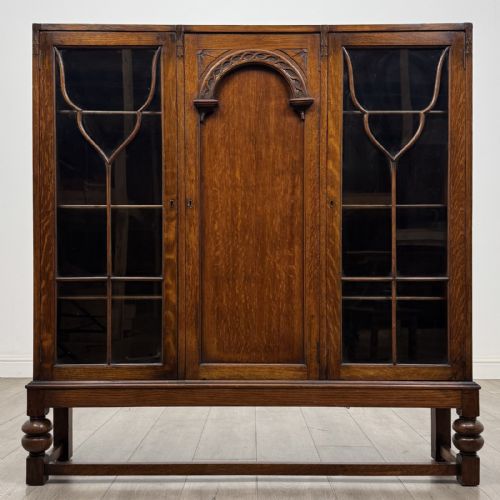
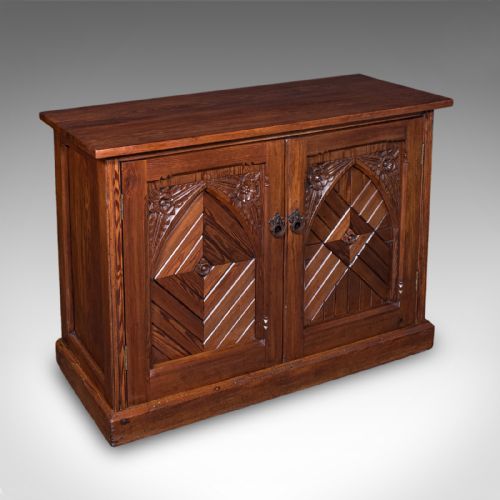
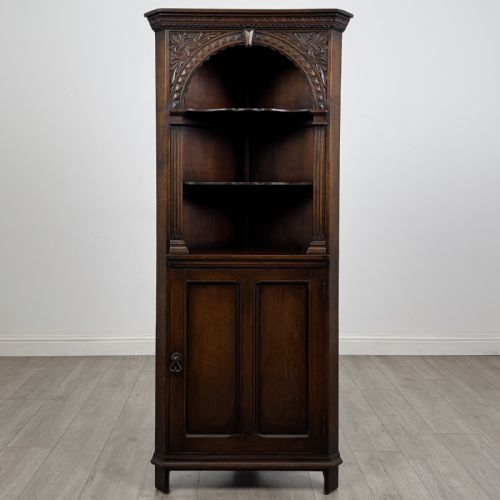
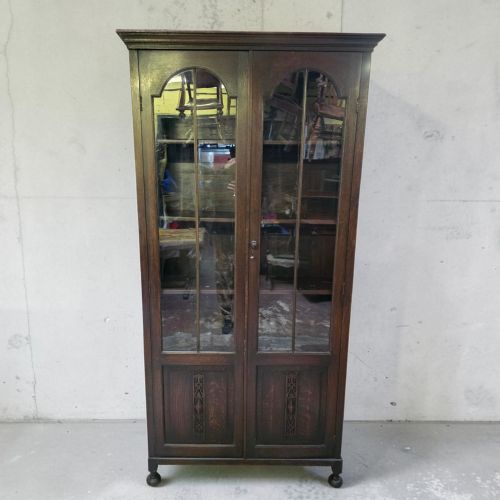
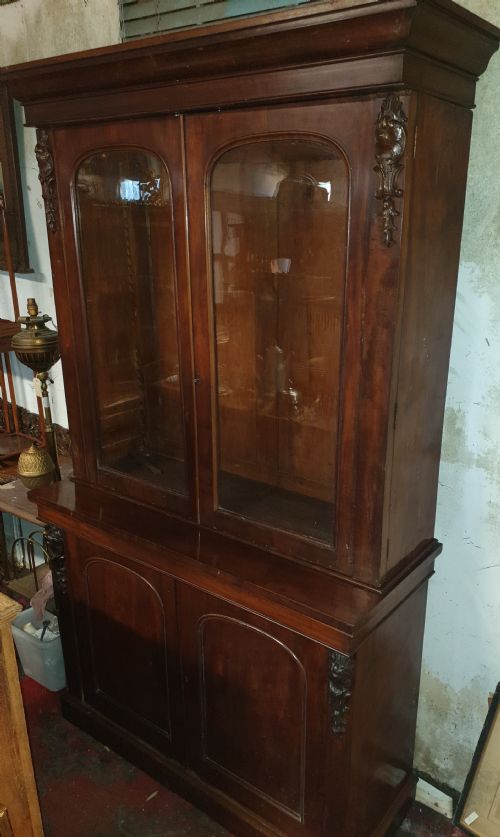


Carved Arch Bookcase
A carved arch bookcase brings architectural gravity and rich timber grain to a room, offering glazed storage for cherished volumes.
Carved Arch Bookcase
A carved arch bookcase combines sturdy shelving with architectural framing, frequently displaying pointed or rounded arches across the door panels. These pieces emerge primarily from the nineteenth century and the early decades of the twentieth, spanning periods from the Victorian era to Edwardian times. The forms on this page include tall glazed display units, corner cabinets, and substantial housekeepers cupboards.
Makers and workshops of these periods leaned heavily into revivalist movements, resulting in heavy Gothic and Jacobean details. Buyers encounter dark timbers fitted with glass doors, brass hardware, and intricate mouldings designed to elevate domestic libraries. The scale ranges from compact corner cupboards to commanding breakfront cabinets.
Materials and construction
Cabinet makers of the nineteenth and early twentieth centuries relied on durable hardwoods such as oak, mahogany, and walnut, often accentuating the design with iron and brass fittings. Timber was selected for grain pattern and strength, ensuring the heavy glazed doors and carved arches remained structurally sound over generations.
Construction techniques combined traditional joinery with relief carving, particularly around the arched door panels and cornices. Glass was set into timber frames to protect the books within while maintaining visibility, supported by sturdy shelving and panelled backs.
Carved Arch Bookcase Retail Price Guide 2026
Typical asking prices for carved arch bookcase among the pieces listed under this phrase on Sellingantiques today, from the lower quarter to the upper quarter. They describe what is for sale here now, not the wider market.
Listings feature oak, mahogany, and walnut timber across Victorian, Edwardian, and nineteenth-century periods.
Distinguishing quality in timber and carving
The distinction between standard and superior pieces rests on the depth and precision of the carving, particularly around the characteristic arches. Crisp, hand-chiselled details demonstrate a higher level of craftsmanship than softer, machine-milled mouldings.
Timber selection and hardware integrity further separate the range. Heavier, well-figured oak and walnut with original brass hinges and clear, period glass indicate a finer workshop provenance.
Shapland & Petter
The Carved Arch Bookcase Glossary
- Gothic Revival
- A nineteenth-century architectural and decorative style drawing on medieval forms, featuring pointed arches and heavy timber. This aesthetic heavily influences many pieces found in this category.
- Jacobean Revival
- A style popular during the late nineteenth and early twentieth centuries that imitates seventeenth-century English furnishings, known for dark oak and geometric panels. It frequently appears alongside carved arch motifs.
- Breakfront
- A cabinet design where the central section projects forward from the side sections. This layout creates a more dynamic silhouette for large bookcases.
- Glazed
- Fitted with glass panels, typically in doors, to protect contents from dust while allowing them to be viewed. This feature is standard on display cabinets and bookcases.
Carved Arch Bookcase: Frequently Asked Questions
What periods do these bookcases come from?
The pieces listed here span the nineteenth century up to the Edwardian period, encompassing Victorian and Arts and Crafts eras.
Craftsmen during these times drew on earlier historical styles like Gothic and Jacobean to shape their designs.
How were these bookcases used originally?
They served to protect and display valuable libraries in domestic studies, drawing rooms, and libraries.
The glazed doors kept coal smoke and dust away from leather-bound volumes while keeping titles visible.
Are the shelves adjustable in these cabinets?
Many nineteenth-century bookcases feature fixed shelving integrated into the structural carcass of the piece.
Some later examples incorporate simple wooden support brackets that allow for minor height adjustments.
How do I care for the timber?
Maintain the wood by applying a quality beeswax periodically to nourish the grain and prevent drying.
Keep the cabinet away from direct heat sources and strong sunlight to protect the finish and timber stability.