
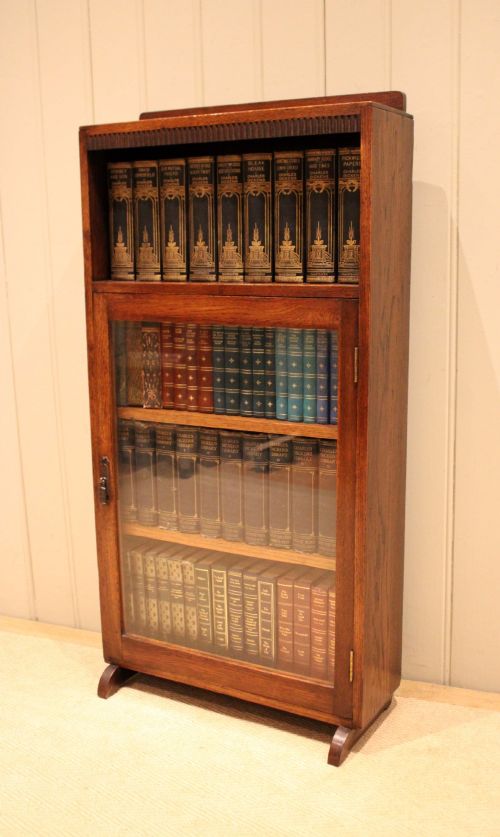
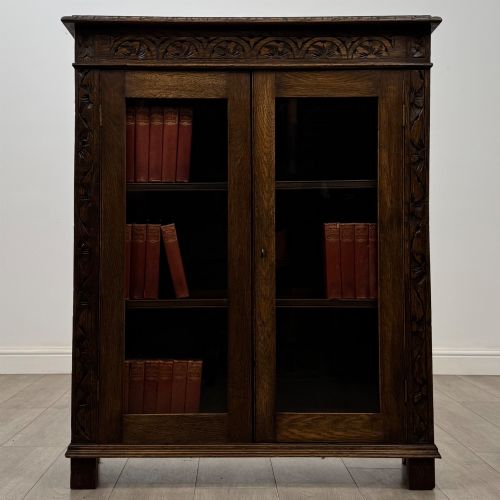
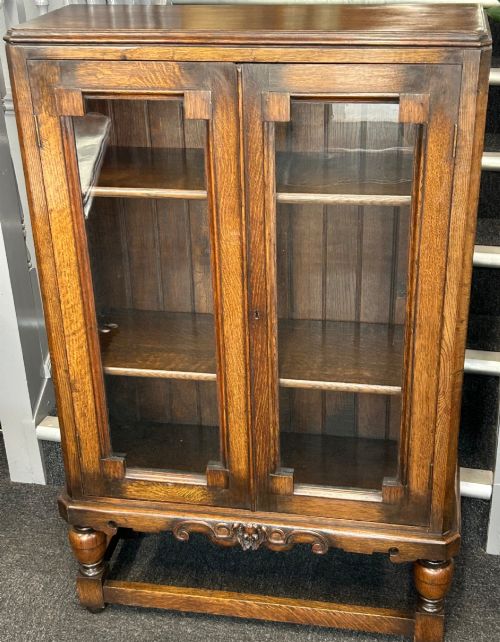


Antique Oak Book Cupboard
An antique oak book cupboard combines closed storage with open or glazed shelving, offering a sturdy home for volumes from the Victorian and Edwardian eras.
Antique Oak Book Cupboard
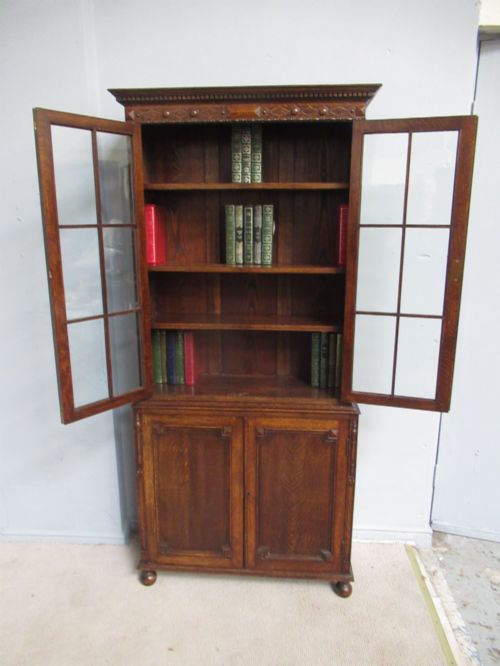
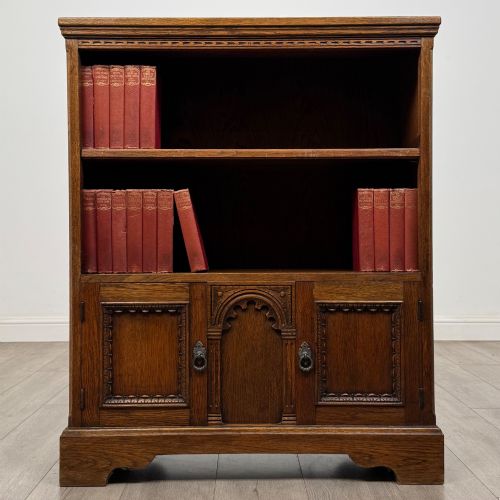
An antique oak book cupboard serves as a dual-purpose piece of furniture, providing concealed storage in a lower cabinet alongside upper shelving for displaying books. The forms span from compact Edwardian designs to substantial Victorian library pieces and earlier revival styles.
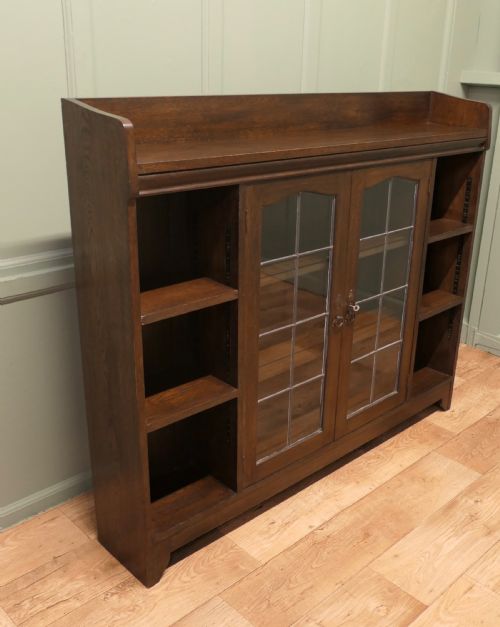
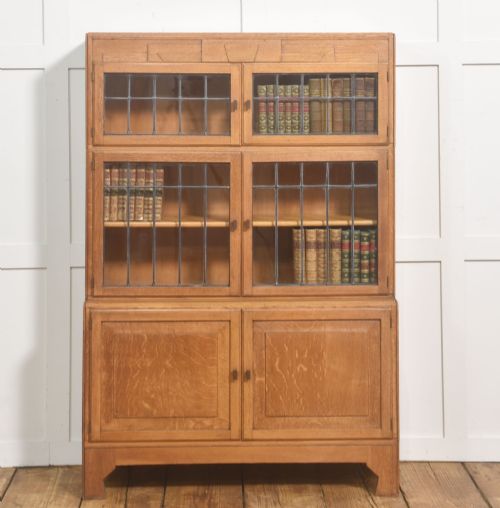
Buyers will encounter various configurations on this page, including glazed display doors, open shelving, and fitted adjustable shelves. Many examples incorporate glass, lead, or brass hardware alongside the primary timber.
Origins range across the nineteenth and early twentieth centuries, capturing periods from the late Victorian era through to the nineteen-twenties and nineteen-thirties.
How They Were Made
Carpenters utilised solid oak and pollard oak for the structural carcass and decorative panels, building pieces designed to withstand heavy domestic or institutional use. Timber surfaces frequently exhibit carved detailing or beaded edges.
Glazing takes the form of clear or leaded glass panes fitted into timber doors, while metal fittings such as brass and iron provide structural support and operational hardware.
Materials documented across the archive include solid oak, pollard oak, leaded glass, brass hardware, and iron fittings.
What Varies in Quality
The degree of hand-carved detail and the selection of figured oak veneers, such as pollard oak, distinguish finer cabinet-making from standard production. Master joiners employed precise joinery for adjustable shelving systems and tight-fitting doors.
Proportion and scale dictate the hierarchy, with larger library pieces and matched grain patterns commanding greater visual presence than simpler utilitarian school or office cabinets.
A Blain And Son Liverpool·Gillows·Heals Of London·Maple And Co·Samuel Pepys
The Antique Oak Book Cupboard Glossary
- Pollard oak
- A decorative timber derived from trees that were cut close to the trunk to produce a clustered, highly figured grain pattern. This timber was favoured by Victorian makers for display cabinets.
- Leaded glass
- Individual panes of glass held together within a network of lead cames. This technique appears on Arts and Crafts and early twentieth-century cabinet doors.
- Adjustable shelves
- Shelving supported by moveable pegs or ratchet systems rather than fixed housings. This feature allows the cabinet interior to accommodate volumes of varying heights.
- Book press
- A heavy mechanical device used to flatten paper or bind volumes. Early Victorian examples sometimes share construction traits with small oak storage cabinets.
Antique Oak Book Cupboard: Frequently Asked Questions
How do I date an oak book cupboard?
Dating relies on architectural styling, timber selection, and construction methods. Pieces from the mid-nineteenth century often display heavier Gothic revival carving, whereas nineteen-twenties examples favour cleaner lines.
Hardware styles and the presence of original glass or adjustable shelf mechanisms also offer reliable clues to the exact decade of manufacture.
Are the shelves adjustable on these cupboards?
Many Victorian and Edwardian library cabinets feature adjustable shelving systems. These use wooden or metal supports to allow customisation of shelf heights.
Simpler utilitarian cupboards from the early twentieth century occasionally feature fixed shelves built directly into the carcass.
What is the difference between a bookcase and a book cupboard?
A standard bookcase provides open or glazed shelving for book storage without enclosed floor-standing cupboards. A book cupboard specifically combines upper display shelves with a lower enclosed storage cabinet.
This hybrid form emerged to keep working libraries organised while concealing loose papers or household items behind timber doors.
How should I care for antique oak furniture?
Oak benefits from steady indoor humidity and protection from direct sunlight to prevent the timber from drying out or splitting. Routine maintenance involves gentle dusting with a dry cloth.
Applying a traditional beeswax polish periodically helps nourish the grain and preserve the surface sheen without building up excessive residue.