



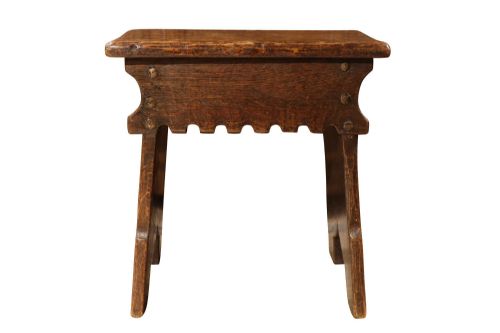
Carved Apron Oak Table
A carved apron oak table holds the honest grain and sturdy architecture of centuries past, offering a solid surface built to endure.
Carved Apron Oak Table
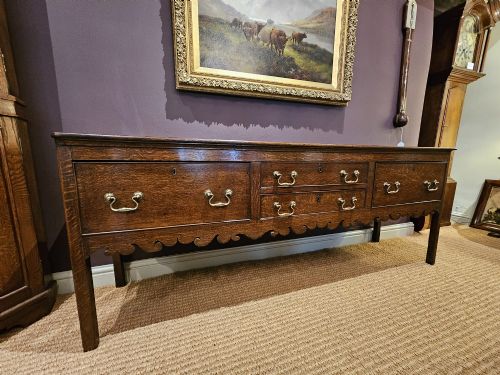
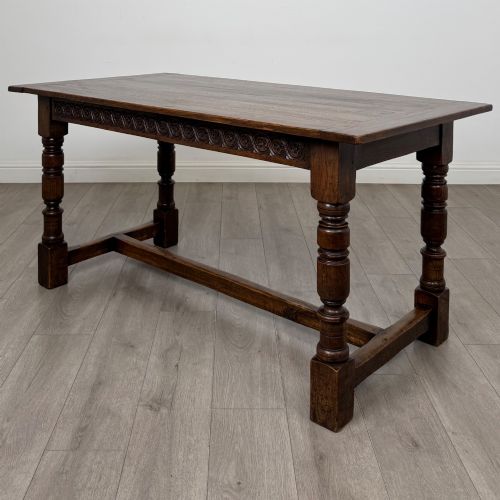
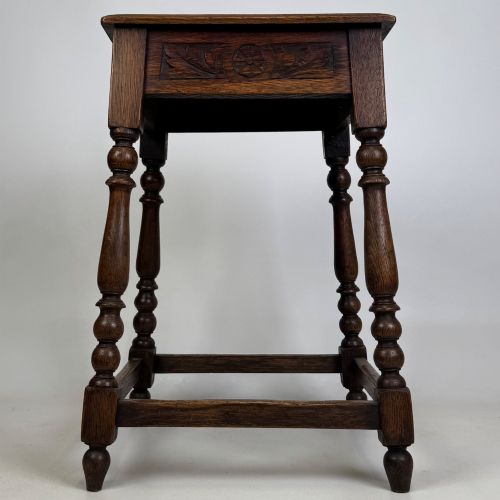
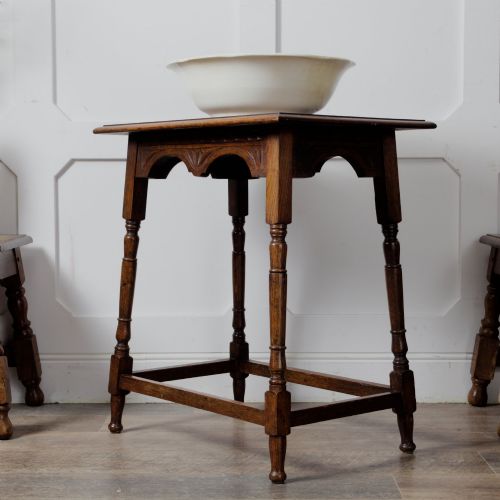
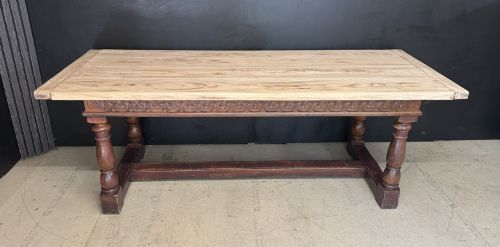
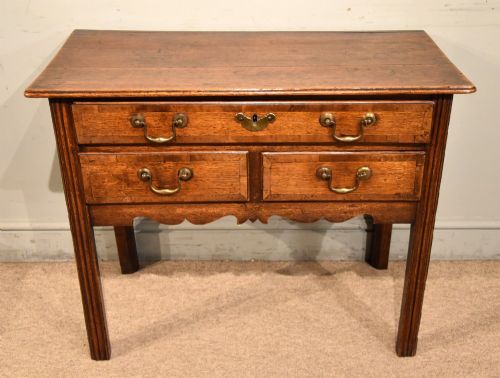
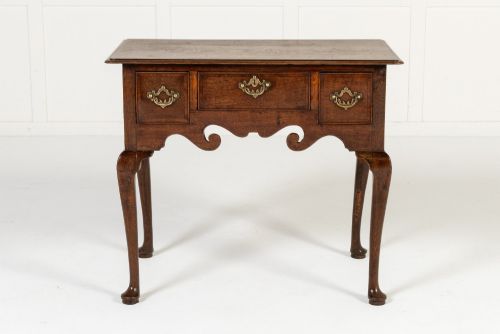
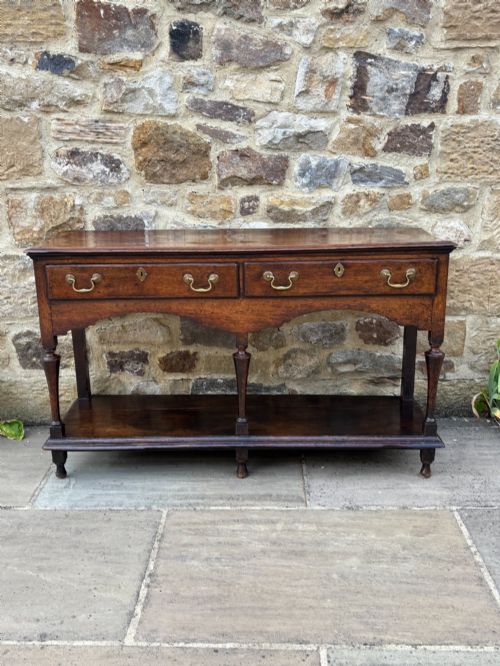
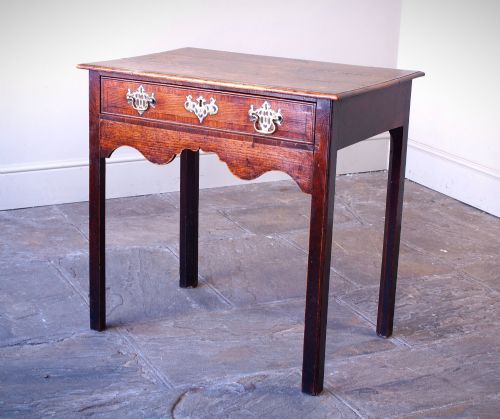
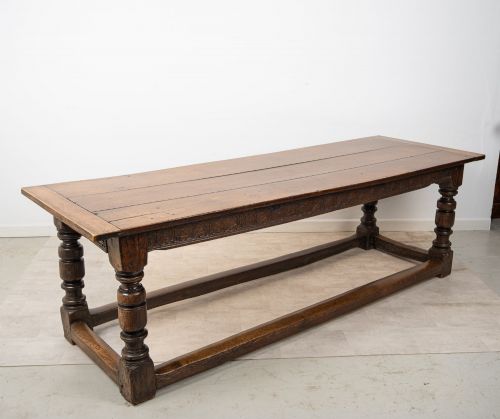
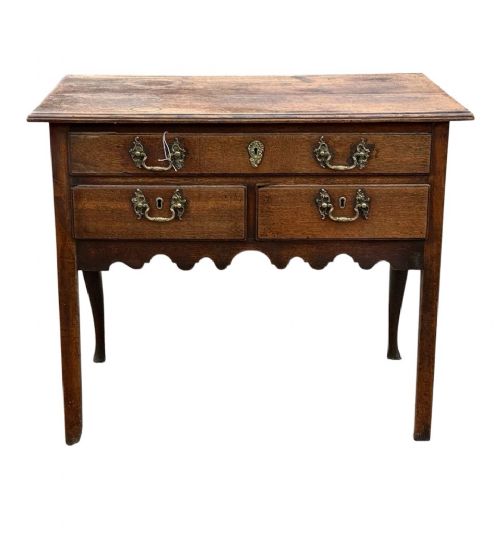
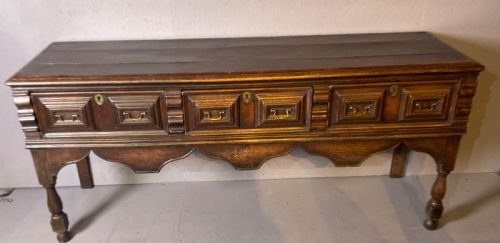
A carved apron oak table brings together robust timber and decorative lower framing beneath the surface top. You encounter these most frequently as dining tables, lowboys, and side tables dating from the seventeenth, eighteenth, and nineteenth centuries.
The selection ranges from early refectory and farmhouse formats to refined Georgian lowboys and revival centre tables. Each piece displays the distinctive figuring of English and continental oak, often complemented by carved ornamentation along the skirt.
Makers shaped these forms for daily utility in country houses, farmhouses, and formal halls alike. Survivors carry the marks of generations of use in their timber.
Materials and construction methods
Carpenters relied primarily on solid oak, supplemented occasionally by walnut, pine, and brass hardware. Planks were joined using pegged construction and traditional framing techniques that allowed the timber to expand and contract naturally.
Decoration on the apron was executed through direct carving into the solid wood rather than applied mouldings. Surfaces finished with wax or polish reveal the natural grain patterns developed over decades.
Carved Apron Oak Table Retail Price Guide 2026
Typical asking prices for carved apron oak table among the pieces listed under this phrase on Sellingantiques today, from the lower quarter to the upper quarter. They describe what is for sale here now, not the wider market.
Several tables retain generations of pocket-knife notches hidden beneath the leaves, left by diners who carved their initials between courses.
Judging quality in historic tables
Quality rests in the integrity of the timber and the crispness of the carved details along the apron. Tables retaining their original tops and uncompromised structural joints command greater regard among collectors.
Proportion and timber selection separate utilitarian workshop output from finer vernacular examples. The presence of period brasses and minimal later alteration preserves the historical character of the piece.
The Carved Apron Oak Table Glossary
- Apron
- The vertical timber member running beneath the edge of the table top, often ornamented with carving. This component frames the structure and supports the transition to the legs.
- Lowboy
- A small oak table fitted with drawers, commonly used as a side table or dressing surface during the eighteenth century. They frequently exhibit cabriole or straight legs.
- Refectory table
- A long, narrow dining table originating in monastic and great hall settings. These heavy pieces utilise sturdy stretchers to stabilise the span.
- Draw leaf table
- An extending table design featuring hidden leaves beneath the main top that pull out to lengthen the surface. This mechanism allows flexibility for dining.
- Pegged construction
- A method of joining wooden elements using wooden pins instead of metal nails. This traditional technique accommodates seasonal movement in solid oak.
Carved Apron Oak Table: Frequently Asked Questions
What is an oak lowboy?
An oak lowboy is a small side table featuring one or more drawers beneath the working surface. They date predominantly from the eighteenth century and served various domestic functions.
Craftsmen often fitted them with shaped aprons and slender legs. Their compact scale makes them adaptable for placement in modern hallways and living spaces.
How do I care for antique oak?
Maintain antique oak by applying a microcrystalline wax polish occasionally to nourish the dry timber. Avoid placing tables near direct heat sources or strong sunlight.
Use coasters and felt pads to protect the finished surface from moisture and scratches. Gentle dusting with a soft cloth preserves the natural patina.
Are these tables suitable for daily dining?
Many of these oak tables were built for heavy domestic use and remain entirely practical for contemporary meals. Refectory and farmhouse formats offer ample seating capacity.
Careful consideration of height and knee clearance ensures comfort for regular dining use. Sturdy construction provides the stability needed for modern households.
How can I tell the period?
Dating relies on observing construction marks, timber characteristics, and stylistic conventions of the apron and legs. Seventeenth-century examples display heavier frames and pegged joinery.
Eighteenth-century pieces often incorporate refined proportions and specific leg configurations such as cabriole or square tapered supports. Examining the underside reveals tool marks left by historical makers.