



Circular Oak Centre Table
A circular oak centre table anchors a room with solid grain and dependable weight.
Circular Oak Centre Table
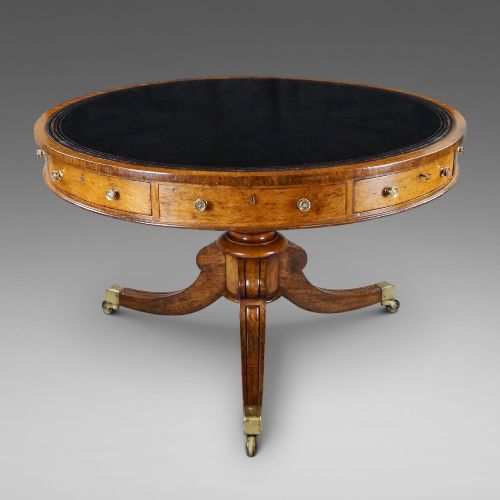
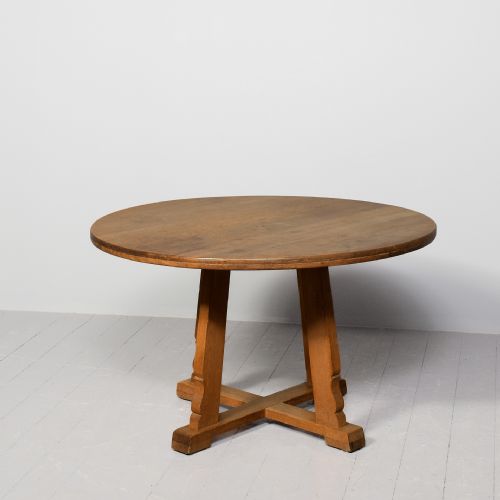
When you search for a circular oak centre table, you encounter round tables fashioned primarily from oak, featuring timber of various grains and tones. The forms span robust library drum tables, breakfast tables, and occasional pieces designed to stand in the middle of a room.
The pieces listed on this page originate from diverse periods including the Regency era, Victorian times, and the mid-twentieth century. You will meet styles ranging from formal George IV designs to rustic country items and Arts and Crafts creations.
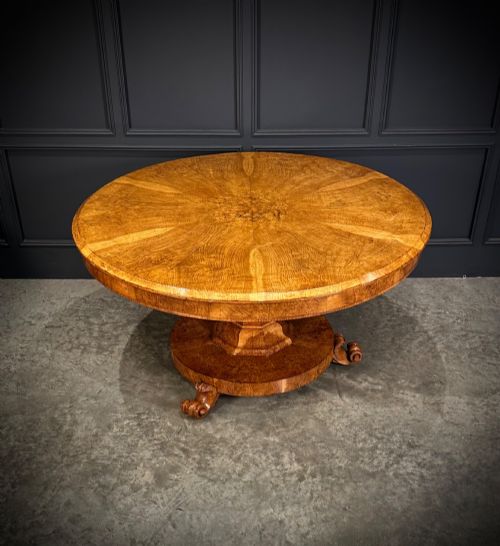
Function varies from dining and library work to smaller lamp and occasional use. Most examples rely on the natural strength and figuring of oak, sometimes enhanced by pollard or burr veneers.
How they were made
Cabinet makers utilised solid oak and specialised veneers such as pollard oak and burr oak to construct these round tops and supportive bases. The timber is frequently paired with contrasting materials like brass mounts, leather inserts, satinwood stringing, and iron details.
Construction techniques visible across the eras include segmented top assembly, tilt-top mechanisms, and sturdy tripod or pedestal supports. Bleached finishes and painted treatments also appear on select tables from the nineteenth century.
Listings feature oak combined with brass, leather, iron, and satinwood across nineteenth and twentieth-century periods.
What varies in quality
The standard of timber selection and veneer matching defines the upper tier of these tables. Figured sections like burr oak or pollard oak demand superior skill from the cabinet maker compared to plain, uniform boards.
Proportion and structural integrity separate simpler country pieces from formal Regency and Victorian examples. Refined carving, integrated inlay work, and robust pedestal construction elevate the execution of a piece.
The Circular Oak Centre Table Glossary
- Pollard oak
- Timber taken from trees that have been pollarded, resulting in rich, clustered growth rings and distinctive figuring.
- Burr oak
- Wood harvested from tree growths that produce chaotic, highly decorative grain patterns highly prized for tabletops.
- Drum table
- A heavy, round library table supported by a central pillar, often fitted with drawers around the deep skirt.
- Tilt-top
- A mechanism allowing the circular tabletop to pivot vertically for storage when not in active use.
- Satinwood
- A hard, yellowish exotic wood utilised for stringing and decorative inlay on formal tables.
Circular Oak Centre Table: Frequently Asked Questions
Where should a circular table sit?
These tables function best positioned in the middle of a room where people can walk entirely around the perimeter. They serve as natural focal points beneath a ceiling rose or central chandelier.
Ensure sufficient clearance remains between the table edge and surrounding seating or walls for comfortable daily movement.
Can I use one for dining?
Certain larger examples function well for meals, particularly breakfast tables and circular dining variants from the Victorian era. The round format encourages conversation among guests.
Check the height and diameter carefully to confirm adequate legroom and seating capacity for your household.
How do I identify a Regency piece?
Regency tables typically display classical restraint, architectural pedestals, and carefully matched veneers like pollard oak. Look for balanced proportions and understated brass details rather than heavy ornamentation.
Construction methods and secondary timbers inside drawers or beneath the top often corroborate this period origin.
How do I care for oak surfaces?
Oak tolerates standard household conditions well when kept away from direct heat sources and extreme humidity swings. Clean timber surfaces using a dry or barely damp cloth to preserve the natural finish.
Period leather inserts or polished wood tops benefit from occasional appropriate wax treatment to maintain suppleness and lustre.