
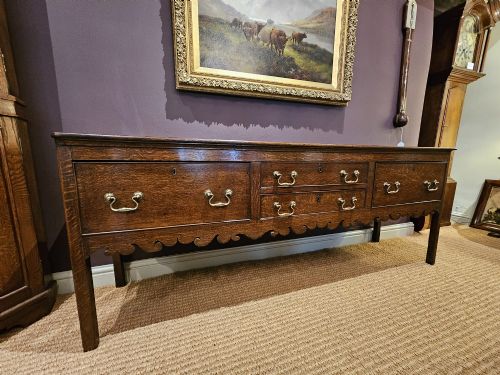
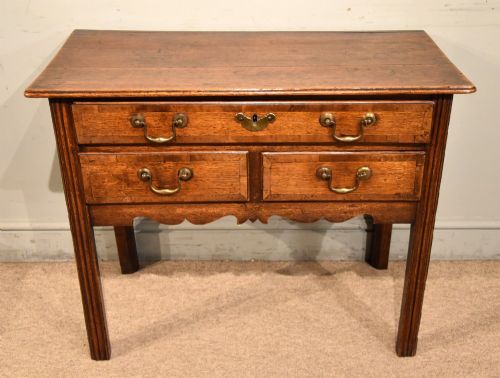
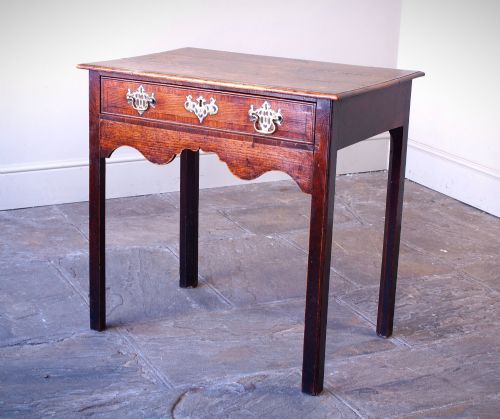
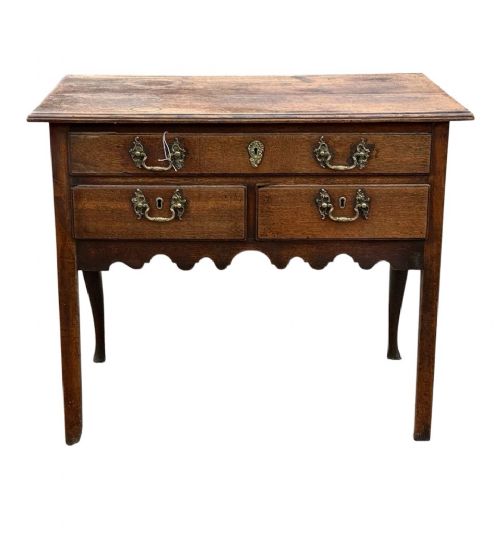

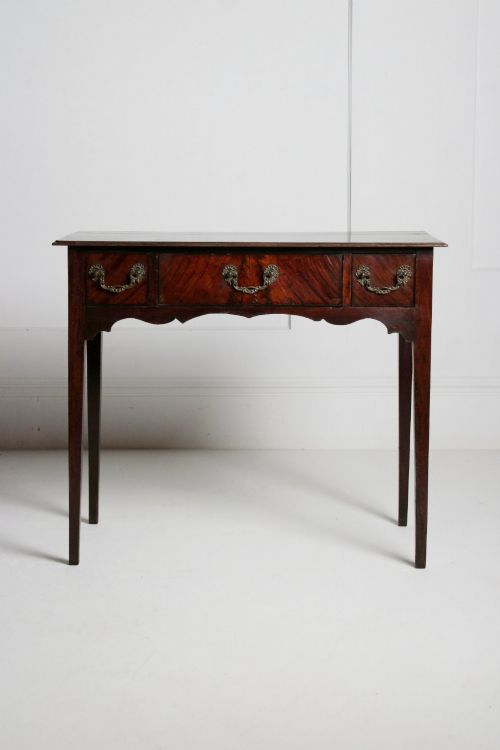
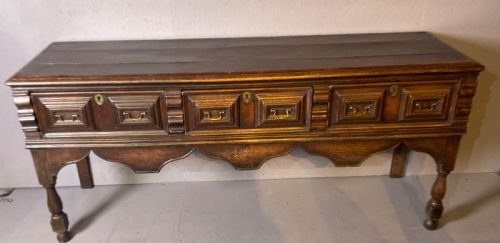
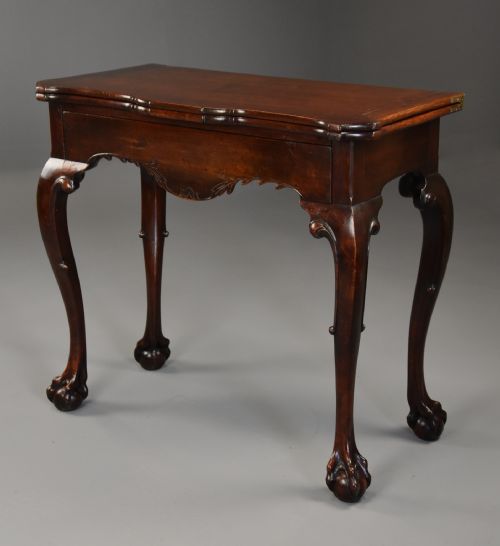


Carved Apron Console Table
A carved apron console table brings historic timber and ornamented underframes into a room, offering both a surface for display and a sculptural statement against a wall.
Carved Apron Console Table
A carved apron console table appears primarily in oak, mahogany, walnut, and pine, taking forms associated with side tables, serving tables, and lowboys across the Georgian, eighteenth century, and nineteenth century periods.
The selection ranges from early oak country pieces and walnut lowboys to grander mahogany and painted pine examples shaped by Georgian, Irish Chippendale, and Renaissance Revival styles.
Most pieces function against a wall or as freestanding centre tables, uniting utilitarian surfaces with decorative woodwork beneath the tabletop.
How they were made
Cabinetmakers utilised dense timbers such as oak, mahogany, walnut, and hardwood, shaping them with hand tools to build sturdy frames and durable tabletops.
Decoration relied on hand carving applied directly to the wooden apron beneath the top, occasionally augmented with marble inserts, brass fittings, or painted finishes.
Some tables crossed oceans before settling here, carrying traces of Irish and Chinese craftsmanship on their carved wooden aprons.
What varies in quality
Depth and crispness of the hand carving on the apron set apart finer examples, where crisp floral, scroll, or geometric motifs show confident execution by the maker.
The choice and figuring of the timber, from richly grained walnut and mahogany to well-figured oak, dictate the visual weight and presence of the piece in an interior.
The Carved Apron Console Table Glossary
- Apron
- The horizontal timber member beneath the tabletop that connects the legs, frequently decorated with carving. This structural element provides the primary visual focus for ornamental detail.
- Console table
- A table designed to stand against a wall, traditionally fixed with brackets or supported by front legs. It serves display purposes in hallways and reception rooms.
- Lowboy
- A small eighteenth-century table with drawers, typically constructed in oak or walnut. These low tables functioned variously as dressing tables or side tables.
- Serving table
- A large table placed in dining rooms for food and silverware presentation. They often feature robust timber frames and elaborate ornamentation.
- Centre table
- A freestanding table finished on all sides to sit in the middle of a room rather than against a wall. These pieces allow access from every angle.
Carved Apron Console Table: Frequently Asked Questions
Where should I place a console table?
These tables fit well in entrance halls, living rooms, and dining spaces where surface space is needed without blocking thoroughfares. They provide a practical spot for lamps and decorative objects.
Because many examples stand against walls or function as freestanding centre tables, placement depends on whether the carved apron is visible from multiple angles.
How do I care for antique timber?
Keep wooden tables away from direct heat sources and strong sunlight to prevent the timber from drying out and cracking. Regular dusting with a soft, dry cloth preserves the finish.
Avoid using silicone-based polishes, as they build up over time and alter the natural lustre of older oak, mahogany, and walnut surfaces.
What is the difference between a lowboy and a console table?
A lowboy is a compact table featuring one or more drawers beneath the top, originally designed for personal use in bedrooms or parlours. They date frequently to the eighteenth century in oak and walnut.
Console tables are typically larger surface pieces intended for display against walls, often lacking the drawer configurations found on traditional lowboys.
How can I tell an eighteenth century table from a later revival piece?
Examine the construction methods, tool marks, and timber shrinkage visible on the underside and drawer interiors. Eighteenth-century pieces exhibit hand-cut joints and timber movement consistent with age.
Revival pieces from the nineteenth and early twentieth centuries often show more uniform machine-assisted work or different secondary woods beneath the primary surface.