
Neoclassical Mahogany Table
When you want a neoclassical mahogany table, you are looking for formal design built in rich timber and elevated by classical restraint.
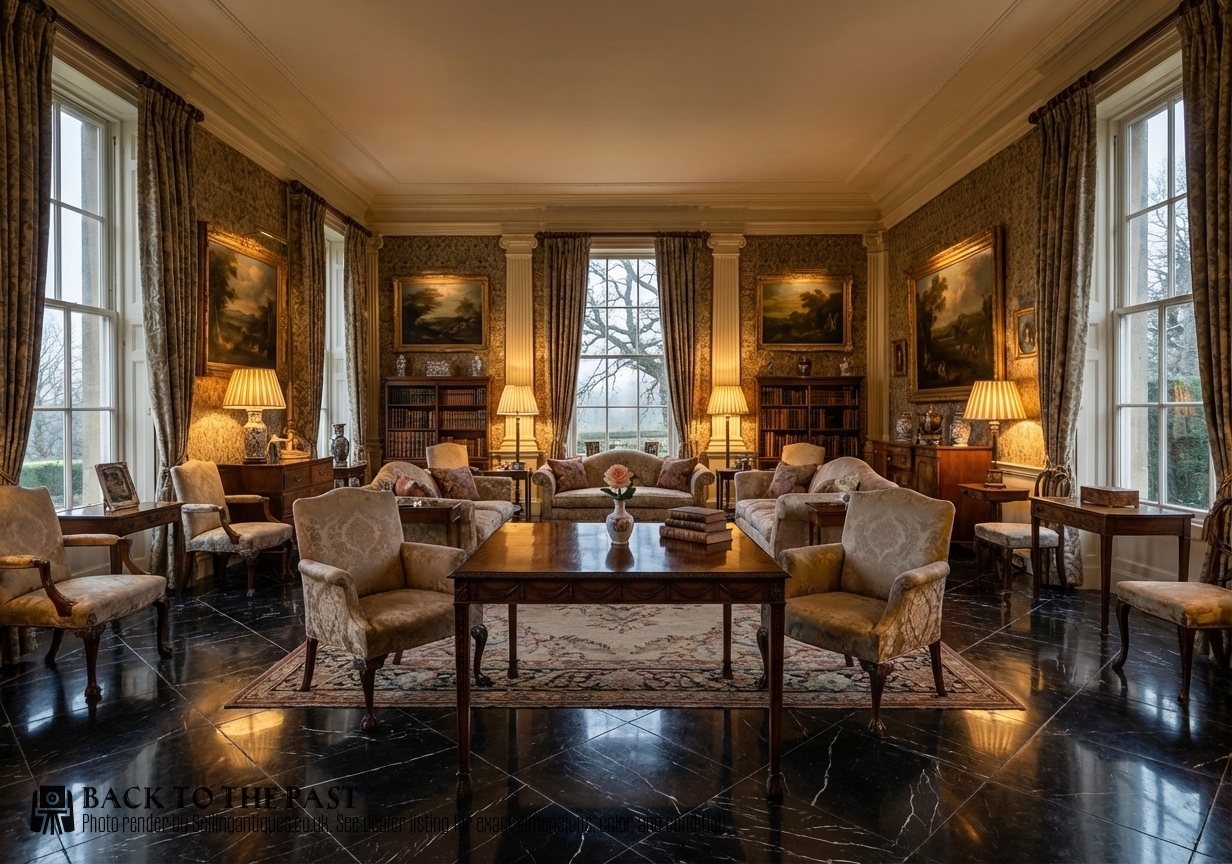
Neoclassical Mahogany Table
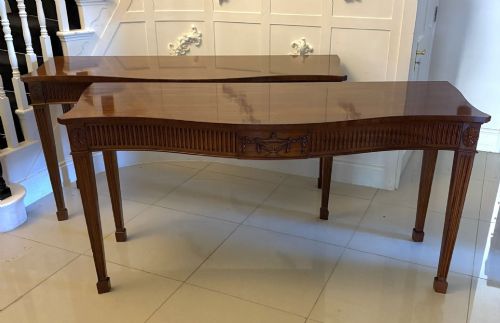
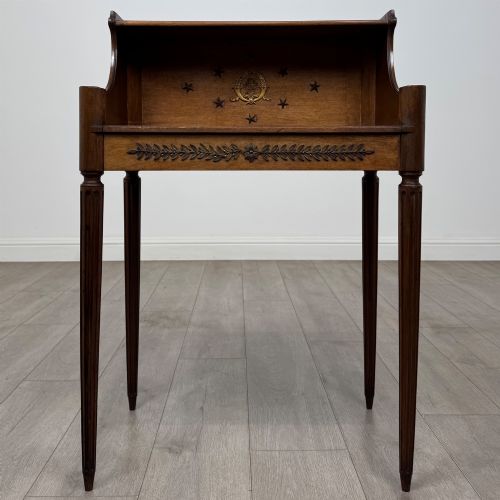
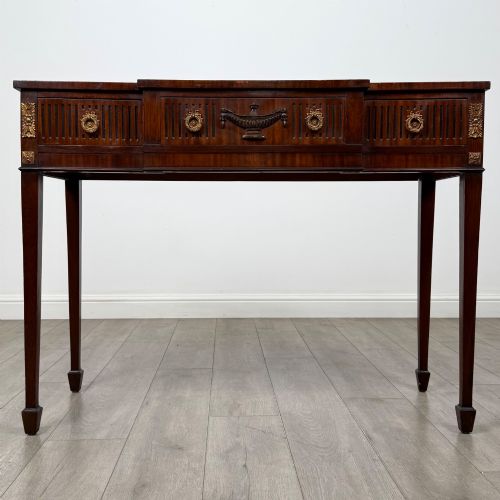
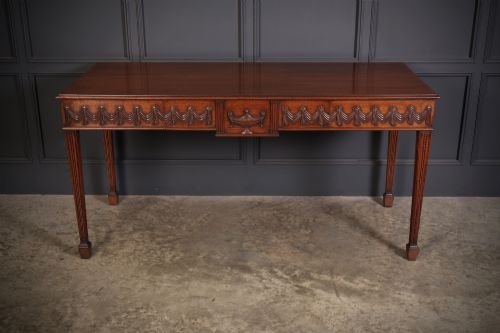
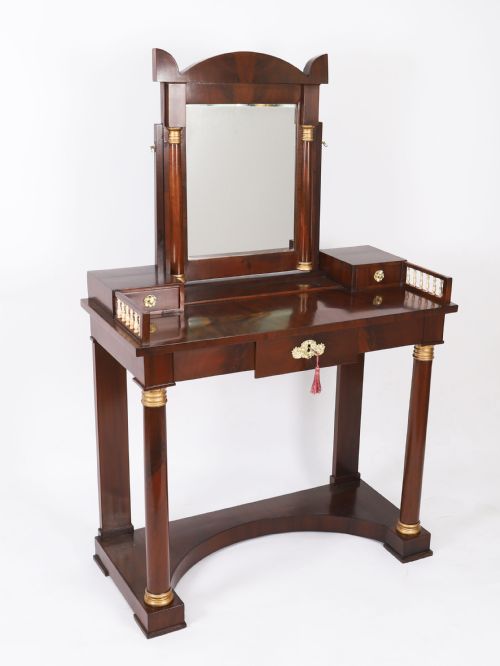
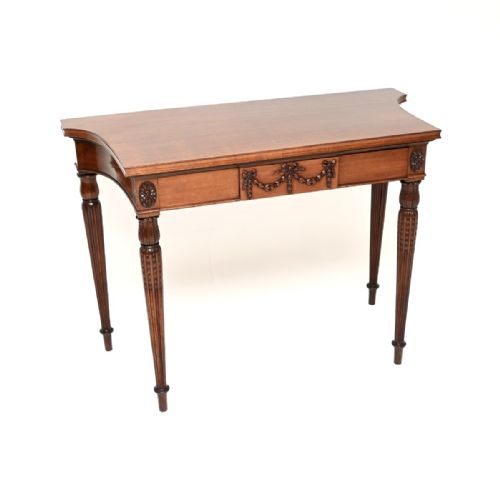
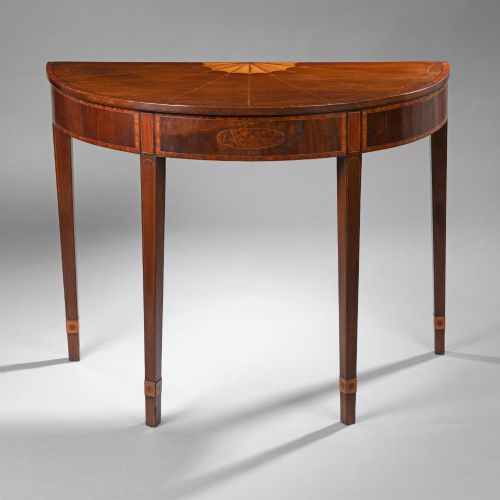
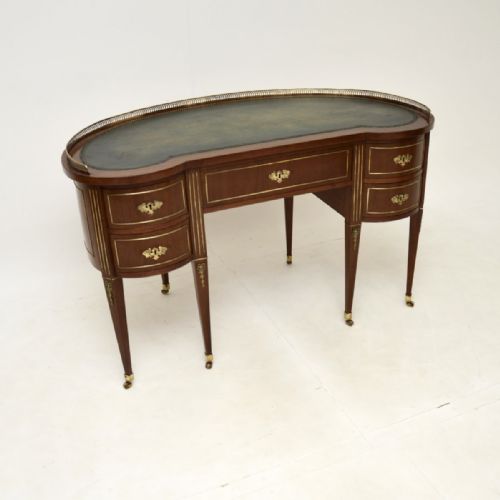
A neoclassical mahogany table takes several distinct shapes across this selection, appearing most frequently as console tables, side tables, serving tables, and writing desks. These pieces span periods from the eighteenth century through the Georgian and Edwardian eras, incorporating later revivals such as Louis XVI and French Empire styles.
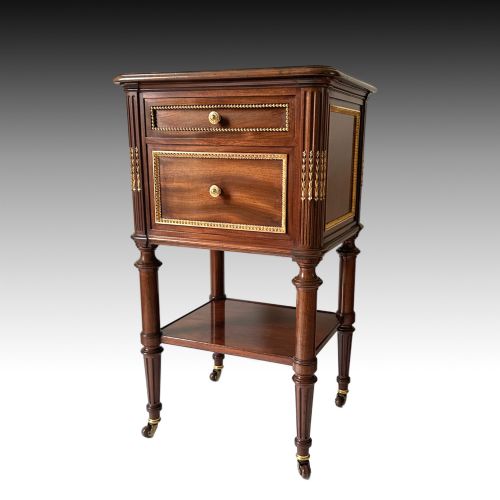
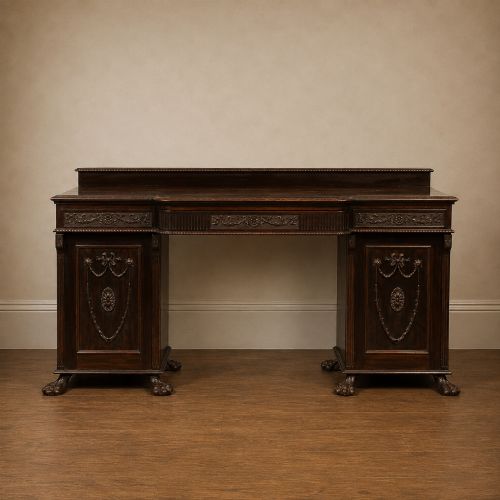
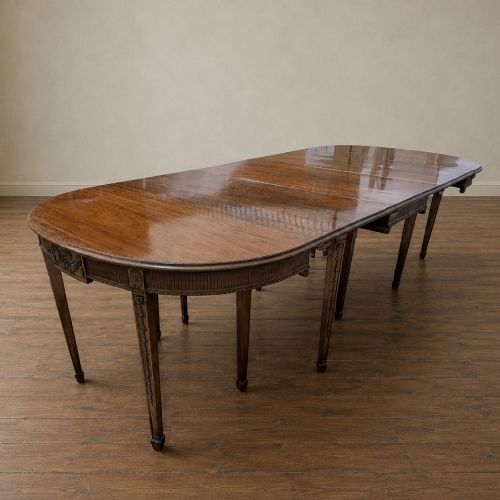
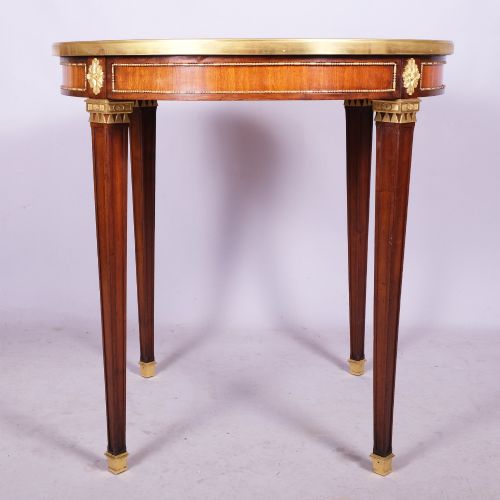
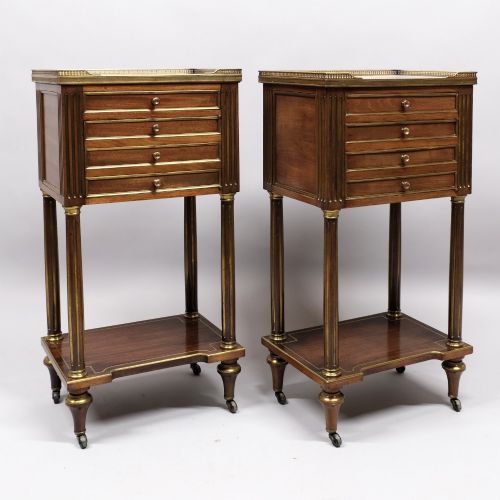
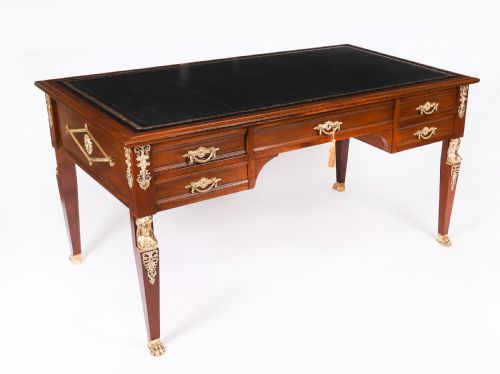
Console tables and demi-lune shapes dominate the offerings, often accompanied by sideboards, bouillotte tables, and bureau plat desks. The proportions range from compact bedside cabinets to large breakfront serving surfaces and extending dining tables.
Origins stretch across English workshops inspired by Sheraton and Robert Adam to continental centres producing French Empire and Italian neoclassical furniture. Buyers encounter both original period pieces and later Edwardian or twentieth-century revivals adhering to the same classical vocabulary.
Materials and construction
The primary timber is mahogany, selected for its rich grain and stability, frequently complemented by satinwood and boxwood for contrasting stringing and inlay. Secondary materials include leather for writing surfaces and marble for tabletops, particularly on French console and bouillotte forms.
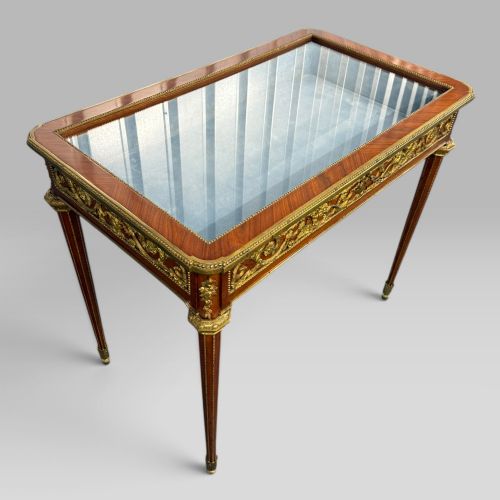
Metal mounts provide the characteristic classical contrast, utilising cast brass and ormolu for decorative details, handles, and gallery rails. Carved neoclassical motifs such as fluting, urns, and paw feet punctuate the timber surfaces alongside painted and inlaid decoration.
Several tables include hidden drawers originally designed to conceal secret love letters or gaming counters from prying eyes.
Judgement of quality
Quality rests upon the crispness of the carving and the precision of the brass or ormolu mounts rather than the complexity of the silhouette. Finely cast mounts fit the contours of the mahogany precisely, whereas lesser pieces display crude chasing and ill-fitting metalwork.
The choice of timber grain and the integrity of secondary elements like marble tops or inset leather surfaces determine the distinction between standard production and exceptional work. Cohesiveness of style, whether executed in the manner of Gillows or under French Empire influence, dictates the overall standing of an example.
François Linke·Robert Adam·Wilkinson London·Gillows·Maple & Co
The Neoclassical Mahogany Table Glossary
- Ormolu
- Gilded bronze used for decorative mounts and accents on French and English furniture. It provides a bright metallic contrast against dark mahogany surfaces.
- Demi-lune
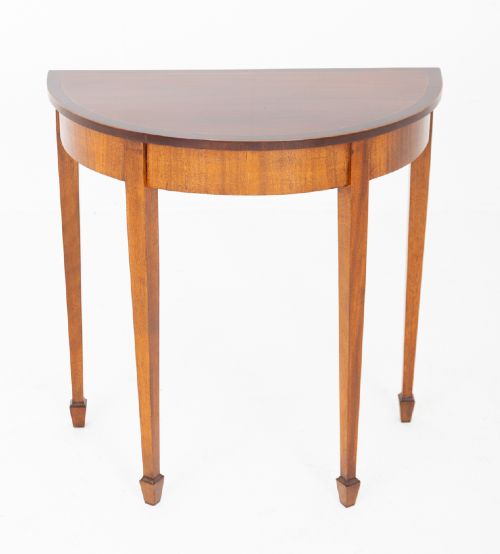
- A half-moon shape characteristic of console and card tables designed to stand flat against a wall. This form allows for decorative inlay along the straight edge and curved apron.
- Bouillotte
- A small circular occasional table featuring a raised gallery edge to prevent items from sliding off. These frequently incorporate marble tops and candle slides.
- Bureau plat
- A rectangular writing desk fitted with drawers along the frieze. The top is typically lined with leather and edged with bronze mounts.
- Serpentine
- A curved line that bends outward at the centre and inward at the sides. This contour appears on the fronts of serving tables and console cabinets.
Neoclassical Mahogany Table: Frequently Asked Questions
What is a neoclassical mahogany table?
A neoclassical mahogany table is a formal piece of furniture defined by straight lines, symmetrical geometry, and classical motifs executed in mahogany timber. These tables draw inspiration from ancient Greek and Roman architecture.
Such pieces range from serving consoles and side tables to writing desks and occasional tables. They frequently incorporate brass mounts, marble tops, and inlaid woodwork.
How do I identify a French Empire style table?
French Empire style tables display heavy classical proportions, dark mahogany surfaces, and elaborate ormolu mounts depicting military or mythological themes. They often feature marble tops and bold structural supports.
These pieces reflect the tastes of nineteenth-century France and command attention through their imposing presence and high-contrast metalwork.
Where should I place a demi-lune table?
A demi-lune table is designed to stand flat against a wall in a hallway, drawing room, or dining area. Its half-moon shape saves floor space while providing a functional surface.
These tables often function as serving surfaces or display areas for clocks, lamps, and decorative objects.
What is the difference between George III and Edwardian revival?
George III furniture dates from the eighteenth or early nineteenth century and represents original craftsmanship of the period. These pieces carry authentic age and period construction methods.
Edwardian revival pieces date from the early twentieth century and imitate eighteenth-century styles like Adam and Sheraton. They utilise older design vocabulary constructed with twentieth-century workshop practices.
How should I care for a leather top desk?
Leather top desks require protection from direct sunlight and excessive moisture to prevent the hide from drying and cracking. Regular dusting with a soft cloth keeps the surface clean.
Occasional conditioning with appropriate leather balm maintains the suppleness of the writing surface without damaging the surrounding mahogany.