



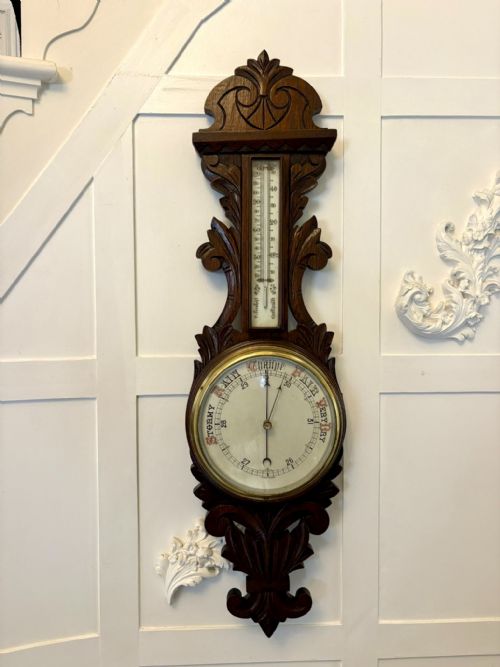
Carved Aneroid Barometer
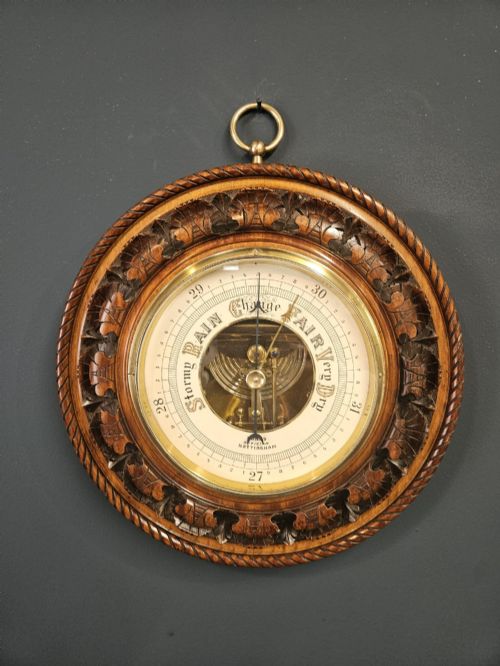
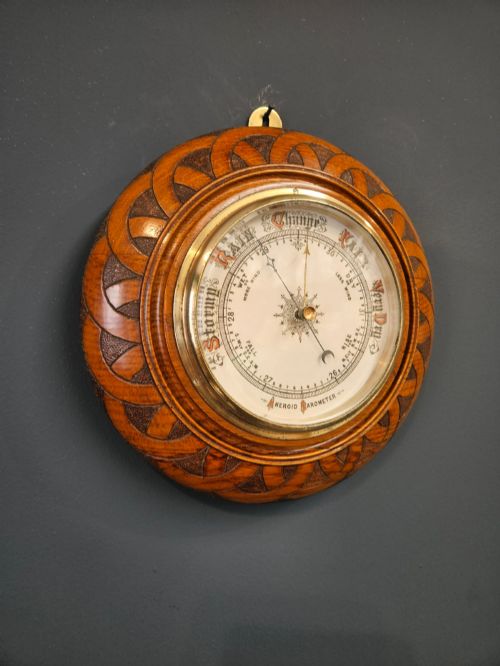
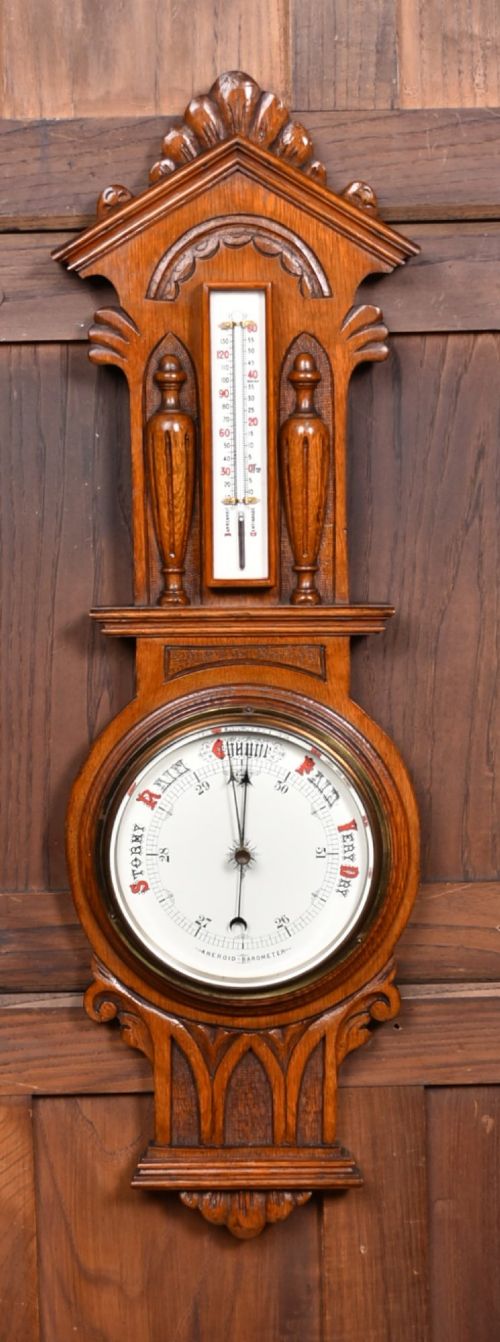
A carved aneroid barometer measures atmospheric pressure within a deeply sculpted timber housing, offering reliable weather forecasting alongside intricate nineteenth and early twentieth century craftsmanship.
Carved Aneroid Barometer
A carved aneroid barometer consists of a sealed metal capsule that expands or contracts with air pressure changes, connected to a pointer that moves across a graduated dial. These pieces date predominantly from the Victorian and Edwardian periods, stretching from the late nineteenth century into the early twentieth century.
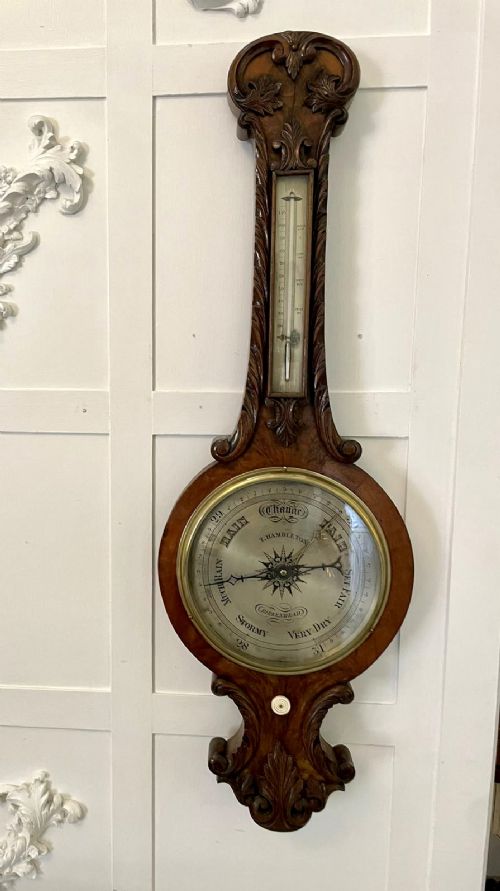
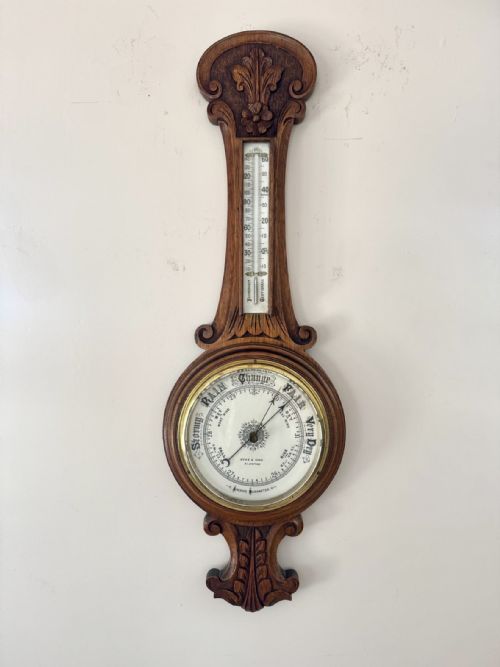
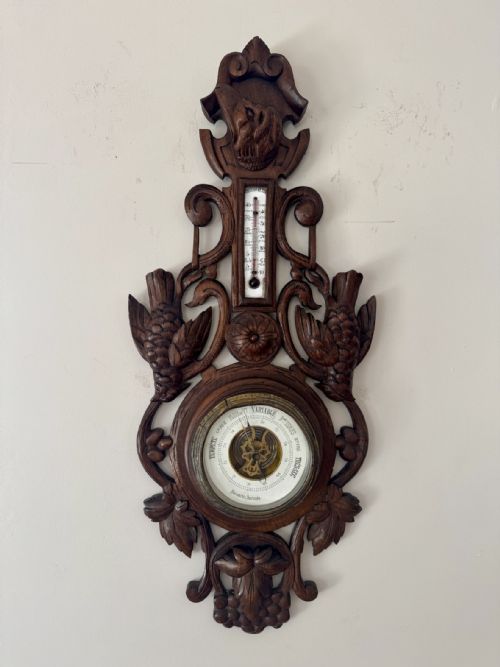
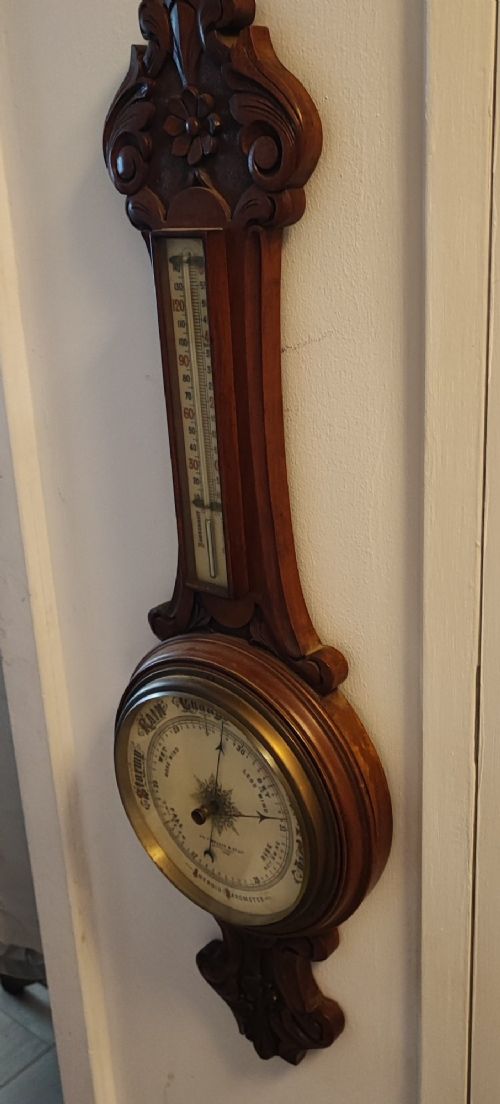
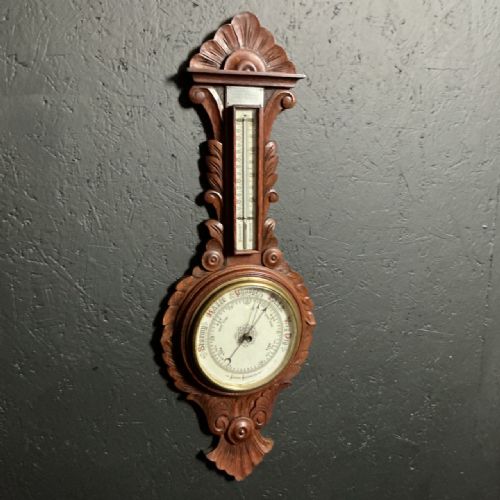
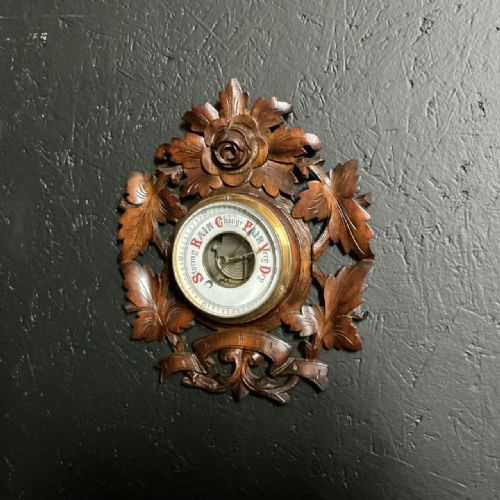
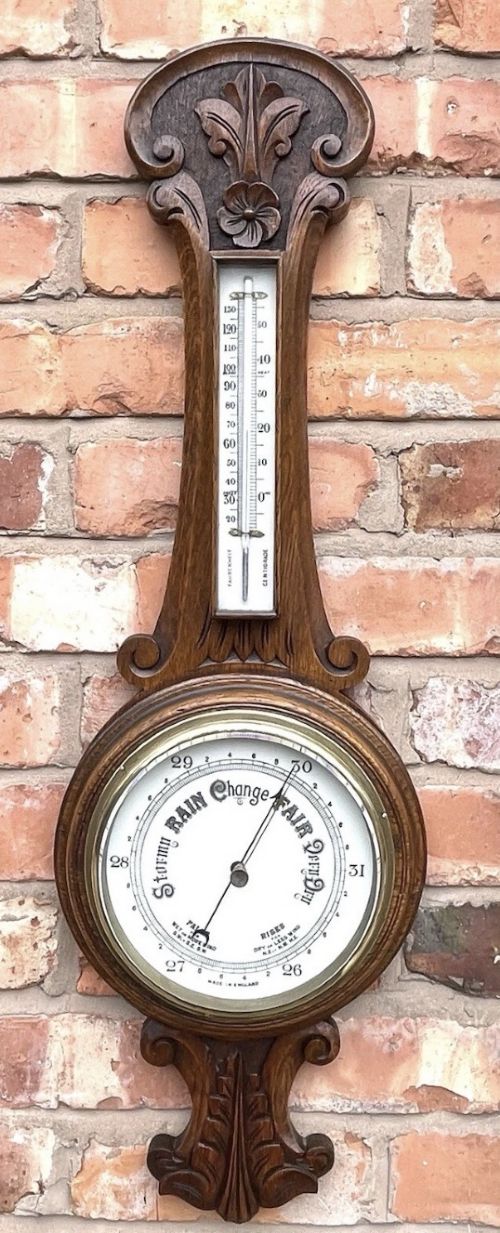
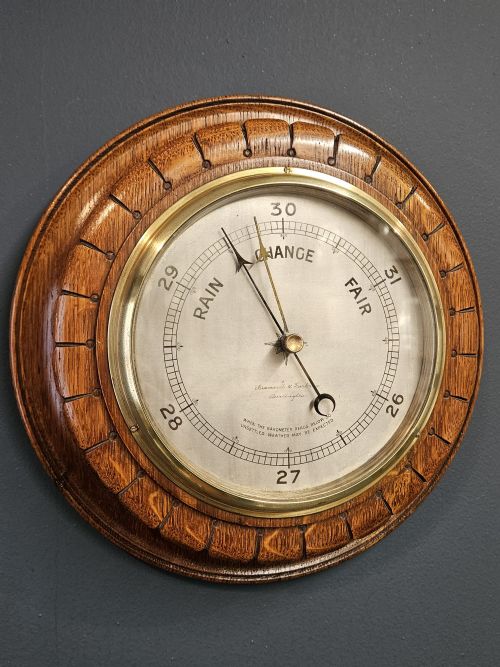
The housing for these instruments is typically formed as a wall-hanging banjo shape or a circular frame, sculpted from native or exotic timbers. Most examples encountered here are constructed from oak or walnut, featuring carved foliate motifs, geometric borders, or naturalistic animal and bird ornamentation.
Makers housed these precision movements within robust wooden surrounds that doubled as interior decoration for domestic halls and libraries. Alongside the primary pressure gauge, many specimens incorporate a matching thermometer or a clock face within the carved timber body.
Materials and construction methods
Cabinets were fashioned from dense hardwoods such as oak, walnut, and mahogany, selected for their stability and capacity to hold crisp hand-carved detail. Woodcarvers utilised gouges and chisels to render deep relief patterns, floral garlands, and Black Forest animal studies directly into the timber surrounds.
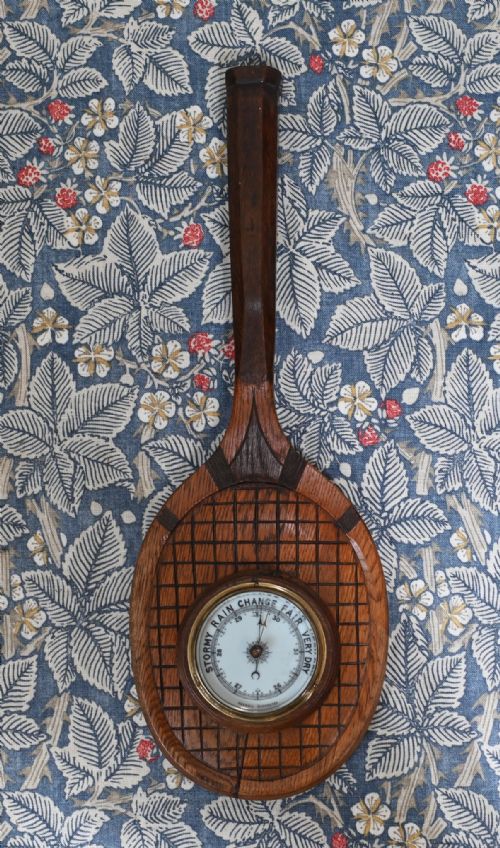
Several heavy oak frames abandon conventional weather forecasting altogether to sport hand-carved sporting motifs and intricately rendered songbirds.
Judging the quality of execution
Quality rests primarily upon the depth, sharpness, and ambition of the woodcarving, distinguishing factory-rutted mouldings from spirited hand-chiseled foliage and figures. The crispness of the bezel casting and the legibility of the silvered or ceramic dial further separate standard production pieces from finer workshop commissions.
The reputation of the retailer or maker inscribed upon the dial or movement backplate indicates the standard of internal mechanical engineering. Signed pieces by established opticians and instrument makers generally exhibit superior calibration, finer glass bezels, and more robust structural joinery in the timber case.
Hyde & Sons Sleaford·Bramwell & Harbron of Darlington·W Watson & Sons·Negretti & Zambra·Chadburns Castle St Liverpool·Frederick Cox London·James Pitkin London·J Hicks London
The Carved Aneroid Barometer Glossary
- Aneroid barometer
- An instrument that measures atmospheric pressure using a flexible metal capsule rather than liquid mercury, housed within a protective case.
- Banjo barometer
- A wall-hanging weather glass shaped with a circular dial head above a long, tapered trunk that frequently holds a thermometer.
- Skeletonised
- A design where the dial centre is cut away or open, revealing the brass levers and mechanical linkages of the barometer movement beneath.
- Silvered dial
- A brass or metal dial plate treated with a silver compound to produce a matte, reflective surface that highlights engraved numerical markings.
- Bezel
- The brass or metal ring that holds the protective glass face in position over the barometer dial, often hinged for manual adjustment.
Carved Aneroid Barometer: Frequently Asked Questions
How do I read a barometer dial?
The main pointer indicates the current barometric pressure in inches of mercury or millibars, moving towards 'Fair' for high pressure and 'Rain' for low pressure.
A secondary movable pointer, controlled by a central glass knob, is set manually over the primary needle to track whether pressure is rising or falling since the last observation.
Where should I hang a wall barometer?
Barometers require a stable interior wall away from direct sunlight, central heating radiators, and damp exterior stone to protect the delicate internal mechanism and wooden case.
Hang the instrument at eye level using a secure wall fixing suited to the weight of the dense oak or walnut timber frame.
How do I calibrate an aneroid barometer?
Calibration is performed by turning a small adjustment screw located on the back of the movement until the pointer matches known local meteorological pressure readings.
Adjustment should be done gradually and only after the instrument has acclimatised to its permanent room location for several hours.
Are these barometers still accurate today?
When properly serviced and calibrated against a reliable local weather reference, a nineteenth-century aneroid mechanism remains surprisingly dependable for tracking impending weather changes.
The mechanical brass linkages respond faithfully to barometric shifts, though extreme physical shocks or worn gears can introduce minor calibration drift over decades.