



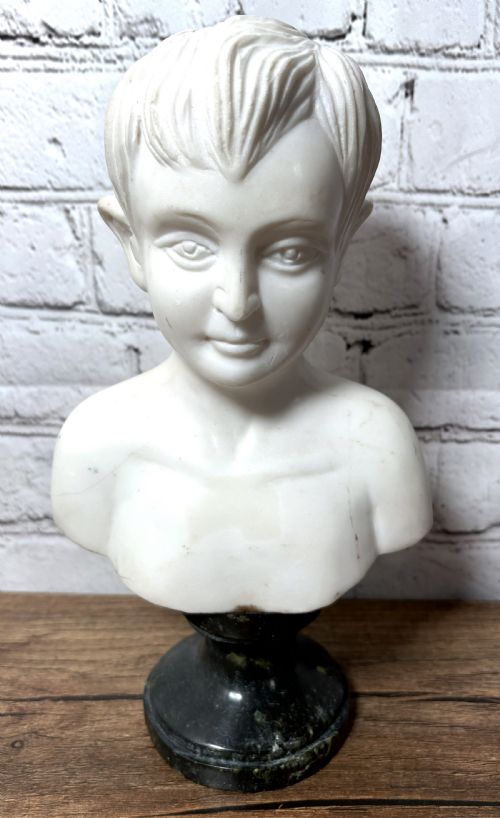

Carved Alabaster Portrait Bust
A carved alabaster portrait bust brings classical presence and fine sculptural detail into a room.
Carved Alabaster Portrait Bust
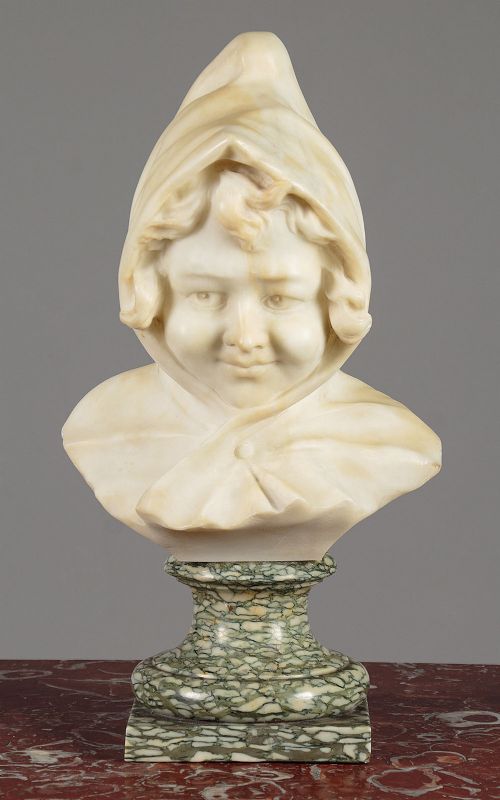
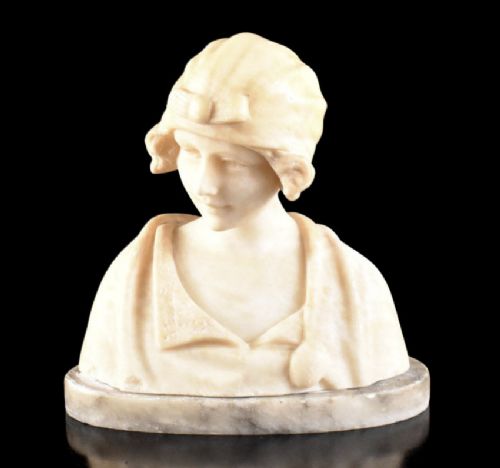
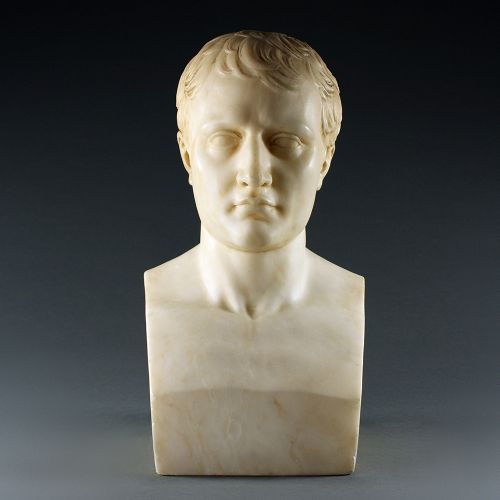
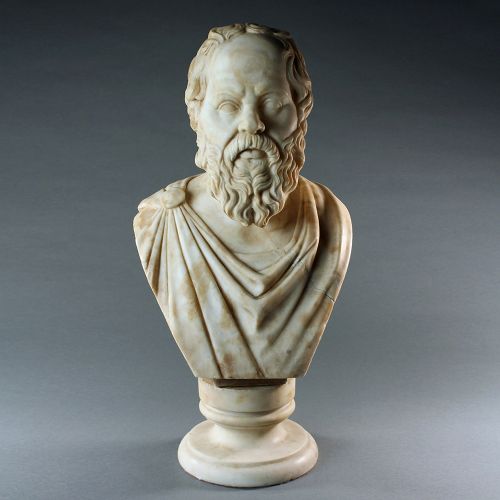
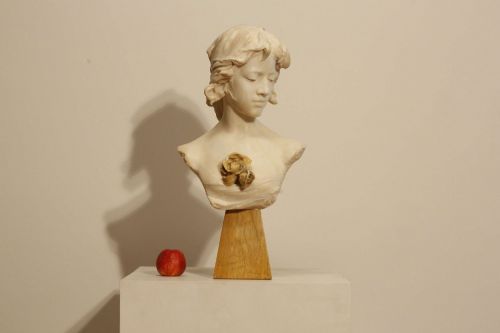
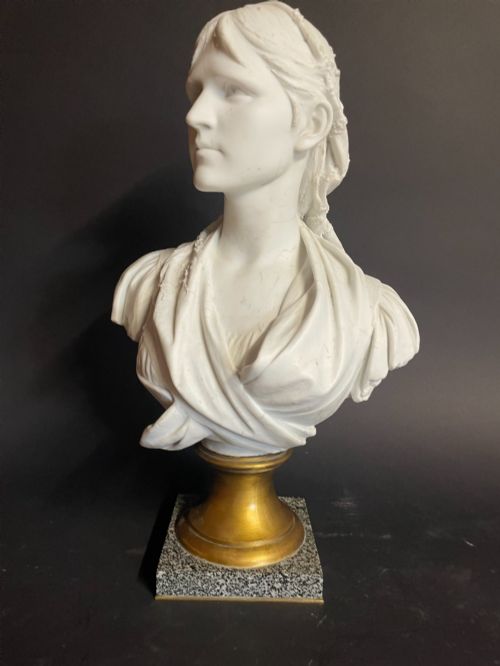
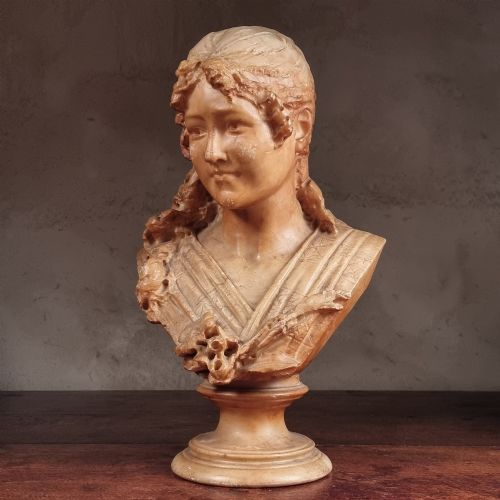
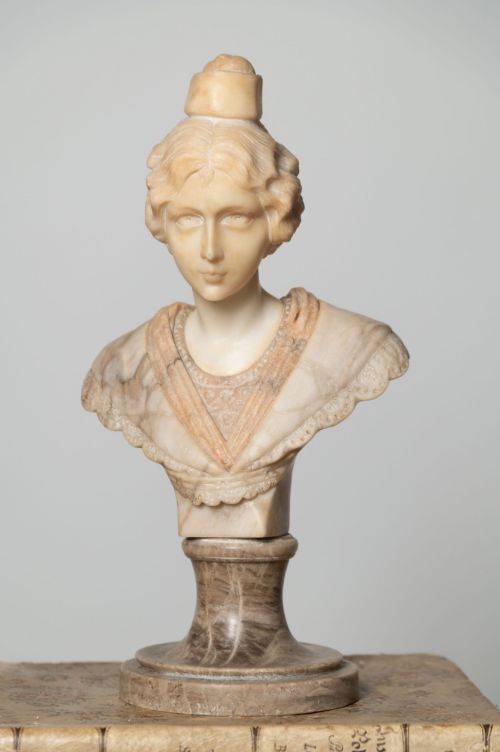
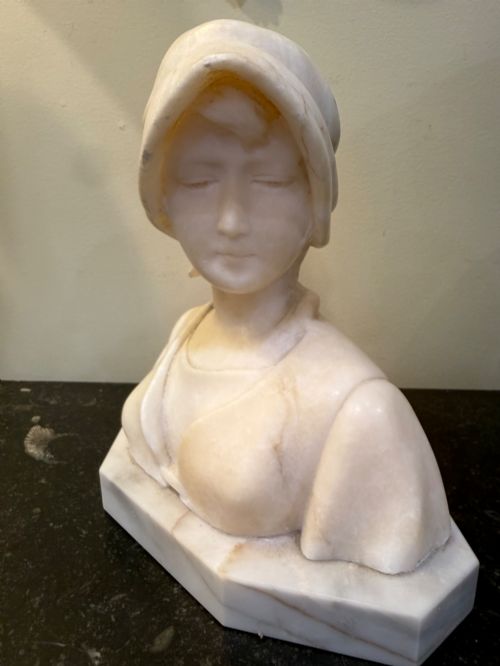
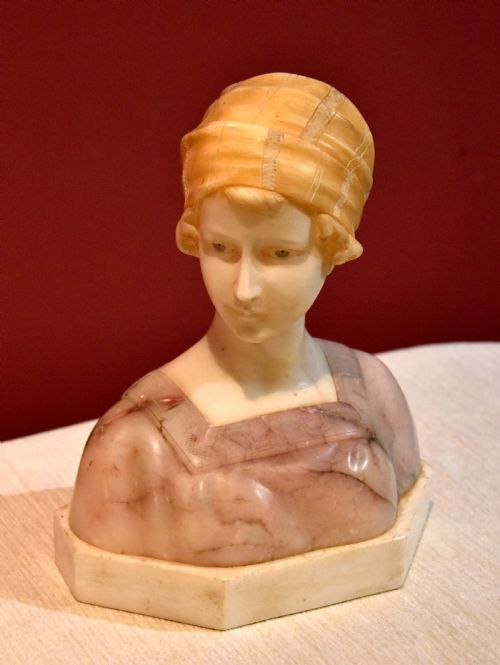
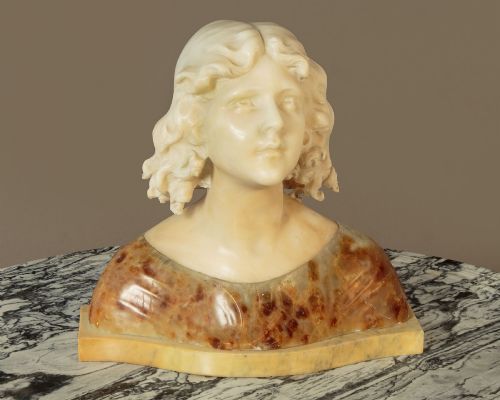
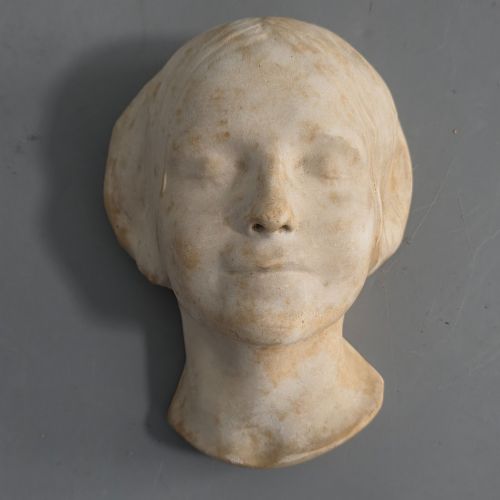
A carved alabaster portrait bust captures historical figures, literary subjects, and anonymous young women through detailed nineteenth-century and early twentieth-century sculpture. These works range from grand Grand Tour subjects like Socrates to idealised female forms and death masks.
The pieces appearing on this page span the Victorian, Edwardian, and Art Nouveau periods, with Italian and French origins predominating. Buyers frequently encounter representations of young women alongside classical profiles and historical personages.
Forms extend beyond traditional chest-height sculptures to include wall plaques, profile reliefs, and library busts mounted on contrasting stone or wood bases. Each piece translates the soft translucency of the material into lifelike drapery and facial expression.
Assessing quality and execution
Quality rests upon the sensitivity of the carving, particularly in the rendering of hair, facial expression, and the drape of fabric. Superior pieces display crisp undulations and subtle gradients in the stone that create a lifelike translucency.
The integration of the bust with its support structure also distinguishes the work, whether through a matching marble socle or decorative ormolu mounts. Finer examples often bear the signature of a known sculptor or originate from established Italian and French workshops.
Carved Alabaster Portrait Bust Retail Price Guide 2026
Typical asking prices for carved alabaster portrait bust among the pieces listed under this phrase on Sellingantiques today, from the lower quarter to the upper quarter. They describe what is for sale here now, not the wider market.
Listings feature works in alabaster, Carrara marble, and mixed media including ormolu and bronze from the Victorian and Edwardian eras.
Affortunato Gory·Auguste Henri Carli·Mieczyslaw Leon Zawiejski·G.V. Vaerenbergh·Greuze
The Carved Alabaster Portrait Bust Glossary
- Alabaster
- A fine-grained, soft stone prized for its smooth texture and translucent quality. It allows sculptors to achieve delicate facial details and soft light diffusion.
- Carrara Marble
- A white or blue-grey Italian marble quarried in the city of Carrara. Sculptors used this dense stone for classical figures and library busts.
- Ormolu
- Gilded bronze mounted onto furniture and sculpture bases. This decorative metalwork often complements stone portrait busts from the nineteenth century.
- Grand Tour
- A cultural journey undertaken by wealthy young Europeans in the nineteenth century. Travellers frequently acquired small classical portrait busts as souvenirs.
- Socle
- A short plinth or pedestal supporting a bust. This architectural base elevates the sculpture and provides stability.
Carved Alabaster Portrait Bust: Frequently Asked Questions
Where should I display a portrait bust?
These sculptures suit mantelpieces, heavy libraries, or dedicated pedestals where adequate lighting can highlight the translucent qualities of the stone.
Because alabaster is relatively soft, place the piece away from areas of high traffic or moisture to protect the carved surfaces.
How do I clean carved alabaster?
Dust the sculpture gently with a dry, soft brush or a clean microfiber cloth to prevent dirt from settling into the porous carved details.
Avoid using water, chemical cleaners, or polishes, as moisture can easily stain or dissolve the delicate surface of the stone.
What is a Grand Tour bust?
Grand Tour pieces are smaller-scale antique sculptures purchased by travellers visiting classical sites in Italy during the nineteenth century.
Subjects typically include ancient philosophers, historical leaders, and classical mythological figures carved in alabaster or marble.
How do I distinguish alabaster from marble?
Alabaster is significantly softer than marble and possesses a natural translucency that allows light to penetrate just beneath the surface.
Marble tends to feel colder, heavier, and displays a more crystalline structure when examined closely under good light.