

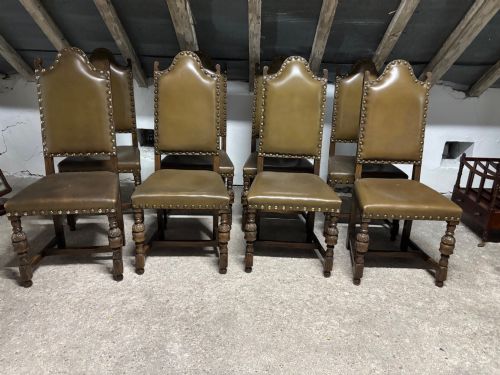

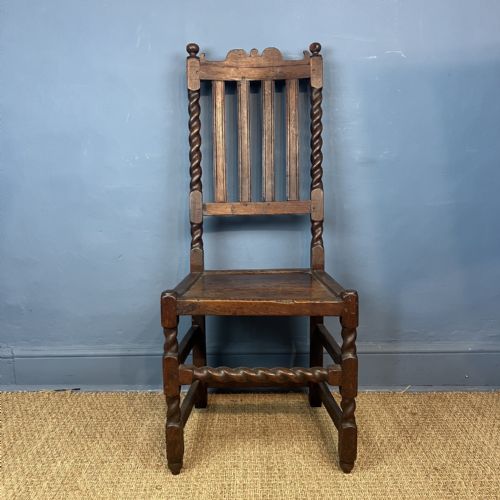


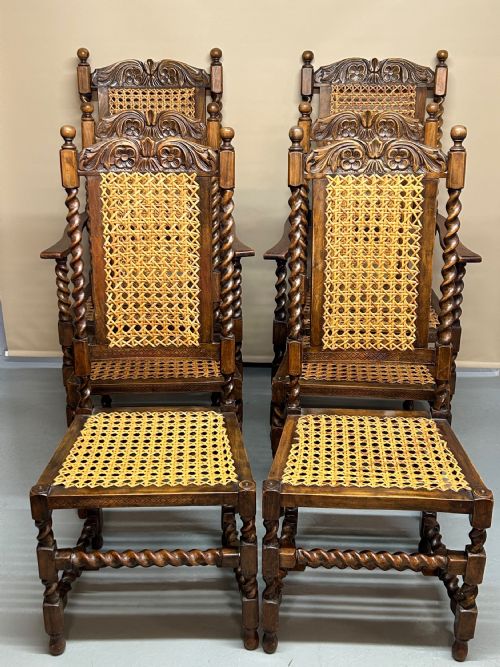


Carolean Oak Side Chair
A carolean oak side chair brings seventeenth-century carved presence into a room, offering sturdy timber framing and upright seating.
Carolean Oak Side Chair
A carolean oak side chair stands as a sturdy seat originating from the seventeenth century or reflecting later revivals. Buyers seeking this phrase encounter authentic seventeenth-century examples alongside nineteenth-century and early twentieth-century interpretations.
The form encompasses side chairs, dining chairs, and hall chairs with upright backs. Regional variations such as Lancashire chairs and South Yorkshire joined back stools appear among the selections.
Many examples arrive in sets of various sizes, from pairs to groups of eight. Later revivals borrow heavily from the original aesthetic, spanning Jacobean and Queen Anne styles.
Judging quality in construction and design
Quality rests upon the crispness of carved ornamentation and the integrity of the timber frame. Deeper relief carving and well-proportioned turned stretchers elevate an individual piece.
The condition of integrated materials such as cane panels or original upholstery determines the refinement of the surviving object. Consistency across matching sets distinguishes superior groups from assembled collections.
Listings feature oak combined with cane, brass, fabric, leather, velvet, and tapestry across seventeenth-century, Victorian, and Edwardian periods.
The Carolean Oak Side Chair Glossary
- Carolean
- Pertaining to the reign of King Charles the Second, marked by rich carving and scrolled woodwork. This aesthetic defines the key ornamentation seen on these chairs.
- Joined stool
- An early form of seating constructed with mortise and tenon joints rather than simpler pegged construction. These sturdy pieces form a foundation for later chair designs.
- Cane
- Woven rattan material utilised for chair backs and seats. This technique provides flexible support within a rigid wooden frame.
- Jacobean
- Relating to the period of King James the First, characterised by solid proportions and strapwork decoration. Revivals of this style recur throughout later centuries.
- Farthingale chair
- An upholstered seat constructed without arms to accommodate wide period dresses. These low-backed chairs date from the seventeenth century.
Carolean Oak Side Chair: Frequently Asked Questions
How do I date a carolean oak side chair?
Dating relies on examining the tool marks, timber shrinkage, and joinery methods visible on the frame. Seventeenth-century originals display hand- split oak and pegged joints that differ noticeably from later nineteenth-century revival techniques.
Style markers also assist with chronology, as authentic period pieces exhibit distinct carving depths and wear patterns built up over centuries of use.
Are these chairs comfortable for daily dining?
Most seventeenth-century and revival side chairs feature upright wooden backs and firm seats designed for formal posture rather than lounging. Adding appropriate seat pads can improve comfort for modern dining.
Upholstered variants and those with cane webbing offer slightly more give than solid wooden panels, though upright support remains the primary characteristic.
How should I care for antique oak furniture?
Maintenance involves keeping timber away from direct heat sources and sudden humidity changes to prevent wood splitting. Regular dusting with a dry cloth protects the carved surfaces without building up heavy chemical residues.
Conditioning the wood occasionally with appropriate wax helps preserve the finish. Cane and fabric components require gentle handling and protection from sharp objects.
What is the difference between original and revival pieces?
Original pieces date from the actual seventeenth century and carry the patina of age, while revival chairs were manufactured during the Victorian, Edwardian, or 1920s periods. Revivals intentionally copy the earlier Carolean or Jacobean aesthetic using period machinery and updated workshop practices.
Both categories use solid oak and similar carved motifs, but material analysis and structural wear usually reveal the true manufacturing era.