



Jacobean Carved Side Chair
A jacobean carved side chair brings robust seventeenth-century character and dark timber grain straight into a modern interior.
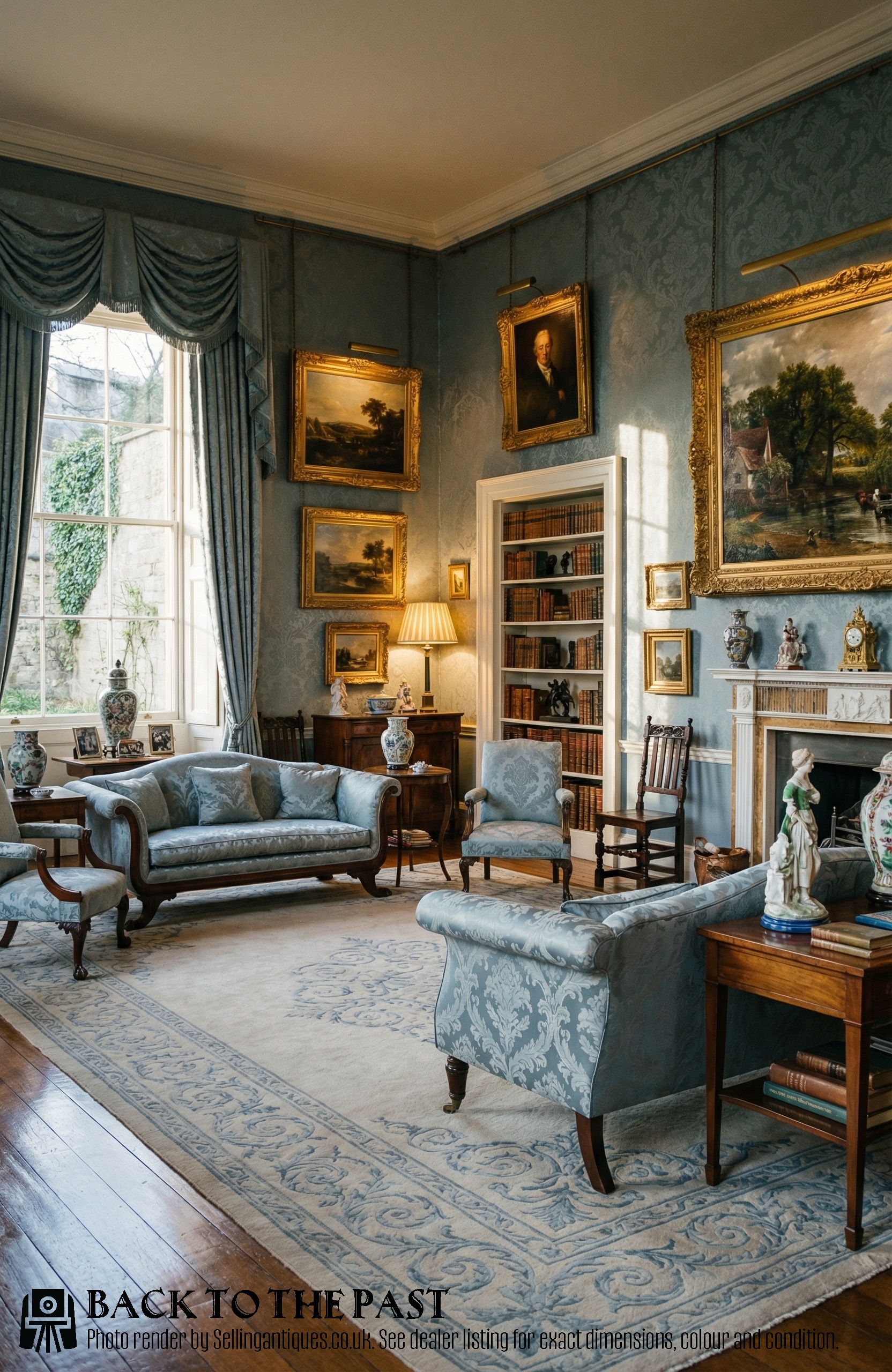
Jacobean Carved Side Chair
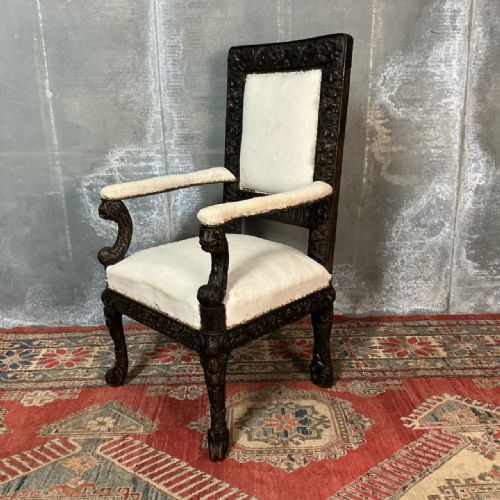
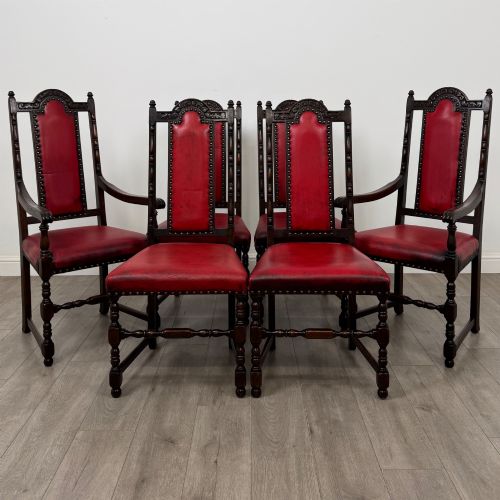
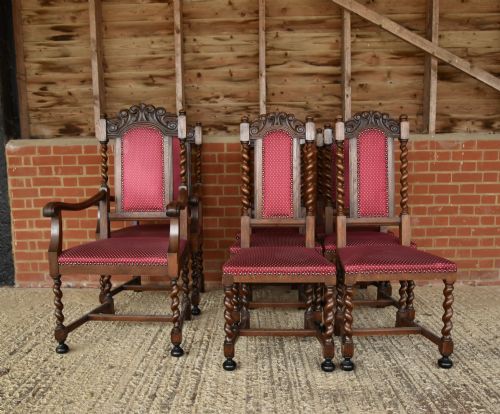
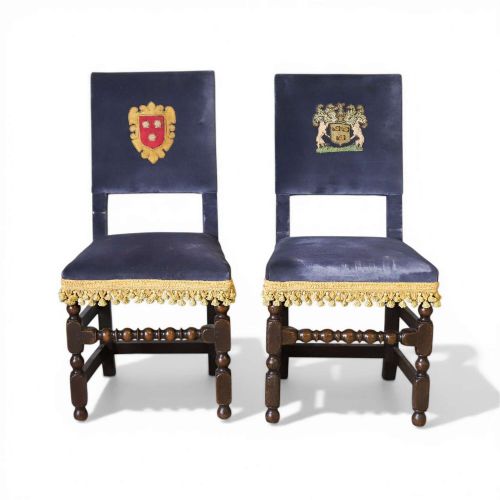
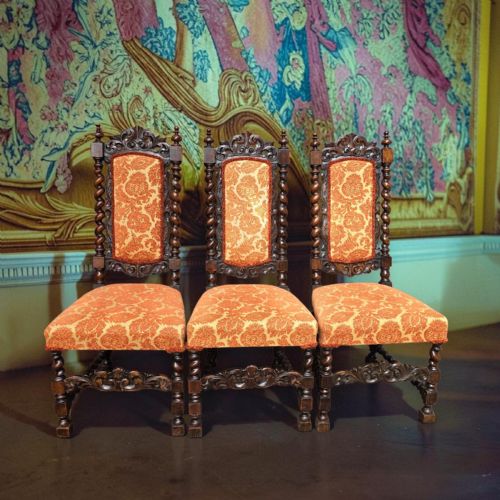
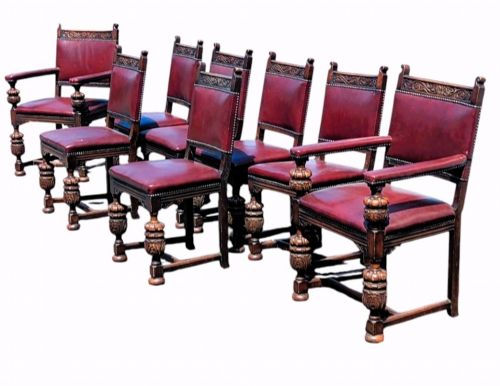
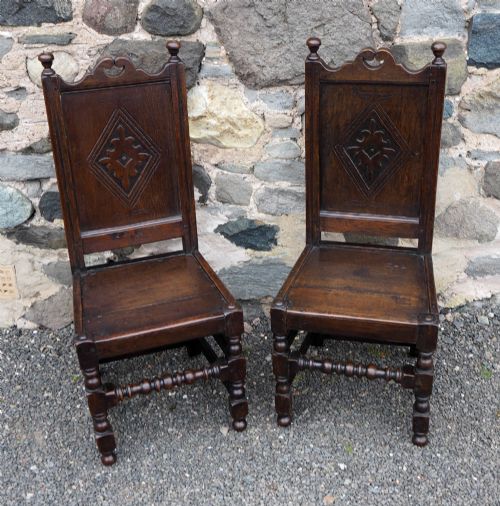
A jacobean carved side chair can range from authentic seventeenth-century joined timber originals to revival interpretations made during the nineteenth and twentieth centuries. The selection includes single seats, matched pairs, and larger dining sets originating from English and Scottish workshops.
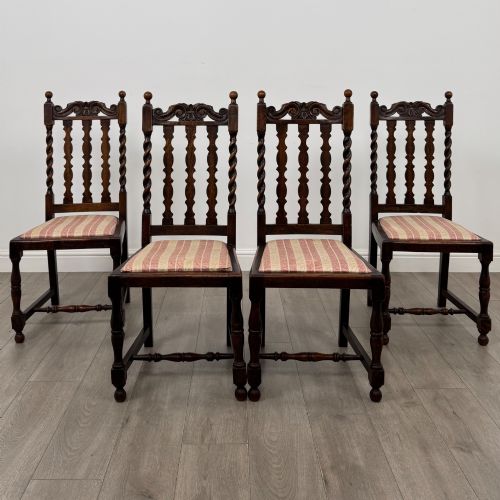
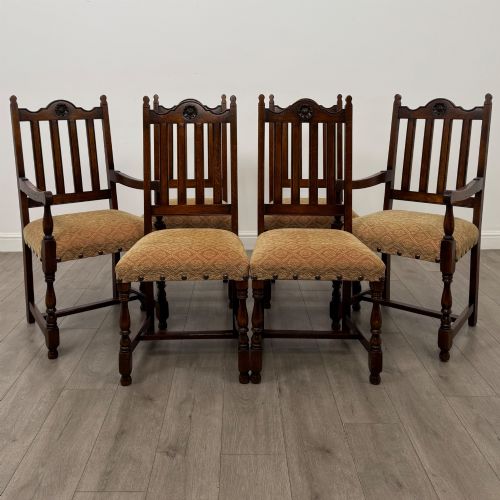
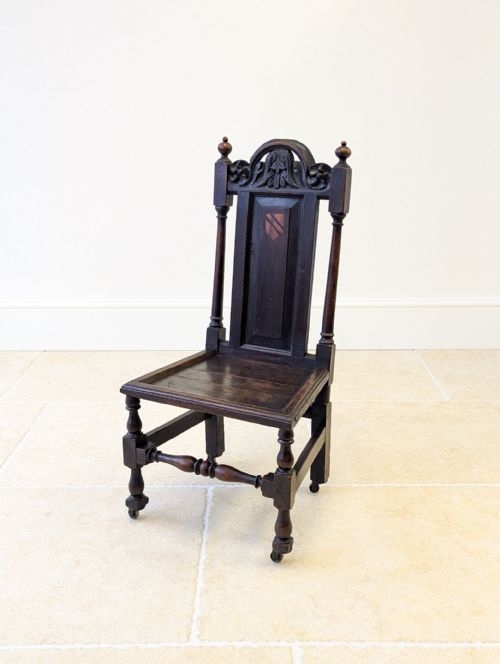
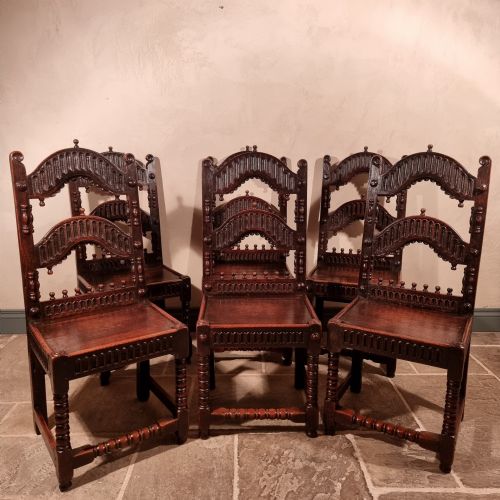
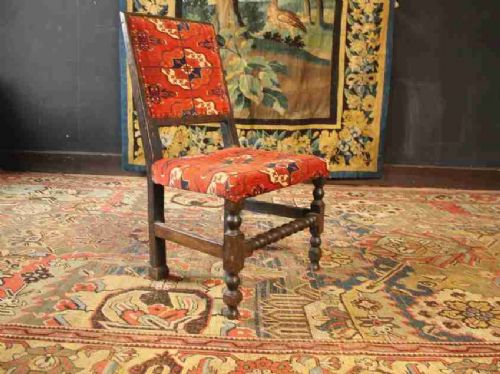
Buyers will encounter formal high-back designs alongside sturdy Yorkshire and South Yorkshire backstools featuring carved splats and solid timber seats. Later revival pieces often incorporate barley twist legs and upholstered elements finished in leather or velvet.
How they were made
Makers relied primarily on sturdy oak, shaping panels and framing joints through traditional pegged mortise and tenon construction designed for heavy daily use. Turnery details like barley twists were produced on manual lathes, while ornamentation relied on hand-chisel carving.
Seating surfaces often combined solid timber planks with drop-in pads secured by upholstery fabric, leather, or cane webbing. Metal elements such as brass studs frequently fastened these coverings directly to the wooden frame.
What varies in quality
The crispness of the hand-carved decoration defines the upper tier of these seats, separating deeply chiselled motifs from softer, later machine profiling. Original surface patination and timber selection also drive distinction, with tight, old-growth oak boards holding superior visual depth.
Structural integrity depends on the tightness of the original joints and the survival of the frame without excessive timber replacement. Matched sets command greater regard when all components share identical wear and matching structural proportions.
The Jacobean Carved Side Chair Glossary
- Backstool
- An early term for an upholstered or panelled chair without arms, serving as a precursor to the modern side chair.
- Joined oak
- Furniture constructed using interlocking mortise and tenon joints secured by wooden pegs rather than metal nails.
- Barley twist
- A decorative spiral turning cut into furniture legs and stretchers, popular during the seventeenth century and later revivals.
- Splats
- The vertical wooden strip forming the centre of a chair back, frequently carved with heraldic or floral motifs.
- Derbyshire chair
- A regional seventeenth-century style distinguished by an open timber back and multiple carved rails.
Jacobean Carved Side Chair: Frequently Asked Questions
Are these chairs comfortable to sit on daily?
Most seventeenth-century and revival examples feature upright wooden or cane panels designed for posture rather than lounging. Adding small cushions can make them practical for regular dining use.
Their sturdy oak frames provide reliable support, though period seats often sit slightly lower than modern dining furniture.
How do I spot a true seventeenth-century piece?
Authentic period examples display hand-cut peg joints, irregular tool marks, and deep patination accumulated across centuries of use. Timber shrinkage and historical wear patterns offer reliable indicators of age.
Revival pieces from the Victorian and Edwardian eras often use more uniform machinery cuts and standardised joinery dimensions.
Can I mix these chairs with modern tables?
The dark tones and striking carved backs make them effective statement pieces around contemporary wooden or glass dining tables. Pairing them with a minimalist table allows the historical woodwork to stand out.
Mixing single chairs or pairs creates an eclectic dining arrangement rather than a strict period suite.
How should I care for old oak timber?
Feed the wood occasionally with traditional beeswax to nourish the dry grain and maintain a soft natural sheen. Avoid placing timber seats near direct heat sources or strong sunlight to prevent splitting.
Dust carved crevices regularly with a soft brush to prevent dirt buildup in the intricate recesses.