
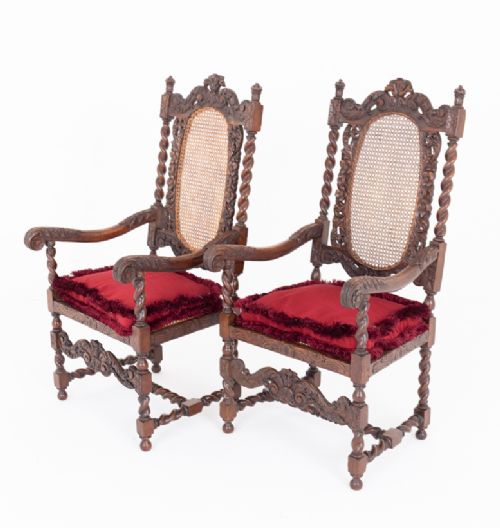
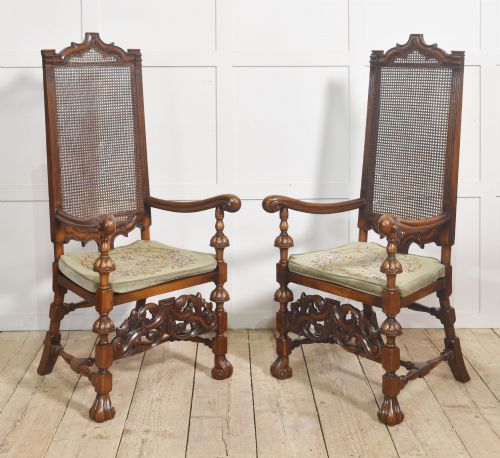


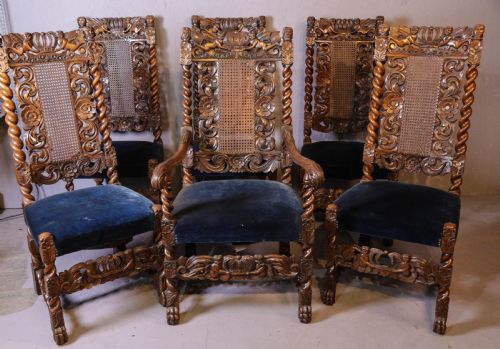


Carolean Cane Chair
A carolean cane chair brings grand seventeenth-century presence into a room through elaborate carving and woven seating.
Carolean Cane Chair
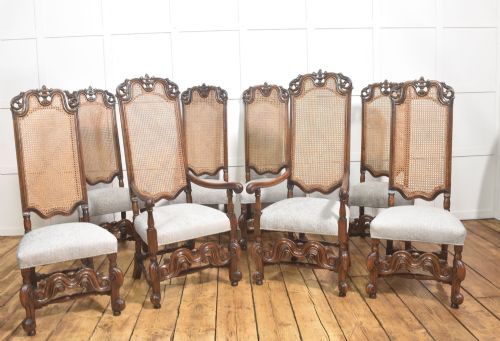
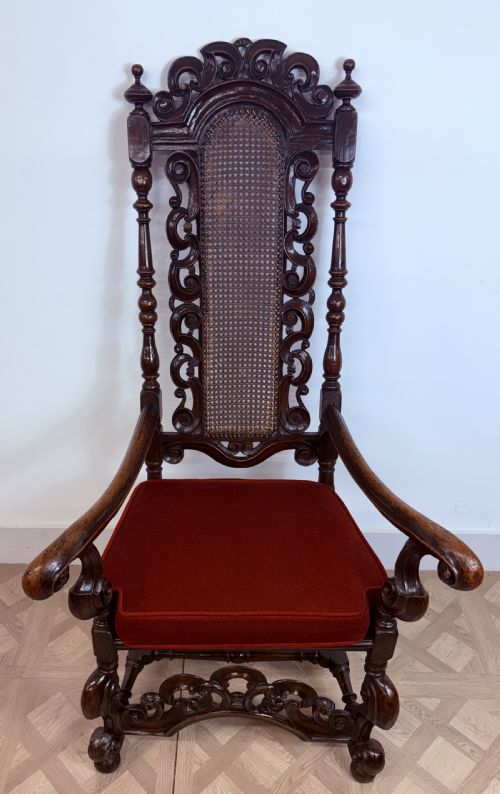
A carolean cane chair is a seating piece defined by tall backs, intricate woodwork, and woven cane panels in the seat or backrest. These items draw on late seventeenth-century design traditions, appearing in original period forms from the seventeen-hundreds as well as later revival editions made across the nineteenth and twentieth centuries.
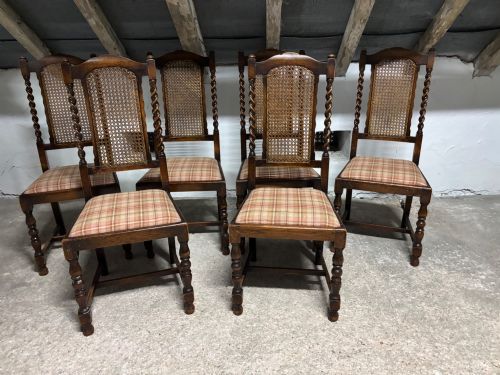
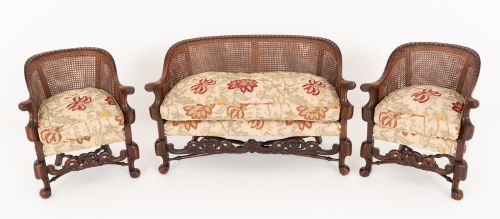
Buyers browsing this selection encounter various formats, ranging from single armchairs and side chairs to full dining sets and matching suites. Oak and walnut serve as the primary timber choices across these pieces, paired with natural woven cane.
Many examples on this page reflect revival movements, particularly Jacobean and Carolean interpretations produced during the Victorian and Edwardian eras. Original seventeenth-century specimens sit alongside these later revival interpretations, offering distinct historical periods to collectors.
Materials and Construction
Craftsmen built these chairs primarily using solid hardwoods such as oak and walnut, chosen for their structural strength and capacity to hold deep, ornate chisel work. Artisans carved crest rails, stiles, and stretcher bars by hand, creating pierced scrolls, foliage, and crown motifs.
The woven cane panels utilised natural rattan materials threaded through drilled frames to form resilient, flexible seating and backrests. Upholstery fabric and velvet also appear on certain padded versions and associated seating suites.
Assessing Quality and Craftsmanship
Quality separates along the depth and crispness of the timber carving, where sharp relief work indicates superior artisan skill compared to soft or shallow moulding. The density and tightness of the cane weaving further distinguish finer examples from simpler production.
The choice and age of the primary wood influence overall stature, with seventeenth-century walnut or oak originals carrying distinct historic weight over later revival interpretations. Joinery integrity and the retention of original timber surfaces complete the measure of a superior piece.
The Carolean Cane Chair Glossary
- Cane
- Woven material made from the peeled bark of rattan palms used for seats and backrests. It provides a lightweight yet supportive surface.
- Carolean
- Pertaining to the reign of Charles the Second from sixteen-sixty to sixteen-eighty-five, characterised by lavish Baroque furniture styles. This period introduced rich carvings and cane seating to English interiors.
- Revival
- A stylistic movement in the nineteenth and twentieth centuries that copied earlier historic designs. Makers during the Victorian and Edwardian eras frequently produced Carolean and Jacobean revival pieces.
- Stretcher
- Horizontal wooden members connecting the legs of a chair to provide structural stability. On these chairs, they often feature ornate central carving matching the crest rail.
- Bergere
- An enclosed upholstered armchair with a wooden frame, often incorporating cane work into the back and sides. This form appears across several nineteenth and twentieth-century listings.
Carolean Cane Chair: Frequently Asked Questions
Are these chairs comfortable for daily use?
The woven cane panels offer a surprisingly springy and supportive surface when sat upon, though many owners add loose squab cushions for extra softness.
Armchairs and high-back dining variations provide substantial upright posture support suitable for long periods at a table.
How do I spot an original from a revival?
Original pieces from the seventeenth century display specific timber ageing, hand-cut joinery marks, and wear patterns unique to centuries of handling. Revival editions from the Victorian and Edwardian periods often utilise machine-assisted elements or later hardware while imitating the earlier styles.
Examining the construction methods inside the frame and the oxidation of the wood helps clarify the true age.
How should I care for cane seating?
Keep woven cane panels away from direct heat sources and extreme dryness to prevent the natural fibres from becoming brittle and snapping. Light dusting and occasional damp wiping maintain the material's moisture balance.
Protect the surrounding oak or walnut woodwork with traditional beeswaxes rather than modern silicone sprays.
What rooms suit a high-back chair best?
Tall carved frames work well as statement accent pieces in hallways, studies, or bedrooms where their vertical presence draws the eye. Dining sets create a dramatic focal point around large timber tables in formal eating spaces.
What is the difference between side chairs and armchairs?
Side chairs are armless designs traditionally placed around the perimeter of a room or tucked along the sides of a dining table. Armchairs feature supporting rests for the arms, often serving as larger fireside or head-of-table seating.